When your car quits in traffic, won’t start in a parking lot, or gets damaged in a wreck, the next step is usually simple – tow car to repair shop Tulsa. What matters is how that tow gets done. A rushed hookup, the wrong equipment, or poor communication can turn one problem into two.
Most drivers are not looking for a long explanation in that moment. They want to know whether the truck is coming, whether the vehicle will be handled correctly, and whether it can be delivered straight to the shop they choose. That is the real job.
When you need to tow car to repair shop in Tulsa
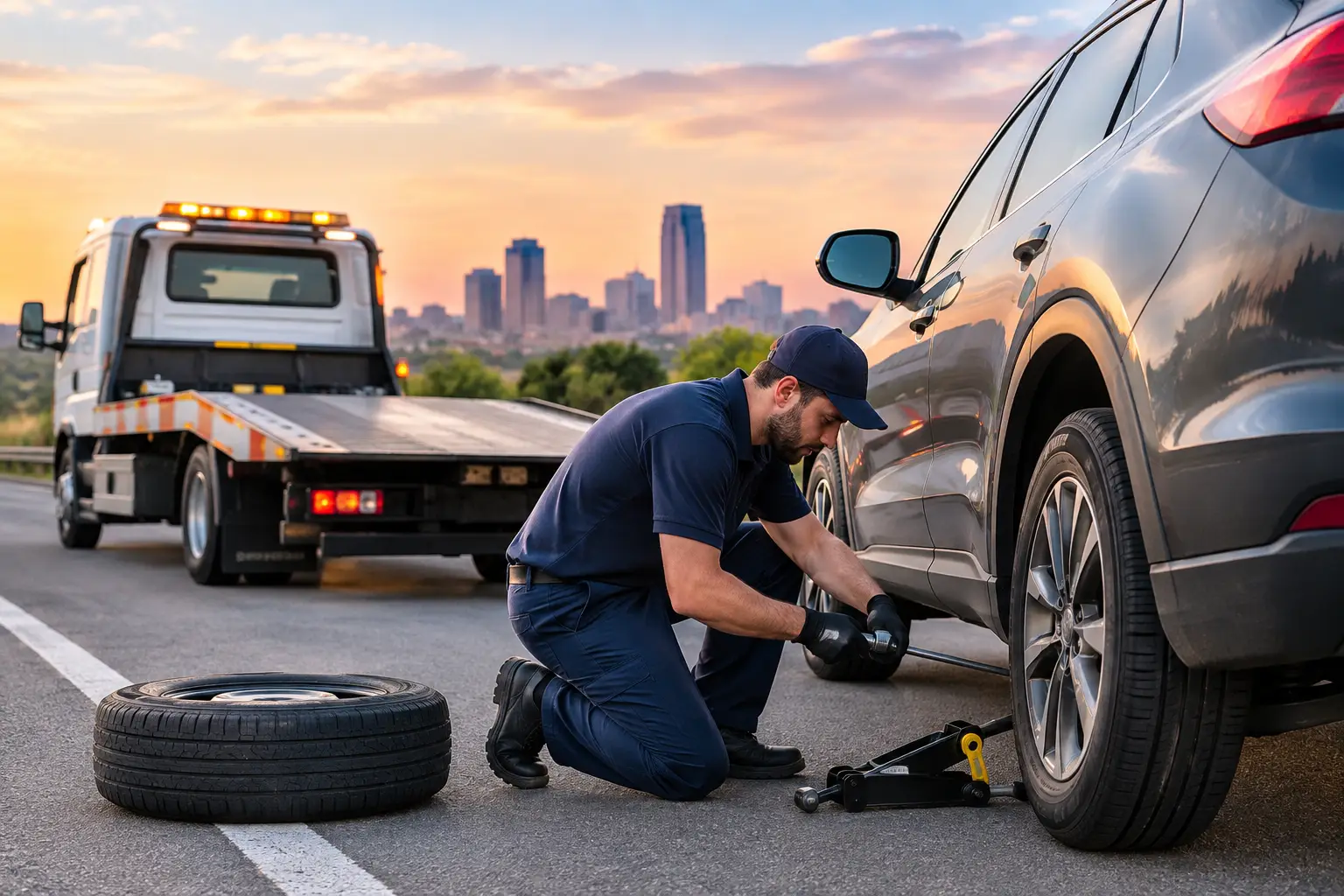
A repair shop tow usually happens after a breakdown, accident, dead battery that cannot be resolved on site, or a vehicle that simply is not safe to drive. Sometimes the issue is obvious, like a blown tire with wheel damage or front-end damage after a collision. Other times it is less clear, like transmission trouble, overheating, steering problems, or an EV that has gone into a fault condition and should not be moved under its own power.
In Tulsa, these calls happen everywhere – on I-44 shoulders, apartment complexes in South Tulsa, parking garages downtown, grocery store lots near Memorial, and neighborhood streets in Midtown. The location changes the loading plan, but the goal stays the same. Get the vehicle out safely and deliver it to the repair shop without adding damage.
That sounds basic, but this is where experience matters. A low-clearance car needs a different approach than a pickup. An all-wheel-drive vehicle cannot be handled the same way as a two-wheel-drive sedan. Electric vehicles need careful loading and transport, especially when they are disabled and cannot be shifted or rolled normally.
Why proper towing to a repair shop matters
A tow to a shop is not just transportation. It is vehicle handling. If the car already has mechanical or body damage, careless towing can make diagnosis harder and repairs more expensive.
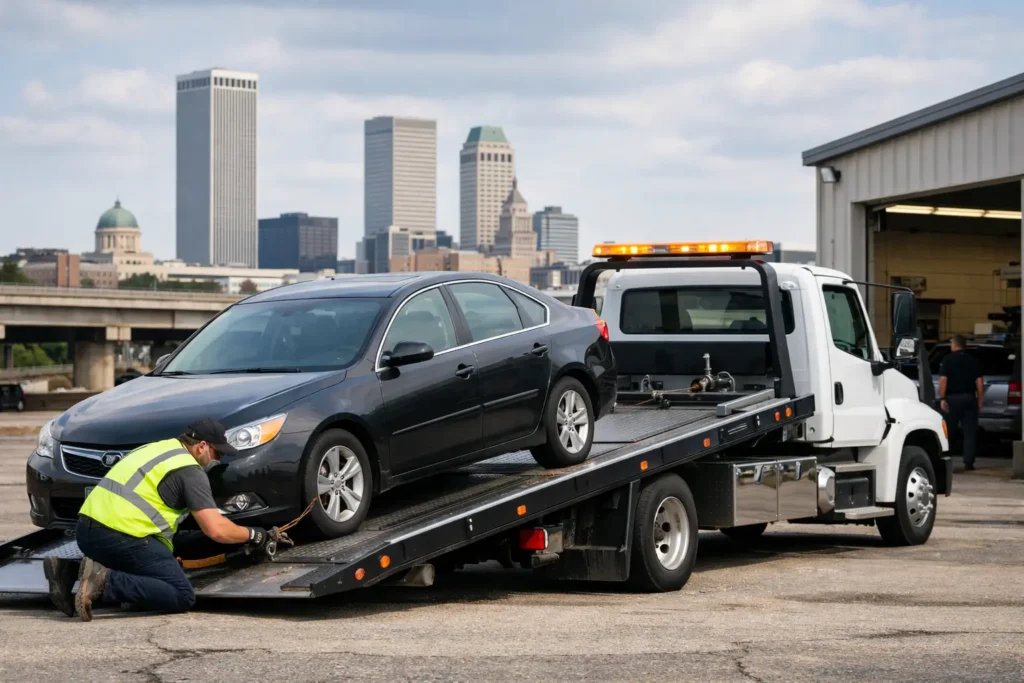
Flatbed towing is usually the right call for repair shop transport because it keeps the entire vehicle off the ground. That reduces wear, avoids driveline issues, and gives better control during loading and unloading. It also matters for vehicles with suspension damage, low front bumpers, aftermarket wheels, or limited ground clearance.
There are cases where the tow itself is straightforward but the pickup is not. A car stuck nose-first against a curb, a truck that lost power in a narrow garage, or a vehicle with a locked steering column all require a more careful setup. Those jobs are not about speed alone. They are about doing the work correctly so the vehicle arrives at the shop in the same condition it was picked up.
What the process should look like
If you need a tow to a repair shop, the process should be simple. First, the driver or dispatcher needs the vehicle location, make and model, condition of the car, and the destination shop. If the car has been in an accident, does not roll, is low to the ground, or is an EV, that should be mentioned right away.
From there, the truck should be dispatched with the right equipment for the job. Not every tow is the same, and trying to make the wrong truck work is where delays and handling mistakes happen. A proper flatbed setup, soft straps where needed, winch control, and enough clearance for loading all make a difference.
Once on site, the driver should assess how the car can be loaded safely. That may mean using skates for locked wheels, planning around traffic, adjusting approach angles, or choosing a different loading position if the area is tight. Clear communication matters here. You should know what is happening, where the car is going, and what the driver is doing to protect it.
After loading, the vehicle should be secured correctly and transported directly to the shop you selected. That might be an independent repair shop, dealership, body shop, or tire store. The important part is that the tow is focused on delivery, not adding confusion or unnecessary steps.
Tow car to repair shop Tulsa for different vehicle types
Not every vehicle can be treated the same, and that is one of the biggest differences between careful towing and careless towing.
Low-clearance cars
Sports cars, sedans with long front overhangs, and lowered vehicles often need extra care during loading. Approach angle is the issue. If the bed angle is too steep or the driver rushes the pull, the front bumper or underside can scrape. The right setup takes a little longer, but it prevents damage that did not exist before the tow.
SUVs and pickup trucks
Heavier vehicles need proper weight distribution and securement. If a truck has steering or suspension damage, loading can be more complicated than it looks. Size alone is not the challenge. It is the condition of the vehicle and the available space to recover it.
All-wheel-drive vehicles
These should generally be transported with all four wheels off the ground. That is one reason flatbed towing is often preferred for a repair shop tow. It avoids unnecessary stress on the drivetrain and keeps the transport method in line with what many manufacturers recommend.
Electric vehicles
EV towing is its own category. Tesla and other electric vehicles may require special handling if the vehicle will not power on, will not shift, or has low battery and fault warnings. Safe loading, proper tie-down points, and avoiding rough handling matter more than ever with these vehicles.
Choosing the right repair shop destination
Most drivers already know where they want the car taken. If you have a trusted mechanic, dealership, or body shop, the tow should go there directly. If you are still deciding, it helps to think about the type of problem first.
A collision-related tow usually goes to a body shop or dealer-approved repair center. A no-start, overheating, brake issue, or transmission problem usually goes to a general repair shop or specialist. If the car is under warranty, a dealership may make more sense. If it is an older vehicle and you want practical repair options, an independent shop may be the better fit.
It depends on the vehicle, the problem, and how quickly the shop can take it in. Some shops are prepared for after-hours drop-off, while others are not. That is worth confirming before the vehicle is on the truck.
What drivers in Tulsa should have ready
You do not need much, but a few details can save time. Have the exact location, the name of the repair shop, and any special instructions ready. If the car is stuck in a garage, on a busy roadside, or blocked in by other vehicles, say that up front.
If you can, remove valuables and keep your keys, ID, and phone with you. If the vehicle has special issues like air suspension problems, broken axles, a dead EV battery, or wheels that do not roll, mention it before dispatch. That is not overexplaining. It helps send the right truck and avoid delays.
Why local experience makes the tow easier
Tulsa towing jobs are not all the same. A breakdown on US 75 during traffic is different from a disabled car in a Bixby subdivision or a vehicle stuck in a tight downtown deck. Local route knowledge helps with response time, but it also helps with the actual work.
Knowing where traffic backs up, where parking access is limited, and which areas require tighter maneuvering can make the whole process smoother. That is especially true when the vehicle needs to get to a repair shop quickly so the owner can move on with their day.
Tulsa Towing, powered by Neptune Towing, focuses on exactly that kind of local, damage-free transport. The job is straightforward – get there, load the vehicle correctly, and deliver it where it needs to go without making the situation harder than it already is.
The real difference is how the vehicle is handled
Anyone calling for a tow is already dealing with enough. The last thing they need is vague timing, poor communication, or a vehicle that gets scraped on the way to the shop. A proper repair shop tow is about more than moving a car from point A to point B. It is about using the right equipment, understanding the vehicle in front of you, and keeping the process clear from pickup to drop-off.
If your car is disabled and needs to go to a repair shop, keep it simple. Tell the towing company what the vehicle is doing, where it is located, and where you want it delivered. The right tow should lower your stress, not add to it.