A car stopped on the shoulder of I-44 is already a bad day. What makes it worse is finding out later that the tow caused more problems than the breakdown did. That is why flatbed towing Tulsa drivers call for is usually less about convenience and more about protecting the vehicle from the start.
When a vehicle rides fully off the ground, there is less risk to the drivetrain, suspension, wheels, and body. That matters if your car will not roll, if it has low ground clearance, if it was in an accident, or if you drive something heavier or more specialized than a standard sedan. In real towing work, the equipment choice changes the outcome.
Why flatbed towing in Tulsa is often the safer choice
Not every tow needs the same setup. Some vehicles can be moved short distances with other equipment, but flatbed towing is the safer option in a lot of situations because the vehicle is loaded completely onto the truck and secured in place. There is no dragging and no guessing about whether a damaged wheel, tire, or axle will hold up during transport.
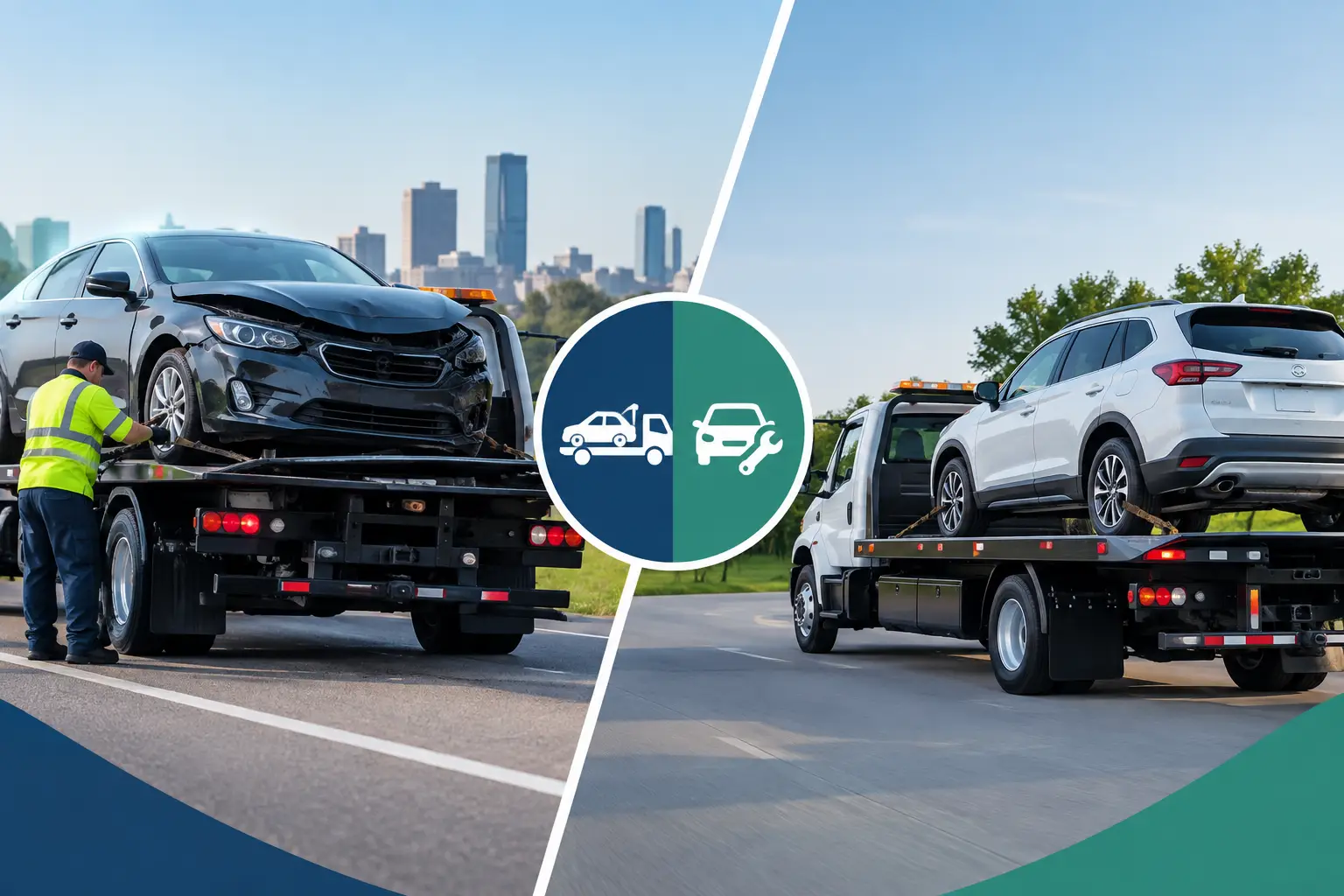
That is especially important after a crash. Even if the damage looks minor, the vehicle may not track straight, the steering may be off, or there may be hidden suspension damage. A flatbed avoids putting that stress back on the car while it is being moved to a repair shop, dealership, or another safe location.
The same goes for breakdowns. If a transmission failed, a battery issue left an EV disabled, or the vehicle will not shift properly, trying to move it the wrong way can turn one problem into two. Flatbed towing keeps the vehicle stable and takes those moving parts out of the equation.
The vehicles that benefit most from flatbed towing Tulsa service
Low cars are one of the most common examples. Sports cars, luxury sedans, and many newer vehicles sit lower than people realize. A rushed tow can scrape the bumper, crack a valance, or cause problems during loading if the operator does not use the right angle and approach. Proper flatbed equipment helps avoid that.
Electric vehicles are another category where experience matters. EVs are heavier, they often have specific towing requirements, and they cannot be handled like every gas-powered car. Tesla models in particular need careful loading and securement. If the vehicle is disabled and cannot be driven onto the bed, the process has to be done correctly from the start.
Pickup trucks and larger vehicles also make flatbed towing the better option in many cases. Weight distribution, ride height, and existing damage all affect how the vehicle should be moved. A heavy-duty truck sitting in a tight lot in South Tulsa is a different job than a compact car in Midtown. The method has to match the vehicle and the location.
What a proper flatbed tow actually looks like
From the customer side, towing can look simple. A truck shows up, the vehicle gets loaded, and it leaves. On the working side, there is more to it than that.
First, the scene has to be assessed. That means checking whether the car is parked safely, whether it rolls, whether it was in a collision, and whether there are clearance issues. A vehicle stuck in a parking garage near downtown Tulsa or angled into a curb off Memorial is not loaded the same way as one sitting straight in a driveway.
Then comes the loading process. The bed angle matters. The approach matters. The use of skates, winching, soft straps, and secure tie-down points matters. If a vehicle cannot move under its own power, it should still be brought onto the bed in a controlled way without adding damage underneath or around the wheels.
After that, the vehicle needs to be secured correctly for transport. Good flatbed towing is not just getting the car onto the truck. It is making sure it stays stable the entire trip, whether it is going a few miles across town or heading from Broken Arrow into Tulsa for service.
When roadside assistance is enough and when you need a flatbed
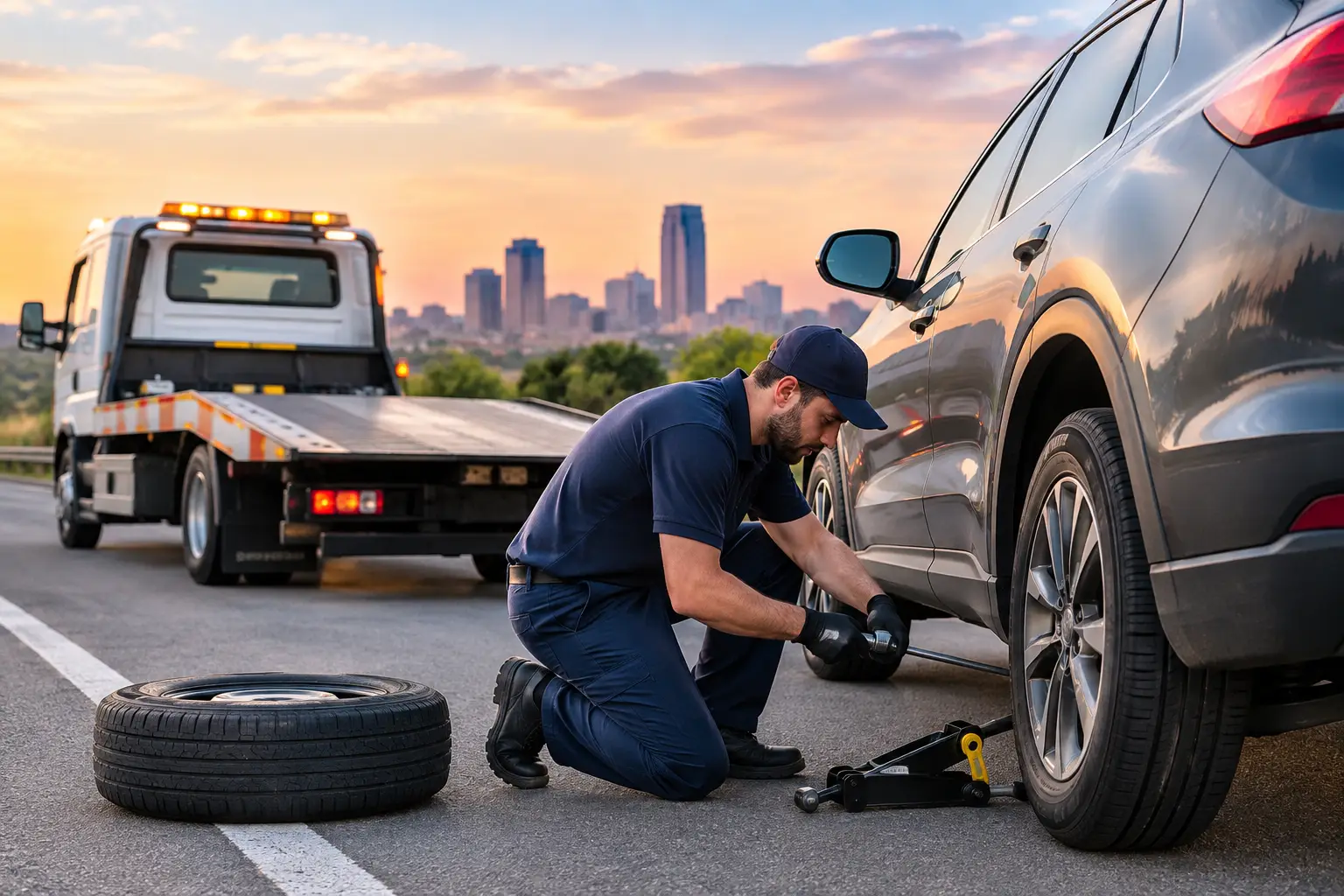
Some calls do not need a tow at all. A dead battery, flat tire, or lockout can often be handled on site. That is the fastest fix when the vehicle itself is otherwise fine.
But there is a line where roadside help stops making sense. If the tire damage is too severe, if the wheel is bent, if the car is stuck where it cannot be safely moved, or if the engine or electrical system has shut the vehicle down completely, towing is the better call. The goal is not just getting you moving for five more minutes. It is getting the vehicle handled safely so the problem does not get worse.
That is where clear communication matters. A driver dealing with a breakdown on US 75 or near Tulsa Hills usually wants one simple answer – can this be fixed here, or does it need to go on the truck? A straight answer saves time and avoids extra frustration.
Local conditions change the towing job
Flatbed towing in Tulsa is not just about the vehicle. It is also about where the vehicle is sitting when the call comes in.
High traffic areas create urgency. A disabled car near an exit ramp, a shoulder stop during rush hour, or a breakdown in a busy retail lot calls for quick loading and safe positioning. Tight apartment complexes, narrow neighborhood streets, and sloped parking lots can make access more difficult even when the distance of the tow is short.
Weather can change things too. Rain, heat, and icy conditions all affect traction, visibility, and loading angles. The route matters as much as the hook-up. A local operator who knows the common trouble spots around Riverside, Highway 169, or East Tulsa can usually assess the job faster and handle the move with fewer delays.
Why careful towing matters more than people think
Most customers are focused on one thing when they call – getting the vehicle moved. That makes sense. But the way it gets moved matters.
A careless tow can leave scrape marks under the front end, stress damaged suspension parts, or create problems with all-wheel-drive systems and EV components. Those issues may not show up until later. By then, what started as a straightforward tow becomes another repair bill and another delay.
That is why damage-free transport is not just a nice extra. It is the point of using a flatbed in the first place. Proper equipment and real experience reduce the chances of turning a bad situation into a more expensive one.
Tulsa Towing, powered by Neptune Towing, is built around that approach. The job is to show up, explain what is happening clearly, load the vehicle the right way, and get it where it needs to go without adding more stress to the day.
Flatbed towing Tulsa drivers usually need right away
Most people searching for towing are not planning ahead. They are standing next to a disabled vehicle, waiting in a parking lot, or trying to get out of traffic safely. They need to know a few things quickly.
They need to know the service handles normal breakdowns and accident towing. They need to know low-clearance cars, trucks, and EVs can be moved without guesswork. They also need to know the truck is coming from a local service area, not from two cities away.
That is why focused local coverage matters. When the service area is centered on Tulsa and nearby places like Jenks, Bixby, and Broken Arrow, dispatch is more practical and the routes are more familiar. It keeps the process simpler for the customer and more efficient on the towing side.
If your vehicle cannot be driven safely, if it has accident damage, or if you simply do not want to risk extra wear by moving it the wrong way, flatbed towing is usually the right call. The helpful thing to remember is simple – when the vehicle matters, how it gets towed matters too.