A breakdown in Jenks usually does not happen at a good time. It happens before work, after school pickup, in a busy lot, or on the shoulder when traffic is moving too fast. When you need a Jenks flatbed tow truck service, what matters most is simple – a truck that gets there fast, clear communication, and careful handling so your vehicle does not end up with more problems than it started with.
Flatbed towing is the right call for a lot of vehicles and situations, especially when the goal is damage-free transport. That includes cars that will not start, vehicles with suspension or tire damage, accident recovery, low-clearance cars, trucks that should not be pulled by the wheels, and electric vehicles that need proper loading. The job is not just getting a vehicle moved. The job is getting it moved safely.
Why flatbed towing makes sense in Jenks
Jenks drivers deal with a mix of road conditions and traffic patterns that make proper towing more important than people think. A vehicle may be stuck in a tight apartment lot, disabled near a busy intersection, or sitting in a shopping center where there is not much room to work. In those situations, a flatbed gives the driver more control over loading and transport.
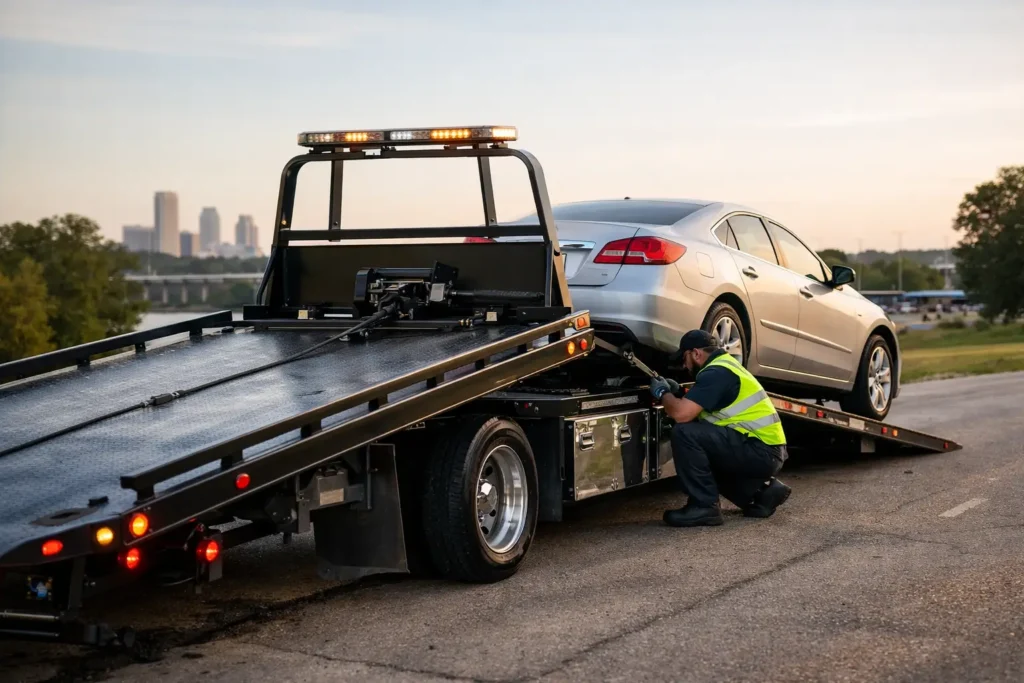
With a wheel-lift tow, some vehicles can be moved safely for short distances, but it depends on the condition of the car and the type of drivetrain. With a flatbed, the entire vehicle is loaded off the ground. That matters when a car has front-end damage, locked wheels, a flat tire that cannot roll, or underbody clearance issues. It is also the safer option for many all-wheel-drive vehicles and EVs.
There is a big difference between hooking up a vehicle and actually knowing how to load it without scraping a bumper, stressing a damaged suspension, or mishandling an electric vehicle. That is where experience matters. The equipment helps, but the operator still has to know what he is looking at before the winch starts pulling.
When to call a Jenks flatbed tow truck service
Some calls are obvious. If you were in an accident and the vehicle is not safe to drive, it needs to be loaded and moved. If the engine failed, the transmission went out, or the battery issue left you stranded and a jumpstart will not solve it, you need a tow.
Other calls are less obvious but just as valid. Maybe your Tesla or other EV is showing a fault and should not be rolled. Maybe your car is sitting too low for a standard tow setup. Maybe you have a truck that needs to go to a local repair shop, but you do not want to risk drivetrain damage by towing it the wrong way. Those are all solid reasons to request a flatbed.
This also applies when a vehicle is stuck in a garage entrance, backed into a curb, or sitting on a damaged wheel after hitting road debris. The car may look movable at first glance, but forcing it to roll can make the problem worse. A careful on-site assessment saves trouble.
What proper flatbed towing looks like
A good tow starts before the truck ever moves your vehicle. First comes the basic assessment. Is the car in gear? Are the wheels locked? Is there suspension damage? Does it sit low enough to need extra care on approach? Is it an EV with specific loading points or transport precautions?
From there, the loading method has to match the vehicle. Sometimes that means using soft straps in the right places. Sometimes it means using skates or dollies if a wheel will not turn. Sometimes it means taking more time because rushing the angle onto the bed is how bumpers get scraped and undercarriages get damaged.
This is where flatbed towing stands apart. The goal is not speed at any cost. The goal is getting the vehicle onto the bed securely and transporting it without adding avoidable damage. Once loaded, the vehicle is fully supported, which makes transport more stable through city traffic and turns.
Flatbed towing for EVs, trucks, and low-clearance cars
Not every tow job is the same, and the vehicle type changes the approach.
Electric vehicles need special attention because improper towing can create expensive problems. Many EVs should not be dragged or moved with drive wheels on the ground. They need to be loaded correctly, secured at proper points, and transported in a way that protects the drivetrain and battery system. That is especially true with Tesla models and other vehicles that have low clearance and specific towing guidance.
Heavy-duty pickups bring a different challenge. Size and weight matter, but so does balance. A truck with steering damage or a blown tire may need extra setup to load safely. The same goes for work trucks carrying equipment or vehicles with modified suspension.
Low-clearance cars are another common issue. Sports cars, luxury sedans, and even some daily drivers can scrape easily if the operator does not manage the approach angle correctly. Flatbed towing is often the safest answer, but only if the loading is done carefully.
Local response matters when traffic is already a problem
In and around Jenks, response time is not just about distance. It is about knowing the routes, traffic flow, and where loading can be done safely. A disabled vehicle near Riverside, a breakdown on the way toward US 75, or a stall in a crowded retail lot all require a different approach.
Local experience helps with the practical parts of the job. Where can the truck position without blocking traffic more than necessary? Is there enough room to winch straight onto the bed, or does the vehicle need to be adjusted first? Can the issue be handled on site with roadside assistance, or is towing the smarter move? Those decisions are easier when the operator works these roads every day.
That local focus also helps keep communication straightforward. If a driver says the vehicle is near a certain intersection, parking area, or apartment entrance, a local tow operator usually knows the setup already. That cuts down on confusion when the customer is already stressed.
More than just transport
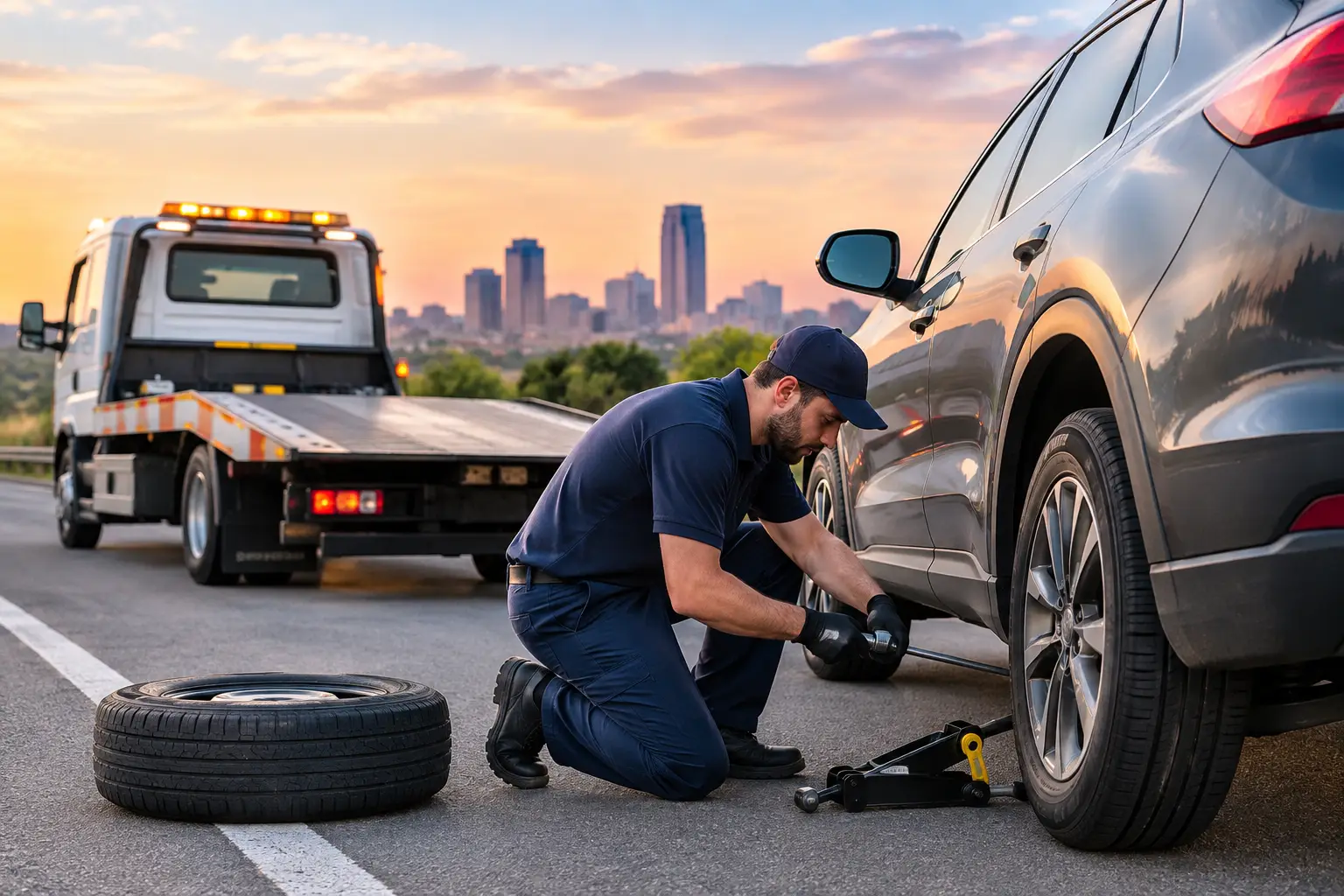
A lot of customers search for a tow truck when what they really need is help figuring out whether the vehicle can be moved at all. Sometimes the answer is a jumpstart, a tire change, or a winch-out if the car is stuck and otherwise fine. Other times, the safest option is towing it directly to a repair shop or dealership.
That is why clear communication matters. Nobody wants to explain the same problem three times or wonder what kind of truck is showing up. A straightforward service call should tell you whether the vehicle likely needs a flatbed, what information helps speed up dispatch, and where the vehicle can be taken once it is loaded.
For many drivers, the main concern is avoiding extra hassle. They want the car picked up, handled correctly, and delivered where it needs to go without added confusion. That is exactly how this type of service should work.
Choosing the right Jenks flatbed tow truck service
If you are comparing towing options while standing next to a disabled vehicle, keep it simple. You want a company that uses proper flatbed equipment, understands damage-free loading, and communicates clearly about arrival and transport. You also want someone who knows the difference between towing a standard sedan, a heavy pickup, and an EV.
It also helps to work with a service focused on direct towing and roadside help rather than adding unnecessary complications. Owner-operated experience makes a difference here because the person handling the job understands the work, not just the dispatch side of it.
Tulsa Towing, powered by Neptune Towing, handles flatbed towing and roadside calls with that kind of practical approach across Tulsa and nearby areas like Jenks when availability allows. The focus stays on safe loading, fast dispatch, and getting the vehicle where it needs to go.
When your vehicle will not move, you do not need a sales pitch. You need someone who answers clearly, shows up prepared, and treats your car like it is worth protecting.