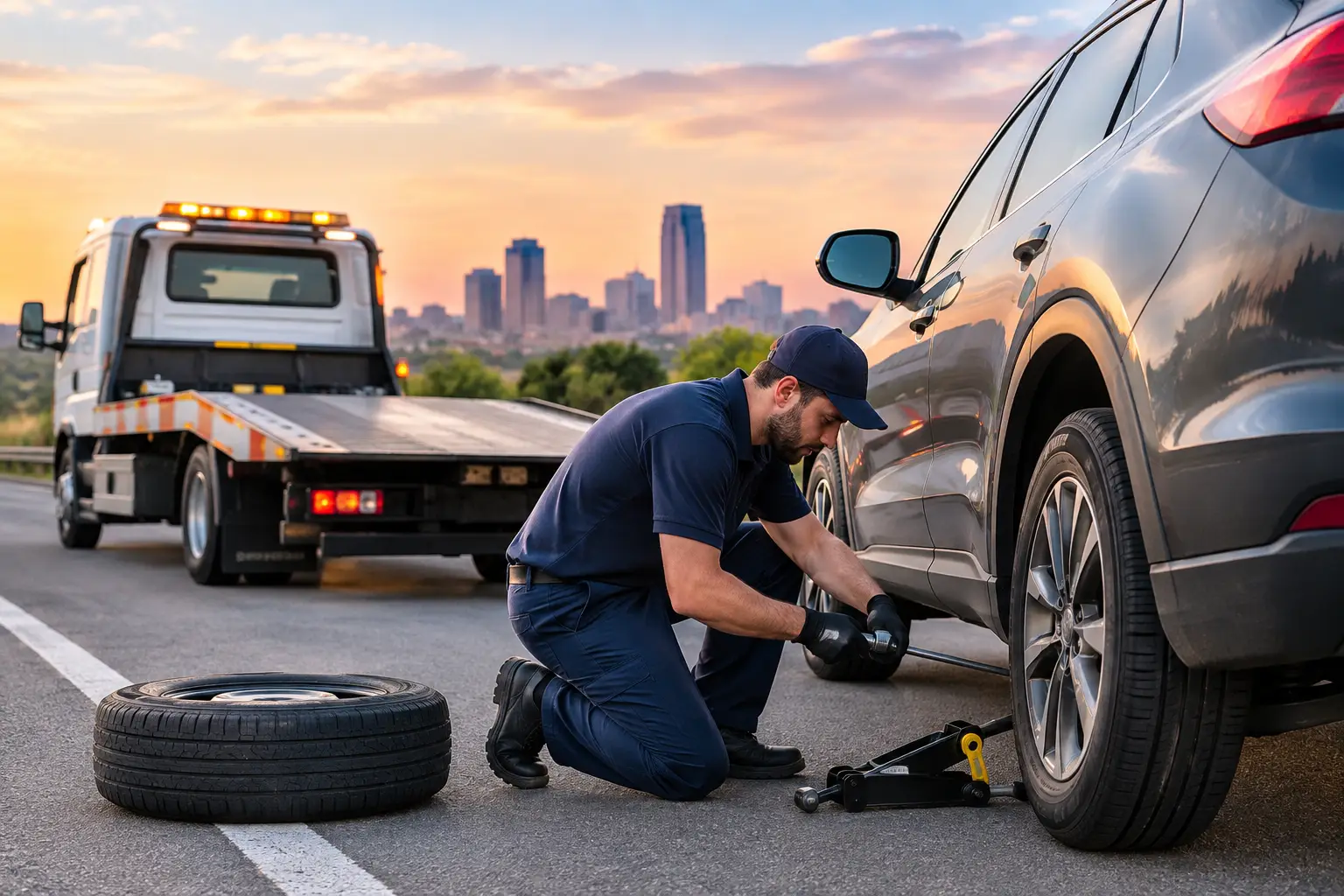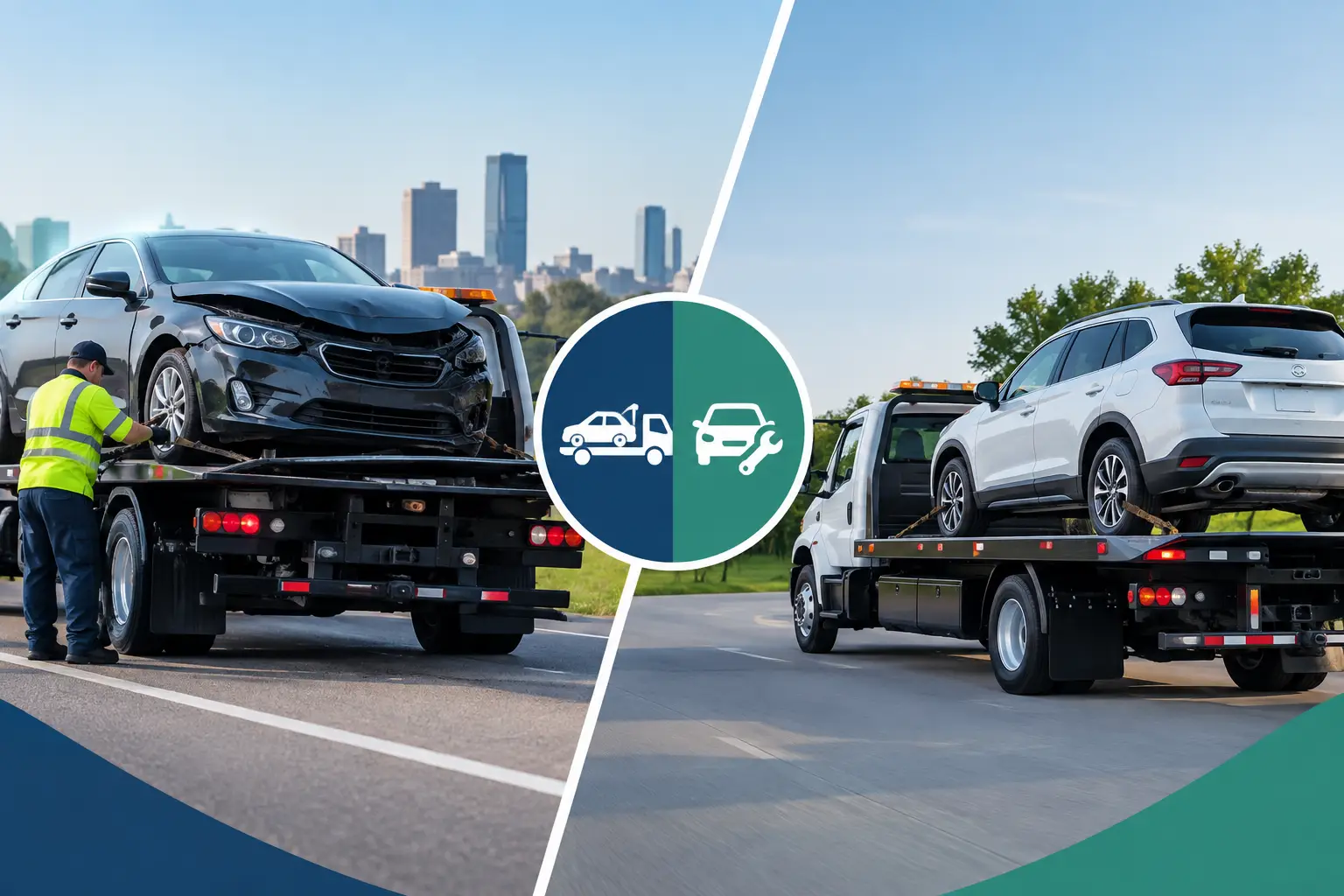

A Tesla on the side of the road is not the same job as towing a gas sedan with a dead starter. Low clearance, battery systems, electronic parking features, and limited safe towing methods all change how the vehicle needs to be handled. That is why Tesla towing Tulsa drivers call for should be done with the right equipment, clear loading steps, and a driver who understands how EVs need to move.
When a Tesla will not drive, the main goal is simple. Get it loaded without scraping the front end, stressing the tires, or dragging the vehicle in a way that can create bigger problems. In real towing work, that comes down to using a flatbed, taking your time on the setup, and knowing how to handle the car where it sits, whether that is in a parking lot, on a shoulder, in a garage, or at home.
Why Tesla towing in Tulsa needs a different approach
A lot of drivers assume a tow is a tow. It is not. Teslas sit low, they rely on electronic systems, and they are not vehicles you want pulled down the road with the drive wheels on the ground. If the vehicle has lost power or is stuck in park, the loading process can take extra care before it even starts rolling.
That matters even more when the breakdown happens in places like I-44, US 75, Memorial, or Tulsa Hills, where traffic and limited space make every step more important. A rushed hookup in a tight area is where damage usually happens. Careful Tesla towing means slowing the process down enough to do it right while still moving efficiently.
The safest method in most cases is flatbed towing. It keeps the vehicle fully off the road surface and gives better control when loading and unloading. For electric vehicles, that is the standard you want, not an afterthought.
What can go wrong with improper Tesla towing Tulsa calls
Most Tesla owners are not calling for a tow because they have time to compare methods. They are dealing with a disabled vehicle, traffic, weather, or a parking issue and need help fast. But the way the car is moved still matters.
If the vehicle is dragged, loaded at the wrong angle, or pulled without the right setup, you can end up with bumper damage, wheel damage, underbody contact, or problems tied to how the vehicle was forced to move. Low front lips and side trim do not leave much room for sloppy loading. Even getting a Tesla onto the bed can require the right ramp angle and extra care if the vehicle is sitting especially low.
There is also the issue of access. Some Tesla towing jobs are straightforward roadside pickups. Others happen in apartment complexes, office garages, tight driveways, or shopping centers where there is not much room to work. That is where experience matters more than sales talk. A tow operator needs to look at the space, the vehicle condition, and the safest path onto the bed before touching the car.
Common reasons a Tesla needs towing
Not every Tesla tow starts with a major failure. Some calls are simple, but the vehicle still needs professional transport.
A dead 12V system can leave the vehicle unable to respond normally. A depleted main battery can stop the car where it sits. Flat tires, collision damage, suspension issues, and vehicles that will not shift as expected are also common towing situations. Sometimes the problem is not even mechanical. The vehicle may be parked in a place where it cannot be safely driven out, or it may need transport to a local service center or repair shop after another issue has already been diagnosed.
Roadside assistance can solve some problems on site, but not all of them. If the Tesla cannot be moved safely under its own power, towing is the next step. At that point, the priority shifts from diagnosis to safe transport.
How a proper Tesla tow usually works
For most Tesla towing jobs, the process starts with confirming the vehicle location, condition, and whether it can roll. That helps determine the safest loading plan before the truck arrives. If the Tesla is in a garage, against a curb, or disabled in traffic, those details change the approach.
Once on site, the vehicle is assessed before loading starts. The operator checks position, clearance, wheel condition, and whether the car can be placed into a mode that allows controlled movement. If it cannot, the loading setup has to account for that without forcing the vehicle or scraping it into motion.
A flatbed is then used to bring the vehicle up at the safest angle possible. The focus is on controlled loading, not speed for the sake of speed. Once the car is secured, it is transported fully off the ground to the destination the customer has requested, whether that is a dealership, repair shop, home, or another local location.
That may sound basic, but this is where careful towing separates itself from careless towing. Most damage does not happen while driving down the road. It happens during approach, loading, tie-down, and unload.
When roadside help may be enough
Not every Tesla problem needs a tow truck bed. In some cases, roadside help can get the vehicle moving again.
If the issue is a simple flat tire in a safe location, the right tire service may be enough. If access to the car is the problem, a lockout call can help. Some no-start situations tied to low-voltage issues may also need an on-site response first. But if there is any doubt about whether the Tesla can drive safely, towing is usually the better call.
That is especially true after an accident, when warning messages are active, when the vehicle will not engage properly, or when the battery level has dropped too far to reach a charger safely. Trying to force a short drive can turn a manageable problem into a more expensive one.
Choosing a Tesla towing service in Tulsa
If you need a tow for a Tesla, the right question is not just who can get there. It is who can load and transport the vehicle the right way.
Look for a company that uses flatbed equipment and speaks clearly about EV handling. You want direct answers, not vague promises. Ask whether they handle Teslas regularly, whether the vehicle will be fully loaded onto a bed, and where they can take it. If the conversation feels rushed or unclear, that is worth paying attention to.
A local service also matters. In Tulsa, response time depends a lot on traffic, truck location, and knowing the area. A driver familiar with downtown access points, Riverside traffic, apartment layouts, and major corridors can usually make the whole process smoother. That is not marketing language. It is just how city towing works.
Tulsa Towing, powered by Neptune Towing, handles Tesla transport with the same straightforward approach used for any vehicle that needs careful loading – proper equipment, damage-free towing, and clear communication from dispatch to drop-off.
What to do while waiting for the tow truck
If your Tesla is disabled in a safe place, stay with the vehicle if conditions allow and keep your phone nearby. If you are on the shoulder of a busy road or in an unsafe traffic area, your safety comes first. Move to a safer location away from traffic if possible.
It helps to have your exact location ready, along with the vehicle model and a simple description of what happened. Let the towing company know if the Tesla is stuck in a garage, has a flat, will not shift, or has gone fully unresponsive. That saves time and helps the driver arrive prepared.
If the car is in a tight space, do not keep trying random fixes while you wait. A repeated attempt to move a disabled vehicle can make loading harder or create more risk. In most cases, the best move is to leave it as is and let the tow operator work from its current position.
Tesla towing Tulsa drivers can count on when it matters
When a Tesla breaks down, the towing part should not add more problems. The vehicle needs a flatbed, a careful loading process, and someone who understands that EV towing is not guesswork. Whether the car is stuck in South Tulsa, disabled near Broken Arrow, or sitting in a downtown garage, the right approach stays the same – handle it carefully, communicate clearly, and get it where it needs to go without unnecessary stress.
If you ever need Tesla towing in Tulsa, the safest choice is the company that treats the job like it matters before the wheels ever start moving.