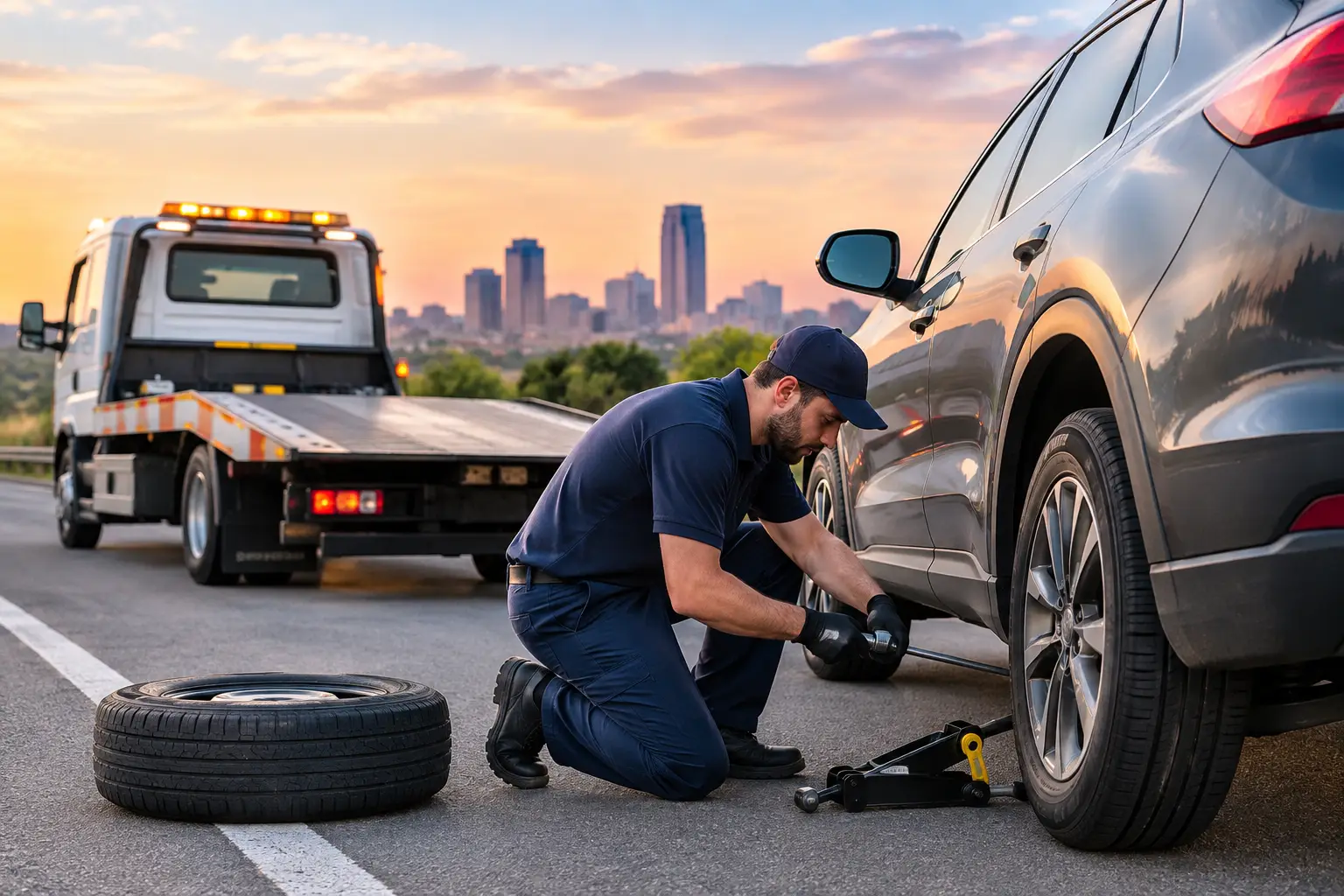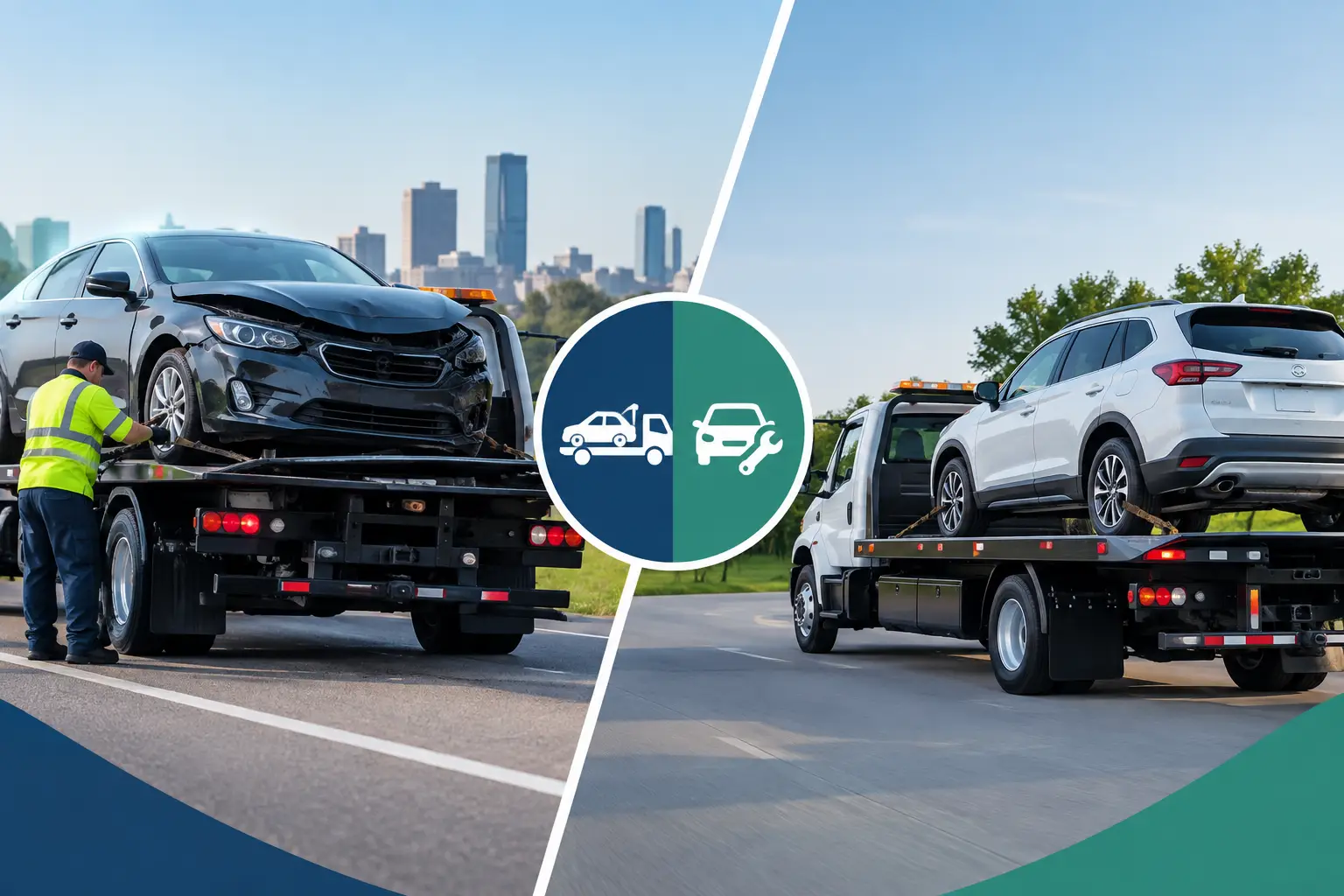
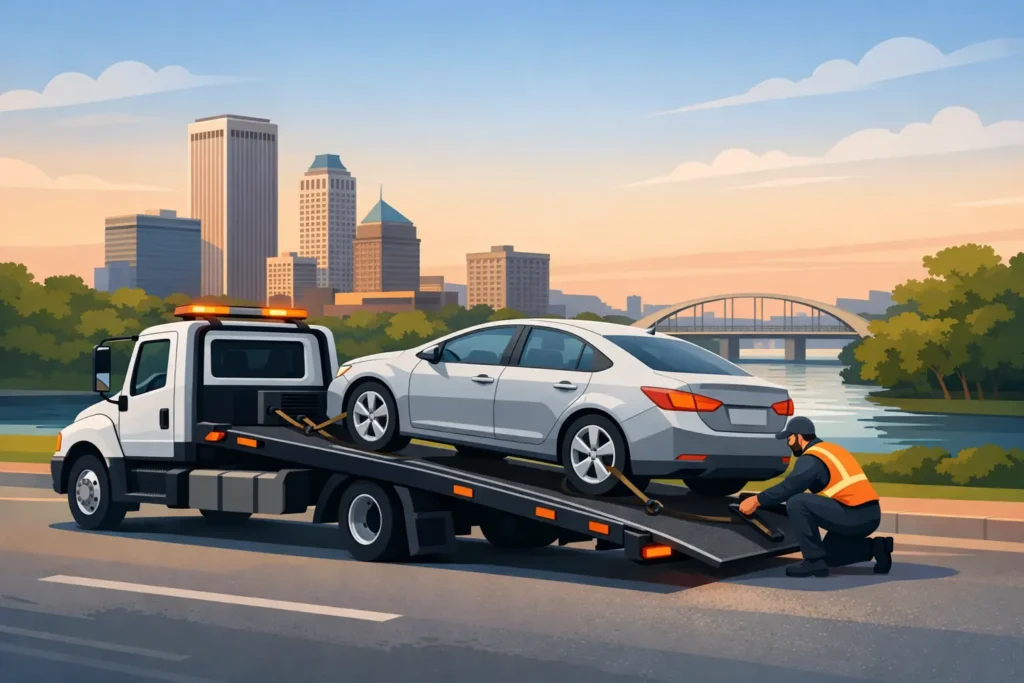
A flatbed tow truck review matters most when your car is already disabled and you do not have time for guesswork. If your vehicle is stuck on I-44, parked nose-down in a garage, or sitting after a collision, the question is simple – will this truck move it safely without adding damage?
For most everyday drivers, a flatbed is the safer option because the entire vehicle rides off the ground. That reduces risk to the tires, transmission, suspension, bumper, and underbody. It also gives the operator more control during loading, which matters a lot for low-clearance cars, all-wheel drive vehicles, trucks, and electric vehicles.
That does not mean every flatbed tow is the same. The truck itself matters, but the bigger difference is how it is used. A well-equipped flatbed in experienced hands solves problems cleanly. The same truck used carelessly can still scrape a front lip, stress a wheel, or mishandle a disabled EV.
Flatbed tow truck review: what drivers should actually care about
Most people looking up a flatbed tow truck review are not comparing paint, chrome, or brand logos on the truck. They want to know whether flatbed towing is worth asking for and what makes one tow safer than another.
The main advantage is straightforward. A flatbed carries the whole vehicle on the deck instead of pulling it with two wheels on the road. That matters if the car cannot roll freely, if it has driveline issues, or if the vehicle sits too low for rough loading angles. It also helps after an accident, when wheel damage or suspension damage makes any partial tow a bad idea.
There is also less uncertainty during transport. When a vehicle is fully loaded and secured on a flatbed, road contact is removed. That means fewer variables on turns, bumps, and stop-and-go traffic. In busy parts of Tulsa, where towing may involve highways, surface streets, and tight shop lots, that control is a real benefit.
Why flatbeds are usually the better choice
A flatbed is often the right call because it puts protection first. If a car has low ground clearance, aftermarket wheels, a damaged tire, or an unknown mechanical issue, lifting only one end can create more problems. A flatbed avoids most of that by keeping the vehicle completely on the bed.
This is especially true for all-wheel drive vehicles and electric vehicles. With those, the wrong towing method can do expensive damage fast. Some drivers know this already. Others only find out after the fact. A proper flatbed setup removes a lot of that risk because the vehicle is transported, not dragged.
It also works better in real situations that are not perfectly lined up. Maybe the car is parked at an angle in an apartment complex. Maybe it is dead in a tight retail lot near Memorial. Maybe the front wheel is broken after a collision. Flatbeds give more loading options when the scene is awkward, and awkward scenes are common.
Where a flatbed makes the biggest difference
Low-clearance cars are a clear example. Without the right deck angle, ramps, and loading approach, the front bumper or undercarriage can scrape before the car is even halfway up. With proper setup, the bed is lowered, the angle is managed, and the car is brought on gradually.
Heavy-duty pickups are another. Weight distribution matters, tie-down points matter, and the truck has to be loaded with balance in mind. The same goes for EVs, including Tesla models, where handling and securement need to follow the vehicle’s design rather than a one-size-fits-all approach.
What separates a good flatbed tow from a bad one
The truck is only part of the review. The operator’s judgment is what customers actually feel.
A good flatbed tow starts with assessing the vehicle before loading. Can it roll? Is a wheel locked up? Is there body damage that changes the angle? Is the vehicle too low for a standard pull? Those answers affect how the bed is positioned, how the winch line is used, and where the vehicle is secured.
Good loading is controlled and patient. There should not be a rush to yank the car onto the deck. If the angle is wrong, it gets adjusted. If clearance is tight, the approach changes. If the car is stuck in a garage or narrow lane, the operator works the scene instead of forcing the vehicle through it.
Securement matters just as much. A vehicle should sit stable on the deck with proper tie-downs, not just enough to move it a few miles. The goal is to keep it planted from pickup to drop-off, whether that is a nearby repair shop, dealership, or home.
Signs the towing process is being handled correctly
You can usually tell in the first few minutes whether the tow is being handled with care. The operator should look over the vehicle, explain what needs to happen, and choose a loading method that fits the situation. Clear communication is a good sign because it usually means the job is being thought through, not improvised.
You should also see attention to small details. Deck angle, ramp placement, wheel position, and tie-down points are not minor things. They are the difference between damage-free towing and a preventable problem.
The trade-offs in any flatbed tow truck review
Flatbeds are usually the safer option, but there are trade-offs. Loading can take a little longer than a quick wheel-lift hookup, especially if the vehicle is blocked in, damaged, or not rolling. In an emergency, that extra setup time is often worth it because it reduces the chance of making things worse.
There are also cases where access is the real challenge, not the tow type. Some garages, alleys, or tight residential spots limit what any truck can do. In those situations, the right answer depends on space, vehicle condition, and the safest path out. That is why experience matters more than blanket rules.
So if you are reading a flatbed tow truck review looking for a simple yes or no, the honest answer is this: flatbeds are usually the better choice, but the result still depends on equipment, technique, and the specific scene.
Flatbed tow truck review for local roadside situations
Around Tulsa, towing jobs are rarely happening in ideal conditions. A breakdown on US 75 is different from a dead car in a parking garage, and both are different from accident recovery on a crowded city street. Flatbed towing works well across all of those situations because it offers more control once the vehicle is on the deck.
That control matters when traffic is moving fast or when the vehicle needs to go straight to a local shop. It matters when rain hits, when the shoulder is narrow, or when the car cannot be rolled safely. In practical terms, a flatbed gives the driver and the operator fewer things to worry about once the vehicle is loaded.
This is also why owner-operated towing services tend to stand out. Hands-on experience shows up in the details – how the truck is positioned, how the vehicle is pulled, and how problems are handled when the scene is not easy. Tulsa Towing, powered by Neptune Towing, is built around that kind of straightforward flatbed work.
When to ask specifically for a flatbed
If your vehicle is all-wheel drive, electric, low to the ground, heavily damaged, or simply will not roll, ask for a flatbed. If you are worried about bumper clearance, underbody contact, or transmission damage, ask for a flatbed. If the vehicle needs to arrive at a dealership or repair shop in the same condition it is in now, ask for a flatbed.
That does not require you to know every towing term. You just need to explain what is happening. Say whether the car starts, whether a wheel is damaged, whether it is stuck in a garage, or whether it is an EV. A good operator can take it from there and choose the right loading approach.
When your vehicle is already having a bad day, the towing part should not add another problem. That is the real point of any flatbed review. Good flatbed towing is not about appearances. It is about getting the vehicle loaded correctly, transported safely, and delivered where it needs to go without extra damage or extra stress.