A car does not have to be totaled or completely dead to leave you stuck on the shoulder. A loose battery cable, a tire issue, a bad connection, or a simple no-start problem can turn a normal drive into a real safety problem fast. That is where minor mechanical roadside help matters. The goal is simple – figure out whether the issue can be handled safely on site or whether the vehicle needs to be moved without risking more damage.
For most drivers, the hard part is not knowing what counts as a small roadside problem and what has already crossed into tow truck territory. In real-world calls, the line is usually pretty clear once someone experienced looks at the vehicle. Some issues are quick fixes. Others may look minor at first but can get expensive if the vehicle is forced to move.
What minor mechanical roadside help usually covers
Minor mechanical roadside help generally means basic problems that can be checked or corrected at the vehicle without a full repair shop setup. It is not major engine work, transmission repair, or anything that requires taking the vehicle apart on the side of the road. It is practical help focused on getting the vehicle moving again if that can be done safely.
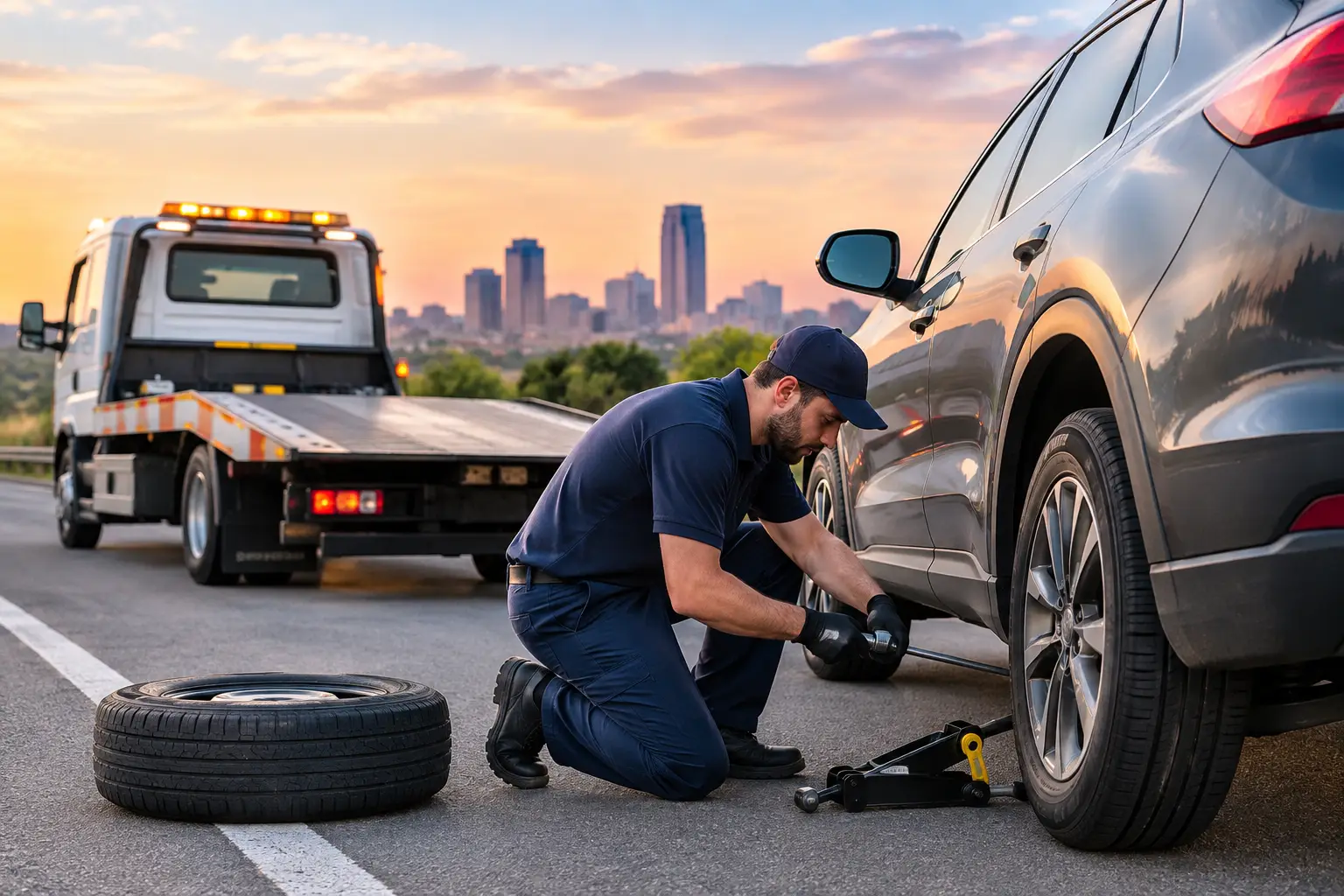
Common examples include a dead battery that needs a jumpstart, a flat tire that can be changed with a usable spare, a simple lockout, or a vehicle stuck in mud, a curb edge, or a parking lot situation where a winch-out is enough to get it free. Sometimes it also includes checking obvious issues like a loose battery terminal, a simple electrical connection problem, or a basic no-start condition that points to the need for towing instead of repeated restart attempts.
That last part matters. Good roadside help is not just about trying something and hoping it works. It is also about knowing when to stop, avoid extra damage, and load the vehicle properly.
When a small problem is not really small
A lot of roadside calls start with the customer saying the vehicle probably just needs a quick fix. Sometimes that is true. Sometimes it is not. If a car lost power in traffic, overheated, started smoking, began leaking fluid, or makes grinding or knocking sounds, that is usually beyond minor mechanical roadside help.
The same goes for a vehicle that will start but will not shift correctly, will not steer normally, or has wheel or suspension damage after hitting a pothole, curb, or debris. Trying to limp a vehicle like that down I-44 or US 75 can turn a manageable situation into a more serious repair bill.
This is where experience matters more than guesswork. A rushed decision on the roadside can cost more than the tow. If there is any doubt about whether driving is safe, moving the vehicle on a flatbed is usually the better call.
How roadside help decisions are made on scene
When a driver calls for help, the first question is not just where the vehicle is. It is what the vehicle is doing or not doing. A no-start in a driveway is different from a no-start in a busy lane near downtown. A flat tire in a store parking lot is different from a truck with front-end damage on the shoulder.
The first step is always to look at the actual condition of the vehicle and the location. Safety comes first. If the vehicle is sitting in fast traffic, on a blind curve, or in an unsafe shoulder position, the priority may be getting the scene under control and preparing for transport rather than trying a roadside fix.
After that, it comes down to what can realistically be handled without making things worse. If a battery jump is all that is needed, that is straightforward. If the spare tire is flat too, roadside service has limits. If a vehicle is stuck because of mud or a curb angle, a winch-out may solve it. If it is stuck because a control arm snapped, that is a towing job.
Minor mechanical roadside help vs. towing
There is no benefit in pretending every roadside problem can be solved on site. Some can. Some should not be.
Minor mechanical roadside help makes sense when the issue is isolated, easy to confirm, and safe to address where the vehicle sits. That usually means the vehicle can be returned to driving condition without disassembly, parts sourcing, or extended roadside work. It saves time, keeps the situation simple, and gets the driver moving again.
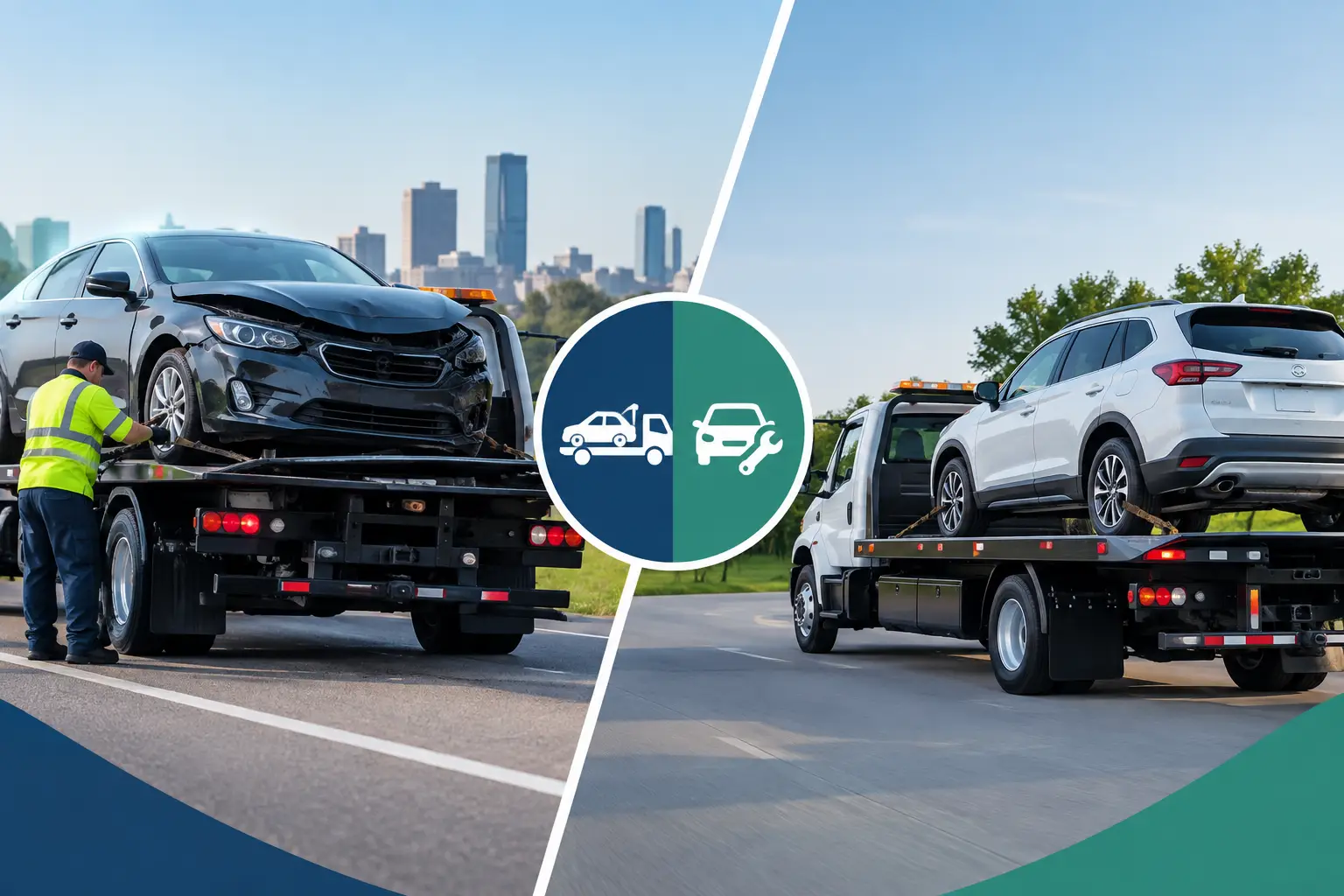
Towing makes more sense when the cause is unclear, the vehicle may have internal damage, or the location itself makes roadside work risky. It also matters when the vehicle is low clearance, all-wheel drive, electric, or otherwise needs careful handling. In those cases, proper equipment is not optional. It is what prevents one problem from becoming two.
For Tulsa area drivers, this comes up often in high-traffic corridors where a stranded car creates pressure to make a fast decision. Fast does not always mean drive it away. Sometimes the safest and quickest resolution is loading it correctly and taking it to the repair shop, dealership, or home.
Why proper equipment matters even on a simple call
People usually think equipment only matters for major wrecks or heavy towing. That is not how roadside work actually goes. A basic call can still go bad if the vehicle is handled carelessly.
A low car with a flat can scrape easily during loading if the operator does not account for clearance. An EV cannot be treated like a standard gas vehicle if it needs transport after a no-start issue. A pickup with steering or front tire damage may look drivable from a distance but still need controlled loading to avoid more damage.
That is why the right approach is not just showing up with a truck. It is showing up with the right truck and knowing how to handle the vehicle in front of you. Minor mechanical roadside help and towing overlap more than people think because both depend on judgment, safe positioning, and proper handling.
What drivers should do while waiting for help
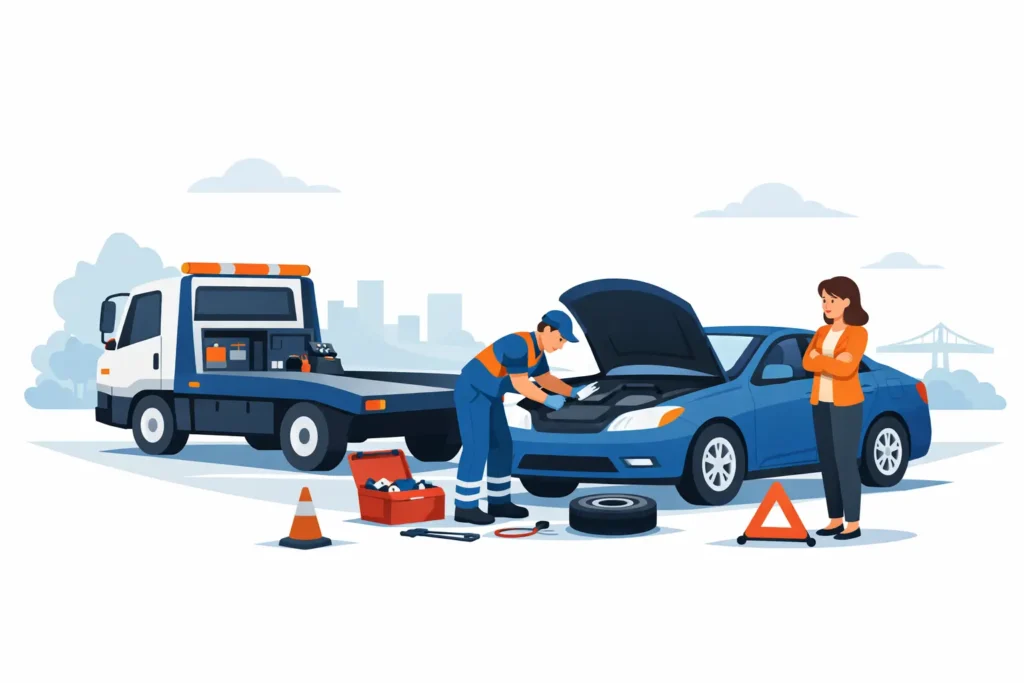
If the vehicle is disabled, get as far out of traffic as possible without forcing it to move. Turn on hazard lights. If it is safe to exit, move away from traffic and wait in a safer spot nearby. On busy roads, staying buckled inside may be safer than standing close to moving vehicles. It depends on the location.
If you call for help, be ready to describe more than just the address. Mention whether the vehicle starts, whether any warning lights came on, whether there is a flat tire, smoke, leaking fluid, or if the car is stuck and cannot move. Those details help determine whether the call is likely a minor roadside fix or a tow from the start.
It also helps to mention the vehicle type. A standard sedan, a lifted truck, and an electric vehicle do not get handled the same way. Clear information saves time and avoids the wrong setup showing up to the job.
Minor mechanical roadside help in real local conditions
In and around Tulsa, roadside calls are not all the same. A dead battery in a quiet neighborhood is one thing. A no-start on Memorial during traffic, a flat on Highway 169, or a disabled SUV near Tulsa Hills is different because location changes the risk level and the room available to work.
That local factor matters more than most people realize. Busy roads, narrow shoulders, parking garages, apartment lots, and uneven surfaces all affect whether a roadside issue can be fixed on site. A problem that would be simple in a driveway may need towing if the vehicle is stuck in a tight or unsafe position.
That is part of why local, owner-operated service tends to make decisions faster. The person handling the call has usually seen the road, the traffic pattern, or the kind of loading problem already. There is less guessing involved.
The value of a clear answer
When your vehicle is not moving, you do not need a long speech. You need to know what the problem likely is, what can be done on site, and whether the vehicle should be driven at all. Good roadside service keeps that part simple.
If the issue is minor and safe to handle, it should be handled. If it is not, you should be told that clearly and the vehicle should be moved the right way. Tulsa Towing, powered by Neptune Towing, works that way because most customers are not looking for extra talk. They want someone to show up, assess the situation correctly, and help them get off the roadside without added stress.
A small mechanical issue can still ruin a day, but it does not have to turn into a bigger problem. The right help is not about forcing a quick fix. It is about making the right call the first time and getting your vehicle where it needs to go safely.