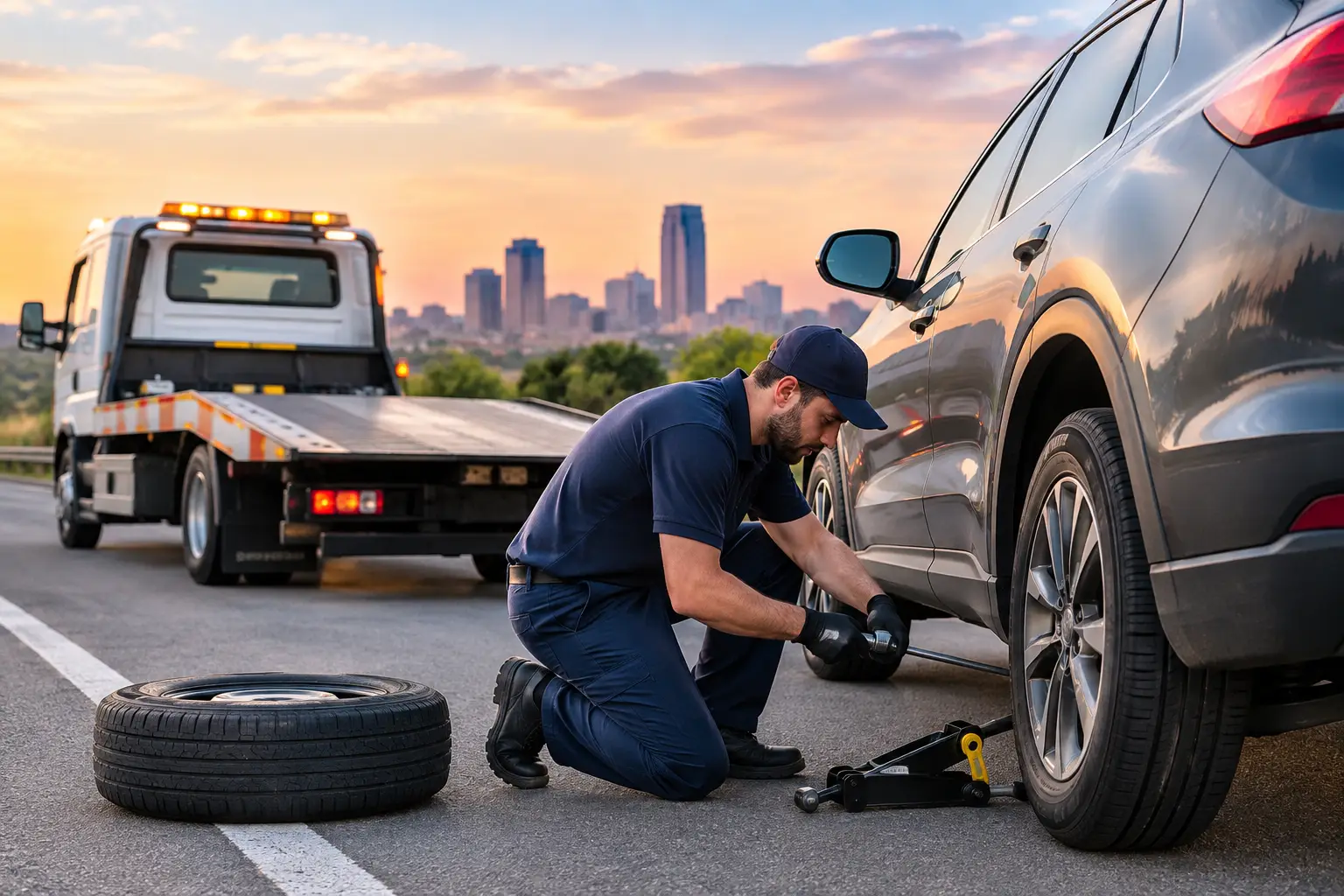
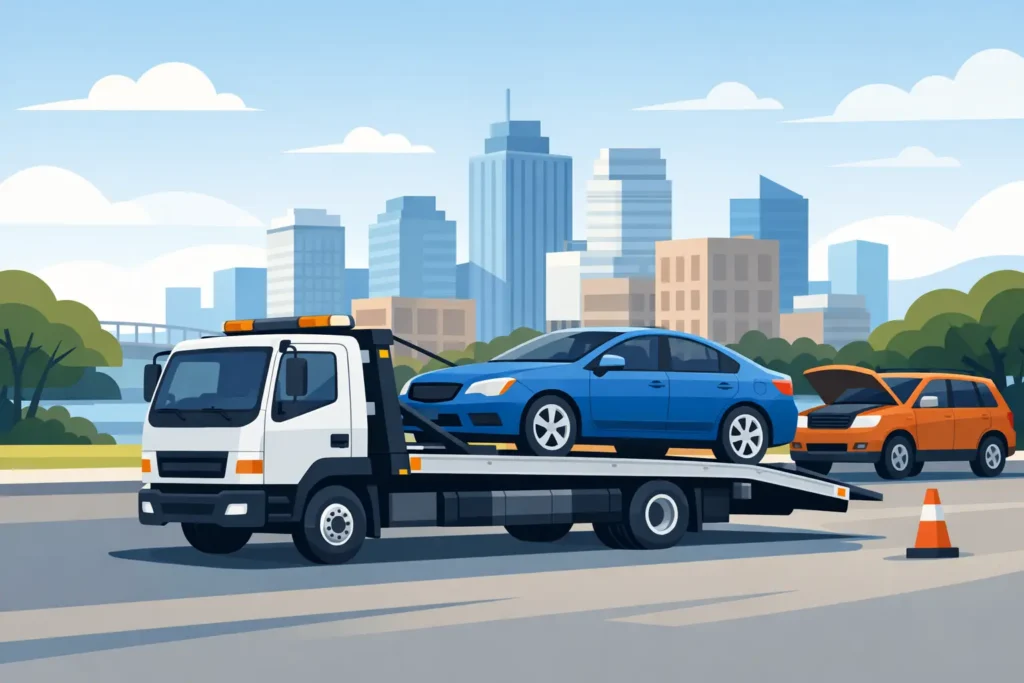
A lot of towing mistakes happen before the truck even starts moving. The wrong equipment gets sent, the vehicle gets pulled the wrong way, and a bad day gets more expensive. That is exactly why the best reasons to choose flatbed towing matter. If your car, truck, or EV needs to be moved, the way it is loaded and transported makes a real difference.
Flatbed towing is not just a nicer option. In many situations, it is the safer and smarter one. When a vehicle rides fully off the ground on a flatbed, there is less strain on tires, suspension, drivetrain components, and low-clearance body panels. That matters whether you are dealing with a breakdown on I-44, accident damage in Midtown, or a disabled vehicle in a parking garage.
The best reasons to choose flatbed towing
The biggest reason people ask for a flatbed is simple. They do not want more damage added to an already stressful situation. A flatbed keeps all four wheels off the road, which removes a lot of the risk that comes with dragging or partially lifting a vehicle.
That is especially important when the vehicle cannot roll correctly, has steering damage, or has been hit in a way that makes normal towing unsafe. In those cases, a flatbed is not just more careful. It may be the only proper way to move the vehicle without causing further problems.
It helps prevent damage during transport
This is the reason most drivers care about first, and for good reason. When a vehicle is loaded onto a flatbed, it is secured in place and carried rather than pulled behind the truck. That setup reduces wear and lowers the chance of scraping bumpers, stressing suspension parts, or creating tire issues during the tow.
For low cars, all-wheel-drive vehicles, luxury vehicles, and newer trucks, that extra protection matters. It also matters for everyday sedans and SUVs. A breakdown is bad enough. Most drivers do not want to arrive at the repair shop with fresh damage that was not there when the tow started.
It is the better choice for disabled vehicles
Some vehicles simply should not be towed with two wheels on the ground. If a car will not go into neutral, has a broken axle, locked wheels, steering problems, or heavy front-end or rear-end damage, a flatbed gives the operator more control.
Instead of forcing movement from a bad angle, the vehicle can be winched up carefully and positioned correctly on the bed. That reduces stress on damaged parts and helps avoid turning a repairable issue into a larger one. In real towing work, that difference shows up all the time.
Why flatbed towing makes sense for more vehicle types
Not every vehicle has the same towing needs. What works for one car may be the wrong call for another. One of the strongest reasons to choose flatbed towing is that it works well across a wide range of vehicles without relying on shortcuts.
It is safer for all-wheel drive and four-wheel drive vehicles
Many all-wheel-drive and four-wheel-drive vehicles need to be transported with all four wheels off the ground. If they are towed the wrong way, the drivetrain can be damaged. That can mean expensive repairs that had nothing to do with the original breakdown.
A flatbed avoids that risk. The vehicle is loaded completely onto the truck, secured, and moved without the wheels turning on the road. For many SUVs, crossovers, and pickups, that is the correct setup, not just a preference.
It works well for electric vehicles
EV towing needs more care than many drivers realize. Vehicles like Tesla and other electric models have specific towing requirements, and improper handling can create major issues. Ground clearance, battery placement, and manufacturer towing guidance all matter.
Flatbed towing is usually the right approach because it keeps the vehicle stable and fully supported. It also allows for more controlled loading, which matters if the car is shut down, locked in place, or parked in a tight area. For EV owners, this is one of the clearest reasons to ask for a flatbed from the start.
It protects low-clearance cars
Sports cars, luxury sedans, and many newer passenger vehicles sit lower than people expect. Even some standard cars can scrape if they are pulled at the wrong angle. With a flatbed, proper loading technique and the right equipment can help avoid damage to the front bumper, undercarriage, and side skirts.
This is one of those areas where experience matters. A flatbed alone is not enough if the loading is careless. The truck has to be positioned correctly, and the vehicle has to be brought up onto the bed without rushing the process.
Flatbed towing gives more control in difficult situations
Breakdowns rarely happen in ideal spots. A vehicle may be stuck on a shoulder, in a crowded lot, inside an apartment complex, or in a narrow downtown lane. The best reasons to choose flatbed towing are often easiest to see when the situation is awkward, damaged, or unsafe.
It handles accident scenes more cleanly
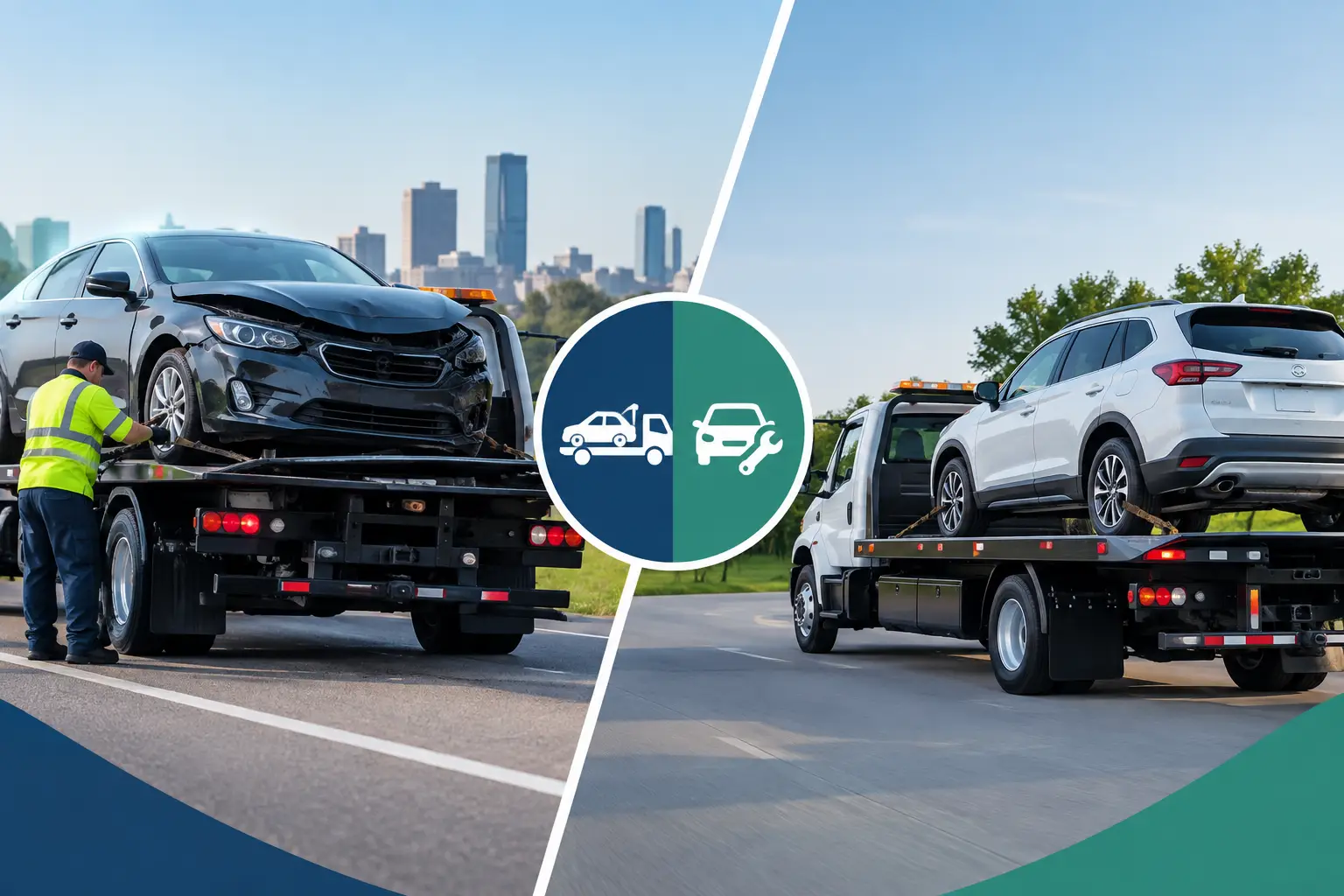
After a crash, the goal is to move the vehicle safely without adding confusion or damage. A flatbed allows the operator to load the vehicle as a unit instead of trying to tow it while parts are hanging loose or wheels are out of alignment.
That is useful for vehicles with impact damage, broken suspension, or body panels rubbing against tires. It also helps when glass, debris, or bent components make the car unstable. In those moments, controlled loading matters more than speed alone.
It is better for short city tows and shop delivery
A lot of towing jobs are not dramatic. The car just will not start, the transmission is failing, or the driver wants it taken from home to a repair shop. In those cases, flatbed towing is still a smart choice because it keeps the transport simple and damage-free.
That matters in city traffic, through stop-and-go streets, and on rough pavement where a vehicle being pulled behind a truck may bounce or track poorly if something is already wrong. For local transport to a dealership or repair facility, a flatbed keeps the process straightforward.
There are trade-offs, but they are usually worth it
Flatbed towing is not magic, and it is not necessary for every single vehicle in every single scenario. Some lighter-duty towing methods can work fine when the vehicle is in good condition and the setup is appropriate. The key is matching the equipment to the vehicle and the problem.
That said, when the goal is avoiding damage and reducing risk, a flatbed is often the better answer. It gives the operator more options, gives the vehicle more protection, and gives the customer more peace of mind. In a stressful situation, that matters.
The right equipment only helps when the operator knows how to use it
This part gets missed a lot. People hear flatbed and assume the job will automatically be handled correctly. The truth is that proper tie-down points, loading angles, wheel security, and vehicle positioning still matter.
A rushed or careless tow can still create problems, even with good equipment. That is why real towing experience matters as much as the truck itself. The best results come from careful handling, clear communication, and knowing how to deal with different vehicle types in real-world conditions.
When drivers usually request a flatbed
Most customers do not call asking for a technical explanation. They call because their car is stuck, damaged, or not safe to drive. In practice, flatbed towing is commonly the right fit for accident vehicles, no-start situations, EVs, low-clearance cars, heavy pickups, and vehicles with drivetrain or wheel issues.
It is also a good option when the owner simply wants the vehicle moved with the least amount of stress. That is a reasonable request. When your vehicle needs to get from the roadside to a shop, your driveway, or a dealership, you want it handled carefully the first time.
For drivers around Tulsa, Jenks, Bixby, and Broken Arrow, that often means choosing a service that uses proper flatbed equipment and knows how to load the vehicle without guesswork. Tulsa Towing is built around that kind of work, with a focus on damage-free transport and clear communication from dispatch to drop-off.
If your vehicle cannot move safely on its own, the main question is not just how fast it can be picked up. It is how safely it can be loaded, secured, and delivered where it needs to go. That is usually where flatbed towing proves its value.