A dead battery in a grocery store lot is one problem. A car sitting disabled on I-44 with traffic moving past it is another. In both cases, the first question is usually the same: what does roadside assistance include? The answer depends on what stopped your vehicle, whether it can be safely fixed where it sits, and whether driving it afterward would create a bigger problem.
Roadside assistance is meant to solve common no-start and no-move situations without automatically towing the vehicle. When the issue cannot be safely handled on site, the next step is a proper tow to your home, repair shop, or dealership. The goal is simple: get you out of an unsafe or inconvenient situation without guessing at your vehicle’s condition.
What Does Roadside Assistance Include?
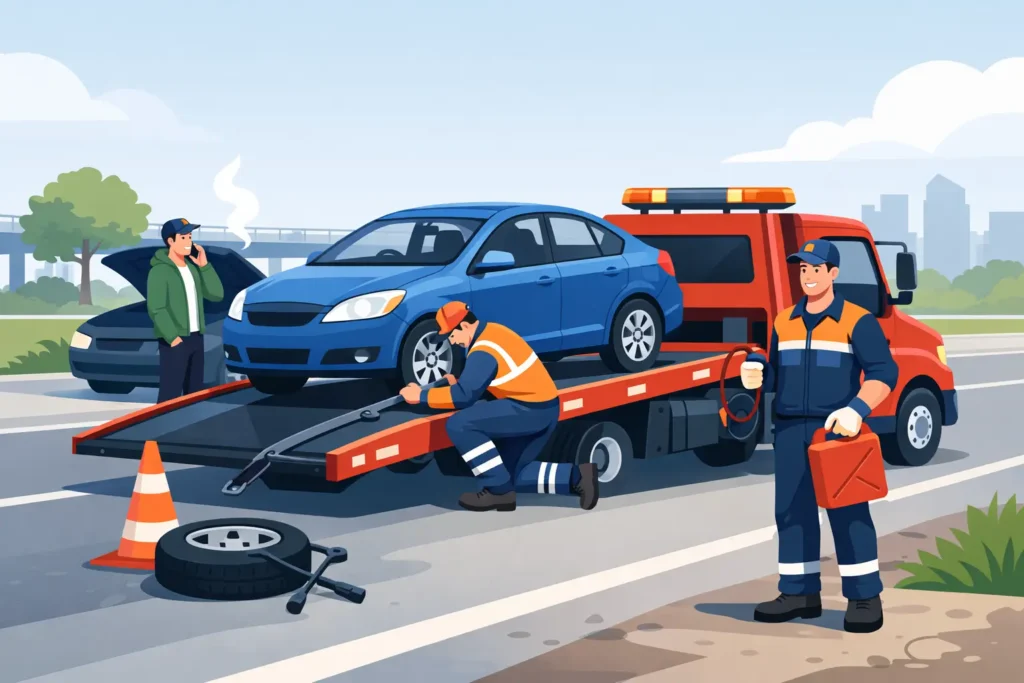
Most roadside calls involve a few common problems: a weak or dead battery, a flat tire, keys locked inside the vehicle, or a vehicle stuck where it cannot safely get traction. A trained operator assesses the situation, explains what can be done, and uses the right equipment for the vehicle and location.
Roadside assistance is not the same as repair work. It can get a vehicle moving again when the issue is straightforward, but it does not replace a mechanic when there is a mechanical failure, warning light, collision damage, overheating problem, or electrical issue that needs diagnosis.
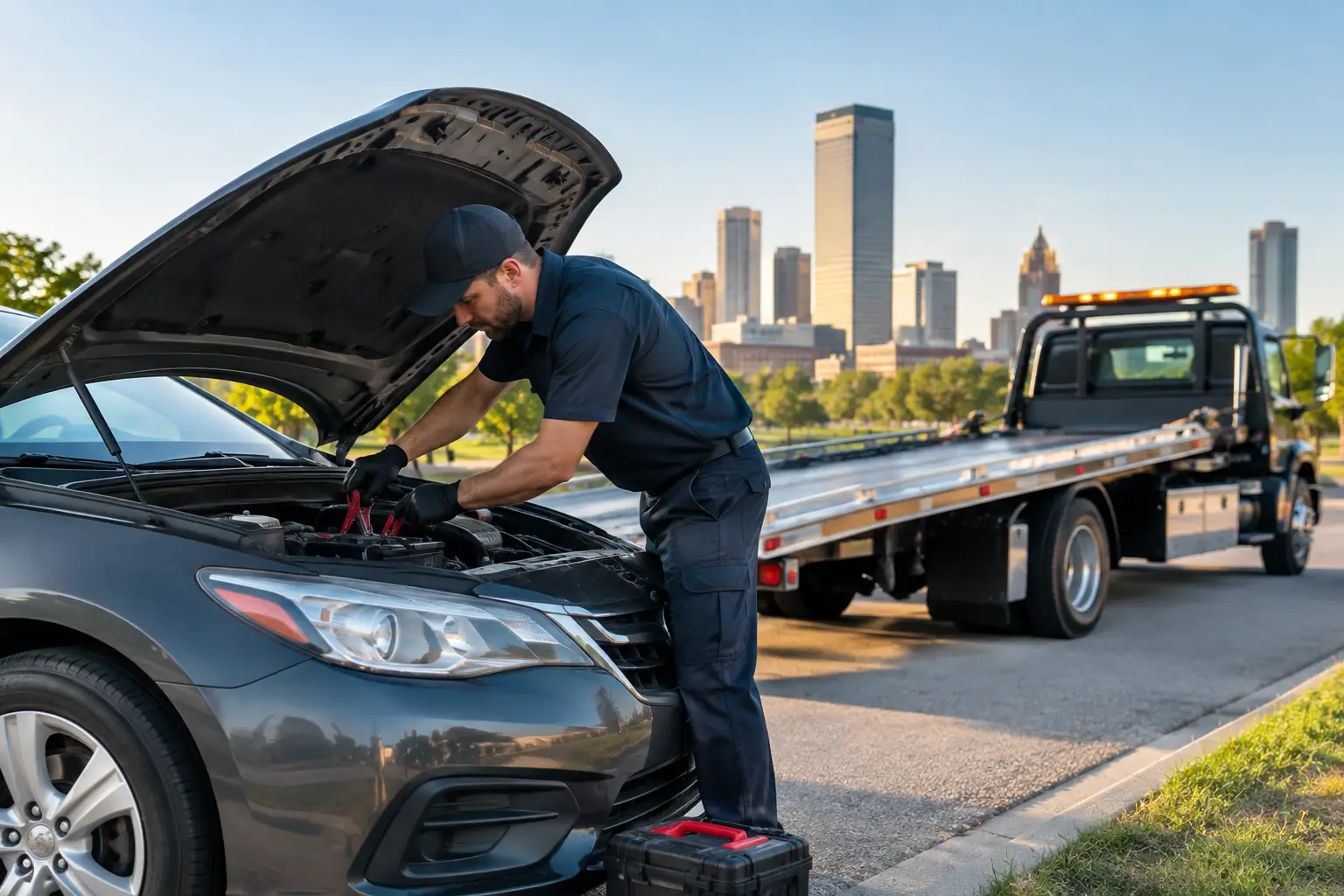
Jumpstarts for dead batteries
A jumpstart is one of the most common roadside services. If the battery is discharged because lights were left on, the car has sat for a while, or cold weather reduced its charge, a jump may be enough to get the engine running.
That does not always mean the battery is healthy. If the vehicle dies again soon after a jump, the battery, alternator, cable connections, or another electrical component may be the real issue. In that case, driving across town and hoping for the best can leave you stranded a second time. A tow may be the safer call, especially if the vehicle will not stay running.
Modern vehicles also need careful handling during a jumpstart. Battery locations, terminals, and electrical systems vary, particularly on hybrids and electric vehicles. The right connection points and procedure matter.
Flat tire help
Flat tire assistance may include installing your usable spare tire or helping determine whether the vehicle needs to be towed instead. If you have a properly inflated spare, the wheel is accessible, and the vehicle is parked in a safe place, a tire change can often get you back on the road.
There are situations where changing the tire at the roadside is not smart. Busy stretches of US 75, Highway 169, or a narrow shoulder leave little room to work safely. Some vehicles have no spare at all, and a damaged wheel, multiple flat tires, or seized lug nuts can turn a simple tire change into a tow job.
A temporary spare also has limits. It is not meant for long distances or highway speeds. It is usually best to drive directly to a tire shop once it is installed.
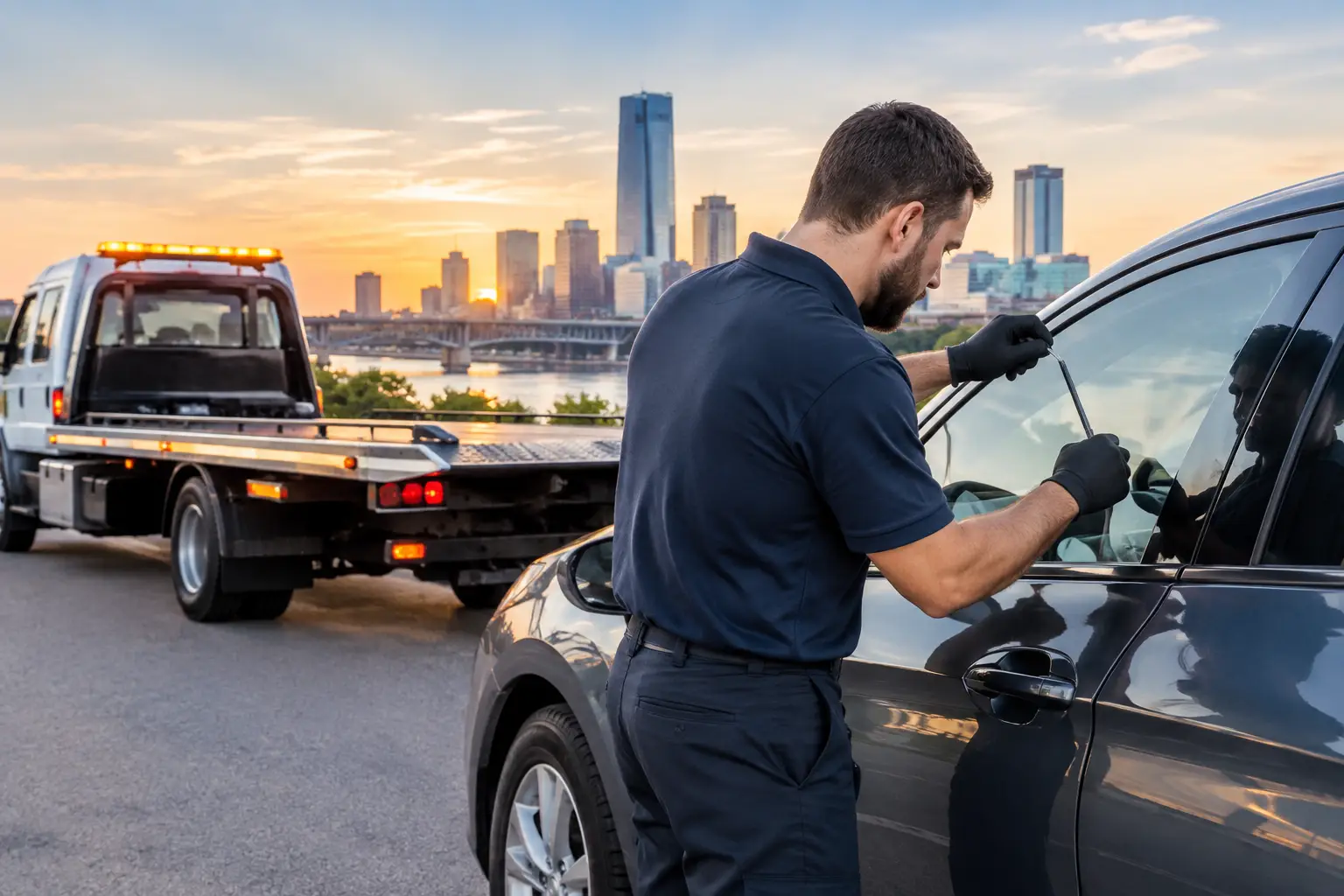
Vehicle lockout service
Lockout service helps when keys are left inside the vehicle, the fob is locked in the cabin, or a door will not open as expected. The job is to gain entry without damaging the door, weather stripping, window, or locking mechanism.
Not every lockout is identical. Some newer vehicles have complex security systems, and a broken key or failed electronic lock may require a locksmith or dealer after entry is gained. Still, for the everyday locked-keys-in-the-car situation, roadside assistance can save the time and expense of arranging a tow just to access your vehicle.
If a child or pet is locked inside, call 911 first. That is an emergency, not a standard lockout call.
Winch-out service for stuck vehicles
A winch-out is for a vehicle that is stuck and cannot move under its own power safely. This may happen after sliding into a ditch during rain, dropping a wheel off a driveway edge, getting caught in mud, or becoming hung up on a curb or uneven ground.
The operator anchors the recovery equipment correctly and pulls the vehicle to stable ground with controlled force. That work requires judgment. Pulling from the wrong point, using the wrong angle, or rushing a recovery can damage bumpers, suspension components, or the underside of the vehicle.
A winch-out does not necessarily mean your vehicle needs a tow afterward. If it is undamaged and drives normally, you may be able to continue. If it hit something, has fluid leaking, has steering damage, or cannot be driven safely, it should be transported instead.
When Roadside Assistance Turns Into a Tow
Roadside service has a clear limit: it is for problems that can be resolved safely at the vehicle’s location. If the vehicle still will not start after a jump, cannot hold air after a spare is installed, has accident damage, is overheating, or is making serious mechanical noise, towing is the practical next move.
This is especially true for low-clearance cars, all-wheel-drive vehicles, heavy-duty pickups, and EVs. A vehicle may need a flatbed because its drivetrain should not be pulled with the drive wheels on the ground, because it has underbody damage, or because it simply cannot roll safely. The right towing method protects the vehicle from additional damage on the way to the shop.
A tow is also the better choice when your location is unsafe. Working beside fast traffic, around a blind curve, or in a tight parking garage calls for a different plan than changing a tire in an open residential driveway. Getting the vehicle out of harm’s way comes first.
What Roadside Assistance Usually Does Not Include
Roadside assistance handles immediate mobility issues. It does not usually include full mechanical repairs, replacement batteries or tires, fuel system repair, collision repair, or diagnostic work that requires a shop.
It also cannot make an unsafe vehicle safe to drive. A jumpstart will not fix a failing alternator. A spare tire will not repair a bent wheel. Pulling a car out of mud does not tell you whether the suspension was damaged. Good roadside service means being honest about that line instead of sending a driver away with a problem that is likely to get worse.
Coverage can vary if you have roadside benefits through insurance, a vehicle manufacturer, a credit card, or a motor club. Those plans may set limits on towing distance, number of service calls, covered labor, or whether a particular service is included. Before assuming the call is covered, check the details of your plan. Even with coverage, the immediate concern should be getting the right help to the vehicle safely.
What to Tell the Dispatcher
Clear information helps get the right truck and equipment sent the first time. Start with your exact location, including the nearest cross street, highway direction, exit number, or recognizable business. On a major road, say whether you are on the shoulder, in a parking lot, or blocking a lane.
Then explain the problem in plain terms: the battery is dead, the tire is flat, the keys are locked in the car, or the vehicle is stuck. Mention the vehicle’s year, make, and model, whether it is electric or all-wheel drive, and any visible damage. If you are in a garage or tight space, say so before dispatch.
For Tulsa drivers, local route knowledge matters when traffic is backed up around Memorial, Riverside, or Tulsa Hills. The faster the location and situation are understood, the easier it is to decide whether roadside help will solve it or a flatbed is needed.
Tulsa Towing, powered by Neptune Towing, handles roadside calls with that same practical approach: assess the problem, handle what can be done safely on site, and tow only when the vehicle needs to go elsewhere.
If you are waiting for help, move to a safe spot away from traffic when possible, turn on hazard lights, and avoid standing near the roadway. A roadside problem is stressful enough. The right response is not always a quick fix, but it should always be a safe, clear next step.