A lot of all wheel drive damage happens after the breakdown, not before it. The vehicle has one problem, then it gets pulled the wrong way, loaded the wrong way, or dragged a few feet when it should not have been moved at all. That is why towing for all wheel drive needs to be handled carefully from the start.
If you drive an AWD vehicle and it will not move safely, the towing method matters just as much as the destination. Many drivers assume a tow is a tow. It is not. With all wheel drive, the wrong setup can put stress on the transmission, transfer case, differential, or drivetrain components even if the vehicle only needs to go a short distance.
Why towing for all wheel drive is different
An all wheel drive vehicle sends power to all four wheels, either full time or as needed. That system gives better traction in rain, rough roads, and changing conditions, but it also means the driveline is more connected than on a simple two wheel drive setup.
When one end of the vehicle is lifted and the other end stays on the ground, those wheels may still turn while other parts of the driveline do not. On some vehicles, that mismatch can create heat and internal stress fast. The result may not show up at the roadside. It can show up later as driveline noise, binding, warning lights, or expensive repair bills.
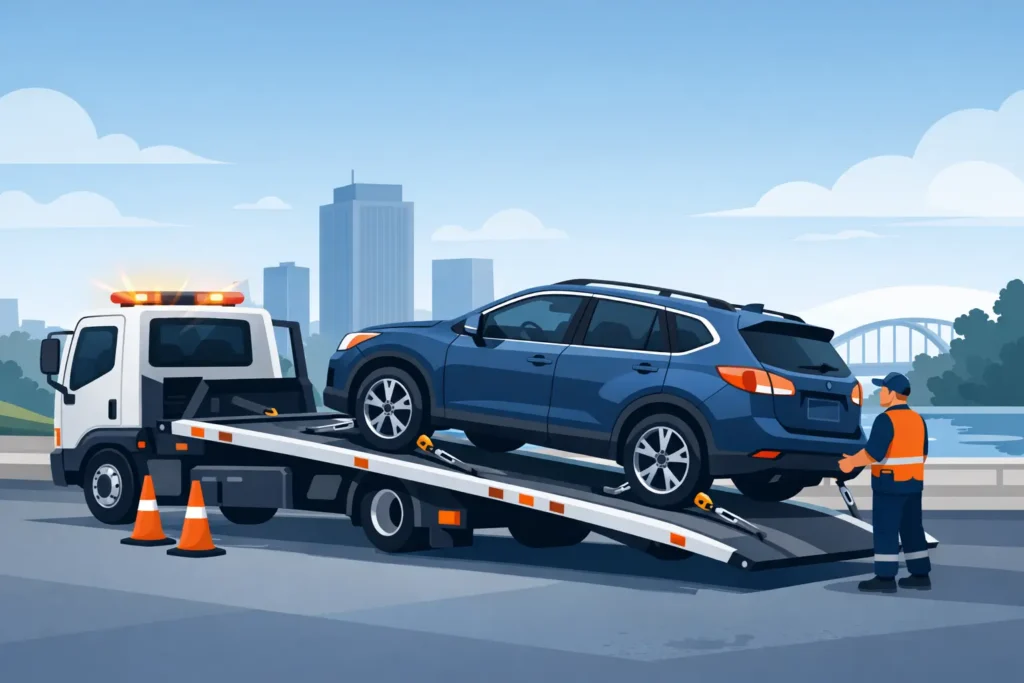
That is the basic reason flatbed towing is usually the right answer for AWD vehicles. All four wheels stay off the ground. The vehicle stays level and secure. There is far less chance of drivetrain damage from the tow itself.
The safest method for towing an AWD vehicle
In most real roadside situations, flatbed towing is the safest option for an all wheel drive vehicle. It keeps the entire vehicle off the road, which protects the drivetrain and also helps avoid tire scrub, bumper damage, and clearance issues during loading.
That matters even more with newer crossovers, luxury SUVs, performance sedans, and electric vehicles with AWD systems. Some sit low to the ground. Some have sensitive underbody panels. Some have electronic parking brakes or limited neutral options if power is lost. A careful loading process matters just as much as the truck type.
A proper tow starts by checking whether the vehicle can roll, whether the steering is unlocked, whether there is suspension damage, and whether the wheels are free. If the car is disabled after an accident, has a broken axle, or is stuck in park, it may need skates, winching, or a more controlled loading angle. This is not guesswork. It is the kind of thing that should be handled based on the vehicle’s condition right there on scene.
When wheel-lift towing can cause problems
Wheel-lift towing has its place, but it is usually not the first choice for AWD. Lifting only the front or rear while the other wheels roll on the ground can be risky unless the vehicle manufacturer specifically allows it and the tow is set up correctly.
Some drivers hear that dollies can make this safe. Sometimes they can, but it depends on the exact vehicle, the condition of the car, and how the tow is being done. In a busy roadside situation, especially on a shoulder or in traffic, the safest and cleanest option is often still a flatbed.
Short distance does not automatically make it safe. A vehicle can be damaged a mile from home just as easily as twenty miles away if it is towed the wrong way.
What your owner’s manual usually means
Most owner’s manuals are clear about one thing. Many AWD vehicles should be transported with all four wheels off the ground. Some manuals allow very specific emergency procedures, but those exceptions are not the same as normal towing.
That is where confusion starts. There is a difference between recovering a vehicle from a dangerous spot and transporting it safely to a repair shop or your driveway. A manual may describe temporary movement under limited conditions, but that does not mean it is the best method for a full roadside tow.
If you are waiting on a truck and you know your vehicle is AWD, say that clearly when you call. If you know the model, trim, or whether it is electric, say that too. That helps the towing company send the right equipment the first time.
Common AWD towing mistakes
The most common mistake is assuming every SUV or crossover can be treated the same. They cannot. Different AWD systems behave differently, and some are much less forgiving than others.
Another mistake is trying to pull the vehicle by one end because it seems faster. Speed matters when you are stuck on I-44, US 75, or in a crowded parking lot, but rushing the loading process can turn a breakdown into a second problem.
A third issue is clearance. Many AWD vehicles have lower front ends than drivers realize. Improper approach angles can scrape bumpers, valances, or underbody panels during loading. That is why careful use of ramps, boards, and winching angle matters.
Then there is the parking brake problem. If the battery is dead or the vehicle has electronic controls that will not release, forcing it can damage tires or drag the vehicle during loading. In those cases, the right equipment and a little patience matter more than brute force.
Towing for all wheel drive after an accident or breakdown
Not every AWD tow looks the same. A simple mechanical breakdown in a driveway is one thing. A vehicle disabled in traffic, with suspension damage or a locked wheel, is something else.
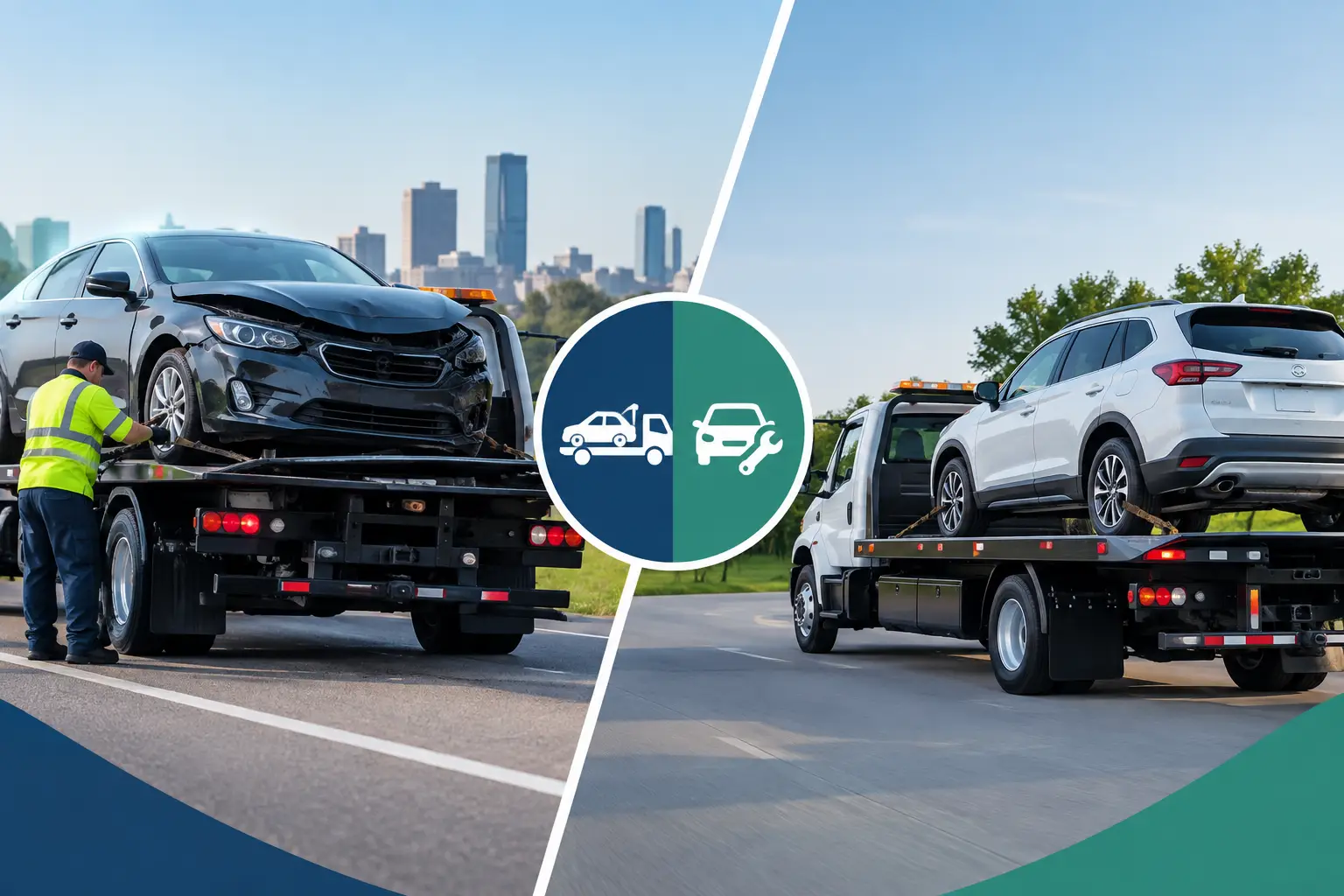
After an accident, even if the body damage looks minor, the vehicle may not track straight or roll freely. One bent component can change how it loads. That is where controlled winching onto a flatbed becomes the safer choice. The vehicle stays supported, and there is less chance of making hidden damage worse.
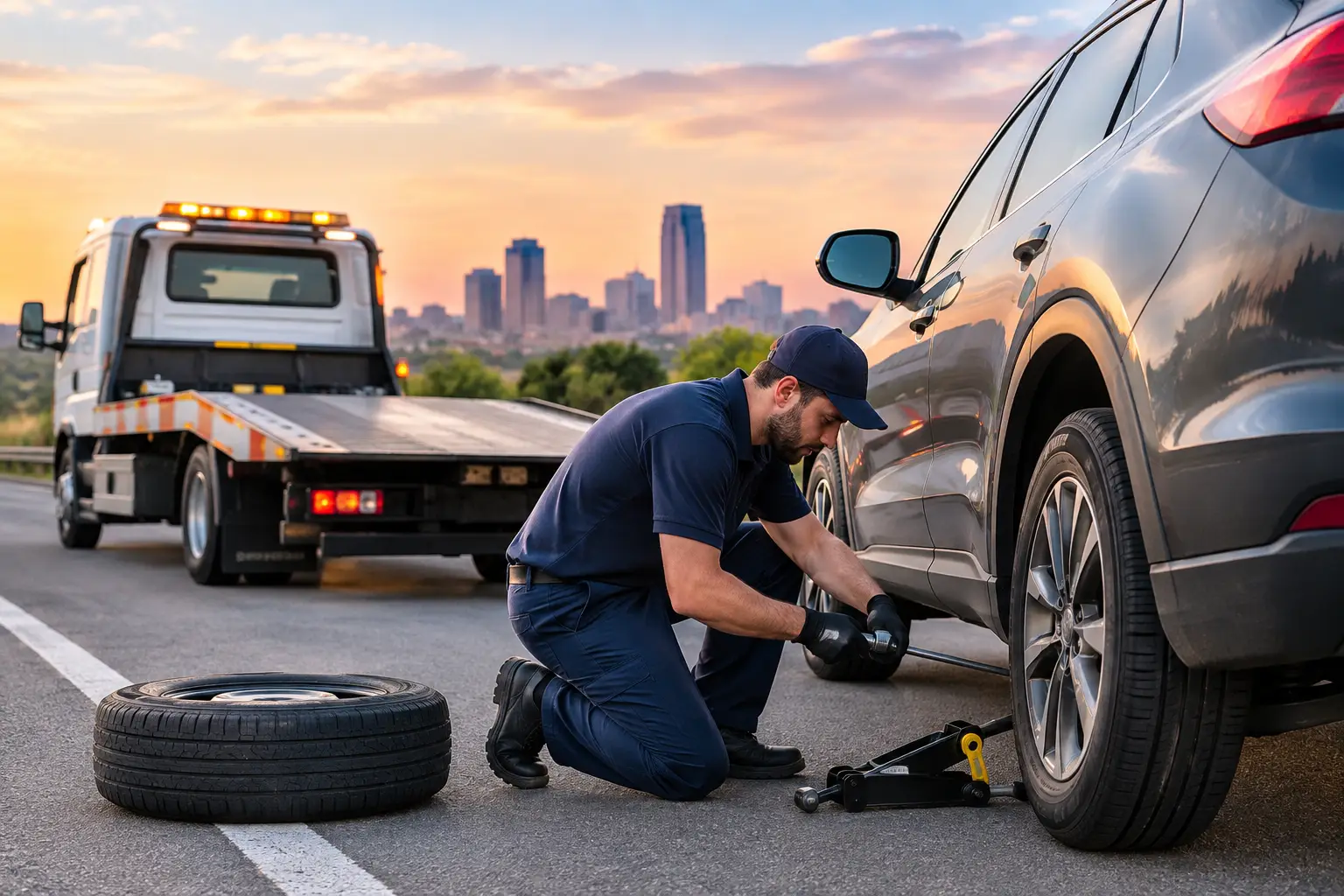
The same goes for roadside breakdowns involving transmission issues, no-start conditions, or warning lights that put the vehicle into a limited mode. If the car cannot be safely driven, it should not be forced. Towing is supposed to solve the problem, not add one.
AWD and electric vehicles
This matters even more with AWD electric vehicles. Many EVs use dual motor setups, low clearance designs, and manufacturer-specific transport procedures. They often need extra care during loading and securement.
That does not mean they are difficult to tow when handled correctly. It just means the truck and the operator need to respect how the vehicle is built. A flatbed is usually the cleanest solution because it avoids wheel rotation on the road and gives better control during loading.
What to tell a towing company if you have AWD
Keep it simple and be specific. Say the vehicle is all wheel drive. Tell them whether it is stuck in park, has a dead battery, was in an accident, or has wheel or suspension damage. If it is in a garage, on a tight street, or in a spot with low clearance, mention that too.
That information helps avoid delays and helps the driver plan the safest approach before arriving. A real towing company would rather know the full situation up front than show up with the wrong setup and waste your time.
If you are in Tulsa, Broken Arrow, Jenks, or nearby and need help with an AWD vehicle, it is worth asking whether the tow will be done on a flatbed. That one question can save you from a lot of avoidable damage.
When flatbed towing is the right call
There are very few situations where using a flatbed for an AWD vehicle is the wrong choice. It is usually the safest method for routine transport, disabled vehicles, accident recovery, low clearance cars, and most EVs.
That does not mean every tow is identical. A parking garage, steep driveway, tight apartment lot, or busy roadside shoulder may require a different loading approach. But the goal stays the same – keep the vehicle protected and get it moved without adding damage.
That is how Tulsa Towing approaches jobs like this. Not by assuming every vehicle can be hooked the same way, but by looking at the drivetrain, the condition of the car, and the safest way to load it with proper flatbed equipment.
If your AWD vehicle breaks down, the main thing to remember is simple. Do not let convenience decide the tow. Let the vehicle type and condition decide it. That extra caution at pickup is usually what keeps a bad day from getting more expensive.