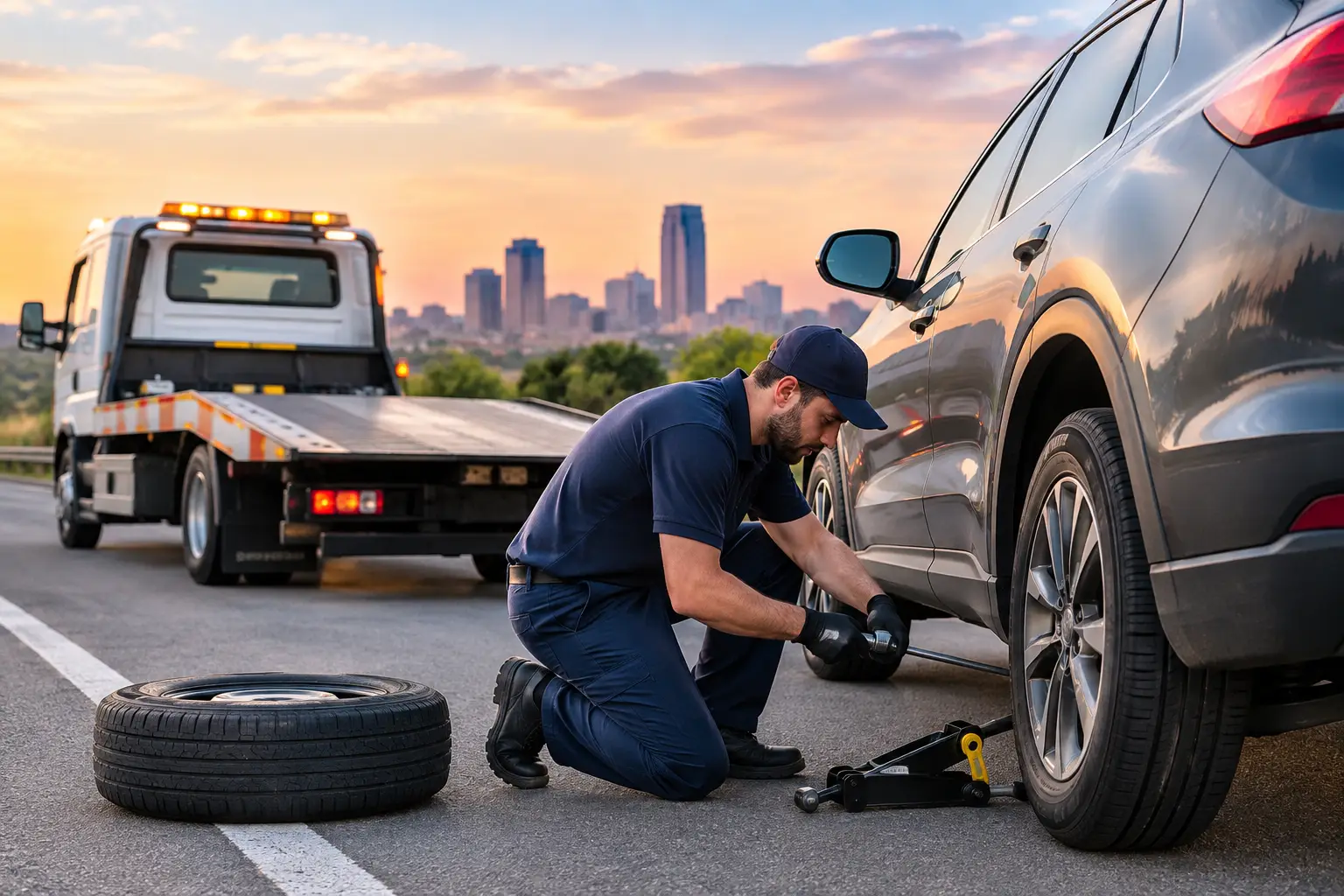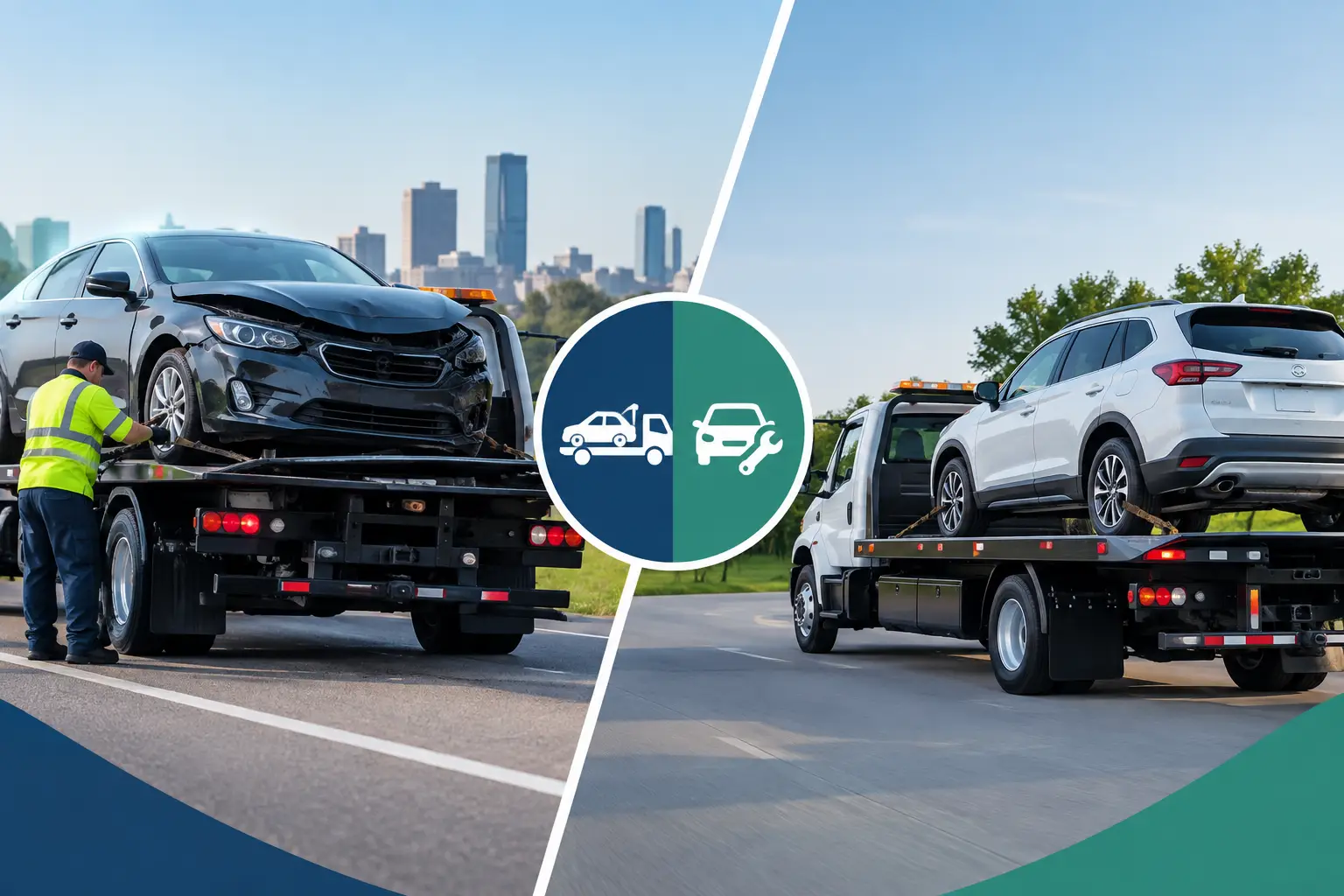
A tow should solve one problem, not create another. When people search for damage-free towing, they are usually dealing with a breakdown, a collision, a dead battery, or a car that simply will not move. The last thing they want is scraped bumpers, bent suspension parts, wheel damage, or battery concerns on top of the original issue.
That is why damage-free towing is not just a nice phrase. It is the difference between careful transport and careless handling. If the truck, the loading method, or the tie-down process is wrong for the vehicle, the tow itself can become the expensive part.
What damage-free towing actually involves
At the basic level, damage-free towing means the vehicle is loaded, secured, transported, and unloaded without adding new problems. That sounds simple, but it depends on experience and proper equipment.
The first part is choosing the right towing method. For many vehicles, especially low-clearance cars, all-wheel-drive models, heavy pickups, and electric vehicles, a flatbed is the safest option. It gets the entire vehicle off the ground and avoids the risks that come with dragging driven wheels or forcing a vehicle into a position it should not be in.
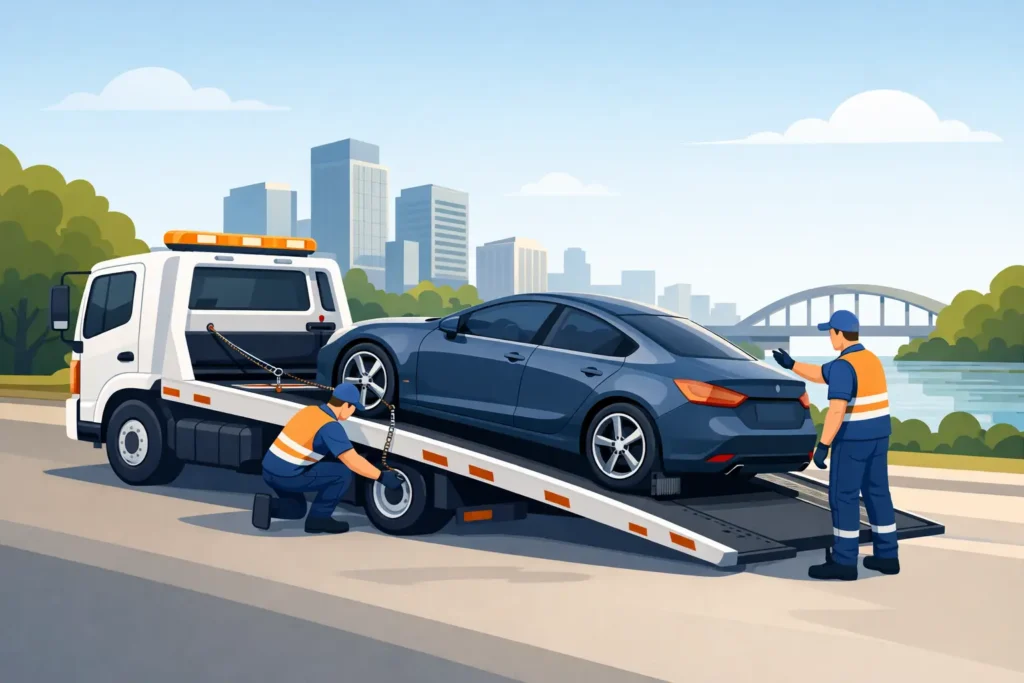
The second part is how the vehicle is loaded. Approach angle matters. Ground clearance matters. Tire condition matters. If a car is stuck in park, has a broken wheel, or has front-end damage, the loading process changes. A careful operator adjusts for the vehicle in front of them instead of trying to make every job fit the same routine.
The third part is securement. A vehicle should be tied down in a way that keeps it stable during transport without stressing the wrong components. Rushing this step can lead to movement on the bed, wheel issues, or underbody damage that could have been avoided.
Why the right equipment matters for damage-free towing
A lot of towing problems start before the vehicle even leaves the ground. If the truck is not set up for the job, the operator has to improvise. That is where avoidable damage tends to happen.
Flatbed towing gives more control during loading and transport. It is especially useful for vehicles with low front ends, long wheelbases, mechanical damage, or systems that make traditional wheel-lift towing a bad fit. With the right bed angle, winching setup, and tie-down points, the vehicle can be moved without scraping the bumper, stressing the drivetrain, or dragging parts underneath.
This matters even more with newer vehicles. Many cars now sit lower than older models, and many trucks have added weight, larger tires, or custom setups that change loading clearance. Electric vehicles add another layer because they need to be handled according to manufacturer-safe towing practices. On some EVs, the wrong tow method can affect motors, drivetrain components, or battery-related systems.
Damage-free towing for low-clearance cars
Low cars are one of the easiest vehicles to damage during a tow if the operator is not paying attention. Front lips, bumpers, side skirts, and splash shields sit close to the ground. A steep loading angle or careless winching can crack or tear those parts quickly.
This is where patience matters. The bed angle may need to be adjusted. Extra care may be needed to reduce scraping risk. The vehicle may need to be aligned slowly and evenly before it moves up the deck. None of that is complicated when you do this work regularly, but it does take time and attention.
For drivers, this is usually the difference they notice right away. A careful tow feels controlled. The operator explains what they are doing, checks clearance, and does not rush the load just to save a minute.
Damage-free towing for trucks, SUVs, and work vehicles
Bigger vehicles come with their own problems. Weight distribution changes how the load sits on the bed. Longer wheelbases affect approach and breakover angles. Some trucks also have suspension setups, oversized tires, or rear weight that need to be accounted for before transport starts.
A heavy-duty pickup that is loaded the wrong way can shift too much weight in the wrong direction or create clearance issues during loading. A work truck with mechanical damage may not roll freely, which changes how it needs to be winched. In these cases, damage-free towing is about control, balance, and using equipment that matches the vehicle instead of forcing a standard setup onto a non-standard job.
EV towing is not the same as towing a gas vehicle
Electric vehicles are not rare anymore, and they should not be handled like older gas-powered cars. Damage-free towing for EVs starts with knowing whether the vehicle can roll, whether it is safe to move, and what towing method protects the drivetrain and battery systems.
Flatbed transport is usually the right choice because it keeps all wheels off the road. That reduces the chance of drivetrain damage and avoids the problems that can come from moving the vehicle the wrong way. This is especially important with vehicles like Tesla models and other EVs that have specific towing requirements.
For the driver, the key point is simple. If the company handling the tow treats every vehicle the same, that is a risk. EVs need proper handling, not guesswork.
When a rushed tow causes extra damage
Most drivers do not think about towing technique until they have seen a bad one. It usually shows up as a scraped fascia, bent wheel, damaged undercarriage panel, or a vehicle that was not secured correctly during transport.
The problem is not always dramatic. Sometimes the damage is subtle and shows up later. A plastic undertray gets pulled loose. A strap is placed wrong. A lowered car scrapes just enough to crack a panel. A truck with steering or suspension damage is loaded without adjusting for the issue. What should have been a straightforward move becomes another repair bill.
That is why clear communication matters as much as equipment. If a vehicle has body damage, a locked wheel, air suspension issues, or a dead EV battery, the tow operator needs to know before loading starts. Good towing is part technique and part judgment.
What drivers should look for when they need damage-free towing
In a real roadside situation, most people are stressed and trying to get help fast. They are not running a full inspection of the towing industry. Still, there are a few signs that usually tell you whether the job will be handled correctly.
First, ask how the vehicle will be towed. If the answer is vague, that is not helpful. If the company can explain the method clearly and it makes sense for your vehicle, that is a better sign.
Second, mention anything unusual. If the car is very low, all-wheel drive, electric, stuck in a garage, or has collision damage, say that upfront. The more accurate the information, the better the dispatch and equipment match will be.
Third, pay attention to how the operator approaches the load. A careful tow does not look chaotic. The truck is positioned correctly, the vehicle is assessed before moving, and the loading process is controlled from start to finish.
In Tulsa, that local experience matters more than people think. A breakdown on I-44 is different from a disabled car in a tight Midtown lot or a low-clearance vehicle stuck in a downtown garage. The route, the traffic, and the loading conditions all change the job.
Why damage-free towing comes down to experience
There is no shortcut for real towing experience. Equipment matters, but equipment alone does not protect a vehicle. The operator still has to know where to hook, how to winch, how to secure, and when to slow down.
That is especially true when the vehicle is already compromised. A car after an accident, a truck with a broken axle, or an EV that will not power up all need a different approach. Damage-free towing means reading the situation correctly before the vehicle moves an inch.
Tulsa Towing, powered by Neptune Towing, works with that mindset every day. The goal is simple – get the vehicle moved safely, handle it the right way, and keep the situation from getting worse.
If you need a tow, the best outcome is not just getting your vehicle from one place to another. It is getting it there without adding new damage, new delays, or new headaches.