Your car usually gives you a warning before it quits completely. The problem is that a lot of drivers try to push through it, especially when they are close to home, late for work, or stuck on a busy road. Knowing the top signs your car needs towing can save you from turning a breakdown into bigger damage, a more expensive repair, or a dangerous situation on the shoulder.
Some problems can be handled with roadside help. Others mean the vehicle should not be driven another mile. The difference matters. If the car is unsafe, unstable, or showing signs of mechanical failure, towing is the safer call.
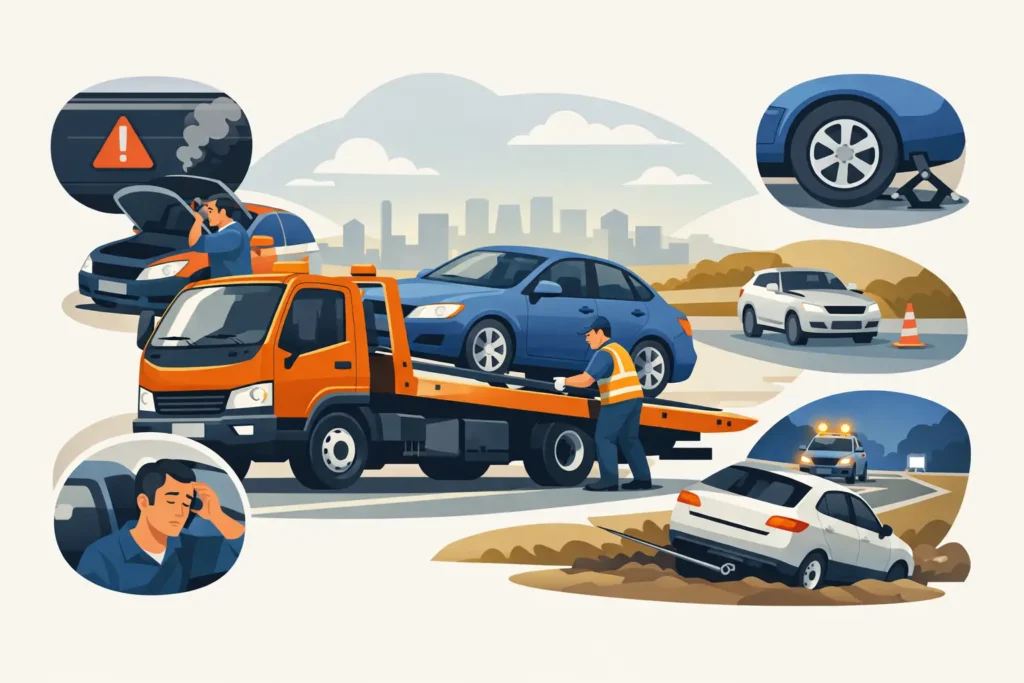
Top signs your car needs towing right away
The clearest sign is simple – the vehicle will not move under its own power. But there are other cases where the car still moves and still should not be driven. That is where people get into trouble.
1. The engine overheats and temperature keeps climbing
If the temperature gauge is rising fast, steam is coming from under the hood, or a warning light says the engine is overheating, stop driving. Pull over somewhere safe as soon as you can.
A lot of drivers hope the car will cool off if they keep going a few more blocks. Sometimes that decision turns a manageable cooling system repair into serious engine damage. An overheating engine can lead to warped components, blown gaskets, or complete failure. If the temperature does not return to normal quickly, it is a towing situation.
2. You have a major fluid leak
A small drip in a driveway is one thing. A visible puddle under the car, a trail of fluid behind you, or fluid actively pouring out is different.
If the leak is engine oil, coolant, transmission fluid, or brake fluid, driving may cause damage or make the vehicle unsafe to control. Brake fluid is especially serious because it affects stopping power. Transmission fluid loss can leave the vehicle unable to shift or move properly. In a real breakdown, a tow is usually the safer option than guessing how far the car can make it.
3. The car starts but will not drive normally
Sometimes the engine turns on, but the vehicle refuses to go into gear, slips hard while shifting, lurches, or barely moves when you press the gas. That is not a car you want to force down the road.
This kind of problem often points to transmission trouble, axle damage, or another mechanical issue that gets worse the longer the vehicle is driven. If the car feels like it is fighting to move, towing is often the better call than trying to limp to a shop.
4. You hear loud mechanical noises that are not normal
A squeak or mild rattle does not always mean tow truck. But heavy grinding, loud clunking, metal-on-metal scraping, or hard knocking from the engine or undercarriage is different.
Those sounds usually mean something has failed or is close to it. If the noise changes with speed, gets worse when turning, or is paired with shaking or loss of power, stop driving. Continuing can cause more damage and may leave you stranded in a worse spot than where the warning started.
5. Steering or brakes feel unsafe
If the steering suddenly gets very loose, very stiff, or the car pulls hard to one side, do not assume you can just “take it easy” and get home. The same goes for brakes that feel soft, go to the floor, grind hard, or do not stop the car like they should.
This is one of the most important signs your car needs towing because it is not just about protecting the vehicle. It is about keeping control of it. A car that cannot steer or stop correctly should not stay in traffic.
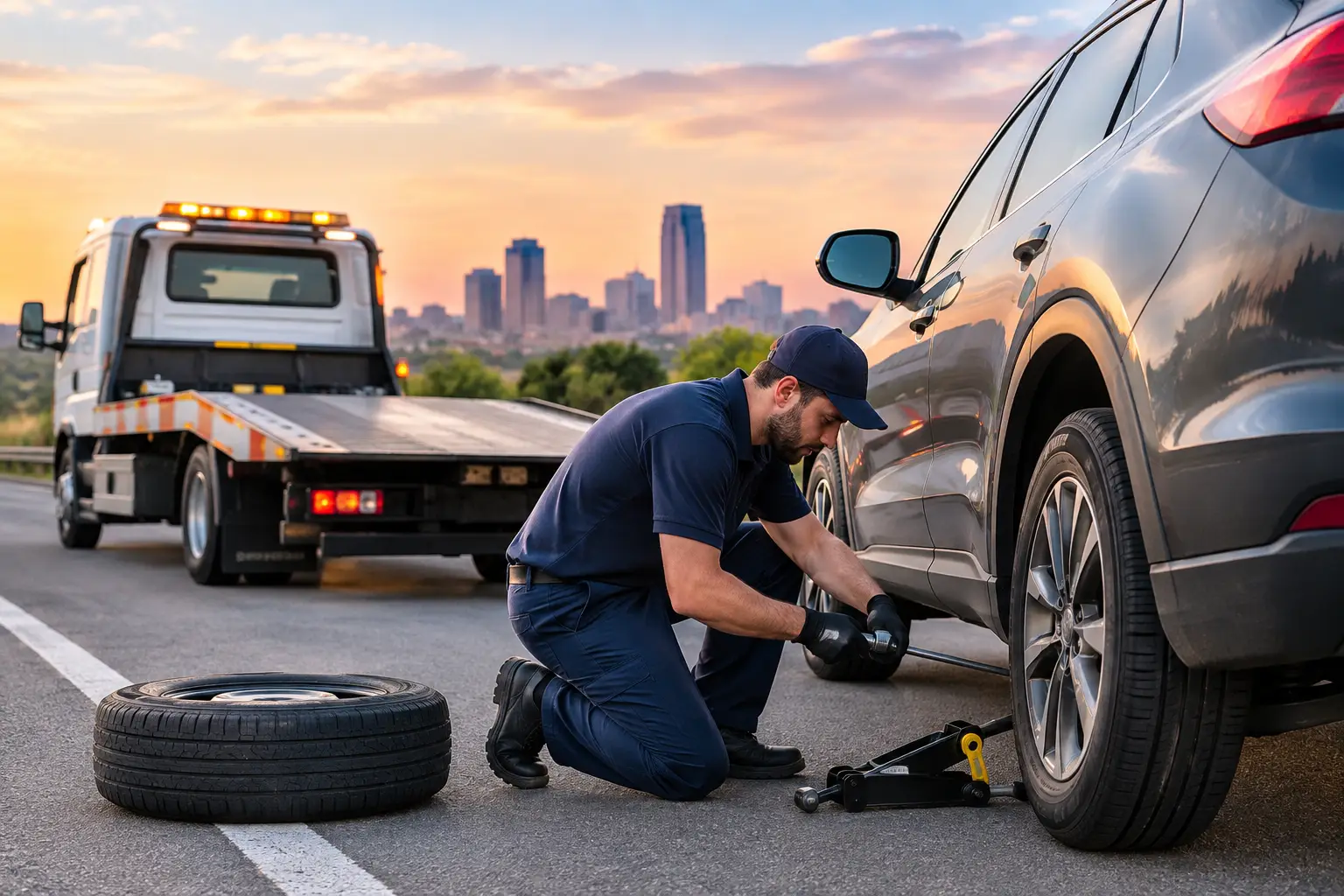
6. A tire problem goes beyond a simple flat
A flat tire can sometimes be handled on site. But not every tire issue is a quick swap.
If the tire blew out at highway speed, the wheel is damaged, multiple tires are flat, the lug nuts are stuck, or the vehicle is in an unsafe place to change it, towing may make more sense. The same applies if the suspension was damaged when the tire failed. A bad tire situation is not always just a roadside fix.
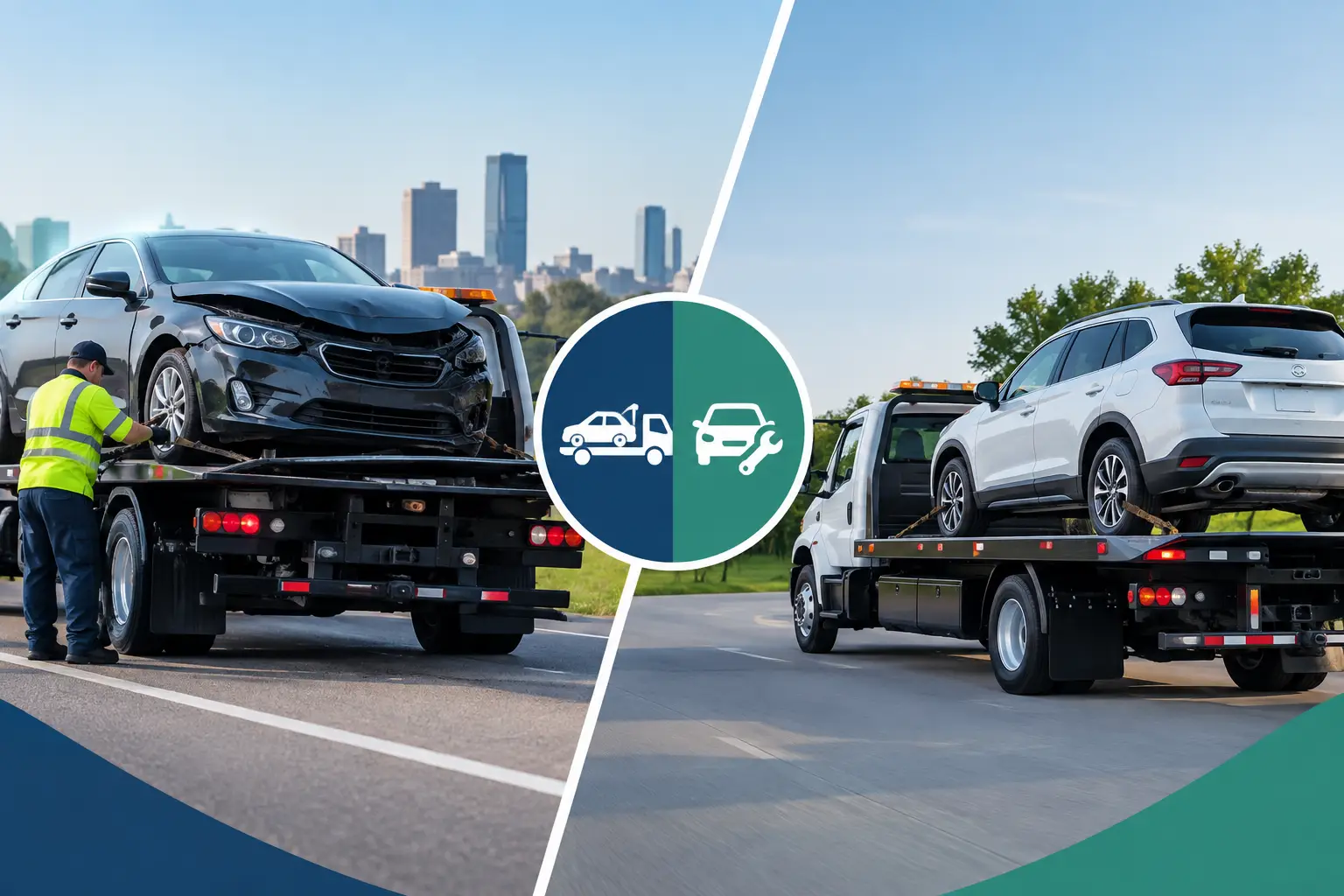
7. The vehicle was in an accident
After a collision, the car may still start and roll. That does not mean it is safe to drive.
Accident damage can affect steering, suspension, wheels, alignment, cooling components, lights, and underbody parts that are not obvious at first glance. If there is visible front-end damage, leaking fluid, a bent wheel, rubbing tire, or anything hanging underneath, the safer move is towing. This is especially true if airbags deployed or the car took a hit near the wheel area.
When roadside assistance is enough and when it is not
This is where it depends. A dead battery, lockout, or simple flat tire can often be handled without towing. If the problem can be fixed safely where the car sits, roadside help is usually faster and cheaper than moving the vehicle.
But once the issue involves overheating, major leaks, brake or steering problems, collision damage, or a vehicle that will not move correctly, towing becomes the smarter option. The goal is not just getting the car moving. The goal is avoiding more damage and getting it transported safely.
That matters even more with low-clearance cars, trucks, and electric vehicles. These are not vehicles you want dragged carelessly or loaded the wrong way. Proper flatbed towing keeps the process simple and reduces the risk of turning one problem into two.
What to do before the tow truck arrives
If you think your car needs a tow, first get yourself somewhere safe. If the vehicle can roll, move it out of traffic if possible. If it cannot, turn on your hazard lights and stay clear of moving traffic.
Take a quick look for obvious issues like leaking fluid, smoke, collision damage, or a flat tire that shredded into the wheel area. You do not need to diagnose the car. You just need enough information to explain what happened.
It also helps to know whether the vehicle is front-wheel drive, rear-wheel drive, all-wheel drive, or electric, especially if it cannot be moved normally. That affects how the vehicle should be loaded. A company with real towing experience will ask the right questions and send the right equipment.
Why waiting too long usually costs more
A lot of breakdown calls start the same way. The driver noticed something was off earlier, kept going, and then the car failed in a worse location.
That could be on I-44 during traffic, in a tight parking garage, or on the side of US 75 with very little room to work. The original issue may have been manageable, but continuing to drive made the repair larger and the situation less safe.
That is why these top signs your car needs towing matter. They are early warnings that the vehicle is no longer reliable enough to keep driving. Acting sooner usually gives you more control over where the car goes and how much damage is avoided.
A practical rule when you are not sure
If you are asking yourself whether the car is safe to drive, there is a good chance something is already wrong enough to take seriously. You do not need to wait for total failure.
A simple rule is this: if the vehicle cannot steer right, stop right, stay cool, hold fluid, or move normally, it should probably be towed. That is not overreacting. That is preventing a bad situation from getting worse.
For drivers around Tulsa, Jenks, Bixby, and Broken Arrow, this comes up often on busy roads where there is not much room for a second mistake. Tulsa Towing handles these kinds of calls with straightforward communication and proper flatbed transport, especially when the main concern is getting the vehicle moved safely without adding damage.
If your car is giving you clear warning signs, trust that. Getting it towed at the right time is usually the easier decision than dealing with what happens after one more mile.