A diesel pickup that will not crank in a parking lot is a different problem than a small sedan with a weak battery after work. That is where a heavy duty jump start matters. When the vehicle is larger, the battery system is stronger, and the load is higher, the right equipment and the right approach make the difference between getting moving again and wasting time.
For a lot of drivers, the first thought is simple: just hook up cables and start it. Sometimes that works. Sometimes it does not, and pushing it can create more trouble than the dead battery itself. A no-start on a heavy-duty truck, work van, or larger SUV can point to a drained battery, a failing battery, bad connections, an alternator issue, or a starter problem. The jump start is the first step, not always the full fix.
When a heavy duty jump start is actually needed
The biggest difference with a heavy duty jump start is capacity. Larger vehicles often need more cranking power than a standard portable jump box or light-duty set of cables can provide. If the battery is deeply discharged, a weak jump source may give you lights on the dash but still not enough power to turn the engine over.
This comes up often with diesel trucks, commercial vans, larger gas pickups, and vehicles that have been sitting with accessories running. Interior lights, liftgates, aftermarket electronics, cold weather strain, and repeated short trips can all leave a battery too weak to start the engine.
In real roadside situations, there are usually a few signs that point to a battery-related issue. You may hear a single click, a rapid clicking sound, or a very slow crank. The dash may light up, then dim hard when you turn the key or press the start button. If everything stays completely dead, that can still be the battery, but it can also mean a bad connection or a more serious electrical problem.
Why bigger vehicles are not the same as a basic jump start
A heavy-duty vehicle asks more from the battery from the start. Higher compression engines, dual battery setups on some trucks, and larger electrical systems all change the job. Using undersized equipment can waste valuable time, especially if the vehicle is blocking traffic, stuck in a lot, or parked somewhere unsafe.
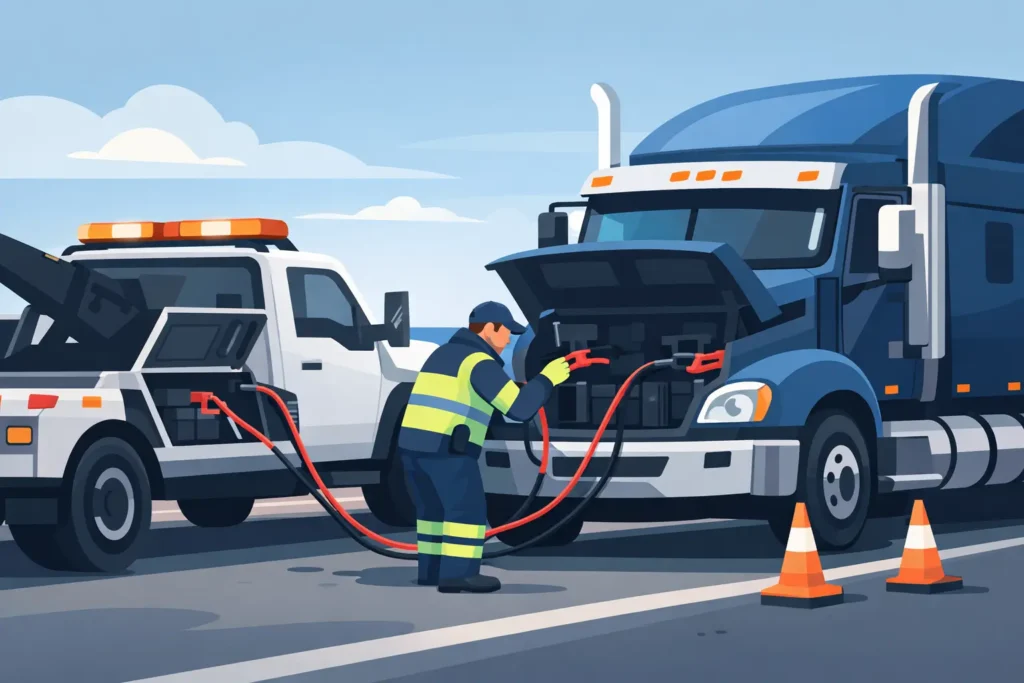
This is also where experience matters. A proper heavy duty jump start is not just about connecting clamps and hoping for the best. The battery condition, terminal corrosion, cable condition, and vehicle setup all need to be checked quickly. On some trucks, battery access is less straightforward than on a standard passenger car. On others, there may be remote jump points or tighter engine bay clearance.
If the battery has dropped too far, a short jump attempt may not be enough. If the terminals are loose or heavily corroded, even good power may not transfer well. If the alternator has failed, the vehicle may start and die again shortly after. Those details matter because they change what the driver should do next.
What happens during a roadside heavy duty jump start
A professional roadside jump start should be simple from the driver side. The vehicle is assessed, the battery setup is checked, proper jump equipment is connected safely, and the starting system is tested. If the engine starts, the next step is making sure the issue was actually the battery and not something else hiding behind the no-start.
That last part gets overlooked a lot. A vehicle that starts once is not always fixed. If the battery is old, internally damaged, or not holding a charge, it may fail again after the engine is shut off. If the alternator is not charging correctly, the driver may only make it a short distance before ending up stranded again.
That is why the right roadside help does more than provide a quick spark. It gives the driver a clear read on whether the vehicle is likely okay to drive, should go straight to a repair shop, or may need towing instead.
When a jump start will not solve the problem
Not every no-start needs a battery boost. If the engine cranks normally but will not fire up, the problem may be fuel, ignition, or another engine issue. If there is no response at all and the battery tests fine, the fault could be in the starter, ignition circuit, or a blown fuse. If the vehicle has obvious wiring damage or signs of overheating around the battery area, trying repeated jump attempts is a bad idea.
Modern vehicles can add another layer to this. Some trucks and SUVs have sensitive electrical systems that do not respond well to guesswork. Electric vehicles and hybrids are a separate category entirely. Even though they may have a 12-volt battery that can go dead, the handling needs to be done correctly and with the vehicle type in mind.
For drivers, the practical takeaway is simple. If the battery is the issue, a heavy duty jump start can get you moving. If the battery is not the issue, forcing it will not help and may delay the real solution.
Common situations where drivers get stuck
A lot of battery calls happen in ordinary places, not dramatic breakdown scenes. It might be a truck outside a jobsite before sunrise, a family SUV in a store parking lot, or a work van that sat too long between stops. In Tulsa, it also happens along busy routes where stopping safely becomes part of the problem. A dead battery on the shoulder of I-44 or near a high-traffic area is more than an inconvenience. It is a safety issue.
Parking garages, apartment complexes, tight business lots, and sloped driveways can also complicate what should be a simple service call. That is another reason proper equipment matters. Some roadside jobs turn into towing jobs if the battery is not the only problem or if the vehicle cannot be safely restarted where it sits.
Should you try it yourself?
It depends on the vehicle, the tools you have, and where you are parked. If you have a properly rated jump pack, clear access to the battery or jump points, and the vehicle is in a safe location, a basic attempt may be reasonable. But if you are working with a large truck, a diesel, a dual-battery setup, or a roadside location with traffic nearby, calling for help is often the smarter move.
The risk is not just getting it wrong. It is losing time on a vehicle that may have a bigger issue. If you are late, blocking access, or stranded somewhere exposed, the fastest path is usually having someone show up with the right equipment and enough experience to tell whether the vehicle should be jumped or transported.
What to look for in roadside help
For a heavy duty jump start, the main thing is not flashy promises. It is whether the person showing up understands larger vehicles, uses proper equipment, and can tell the difference between a drained battery and a deeper mechanical or electrical problem.
Clear communication matters too. When you call, you should be able to explain the vehicle type, what it is doing, and where it is located. In return, you should get a straightforward answer about the service, whether a jump start makes sense, and what happens if the vehicle still will not start.
That practical approach is what drivers usually need most when they are stranded. No guessing, no extra runaround, just a clear plan based on what the vehicle is actually doing.
Heavy duty jump start service in real-world conditions
A true heavy-duty roadside call is rarely textbook perfect. Weather, battery access, traffic, and vehicle condition all change the job. The goal is to get the vehicle started safely if that is possible, and to recognize quickly when it is not.
That is the difference between a basic battery boost and real roadside experience. Tulsa Towing handles jump starts with the same approach used on towing calls – check the situation, use the right equipment, avoid careless handling, and keep the next step clear for the driver.
If your truck, van, or larger vehicle will not start, do not assume all jump starts are the same. A heavy duty jump start is about having enough power, applying it safely, and knowing when the battery is only part of the story.
If your vehicle is stuck where it sits, the most helpful next step is a simple one: get the right set of eyes on it before a dead battery turns into a longer day.