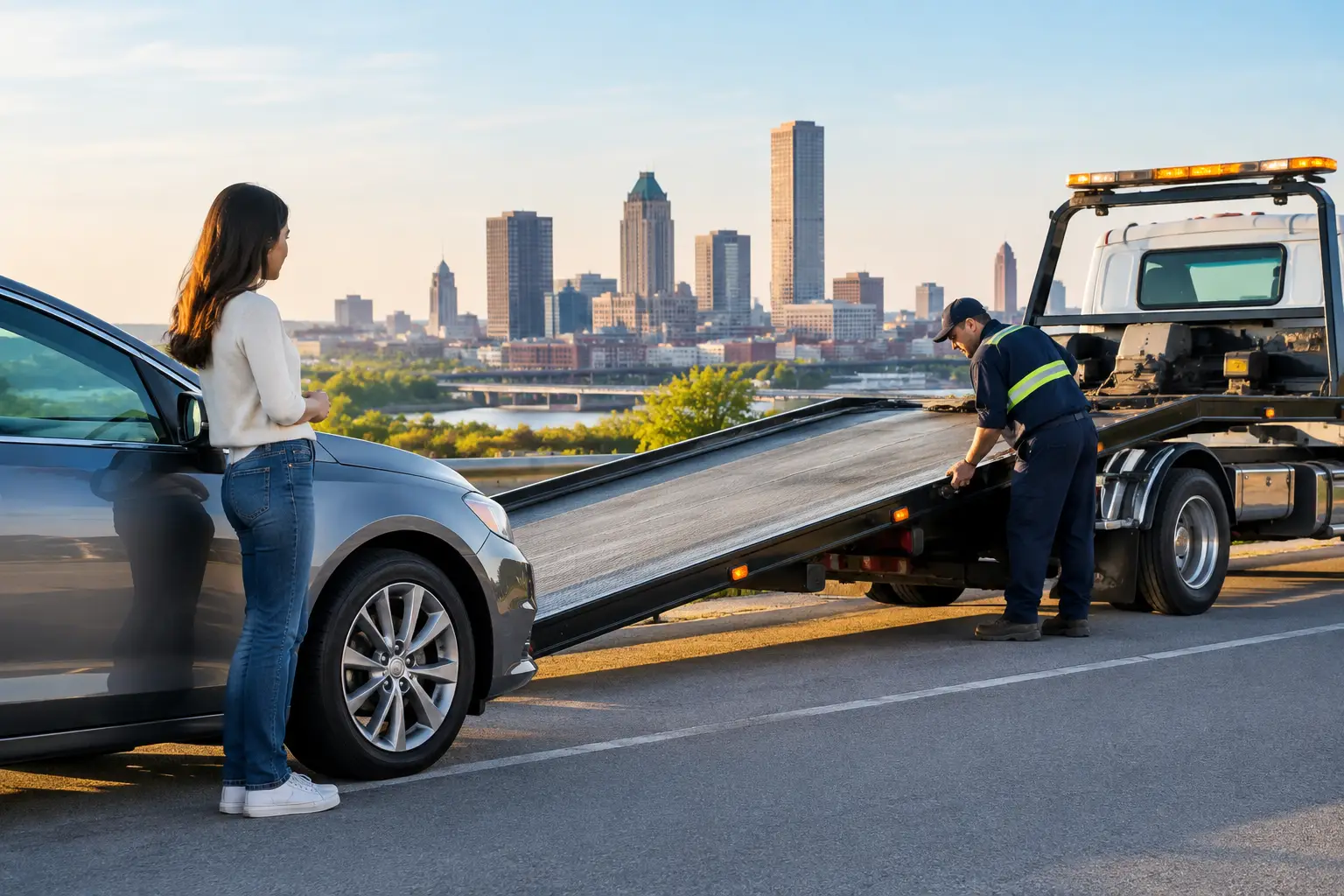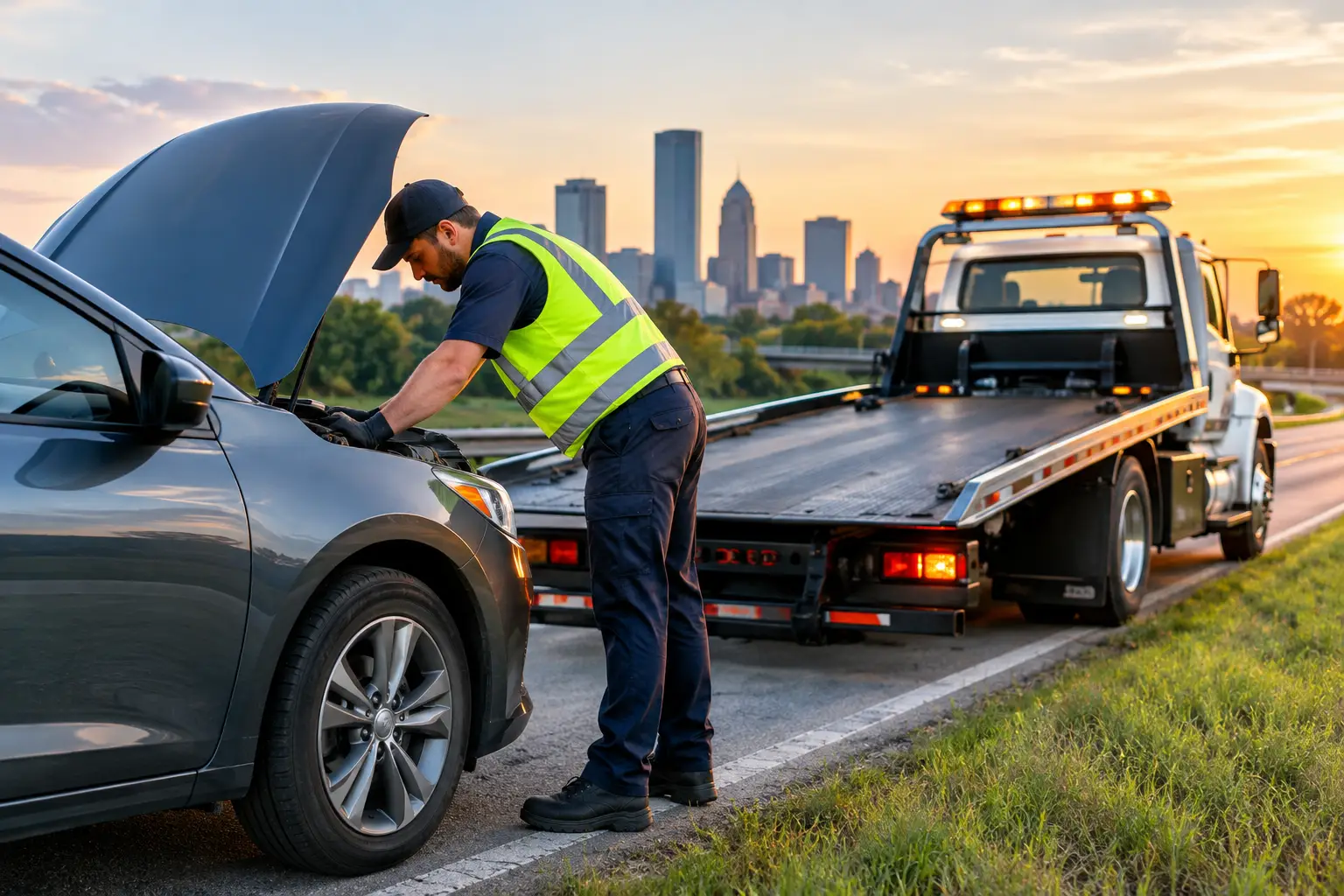
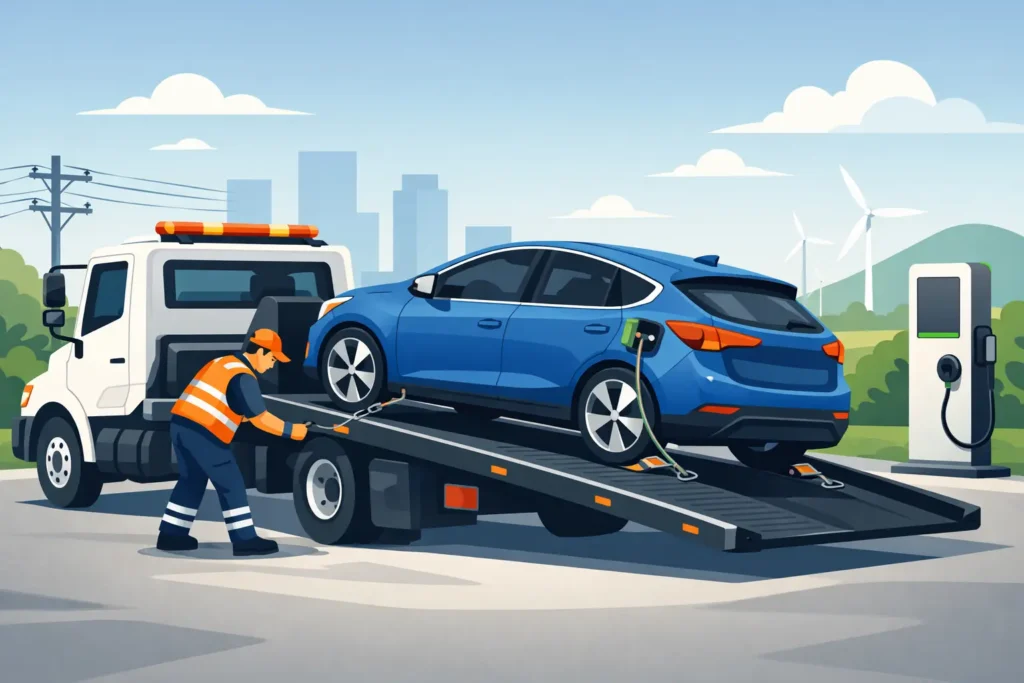
A lot of drivers find out the hard way that towing an EV is not the same as towing a gas car. If you are searching for how to tow an electric vehicle, the first thing to know is simple – in most cases, it should go on a flatbed, not be pulled with two wheels on the ground.
That matters because many electric vehicles keep parts of the drivetrain connected even when the car will not power up normally. If the wrong wheels roll during a tow, you can damage the motor, the reduction gear, the braking system, or other expensive components. What looks like a quick pull can turn into a much bigger repair.
How to tow an electric vehicle without causing damage
The safe answer is usually full lift transport on a flatbed. That keeps all four wheels off the road and avoids drivetrain movement while the vehicle is disabled. For most EVs, that is the standard approach because it removes guesswork.
There are a few exceptions depending on the manufacturer, the model, and whether the vehicle has a transport mode designed for recovery. But those exceptions are specific. They are not something to assume at the side of the road when the car is dead, locked up, or showing fault messages.
If you do not have the owner’s manual in front of you, the safest move is to treat the vehicle as flatbed only. That is especially true for Teslas and other EVs with regenerative braking systems and electronic parking brakes that can complicate loading.
Why EVs are different from gas vehicles
A gas vehicle can sometimes be towed with a wheel lift or dollies depending on drivetrain layout. Electric vehicles are less forgiving. The electric motor can generate power when the wheels turn, and that can create problems if the car is moved the wrong way or too far.
Many EVs also rely on electrical systems to release the parking brake, shift into neutral, or unlock the steering. When the 12 volt battery is dead or the high voltage system has faulted, even basic movement can become more complicated. That is why proper towing is not just about hooking up the car. It is about knowing how that specific vehicle behaves when power is limited or gone.
What to do before the tow truck arrives
If the vehicle is in traffic, your first priority is safety. Get yourself and any passengers out of the vehicle if the location is dangerous and move to a safe spot away from traffic. Turn on hazard lights if they still work.
If the EV still has enough power to respond, try putting it in transport mode or tow mode only if the manufacturer allows it. Some vehicles have a specific setting that helps with loading onto a flatbed. Others do not. If you are not sure, do not force it.
It also helps to tell the towing company exactly what is happening. Let them know the make and model, whether it is fully dead, whether the wheels are locked, whether it is in a garage or tight lot, and whether you were in an accident. That changes the equipment and loading approach.
Do not guess with neutral mode
One of the most common problems with EV recovery is assuming the car can just be shifted into neutral and rolled. Sometimes it can. Sometimes it cannot. On certain models, neutral will not stay engaged once power drops. On others, the electronic parking brake may still hold.
Trying random button sequences or forcing the vehicle to move can make things worse. A proper operator will work from the correct procedure for that vehicle and use the right loading tools if the car will not roll freely.
Flatbed towing is usually the right call
For most roadside situations, flatbed towing is the cleanest and safest option. The vehicle stays fully supported, low clearance models are easier to protect, and the chance of drivetrain damage is much lower than with a conventional tow setup.
That is also why experienced EV towing often includes soft straps, skates, dollies, or careful winching rather than dragging the vehicle. A disabled electric vehicle may not steer or brake normally, and some sit low enough that approach angle matters. Rushed loading is where damage happens.
In real-world towing, details matter. A car stuck in a parking garage needs a different plan than one sitting on the shoulder of I-44. A Tesla with a dead 12 volt battery is different from an EV that was in a collision and cannot be powered up safely. The right equipment is part of the job, but so is knowing when not to force the vehicle.
When can an electric vehicle be towed without a flatbed?
This is where it depends on the vehicle. Some manufacturers allow short-distance movement with dollies or specific emergency procedures. Some allow wheel-lift towing only if certain wheels are off the ground and the vehicle is in a designated mode. Others are very clear that the car should not be towed that way at all.
The problem is that roadside conditions are rarely ideal. If the car is disabled in a tight space, the battery is dead, or the vehicle was impacted, the manufacturer procedure may not be easy to follow on site. That is why the practical answer is still the same in most cases – use a flatbed unless the exact towing method is confirmed for that model.
Teslas and other common EVs
Tesla models are a good example of why this matters. They are generally transported on a flatbed, and incorrect towing can lead to damage. The same caution applies to many newer electric vehicles from Ford, Hyundai, Kia, Rivian, Nissan, Chevrolet, and others. Brand differences exist, but none of them should be treated like a basic front wheel drive gas sedan.
If you drive an EV regularly, it is worth knowing where the tow eye is stored, how the vehicle enters tow mode if equipped, and what the manual says about roadside transport. That information helps when things go wrong fast.
Common mistakes people make with EV towing
The biggest mistake is letting the vehicle roll on its drive wheels without confirming that it is allowed. The second is trying to pull the car out of a bad position without dealing with locked wheels or parking brake issues first.
Another common issue is using improper hook points. Electric vehicles often have battery packs under the floor, side skirts with limited clearance, and manufacturer-specific recovery points. Hooking to the wrong place can damage underbody panels or worse.
There is also the assumption that if the car looks normal after a breakdown, any tow method is fine. That is not true. A no-start condition in an EV can still involve electrical faults that affect braking, steering, shifting, and wheel movement.
What a professional tow operator should check
A qualified operator should confirm the vehicle type, whether it is all wheel drive or rear wheel drive, whether the wheels are free, and whether special loading steps are needed. They should also look at ride height, access conditions, and whether the car can be winched straight onto the deck without scraping.
For EVs, careful loading is not extra. It is the job. That includes using the right attachment points, protecting low clearance areas, and avoiding unnecessary movement once the vehicle is disabled. In Tulsa and nearby areas, that can matter even more on busy roads where there is pressure to move quickly but no room for mistakes.
If your EV breaks down, keep it simple
If your electric vehicle stops running, do not overthink the roadside part. Tell the tow company it is an EV, give the exact location, explain whether it powers on, and ask for flatbed service. If the car is stuck in a garage, wedged against a curb, or has locked wheels, say that too.
The goal is not just getting the vehicle moved. It is getting it moved without adding damage on top of the original problem. That is the difference between a basic tow and the right tow.
Tulsa Towing handles electric vehicle transport the same way it handles any other difficult recovery – with the right equipment, clear communication, and a focus on damage-free loading from the start.
If you ever need to figure out how to tow an electric vehicle in a real breakdown, keep one rule in mind. When there is any doubt, keep all four wheels off the ground and let someone who knows EV recovery handle the rest.