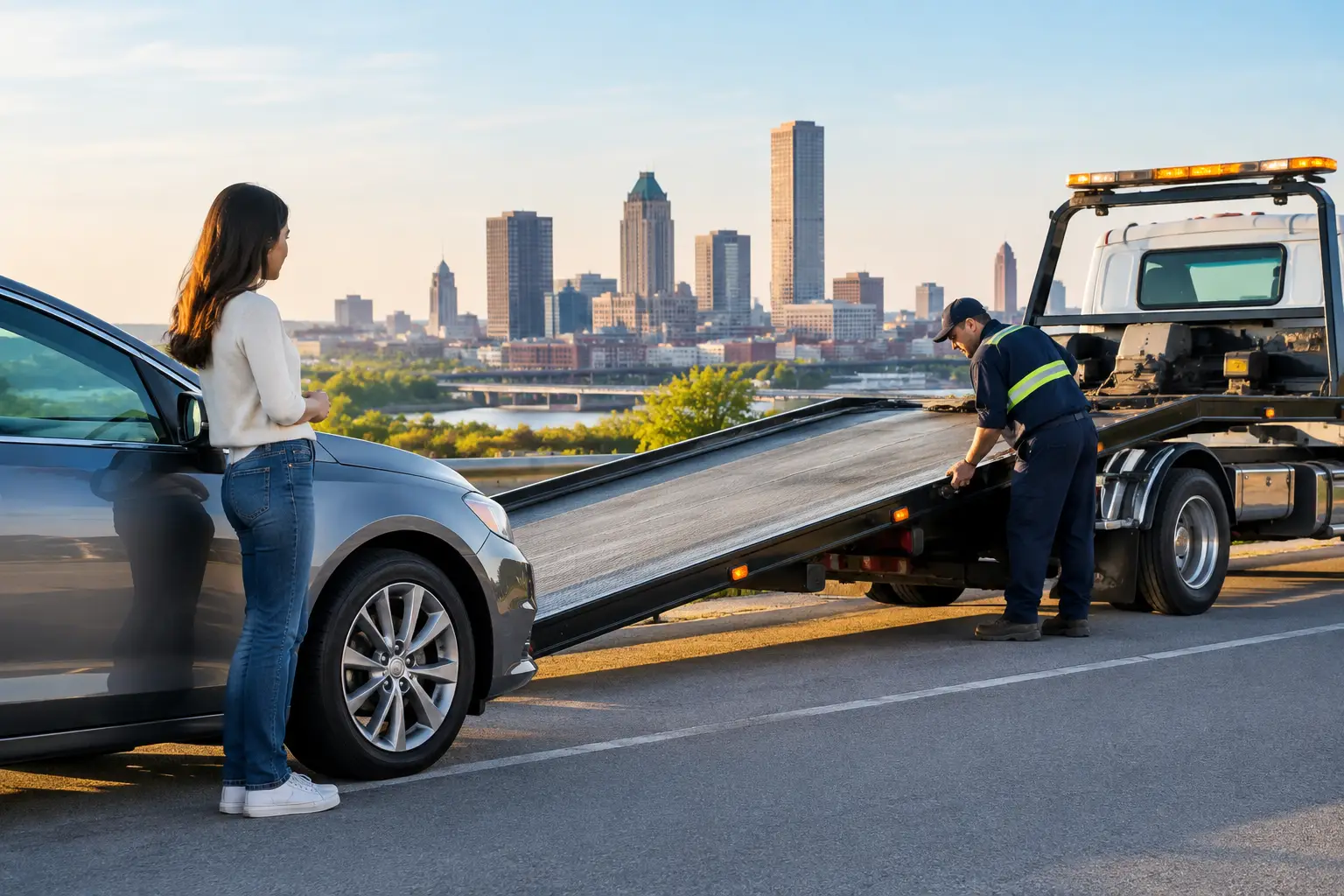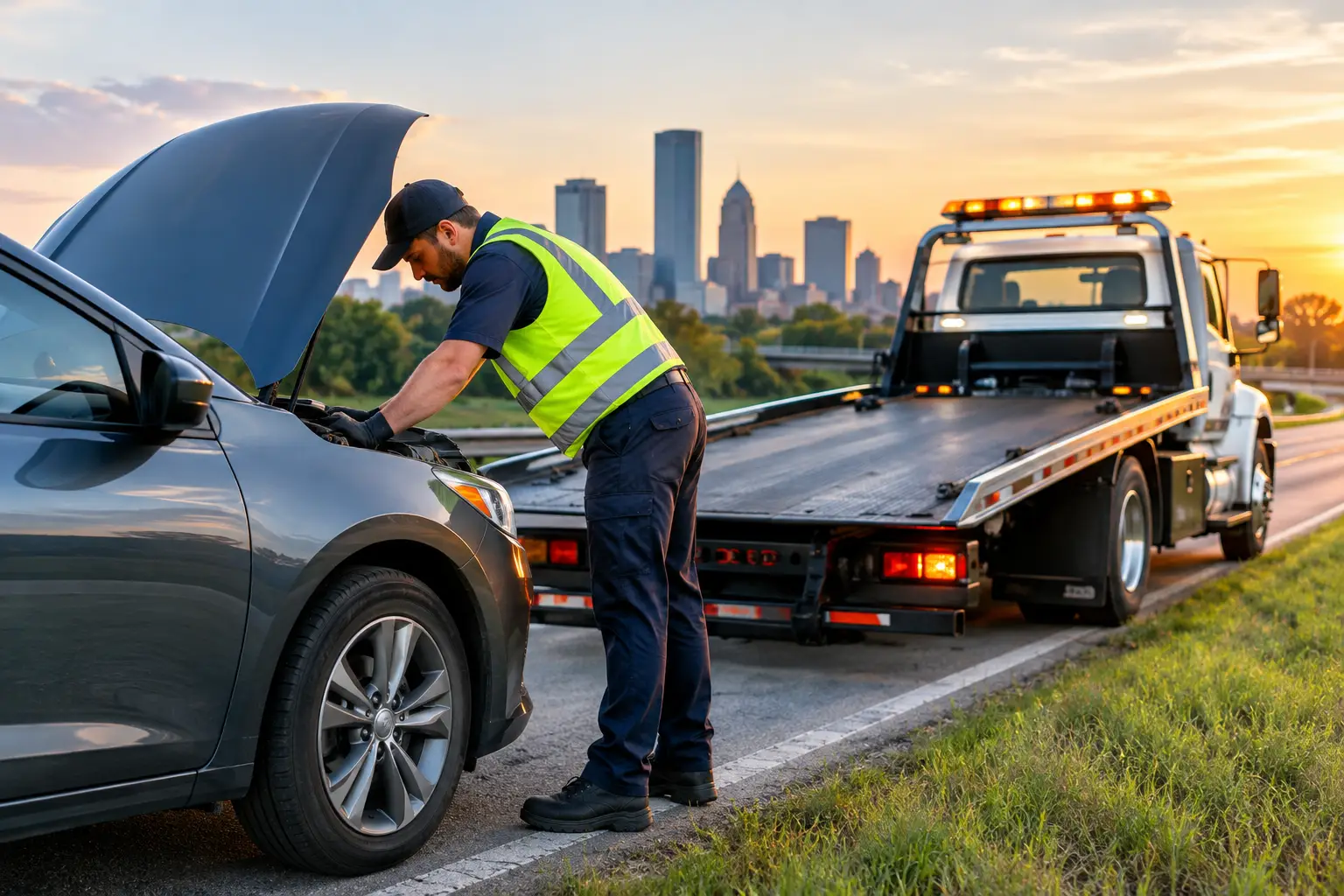
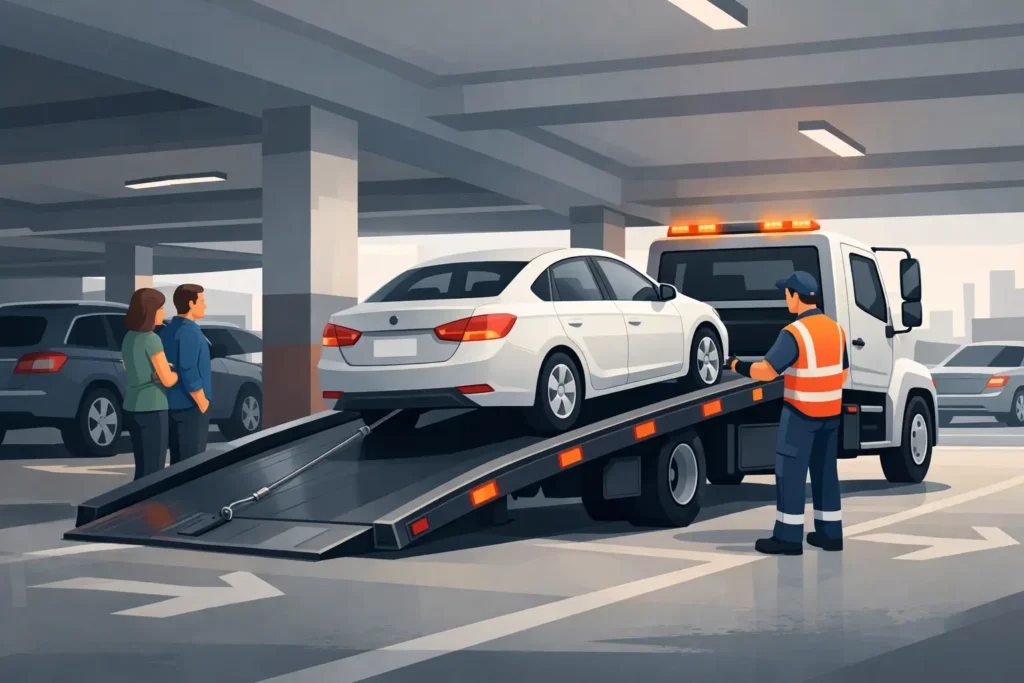
A vehicle stuck in parking garage access lanes, on a ramp, or in a tight corner is a different kind of towing job. It is not just about hooking up and pulling it out. Low clearance, concrete columns, ceiling height, sharp turns, and limited room for loading all change how the job has to be handled if you want to avoid damage.
That is why garage recoveries need a careful approach from the start. If your car will not start, has a flat tire, is hung up on a ramp, or cannot be moved safely inside a garage, the next step is not guessing. It is figuring out what kind of access the tow truck can actually use and what equipment fits the space.
Why a vehicle gets stuck in a parking garage
Sometimes the problem is mechanical. A dead battery, transmission issue, locked steering, brake problem, or flat tire can leave the vehicle disabled in a place where it cannot simply be pushed out. Other times, the issue is clearance. A low car may scrape and hang up on a steep transition, especially near garage entrances, exits, or upper level ramps.
Electric vehicles can add another layer. If the car has gone into a fault condition or will not shift into neutral, it may need to be moved with dollies or other equipment that prevents drivetrain damage. The same goes for all wheel drive vehicles and heavier trucks that are stuck in spaces with very little room to work.
In Tulsa, these calls often happen in downtown garages, apartment structures, hotel decks, and mixed use parking areas where there is no extra space and no margin for careless loading.
What to do first when your vehicle is stuck in parking garage areas
Start by checking whether the issue can be handled safely on site. If the battery is dead, a jumpstart may get you moving without a tow. If it is a flat tire and the vehicle is in a safe spot with room to work, roadside tire service may solve it. But if the vehicle is blocking traffic, sitting on a ramp, or cannot roll freely, it usually becomes a towing or recovery job.
Before calling, look at three things. First, note the clearance height posted at the garage entrance. Second, figure out exactly where the vehicle is located, including level number, nearest entrance, and whether it is on a straight section, corner, or incline. Third, let the towing company know whether the car can roll, steer, or shift into neutral.
Those details matter because they determine whether the truck can enter the garage, whether the vehicle has to be skated out, and whether the tow operator needs extra equipment to prevent scraping or suspension damage.
Why parking garage towing is not a standard tow
A normal roadside tow gives the driver room to line up, load, and secure the vehicle. A garage rarely does. Ceiling restrictions can keep a standard tow truck from entering at all. Tight turns can make it impossible to position the truck the usual way. Even opening the driver door can be difficult if the car is parked too close to a wall or another vehicle.
Then there is the surface itself. Concrete ramps, drain channels, speed bumps, and steep breakover points can cause low cars to drag. If the operator rushes the angle or uses the wrong method, bumper damage, underbody contact, or wheel damage can happen fast.
That is why this kind of call depends on experience more than brute force. The right move is often slower and more precise. It may involve repositioning the vehicle inch by inch before it can even be loaded.
How a tow company safely handles a vehicle stuck in parking garage spaces
The first step is always access. If the truck cannot enter because of height limits, the operator may need to bring the vehicle to the garage exit first using dollies, skates, or a winch setup that works within the space available. If the truck can enter, the loading angle still has to be managed carefully.
For low clearance cars, that usually means using boards, soft straps, and controlled loading techniques to reduce approach angle and avoid front end or rocker panel contact. For disabled vehicles that will not roll, wheel dollies may be needed to free it from the parking spot and move it into a position where loading becomes possible.
For EVs and certain luxury vehicles, careful handling matters even more. You cannot assume every vehicle can be dragged or put into neutral the same way. Proper towing means understanding the vehicle type, where to attach safely, and when flatbed transport is the right option once the car is out of the structure.
Common situations inside garages
A dead battery is one of the simplest calls, but even that depends on access. If the vehicle is buried in a low level with poor clearance, the tow operator may need to walk equipment in rather than drive the truck down. If a jumpstart does not solve it, the car may still need to be extracted manually.
Flat tires are also common, especially when a vehicle has been parked for a while. In a garage, changing a tire sounds easy until you realize the car is angled against a curb or parked where the jack has almost no safe setup space. In those cases, moving the vehicle safely may be the better option.
Another common call is a car stuck on a ramp after bottoming out. This is where experience matters most. Pulling too hard from the wrong angle can make the contact worse. The goal is to relieve pressure, change the angle, and get the vehicle free without tearing up the underside.
What to tell the tow operator
Good information saves time and avoids surprises when the truck arrives. Tell them the garage name or address, the level, the posted clearance, and whether the vehicle is front in or backed in. Mention if the wheels are turned, if the parking brake is stuck, or if the car is wedged close to a pillar.
It also helps to say what kind of vehicle it is. A low sports car, full size SUV, heavy duty pickup, or Tesla all need a different plan. If the car has aftermarket wheels, body kit pieces, or very low suspension, say that up front. That allows the tow operator to bring the right equipment instead of trying to improvise in a tight space.
When roadside help is enough and when towing is the safer call
Sometimes the quickest fix is not a tow. A jumpstart, lockout service, or tire change may get the vehicle moving again without the added step of transport. But if the vehicle has drivetrain problems, wheel damage, brake issues, or has already scraped badly on the garage ramp, trying to force it out can turn a small problem into a bigger repair bill.
The safer call is towing when the car cannot move under its own power, cannot clear the ramps, or cannot be handled without risking more damage. In those cases, a careful extraction and flatbed transport is usually the right answer.
That is especially true if you are in a busy garage where the vehicle is blocking access. Fast response matters, but so does getting it moved the right way. Rushed work in a tight garage usually shows up later as bumper damage, bent splash shields, or scraped wheels.
Local response matters in tight garage calls
Parking garage jobs are easier when the tow company already understands the area, common downtown layouts, and how to move through traffic to reach the structure quickly. In Tulsa and nearby areas like Jenks, Bixby, and Broken Arrow, these calls come with a mix of downtown congestion, apartment access issues, and garages that were not designed with towing in mind.
Tulsa Towing handles these situations with the same basic approach every time. Figure out the access, use the right equipment, and move the vehicle without adding damage. That sounds simple, but in a garage, simple usually comes from experience.
If your vehicle is stuck in parking garage trouble, keep it simple
Do not keep trying to drive out if the vehicle is dragging, stuck on the ramp, or will not shift properly. Do not let friends push it blindly around a tight corner. A little patience and the right equipment usually save money compared to forcing the issue.
If you can give the exact location, clearance height, and what the vehicle will or will not do, a good tow operator can usually tell you the safest next step before arrival. And when the space is tight and the margin is small, that kind of clear plan is what gets your vehicle out without making a bad day worse.