If your car sits low enough to scrape on steep driveways, a rushed tow can do real damage before the truck even leaves. This guide to towing a lowered car covers what actually matters when the vehicle has limited ground clearance, low front overhang, aftermarket body parts, or suspension changes that leave very little room for error.
A lowered car is not hard to tow when the right equipment is used. It becomes a problem when someone treats it like a standard-height sedan and tries to load it at the wrong angle. That is usually where bumpers get cracked, lips get torn off, undertrays get dragged, and owners end up with more problems than they started with.
Why lowered cars need a different towing approach
The main issue is approach angle. A standard vehicle can climb onto a bed or over towing equipment with enough clearance to avoid contact underneath. A lowered car often cannot. Even a small drop in ride height changes how the front bumper, side skirts, exhaust, and crossmembers sit in relation to the ground.
That matters most during loading. The car may be able to roll, but if the ramp angle is too steep, the front end can hit before the tires even start climbing. The same goes for unloading. A careful tow is not just about getting the vehicle on the truck. It is about controlling the angle at every stage so nothing drags on the way up or down.
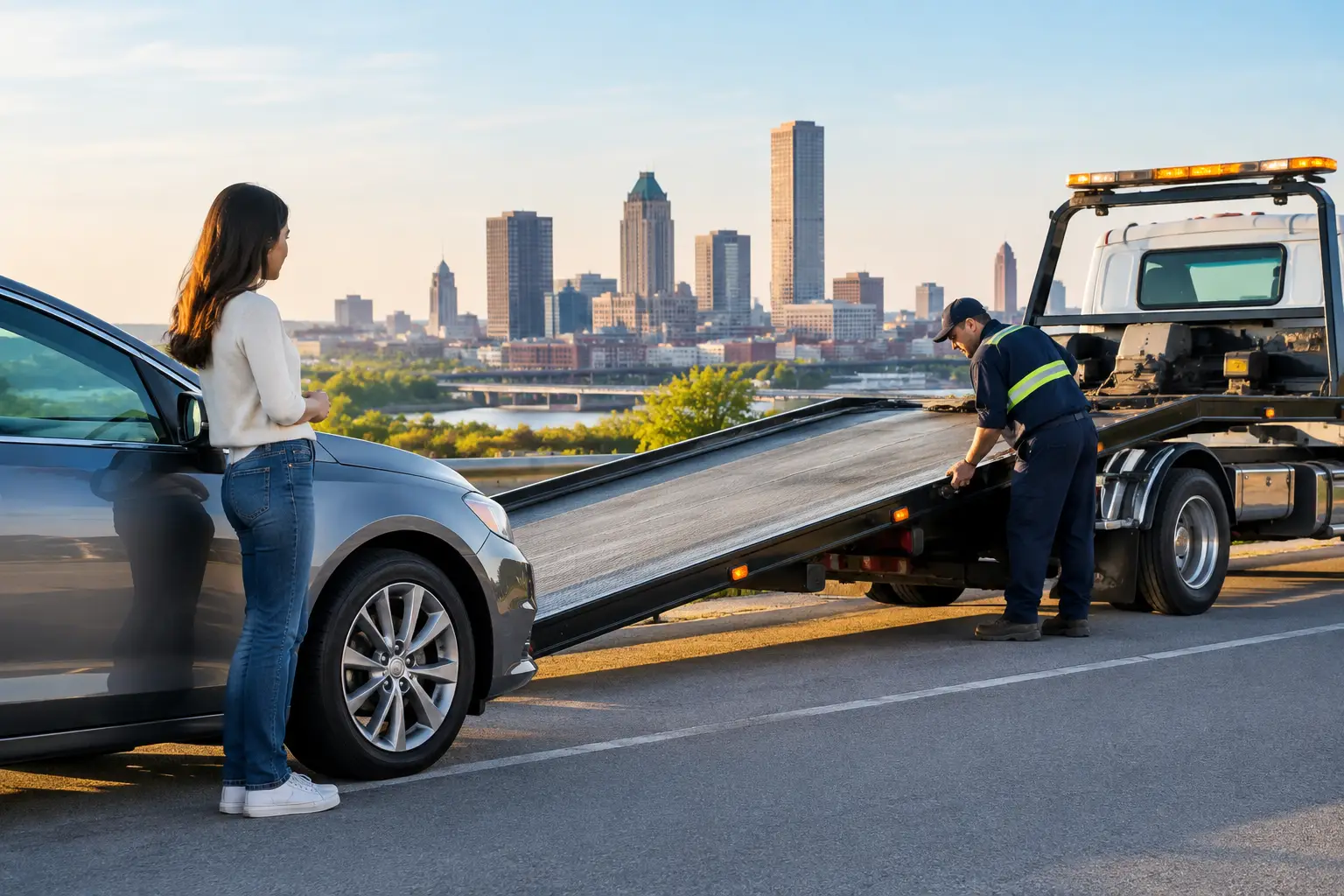
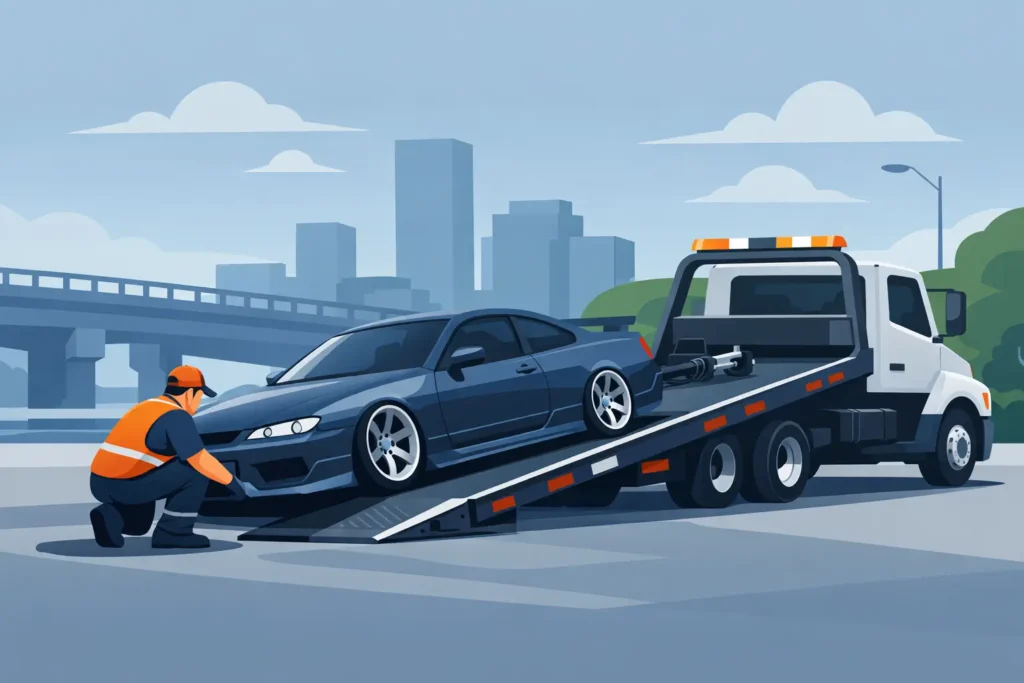
This is also why flatbed towing is usually the right choice. For low-clearance vehicles, a flatbed gives the operator more control over approach angle, ramp positioning, and overall vehicle handling. It is the safest option in most real-world situations, especially when the car has an aftermarket front lip, side skirts, expensive wheels, or suspension work.
Guide to towing a lowered car without causing damage
The first step is identifying exactly how low the vehicle sits and whether it still rolls freely. A lowered car with normal wheel movement is one thing. A lowered car with suspension damage, a broken control arm, or a wheel locked at an angle is a different job entirely. The loading plan changes based on what the car can and cannot do.
If the car rolls, the goal is to reduce the loading angle. That is typically done with a rollback or flatbed setup and additional ramp support if needed. In some cases, extra boards, low-profile ramps, or skates are used to create a smoother transition. The idea is simple – let the tires climb gradually so the bumper and underbody stay clear.
If the car does not roll, extra caution is needed. Dragging a lowered vehicle, even a short distance, can damage the front end, tear up the underside, or shift body panels. A proper recovery may involve dollies, skates, or a winch setup that keeps the vehicle straight and controlled while minimizing contact points.
Tie-down points matter too. Lowered vehicles often have less room underneath for straps and hardware, and some aftermarket parts make access tighter than normal. Securement has to be done in a way that protects the wheels, suspension, and body. This is one reason experience matters. A careful operator knows how to secure the car without guessing or forcing equipment into a space where it does not belong.
The biggest risks during a tow
The front bumper usually takes the most attention, but it is not the only vulnerable area. Front lips, splitters, side skirts, mud flaps, low-hanging exhaust sections, and underbody panels are all at risk if the angle is wrong or the car shifts during loading.
Wheel and tire setup can also create problems. Some lowered cars run wider wheels, stretched tires, or aggressive fitment that leaves very little room around the fenders. If the car is pulled up carelessly or secured without considering that setup, you can end up with rubbing, strap contact, or suspension stress.
Another issue is driver assumption. Some people hear lowered car and think only about sports cars. In reality, this can apply to daily drivers with coilovers, older imports, muscle cars, EVs with low front ends, and even stock vehicles that just sit lower than average. The risk is not about the badge. It is about ground clearance and loading angle.
What to tell the tow company before they arrive
A lot of damage can be avoided with a clear two-minute phone call. If your car is lowered, say that first. Do not assume the truck coming out will be set up correctly unless the dispatcher and driver know what they are dealing with.
Mention whether the car still rolls, whether the suspension is intact, and whether there are low body parts such as a front lip or side skirts. If the vehicle is stuck in a tight parking lot, garage entrance, apartment complex, or roadside shoulder, that is worth mentioning too. Access conditions matter almost as much as the car itself.
Photos can help if the service allows them. A quick picture of the side profile and front bumper gives the operator a much better idea of how low the car sits and what kind of loading angle will be needed.
Flatbed vs wheel-lift for a lowered car
For most lowered vehicles, flatbed towing is the safer choice. A flatbed allows the whole car to ride off the ground, which reduces the chance of scraping and gives more control during loading and unloading. It is also a better fit for all-wheel drive cars, performance cars, and vehicles with body kits.
A wheel-lift setup can work for some vehicles in specific situations, but it depends on clearance, drivetrain, and how the car has been modified. The problem is that a lowered front end and low side profile usually leave less room for towing hardware. If the goal is damage-free transport, the margin for error is smaller.
That is why operators who handle low cars regularly usually prefer flatbeds when available. It is not about making the job look fancier. It is about using the setup that gives the best control.
Real situations where lowered cars get damaged
Most towing damage on lowered cars happens before transport, not during the drive. The common mistakes are loading too steep, skipping ramp extensions, pulling the car too fast, or assuming it will clear because the tires started moving.
Parking garages are another problem area. A lowered car may already be in a tight spot with little room to straighten the approach. Add a dead battery, locked steering, or a flat tire, and the recovery becomes more technical. In those cases, patience matters more than speed.
Roadside calls can be tricky too. On busy routes around Tulsa, there is pressure to get the vehicle loaded quickly and clear the lane. That is understandable, but low-clearance cars still need the right setup. Rushing a difficult load usually costs more time once something scrapes or catches.
When it depends on the car
Not every lowered vehicle needs the exact same method. A mildly lowered sedan with no body kit may load easily with a careful flatbed operator. A heavily modified coupe with a very low front lip and stiff suspension may need a much shallower approach and extra support under the ramps.
The same goes for damaged vehicles. If the car has been in an accident and the suspension is collapsed, it may sit much lower on one corner than expected. A plan that would work on a normal breakdown may not work at all once the wheel position or body alignment changes.
That is why the best answer is often it depends. The right tow is based on clearance, condition, location, and how the vehicle needs to be secured.
Choosing the right help for a low-clearance vehicle
If you need a tow for a lowered car, ask direct questions. Do they use flatbeds? Have they handled low-clearance vehicles before? Can they safely load a car with a front lip, lowered suspension, or limited wheel movement? Clear answers matter.
For drivers in Tulsa and nearby areas, this is where local experience makes a difference. Tight apartment lots, busy roads, sloped driveways, and garage entrances all change how a low car gets loaded. Tulsa Towing handles these jobs with flatbed equipment and a damage-free approach that fits the vehicle instead of forcing a standard tow onto a non-standard car.
A lowered car can be towed safely. The key is simple – use the right equipment, reduce the loading angle, and treat the vehicle like the low-clearance car it is. If the person handling the tow understands that from the start, you are a lot less likely to deal with scraped bumpers, damaged parts, or an avoidable repair bill after the tow is done.
When your car already has a problem, the tow should solve one – not add another.