A flat on the shoulder of I-44 feels different than a flat in your driveway. One is inconvenient. The other can turn unsafe fast. If you are searching for flat tire help Tulsa drivers actually need in the moment, the first priority is not speed with a lug wrench. It is getting yourself out of danger and making a clear next move.
Some flats are simple. You have a usable spare, the vehicle is on level ground, traffic is not close, and you know the jack points for your car. Other situations are not worth the risk. If the tire came apart, the wheel may be damaged. If you are near fast-moving traffic, visibility is poor, or the car is sitting at an angle, roadside assistance is the safer call.
When flat tire help in Tulsa should be a roadside call
A lot of drivers assume every flat tire is a quick swap. Sometimes it is. Sometimes it is a problem that starts with a tire and ends with a tow.
If the tire blew at highway speed, there may be more going on than lost air pressure. The sidewall can shred. The rim can hit pavement. The vehicle may have been driven too far after the flat started. In those cases, putting on a spare may not solve the actual issue. It may only get the car rolling again with damage that still needs attention.
The location matters just as much. A flat in a parking lot gives you options. A flat on US-75, near Memorial during traffic, or along a narrow shoulder near Tulsa Hills is different. Changing a tire inches away from passing vehicles is not a routine task. It is a roadside hazard.
Low ground clearance can also change the decision. Some cars do not leave enough room to safely position a jack if the tire is fully deflated on uneven pavement. Add rain, darkness, or soft ground, and a do-it-yourself tire change stops being practical.
What to do first while waiting for flat tire help Tulsa service
Start by getting as far out of traffic as possible without forcing the vehicle to keep rolling on a destroyed tire. If you can safely make it to a shoulder, side street, or parking lot, do that. If not, stop in the safest available spot and turn on your hazard lights.
Stay aware of where you are standing. The safest place is usually inside the vehicle with your seat belt on if you are close to moving traffic and cannot fully clear the roadway. If you are well off the road, you can wait outside in a safe area away from the vehicle. The right choice depends on your position, traffic speed, weather, and visibility.
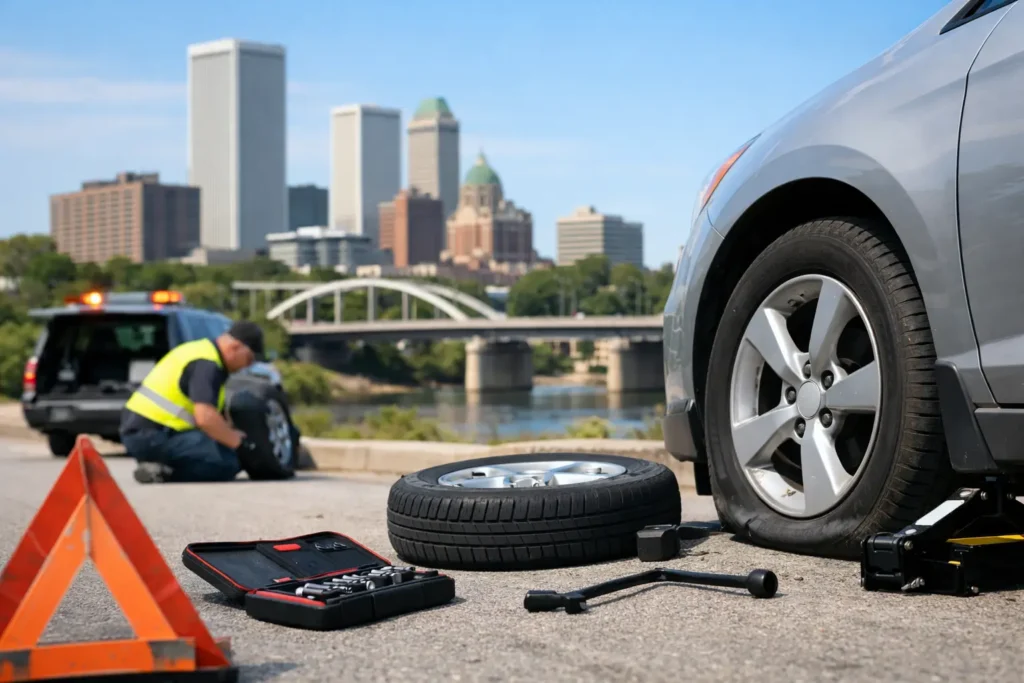
If you have reflective triangles or road flares and can place them without stepping into danger, use them. If not, do not create a second emergency trying to warn other drivers. Hazard lights and a clear description of your location when you call are often the most important steps.
Before help arrives, it also helps to know whether your vehicle has a spare at all. Many newer cars do not. Some come with inflator kits instead of spare tires. Others have compact spare tires with speed and distance limits. If you can safely check, confirm what is in the trunk. That saves time once the roadside technician gets there.
Not every flat tire can be fixed at the roadside
This is where a lot of frustration happens. Drivers call expecting a tire change, but the vehicle does not have a usable spare, the wheel lock key is missing, or the tire damage is too severe for an on-site fix.
A puncture in the tread area is one thing. A split sidewall is another. Sidewall damage cannot be patched safely. A bent rim may prevent even a good spare from seating correctly. If lug nuts are stripped, over-tightened, or swollen, removing the wheel can take more than standard roadside tools.
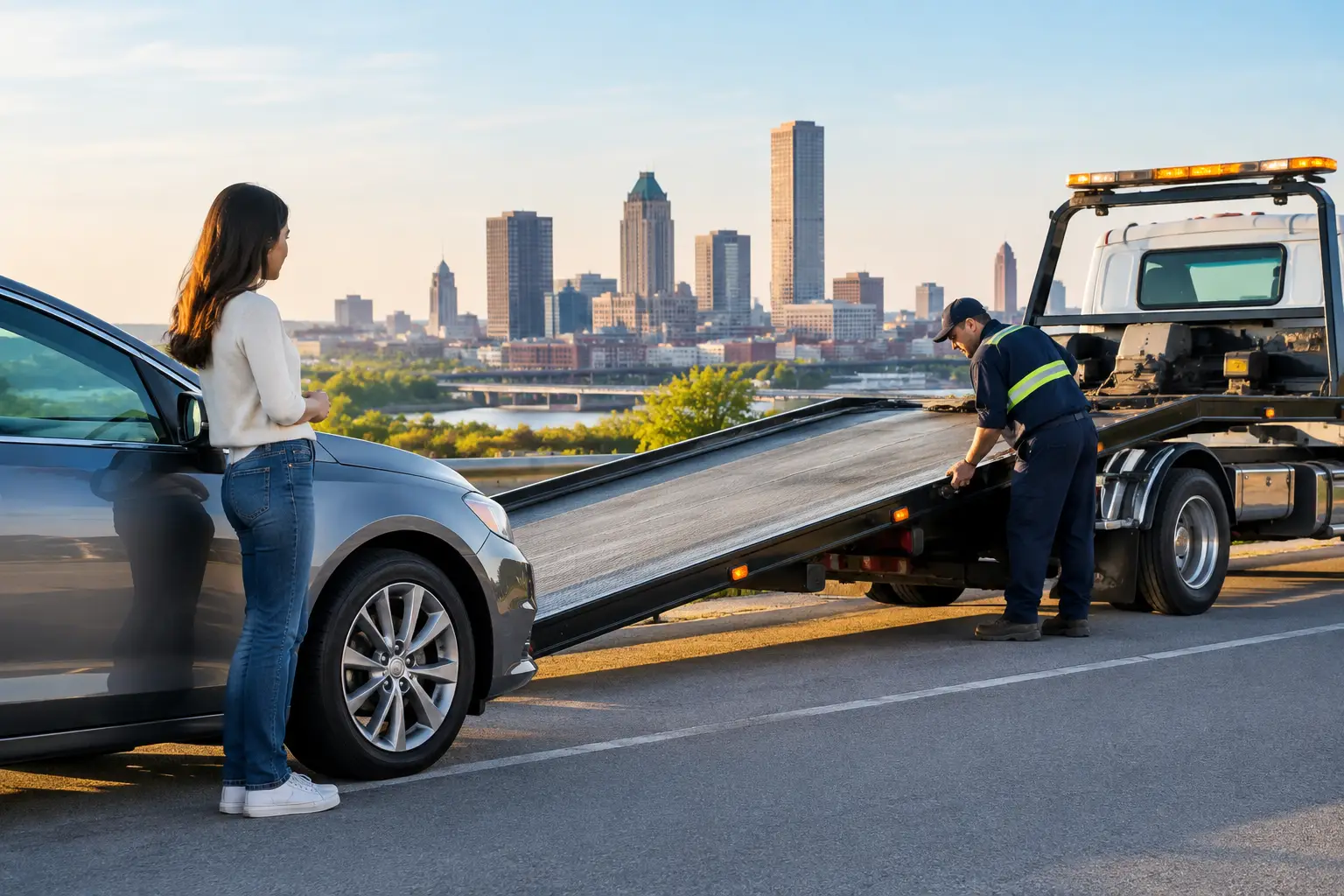
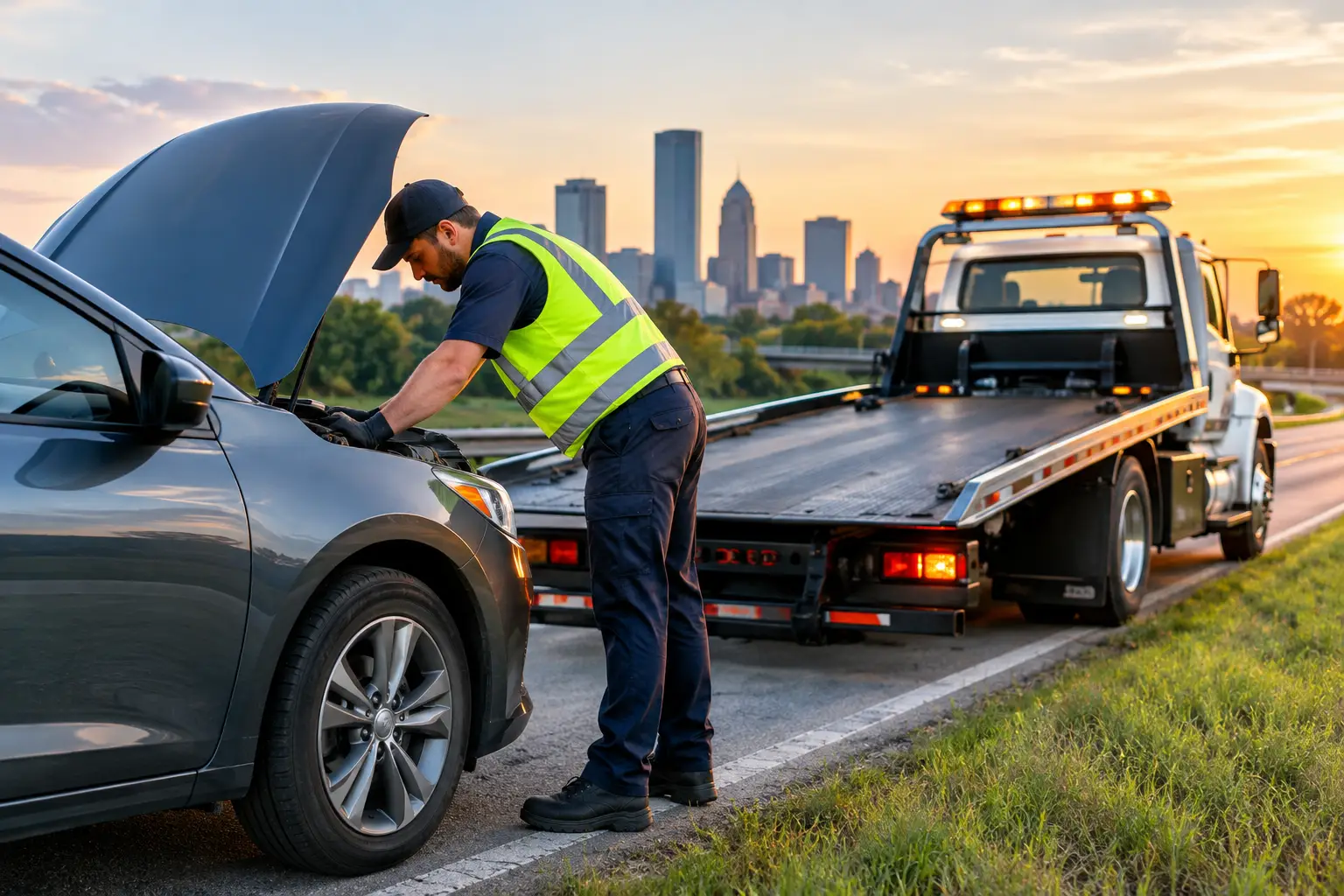
That is why the best roadside service does not treat every call as the same job. Sometimes the right service is installing the spare. Sometimes it is a short tow to a tire shop or repair facility. The goal is not just getting the car moving for five minutes. The goal is getting you and the vehicle out of a bad spot without making things worse.
Why location changes the safest response
There is a big difference between a flat in south Tulsa on a quiet street and a flat near a busy interchange. The same tire problem can require a completely different response depending on exposure to traffic, road surface, and whether the vehicle can be reached without creating additional risk.
In heavy traffic areas, time matters, but so does setup. A roadside provider needs enough room to position the truck, approach the vehicle safely, and work without exposing you or the operator to unnecessary danger. That is one reason local service matters. Familiarity with common problem areas, traffic flow, and alternate access routes can cut down delays and confusion when the call comes in.
For drivers, the practical takeaway is simple. Give the clearest location details you can. Street name, direction of travel, nearest exit, nearby landmark, and whether you are on the shoulder, in a turn lane, or in a parking lot all help speed up the response.
What good flat tire help looks like
When you are stranded, you do not need a long explanation. You need someone to show up, assess the situation correctly, and handle the vehicle without guesswork.
Good flat tire service starts with communication. You should know whether the job is likely to be a spare installation or a tow. You should be able to explain what happened and get a direct response about what the next step probably is.
It also means proper vehicle handling. A flat can create awkward loading angles, especially if the tire is off the bead or the wheel has damage. The vehicle should be lifted, moved, or loaded in a way that avoids additional contact damage. That matters even more with low-clearance cars, larger SUVs, and vehicles with electronic parking systems.
Tulsa Towing is built around that kind of local roadside response – straightforward communication, careful handling, and service limited to Tulsa so dispatch stays focused.
If you are thinking about changing the tire yourself
There are situations where handling it yourself makes sense. If you are at home, on level pavement, with daylight, a good spare, and the right tools, changing the tire may be faster than waiting. But even then, it depends on the vehicle and your comfort level.
Factory jacks are not especially forgiving. They can shift if the ground is uneven or soft. Lug nuts that were installed with an impact gun can be hard to break loose with the small wrench that came with the car. If you have never changed a tire on your current vehicle, a stressful roadside moment is a rough time to learn where the jack points are.
There is also the question of what happens after the spare goes on. Many temporary spares are only meant for limited speed and short distance. If your destination is not close, or the tire shop is across town in traffic, you may still be better off with a tow.
How to make a flat tire call go faster
The best way to speed up service is to be specific. Tell the dispatcher whether the tire is flat, blown out, or off the rim. Mention whether the car is in traffic, on the shoulder, or somewhere safer like a lot or driveway. Say whether you have a spare and whether you know if it is inflated.
If there is visible wheel damage, mention that too. The same goes for anything unusual like locking lug nuts, a missing wheel key, a loaded trunk that blocks access to the spare, or a vehicle that is sitting too low to move normally.
Those details help determine whether the response should be roadside tire service or a tow. They also reduce the chance of lost time when the truck arrives.
The goal is safe movement, not a temporary fix at any cost
Most drivers are not looking for tire advice when they search for help. They are looking for the fastest safe way out of a bad moment. That is the right mindset.
A flat tire is sometimes a five-minute problem. Sometimes it is a sign the vehicle should not be driven another mile. The smartest response is not always the cheapest or the quickest-looking one in the moment. It is the option that gets you off the roadside, protects the vehicle from further damage, and gets you where you actually need to go.
If you are dealing with a flat, keep the decision simple. Get safe first. Then choose the kind of help that fits the real situation, not the best-case version of it.