A vehicle that will not start in a grocery-store lot is stressful enough without wondering, “how much does a tow cost in Tulsa?” The honest answer is that the price depends on the job. A short tow across town is not priced the same as a pickup on I-44, a low-clearance car that needs a flatbed, or a vehicle stuck off the road after heavy rain.
For many local calls, a straightforward tow within Tulsa may fall roughly in the $100 to $175 range. Longer trips, difficult loading conditions, larger vehicles, and after-hours service can raise that number. The right way to avoid surprises is to explain where the vehicle is, what it is doing, where it needs to go, and what kind of vehicle it is before a truck is dispatched.
How Much Does a Tow Cost in Tulsa?
Most towing bills are built around two basic parts: a dispatch or hook-up charge and the distance traveled. The hook-up charge covers getting the truck to your location, preparing the vehicle for transport, and loading it safely. The mileage portion reflects how far the vehicle needs to be moved.
For a normal passenger car that can be safely loaded, a short city tow is usually the most affordable situation. If your car is disabled near Riverside, Memorial, Downtown, or Tulsa Hills and needs to go to a nearby repair shop, the job is generally simpler than a tow from Tulsa to a shop in Broken Arrow, Jenks, or Bixby.
A quote should match the actual situation, not just a quick guess based on a zip code. A driver may need to work around traffic, a parking garage, a locked steering wheel, a flat tire, or a vehicle that cannot be shifted into neutral. Those details affect the time, equipment, and care needed to move the vehicle without causing more damage.
What Changes the Price of a Tow?
Distance is a major factor, but it is not the only one. A five-mile tow with an easy pickup on a clear street is different from a five-mile tow from a tight apartment lot or a busy highway shoulder. Safe loading takes time, especially when traffic is moving close to the vehicle.
Vehicle size and condition also matter. A compact sedan is usually easier to transport than a heavy-duty pickup, a full-size SUV, or a vehicle with suspension damage. If the vehicle has been in an accident, has a wheel turned sharply, or cannot roll freely, the operator may need additional equipment or a different loading approach.
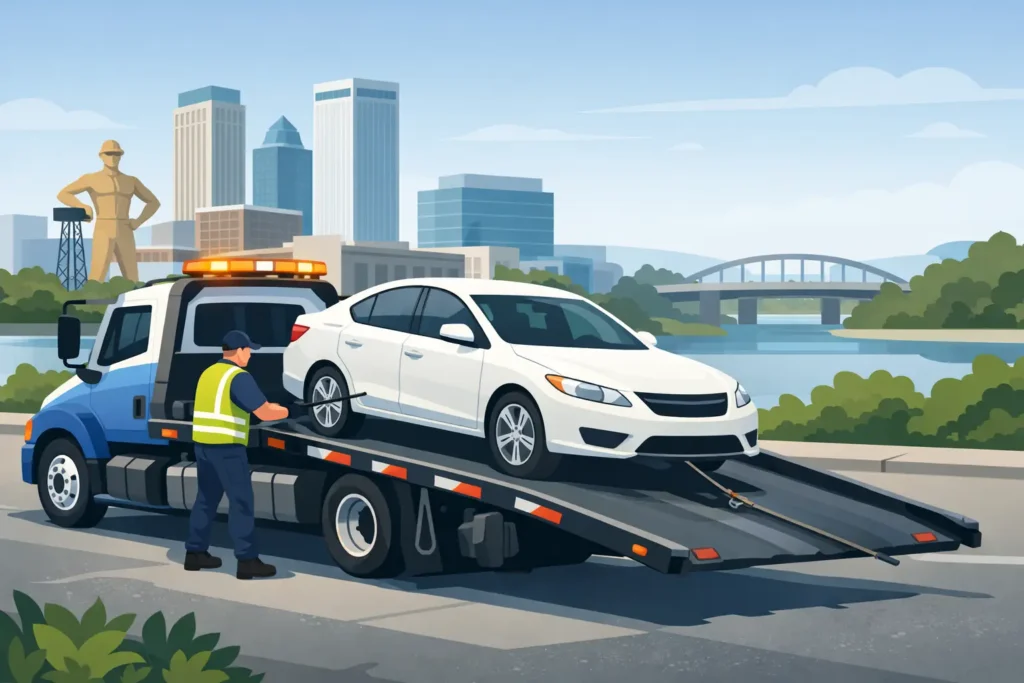
Flatbed towing can also affect the quote, but it is often the right choice for the vehicle. A flatbed keeps all four wheels off the road and is especially useful for all-wheel-drive vehicles, low cars, luxury vehicles, and electric vehicles. It is not about making the job complicated. It is about using the proper method so a simple breakdown does not become an expensive repair.
Time and location can change the cost as well. A call during regular daytime hours in a safe, accessible location is typically more straightforward than a late-night emergency on US 75 or Highway 169. Weather, road closures, and heavy traffic can slow access to the vehicle and create a more difficult recovery environment.
Towing vs. Roadside Assistance: Which Costs Less?
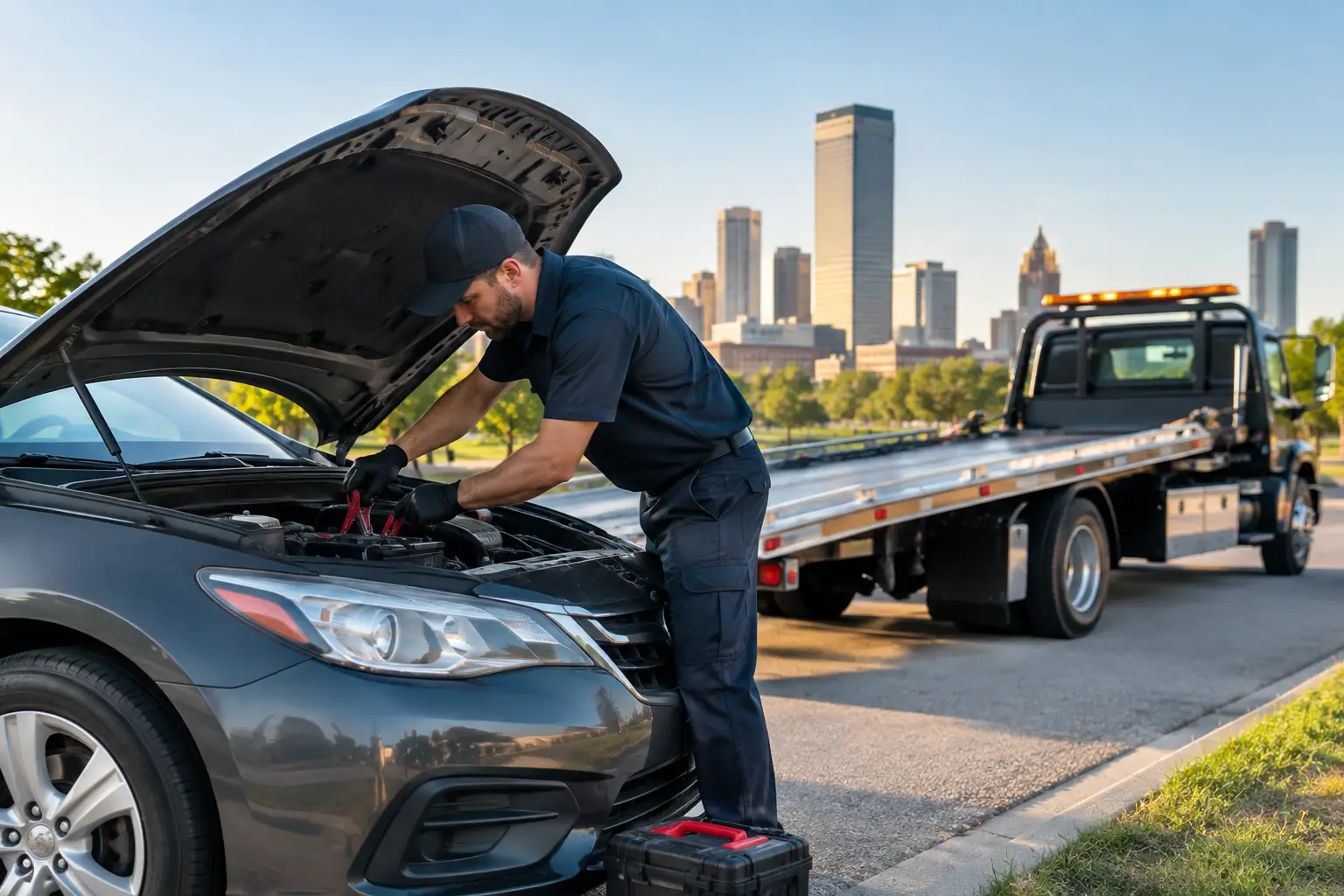
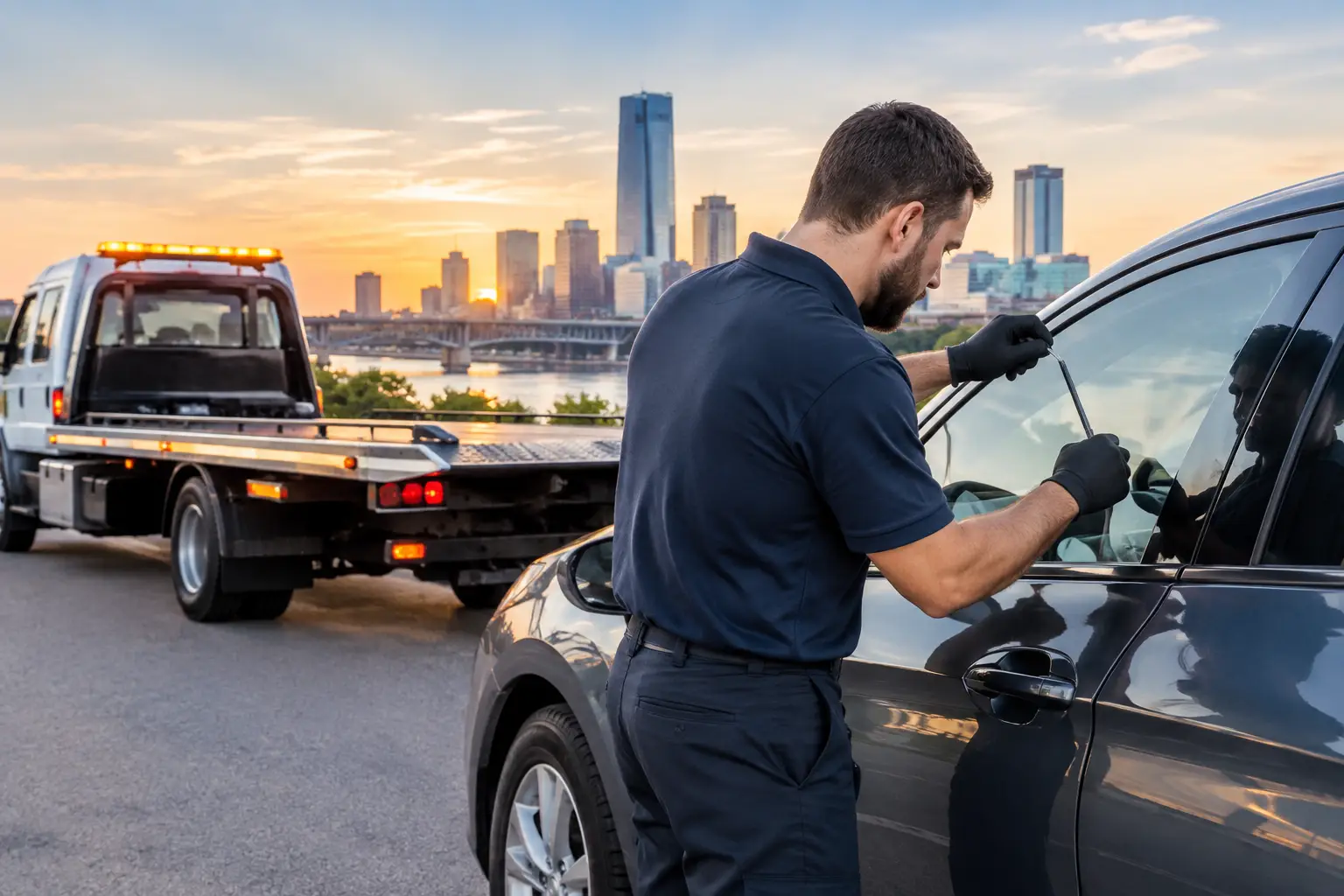
Not every disabled vehicle needs a tow. If the issue can be safely handled where the vehicle sits, roadside assistance may be the less expensive and faster option. A dead battery may only need a jumpstart. A locked vehicle may only need a lockout service. A flat tire may be manageable with help changing the tire, provided you have a usable spare and the vehicle is in a safe place.
That said, roadside service is not always the final answer. A jumpstart can get a car running, but it does not fix a failing battery, alternator, or loose connection. If the vehicle dies again, has warning lights, overheats, leaks fluid, or runs rough, towing it to a repair shop may save you from being stranded a second time.
Winch-out service is another situation with different pricing. If a vehicle is stuck in mud, a ditch, a soft shoulder, or an awkward parking area, the work is not simply a standard tow. The operator has to assess the vehicle position, ground conditions, attachment points, and the safest way to pull it free. Recovery work can cost more because the risk and time involved are different.
Why a Cheap Quote Can Become a Problem
Price matters, especially when a breakdown was not in the budget. But the lowest number over the phone is not always the lowest cost once the vehicle is loaded. A quote that leaves out mileage, vehicle condition, difficult access, or required equipment can lead to confusion when the truck arrives.
Careful towing is also worth considering. A low-clearance car can scrape if it is loaded carelessly. An all-wheel-drive vehicle can be damaged if it is moved with the wrong wheels on the ground. EVs, including Tesla vehicles, need operators who understand safe loading points and transport procedures. The goal is to get the vehicle to the shop without adding body, wheel, drivetrain, or battery-related damage to the original problem.
A clear quote is more useful than a vague low price. Ask what the quoted amount includes, whether mileage is included, and whether there could be added charges based on your vehicle’s condition or location. You should also tell the dispatcher if the car is in a garage, has a flat tire, is blocked in, has accident damage, or will not roll. Those details help send the right equipment the first time.
How to Get an Accurate Tow Quote Fast
When you need a tow truck near you, have a few details ready before you call. The operator needs your exact location, including a cross street, parking-lot name, highway direction, or mile marker when possible. On a freeway, knowing whether you are on the northbound or southbound side can prevent delays.
Be ready to share the vehicle year, make, model, and condition. Mention whether it is all-wheel drive, electric, lowered, oversized, or carrying a load. Explain the problem in plain language: it will not start, it has a flat tire, it was in an accident, it is overheating, or it is stuck. Then provide the destination, whether that is your home, a local repair shop, or a dealership.
You do not need to diagnose the vehicle perfectly. You just need to describe what you see. A good dispatcher can ask the follow-up questions needed to determine whether you need a jumpstart, tire help, a winch-out, or a flatbed tow.
When a Tow Is the Safer Choice
If your vehicle is stopped on a high-speed roadway, in an active traffic lane, or on a narrow shoulder, safety comes before cost. Move away from traffic if you can do so safely, turn on your hazard lights, and avoid standing near the travel lanes. A vehicle that is unsafe to drive should not be pushed to make it “just a few more miles.”
The same applies after an accident or when the car has major mechanical symptoms. Grinding noises, severe overheating, smoke, a damaged wheel, steering problems, or a warning that the vehicle should not be driven are all reasons to arrange transport rather than risk a larger repair or another roadside emergency.
Tulsa Towing, powered by Neptune Towing, focuses on straightforward local service: assess the situation, use the right equipment, and get the vehicle where it needs to go safely. The final cost should make sense for the actual job, and clear communication before dispatch is the best way to know what to expect.
When you are stranded, give the full picture, ask for the quote details, and choose the safe option for both you and your vehicle. A properly handled tow may cost more than hoping the car makes it home, but it can prevent a much bigger problem before the day is over.