A vehicle can get stuck faster than most drivers expect. One wet shoulder, muddy yard, drainage ditch, steep driveway, or loose gravel parking area can leave the tires spinning with no safe way out. Knowing how winch out service works helps you make the right call before repeated attempts to drive out turn a simple recovery into vehicle damage.
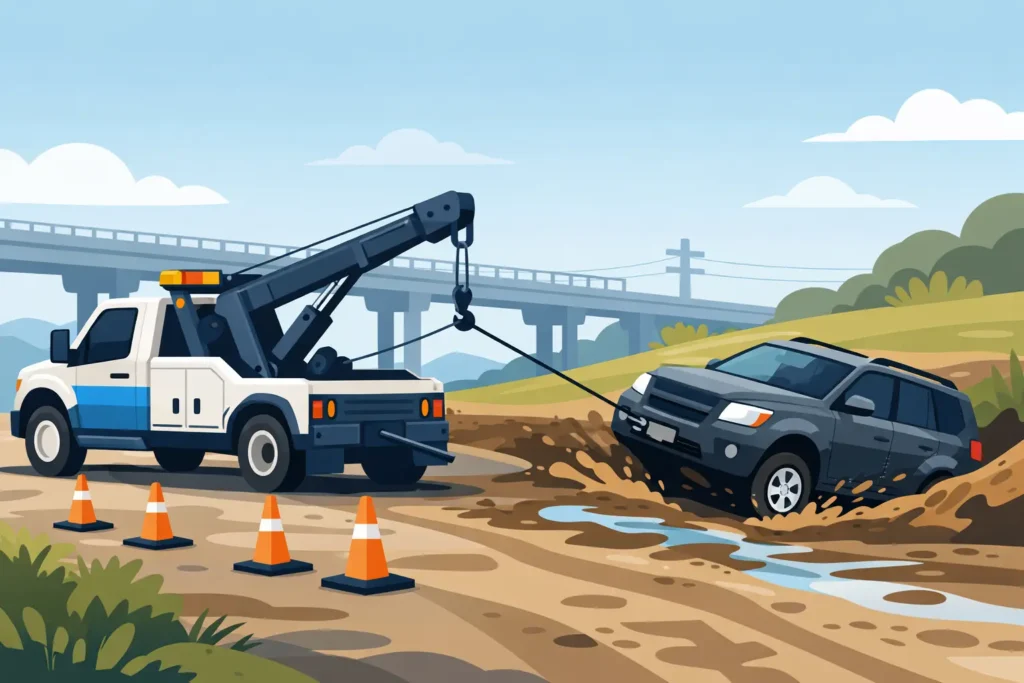
A winch-out is a controlled recovery service. Instead of pulling your vehicle with another car or forcing it forward under its own power, a tow operator uses a truck-mounted winch, recovery straps or chains, and a secure anchor point to move it back onto stable ground. The goal is not just to get the vehicle moving. It is to recover it in a way that protects the vehicle, the people nearby, and the property around it.
What a Winch-Out Service Is Designed to Handle
Winch-out service is for vehicles that are stuck, off the pavement, or unable to move safely under their own power. Common calls include a car that slid into a ditch after rain, a truck stuck in soft ground, or a vehicle that dropped a wheel off the edge of a driveway.
It can also be the right solution when a driver tries to avoid traffic, pulls onto a muddy shoulder, and cannot regain traction. Around Tulsa, this can happen after heavy rain along unpaved parking areas, residential streets, construction zones, and highway shoulders. Even a light rain can make red clay, grass, and loose soil surprisingly slick.
A winch-out is different from a standard tow. A regular tow transports a disabled vehicle from one location to another. A winch-out first recovers the vehicle from a position where it cannot be safely driven or loaded. If the vehicle has mechanical damage, a flatbed tow may be needed after the recovery.
How Winch Out Service Works on Scene
The operator starts by looking at the full situation, not just hooking a cable to the nearest part of the vehicle. They check how far the vehicle is off the road, whether it is sitting level, the condition of the ground, where the tires are positioned, and whether there are hazards such as traffic, standing water, trees, curbs, fences, or steep drop-offs.
This assessment matters because the safest direction to pull is not always the direction the vehicle was traveling. Pulling at the wrong angle can increase the risk of dragging the vehicle sideways, damaging suspension components, or causing it to slide farther into soft ground.
Finding a secure recovery point
Once the plan is clear, the operator positions the tow truck on firm ground and sets it up as a stable recovery vehicle. The truck’s winch cable is then connected to an approved recovery point on the stuck vehicle whenever possible.
Recovery points are designed to handle pulling force. They are not the same as a bumper cover, axle component, steering part, or random piece of metal under the vehicle. A careful operator knows the difference. Using the wrong connection point may bend panels, damage the undercarriage, or create a dangerous failure under tension.
For some recoveries, additional straps, rigging, or pulley blocks may be used to control the pull or change the angle. The equipment choice depends on the vehicle’s weight, how deeply it is stuck, and the terrain. A compact car on wet grass is a different job from a heavy-duty pickup sunk into mud.
Pulling the vehicle out slowly and under control
With the connection secured, the winch applies steady tension. The vehicle is moved gradually rather than yanked free. Slow, controlled recovery gives the operator time to watch tire movement, ground conditions, cable alignment, and clearance around the vehicle.
The driver may be asked to keep the wheels straight, shift into neutral, or use very light power when directed. In many cases, the safest move is to let the winch do the work while the driver stays out of the vehicle or follows the operator’s instructions from a safe distance. This depends on the position of the vehicle and the recovery plan.
Once the vehicle reaches solid, level ground, the operator checks whether it can roll and steer normally. If it is safe to drive, the service may end there. If the vehicle has damage, a flat tire, a mechanical issue, or is still unsafe to operate, it can be loaded for transport instead.
Why Spinning the Tires Often Makes the Job Harder
When tires lose traction, the natural reaction is to press the gas harder. That usually makes the situation worse. Spinning tires can dig deeper into mud, loose gravel, snow, or soft grass. It can also throw debris, overheat components, and leave the vehicle sitting lower than it was when it first got stuck.
Trying to rock the vehicle back and forth can help in a minor traction situation on level ground, but it has limits. Stop if the tires continue to spin, the vehicle moves closer to a ditch, or the ground gives way beneath it. Do not keep accelerating near traffic, standing water, or a steep edge.
Avoid using another personal vehicle to pull yours out with a rope, chain, or strap unless the situation is simple and the people involved know exactly what they are doing. Improper pulls can damage both vehicles or cause a strap, chain, or attachment point to fail. A stuck vehicle may look like a quick fix from the road, but the force involved can be significant.
When a Winch-Out May Not Be the Right First Step
Not every stuck vehicle can be recovered with a straightforward winch pull. If a vehicle is heavily damaged, resting against an obstacle, in deep water, severely tilted, or located where a tow truck cannot safely position itself, the job may require a different approach.
The same is true when the ground under the tow truck is unstable. A recovery truck needs firm footing to pull safely. The operator may need to change angles, use different equipment, or determine that the vehicle should be handled by a more specialized recovery setup.
Electric vehicles and low-clearance cars also require extra care. Their battery placement, underbody panels, and low approach angles mean rushing the setup can cause costly damage. Proper attachment points and a controlled pull matter more than speed in these situations.
What to Do While You Wait for a Winch-Out
Your first priority is safety. If you are near moving traffic, turn on your hazard lights and move to a safer location if you can do so without walking into traffic. Do not stand downhill from the vehicle, directly in front of it, or near a tensioned cable during recovery.
When you call, give a clear description of where the vehicle is located and what happened. Mention whether it is in mud, a ditch, water, grass, gravel, or on a slope. Let the operator know the type of vehicle, whether it is all-wheel drive or four-wheel drive, and if it has any visible damage. A photo can also help when dispatch requests one.
Remove loose items from around the tires if it is safe, but do not crawl underneath the vehicle or attempt to dig it out near a roadway. Keep children, pets, and bystanders back while the recovery is underway. The operator needs room to position the truck and work without anyone entering the recovery area.
A Careful Recovery Can Prevent a Bigger Problem
A winch-out is about controlled movement, proper equipment, and knowing when to stop before damage gets worse. The right setup protects more than the vehicle. It protects you, other drivers, and the people working around the recovery.
If your vehicle is stuck in Tulsa, Jenks, Bixby, Broken Arrow, or nearby and you cannot get it out safely, leave the tires alone, move to a safe spot, and let an experienced operator assess the recovery before a bad position becomes a more expensive one.