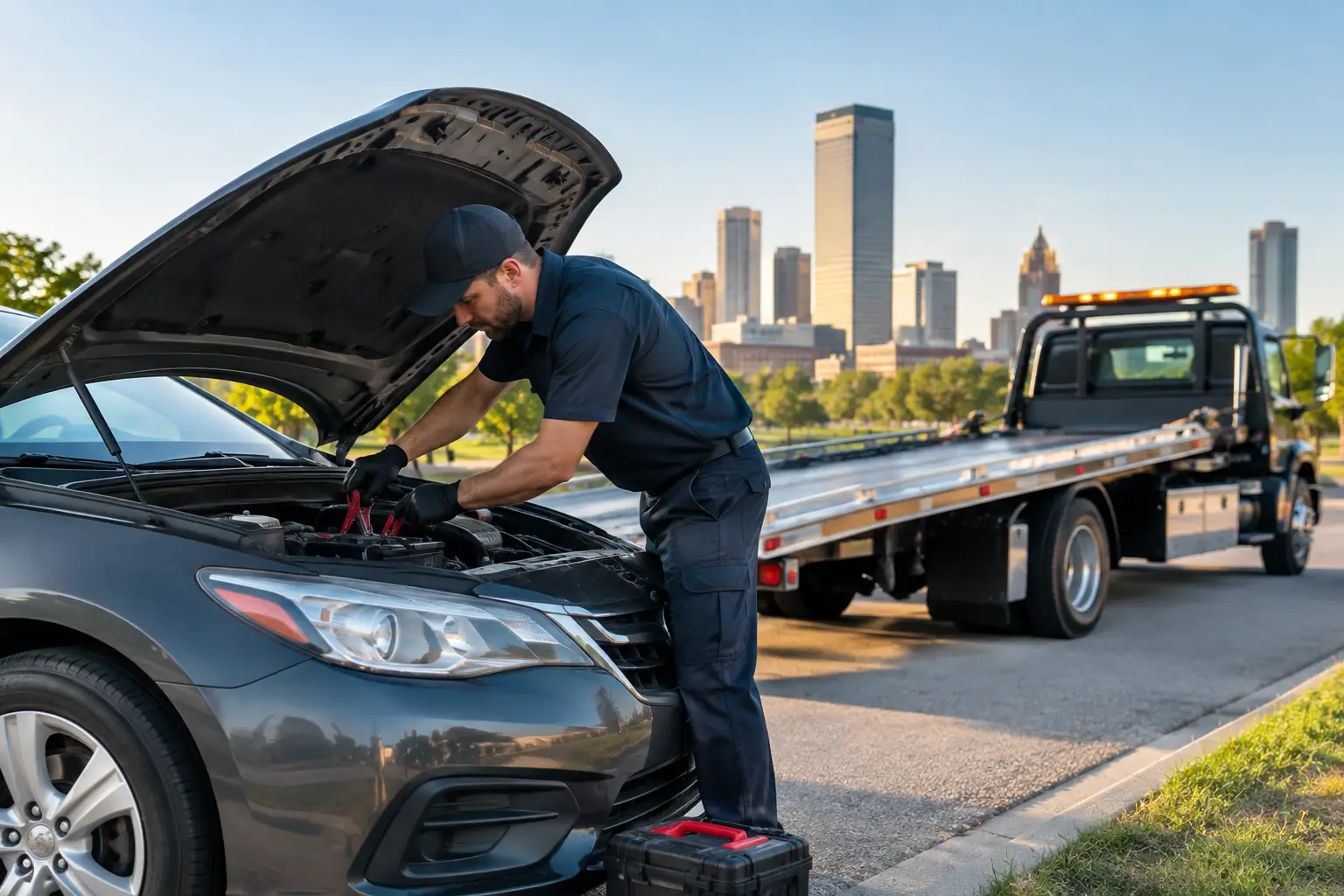
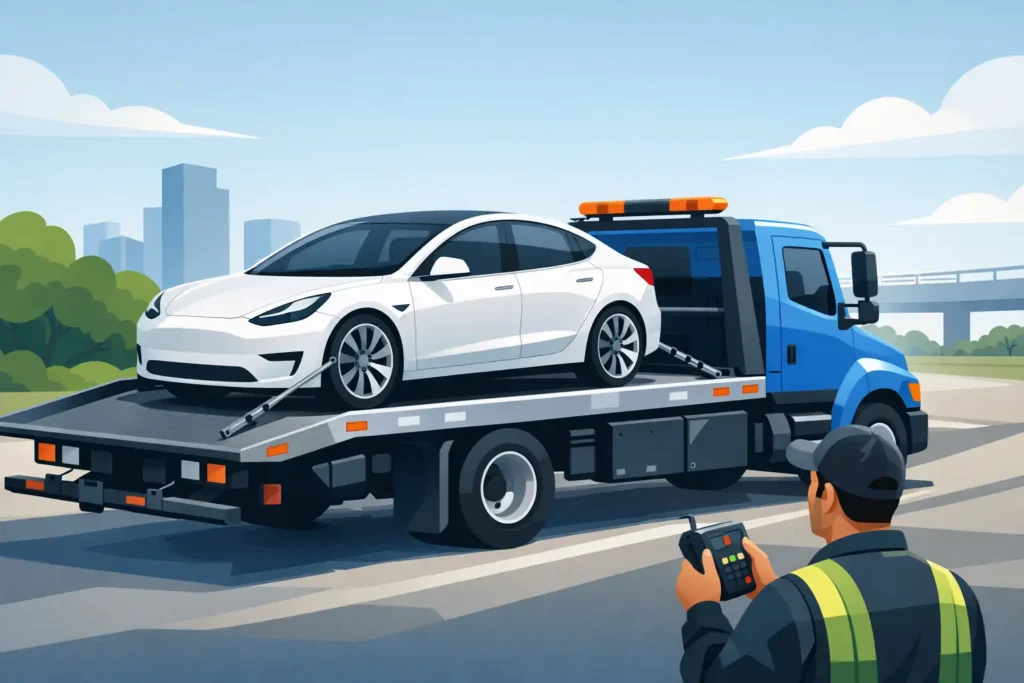
A dead Tesla on the shoulder is not a vehicle to hook up quickly and pull. Can a Tesla be flatbed towed? Yes. In most breakdown, collision, and no-start situations, a flatbed is the right way to move it because all four wheels stay off the road.
That matters more with an electric vehicle. Teslas use electric motors, a high-voltage battery system, low-clearance body panels, and electronic parking controls. Moving one the wrong way can turn a simple roadside problem into damage that was not there before. The goal is simple: get the vehicle loaded carefully, secured correctly, and delivered where you need it without adding another problem.
Can a Tesla Be Flatbed Towed Without Damage?
Yes, when the truck operator uses proper loading procedures and the vehicle is in a condition that allows it to be moved safely. A flatbed keeps the tires from rolling on the pavement, which is the main concern with Tesla towing. It also gives the operator control over the loading angle and makes it easier to avoid contact with the lower bumper, battery area, wheels, and suspension.
A conventional tow with the drive wheels on the ground is generally not the right answer for a Tesla. Depending on the model and situation, rolling the vehicle can create problems with the drive unit or other components. Even if the car appears to be in Neutral, that does not automatically mean it should be towed like a regular gas vehicle.
A flatbed is also the better choice after an accident. Damage may not be obvious from the outside. A wheel may be bent, a suspension part may be broken, or the vehicle may not track straight. Keeping it fully off the road avoids putting more stress on damaged parts while it is being transported.
Why Tesla Towing Takes More Care
The battery pack sits low in the vehicle, underneath the passenger compartment. That design helps with handling and weight distribution, but it leaves less room for careless loading. The front bumper and lower valance can also sit close to the ground, especially on certain models or cars parked on uneven pavement.
A careful operator looks at the approach before pulling the vehicle onto the bed. The bed angle, the position of the truck, and the condition of the vehicle all affect how it should be loaded. A steep approach can cause scraping. A vehicle with a locked wheel, flat tire, or damaged suspension may need a different method than one that simply lost power in a parking lot.
The vehicle also needs to be secured from the wheels using appropriate equipment. Straps should not be placed across fragile underbody components, suspension pieces, or areas that can be damaged under tension. This is not the time to guess at a tie-down point because the car is expensive or because it looks easy to load.
What Happens if Your Tesla Will Not Go Into Neutral?
This is one of the most common questions at a roadside call. A Tesla may not go into a transport or tow setting if the 12-volt system is weak, the main screen will not power up, the vehicle has collision damage, or a parking brake issue is present.
If the vehicle can power on, the driver may be able to use the transport-related setting shown on the screen for that model. Follow the instructions displayed in the vehicle rather than forcing the shifter or trying to bypass a warning. The setting is meant for short, controlled movement during loading, not for towing the car down the road on its own wheels.
If the Tesla cannot be placed in the needed mode, it can still often be loaded onto a flatbed using the right recovery equipment. The operator may use wheel dollies, skates, or another controlled loading method to keep locked wheels from being dragged. Which method makes sense depends on whether the car is in a garage, on a busy road, in a driveway, or damaged from an accident.
Dragging a locked Tesla across pavement is not a shortcut. It can damage tires, wheels, suspension components, or the vehicle underneath. A little extra setup time is better than creating a much larger repair bill.
When You Need a Flatbed Tow for a Tesla
A flatbed is the normal choice when the Tesla has a dead battery, a no-start condition, a flat tire that cannot be changed safely, collision damage, or a warning that prevents driving. It is also the safer option when a wheel is locked, the vehicle is stuck, or there is any concern about the underbody.
A low battery is different from a dead 12-volt battery, and that distinction can affect the call. If the high-voltage battery is low but the car is otherwise operating normally, the vehicle may still move under its own power to a charger. If it will not move, the display is off, or the car will not release the parking brake, tell the tow operator before dispatch. That helps ensure the right equipment arrives.
After a collision, do not assume the car is safe to drive just because it starts. If the underside struck a curb, road debris, or another object, the battery area may need to be inspected. If there is smoke, heat, unusual odor, visible fluid, or a warning about a serious electrical issue, move away from the vehicle if it is safe to do so and call emergency services. Let the towing company know about those conditions before they arrive.
What to Tell the Tow Truck Driver
Clear information saves time on a Tesla tow. When you call, share the model if you know it, where the vehicle is located, and whether it can roll freely. Mention any flat tires, locked wheels, accident damage, low clearance, parking garage limits, or warning messages.
You do not need to diagnose the vehicle. A simple description is enough: “It will not shift,” “the screen is black,” “the front wheel is damaged,” or “it is blocked in a garage.” Those details tell the operator whether a standard flatbed load is likely or whether extra equipment may be needed.
If you are on I-44, US 75, Memorial, or another high-traffic Tulsa road, focus first on safety. Turn on hazard lights if they work, move yourself away from traffic when possible, and avoid standing between the vehicle and the roadway. A tow truck operator can handle the vehicle. Your job is to stay out of harm’s way until help arrives.
Before the Flatbed Arrives
Keep the key card or phone key available, but do not leave the phone inside the vehicle. If the Tesla is still powered on, take a quick photo of the screen warnings and any visible damage. That can be useful later when discussing the issue with a service center or repair shop.
Remove loose personal items if you can do so safely. If the vehicle is in a tight garage or parking area, make sure the operator knows about height restrictions, narrow turns, or obstacles around the car. A flatbed needs room to position, lower the bed, and load without rushing.
Do not try to push the Tesla out of traffic unless there is an immediate safety reason and you know it can roll freely. A car that seems to be in Neutral can still engage a parking brake or stop moving unexpectedly. It is better to wait for the right equipment than force a movement that causes damage.
Flatbed Towing for Teslas in Tulsa
Tesla problems do not always happen in a convenient parking lot. They happen after work in South Tulsa, on a shoulder near Tulsa Hills, in a downtown garage, or on the way home to Broken Arrow, Jenks, or Bixby. Local route knowledge helps, but careful loading is what protects the vehicle.
Tulsa Towing uses flatbed equipment for Tesla transport and approaches each call based on the vehicle’s actual condition. A car that rolls normally is handled differently from one with a locked wheel, dead low-voltage system, or collision damage. Clear communication before arrival helps get the right plan in place.
If your Tesla will not move, do not let the urgency push you toward an improper tow. Ask for a flatbed, explain what the car is doing, and let the operator assess the safest way to load it. Getting it to a charger, repair shop, dealership, or home carefully is the part that counts.