A tow that goes wrong usually goes wrong before the truck ever moves. The angle is bad, the hookup is rushed, or the vehicle is pulled the wrong way for its condition. A safe vehicle towing process is about avoiding those problems from the start, not fixing them after damage happens.
When your car is disabled on I-44, stuck in a tight lot near Memorial, or sitting low enough to scrape on a standard approach, the towing method matters. Different vehicles need different handling. The process should stay simple for the driver, but the work behind it should be careful, deliberate, and based on what is actually in front of the operator.
What a safe vehicle towing process really means
Most drivers think towing starts with hooking up a car and heading out. In real roadside work, it starts with assessment. Before loading begins, the operator needs to look at where the vehicle is sitting, whether it rolls freely, whether steering is locked, whether suspension damage is present, and what type of vehicle is being moved.
That matters because a disabled pickup, a low-clearance sedan, and an electric vehicle do not get handled the same way. If the wrong equipment is used or the loading angle is too steep, the tow itself can create more damage than the original breakdown. That is exactly what a safe vehicle towing process is meant to prevent.
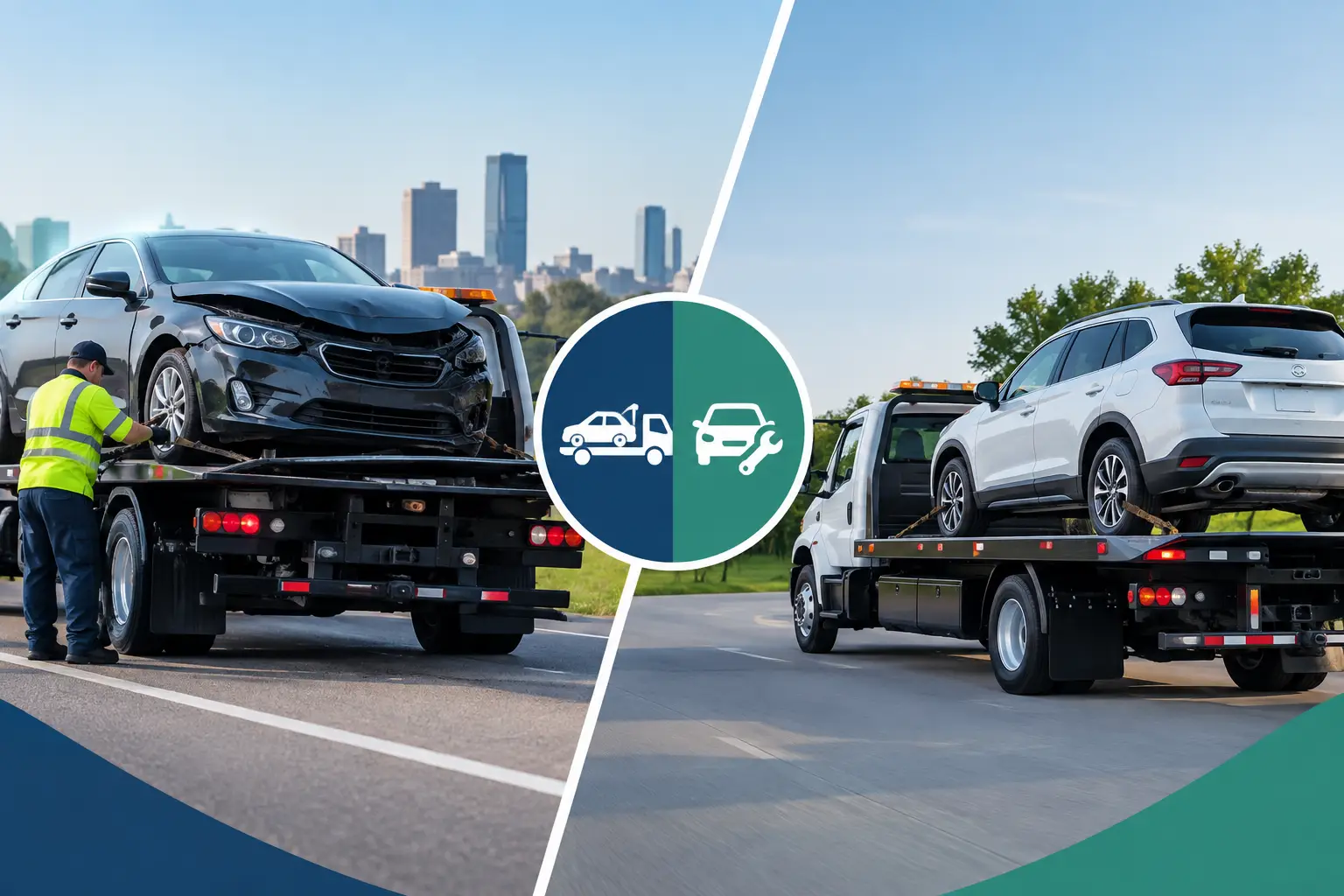
In most situations, flatbed towing is the safer choice because the entire vehicle is loaded and secured off the road. It reduces wear during transport and gives the operator more control over how the vehicle is pulled, positioned, and tied down.
The first step is securing the scene
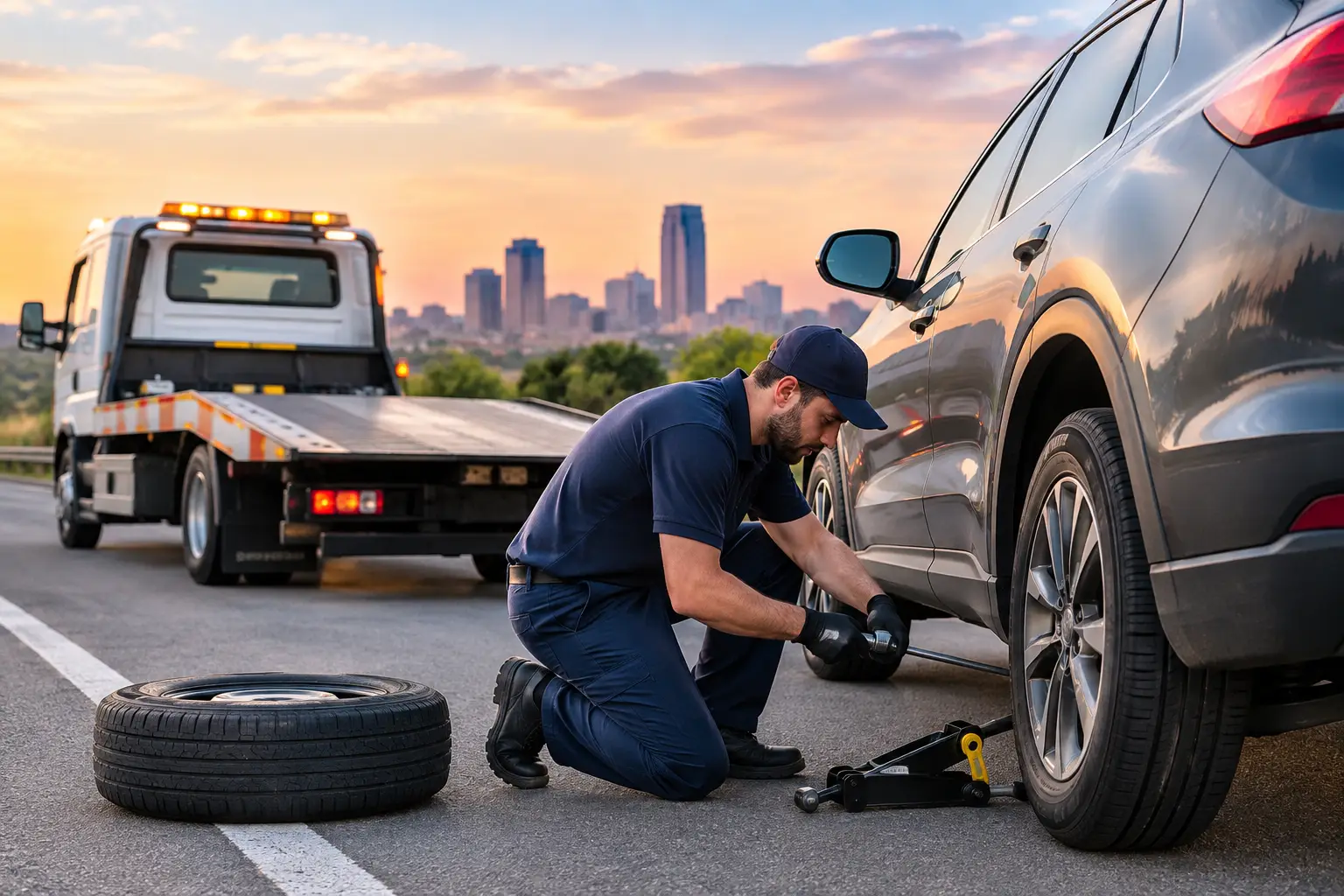
Before the vehicle is touched, the area around it has to be managed safely. On a busy shoulder or a narrow city street, that means positioning the tow truck to create a working buffer and reduce exposure to traffic. Hazard lights, traffic awareness, and clear communication with the driver all come first.
This part is easy to overlook when people are stressed, but it matters. If a driver is standing too close to traffic or trying to help in an unsafe spot, the risk goes up fast. A good operator keeps the customer informed and gets the vehicle set up without adding confusion.
If the car is in a parking garage, apartment complex, or tight driveway, the same principle applies. The operator needs room to work and a plan for the safest loading angle. Tight spaces often require more patience, not more speed.
Why vehicle condition changes the towing method
Not every disabled vehicle can be loaded the same way. If a wheel is bent, the front end is damaged, the transmission will not shift, or the parking brake is locked, the loading approach has to change.
A vehicle that rolls normally is one thing. A vehicle that drags, leans, or has broken suspension parts is another. In those situations, the operator may need skates, dollies, winching adjustments, or a different approach angle to prevent scraping or additional stress on damaged components.
This is especially important after an accident. Even if the damage looks minor, the vehicle may not track straight or may have hidden structural issues. Rushing the load can make a bad situation worse.
Flatbed loading is more than pulling a vehicle up a ramp
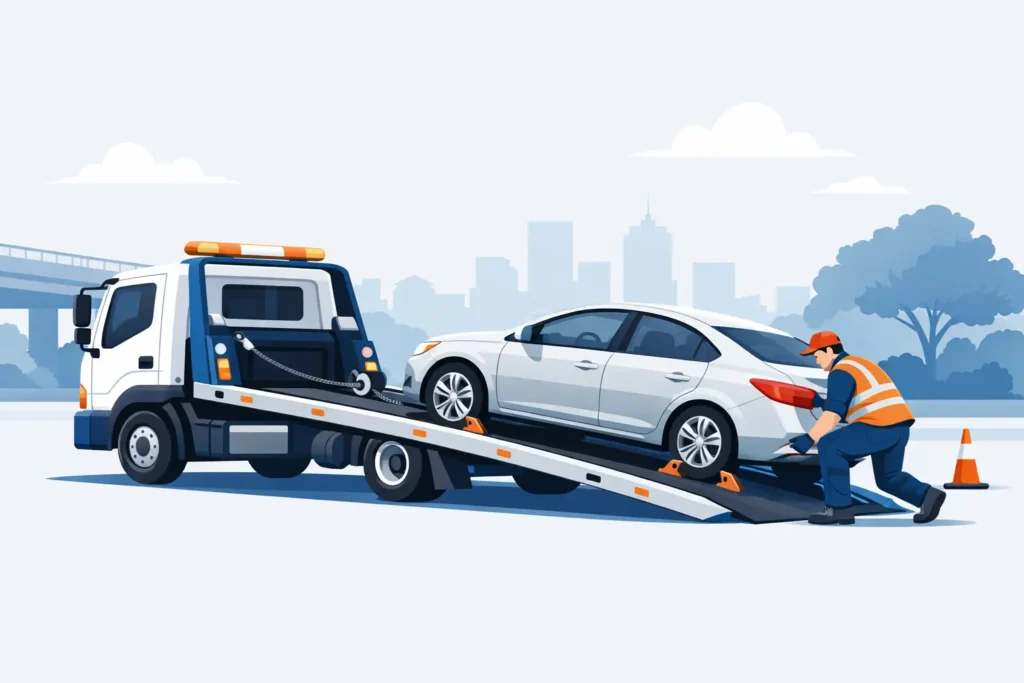
People often assume flatbed towing is automatically damage-free. It is safer when done right, but the details still matter. The bed angle, ramp placement, winch line position, and wheel alignment all play a role.
For low cars, loading usually requires extra care to avoid front bumper damage, underbody contact, or scraping at the rear. That can mean using boards, soft straps, or a slower pull to reduce the breakover angle. If the operator ignores that and loads too aggressively, the car can make contact before it is even fully on the bed.
For trucks and heavier vehicles, balance matters more. The vehicle needs to be centered correctly on the bed so weight is distributed properly during transport. Too far forward or too far back can affect handling and tie-down security.
The safe vehicle towing process for EVs
Electric vehicles need special attention, and this is one area where guesswork causes problems. Many EVs, including Tesla models, should not be towed with drive wheels on the ground unless the manufacturer specifically allows it. In most real-world cases, flatbed transport is the right move.
The challenge is not just the drivetrain. EVs are often heavier than they look, sit lower to the ground, and have battery systems that require careful handling if the vehicle has been damaged. Proper winch points and loading technique matter.
If an EV is completely dead, getting it into neutral may also take a different process than a standard gas vehicle. That is another reason the operator needs to know the vehicle type before loading starts, not halfway through the job.
Proper securement is where careful towing shows up
Once the vehicle is on the bed, the job is only half done. Securement is what keeps it stable through turns, stops, uneven pavement, and normal city driving. Good tie-down placement is not a small detail. It is the difference between controlled transport and avoidable movement.
The vehicle should be secured at the right points using equipment that fits the job. Too much tension in the wrong place can damage wheels or suspension components. Too little tension allows shifting. The goal is firm, even securement without putting stress where it does not belong.
This is also where experience shows. A rushed operator may treat every vehicle the same. A careful one adjusts based on weight, wheel type, ride height, and condition.
Communication matters just as much as equipment
A safe tow is not only about straps, ramps, and winches. It is also about making sure the driver knows what is happening. When people are dealing with a breakdown or accident, they want straightforward answers. Where is the truck taking the vehicle? Can it go to a repair shop, home, or dealership? Does the car roll? Are there any loading concerns?
Clear communication reduces stress and prevents mistakes. It also helps if the keys are missing, the battery is dead, or the steering is locked. Those details change how the vehicle gets moved, and they should be discussed up front.
For local towing jobs around Tulsa, that kind of communication matters even more in heavy traffic areas and during busy hours. Delays happen. Access problems happen. The important part is keeping the customer informed while the vehicle is handled correctly.
What drivers can do before the tow truck arrives
You do not need to know towing equipment to help the process go smoothly. If it is safe to do so, move yourself and any passengers away from traffic, turn on hazard lights, and be ready to explain what happened. Mention if the vehicle is all-wheel drive, electric, lowered, stuck in park, or damaged underneath.
That information saves time and helps the operator bring the right plan to the scene. If the car is in a garage, near a curb, or blocked in by other vehicles, mention that too. Small details can change the safest way to load.
If you are waiting in Tulsa, Jenks, Bixby, or Broken Arrow, local route knowledge can help with response and access, but the bigger issue is making sure the operator understands the vehicle condition before the tow begins.
When careful towing matters most
Every tow should be handled carefully, but some situations leave less room for error. Low-clearance cars, heavy-duty pickups, EVs, accident vehicles, and cars with locked wheels all require more attention than a simple breakdown in an open parking lot.
That does not mean the job needs to be complicated for the customer. It means the operator should know when to slow down, adjust the setup, and use the right equipment instead of forcing a quick load. Tulsa Towing is built around that kind of practical, damage-conscious work because the safest tow is usually the one that looks uneventful from the outside.
When you need a vehicle moved, the process should feel steady from start to finish. The truck arrives, the situation is assessed, the vehicle is loaded the right way, and it gets where it needs to go without adding a second problem to the first.