If your AWD vehicle breaks down, the towing method matters more than most drivers realize. A lot of people ask, is flatbed towing safer for AWD cars, and in most cases the answer is yes. When all four wheels stay off the road, you reduce the risk of drivetrain damage, tire scrub, and the kind of problems that can turn one bad day into an expensive repair.
AWD systems are built to send power to more than one wheel at a time. That improves traction, especially in rain, rough roads, and sudden stops, but it also means the vehicle has more moving parts connected through the drivetrain. When an AWD vehicle is pulled the wrong way, those parts can keep rotating in ways they were not meant to during a tow.
Why flatbed towing is usually safer for AWD
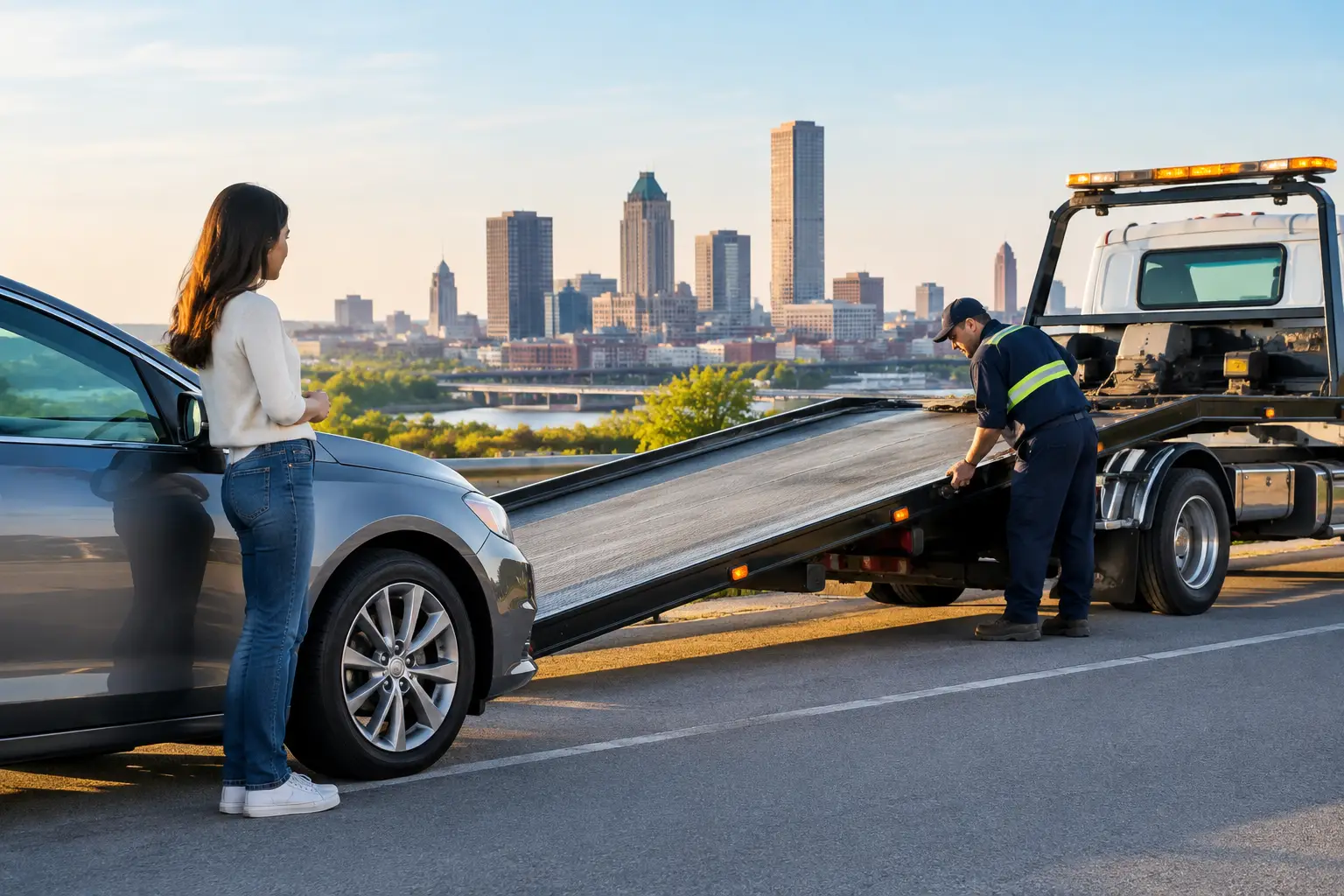
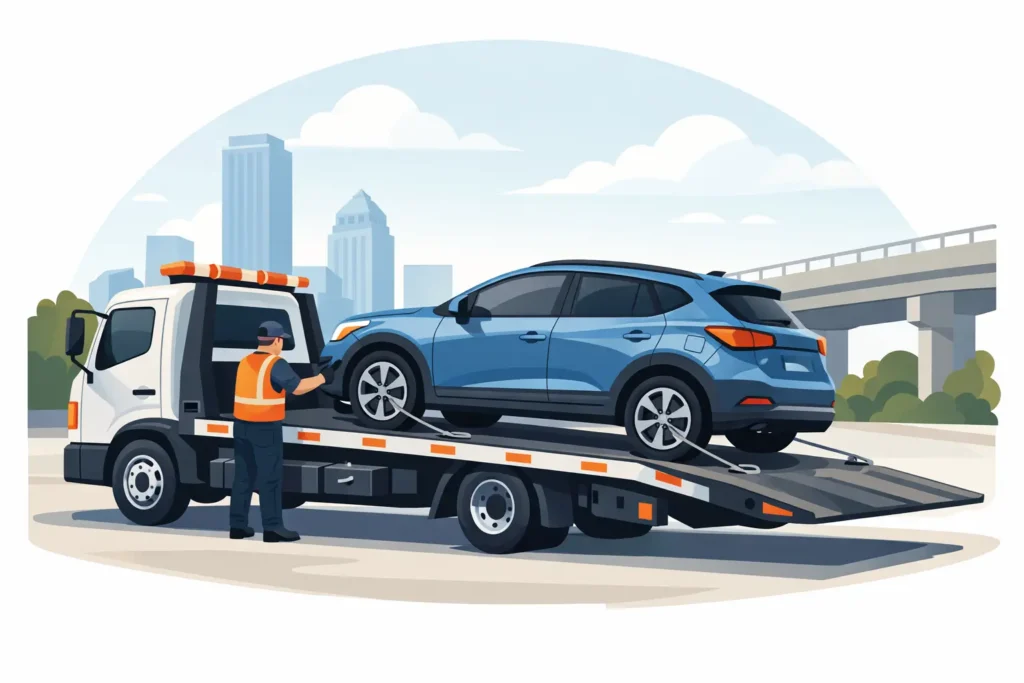
With a flatbed, the entire vehicle is loaded onto the truck. None of the tires stay in contact with the road during transport. That is the main reason flatbed towing is usually the safer choice for AWD vehicles.
When a wheel-lift or dolly tow leaves one set of wheels on the ground, the drivetrain can still be forced to move. On some AWD vehicles, that can put stress on the transfer case, transmission, differential, or electronic AWD system. Even if damage does not happen right away, it can create wear that shows up later.
A flatbed avoids that problem because the car is fully supported. It also helps with low-clearance vehicles, disabled vehicles that will not roll normally, and many electric vehicles that need careful loading. For everyday drivers, the simple version is this: if all four wheels are off the road, there is less chance of the tow itself causing damage.
Is flatbed towing safer for AWD in every situation?
Most of the time, yes, but there are a few situations where the full answer is more nuanced. Some AWD vehicles can be towed in limited ways if the manufacturer allows it. That depends on the exact vehicle, transmission type, and whether the tow operator uses the right equipment.
The problem is that many drivers do not have time to sort through the owner’s manual on the shoulder of I-44 or in a busy parking lot. In a real breakdown, the safest move is usually the one that removes guesswork. That is why flatbed towing is the standard recommendation for so many AWD vehicles.
It is also the better option when the vehicle has accident damage, suspension issues, locked wheels, or a dead battery that affects electronic shifting. In those cases, even a vehicle that might be towed another way on paper may still need a flatbed in practice.
Manufacturer recommendations matter
Every AWD setup is a little different. Some systems are full-time AWD. Others engage only when needed. Some use mechanical connections, while others rely heavily on electronics and clutch packs. Because of that, towing instructions can vary by make and model.
That said, many manufacturers either recommend flatbed towing outright or make it the safest option when there is any doubt. If the vehicle manual says to transport the car with all four wheels off the ground, that is not a suggestion. It is there to help prevent drivetrain damage.
A careful tow operator will always factor in the vehicle type before loading. That matters with newer AWD crossovers, performance cars, larger SUVs, and EVs that may have very specific handling requirements.
What can go wrong with the wrong tow method
The biggest issue is drivetrain stress. If two wheels are on the road and two are lifted, the parts connecting those wheels may still rotate internally. On an AWD vehicle, that can create heat and friction where you do not want it.
There is also the issue of tire rotation mismatch. AWD systems are sensitive to differences in wheel speed. During a bad tow, the vehicle may interpret that movement in ways the system was not designed to handle while the engine is off or the car is disabled.
Then there is the loading angle. Many AWD cars sit lower than drivers expect, especially sedans, wagons, EVs, and sport models. A rushed load can scrape the bumper, underbody, or front fascia if the right approach is not used. Flatbed towing is safer for AWD not just because all four wheels are lifted, but because it gives more control during loading and unloading when proper equipment is used.
Flatbed towing and AWD vehicles with damage or mechanical problems
This is where flatbeds really make sense. If the vehicle has front-end damage, rear-end damage, steering problems, or a wheel that will not turn freely, dragging it into a partial tow setup can make things worse.
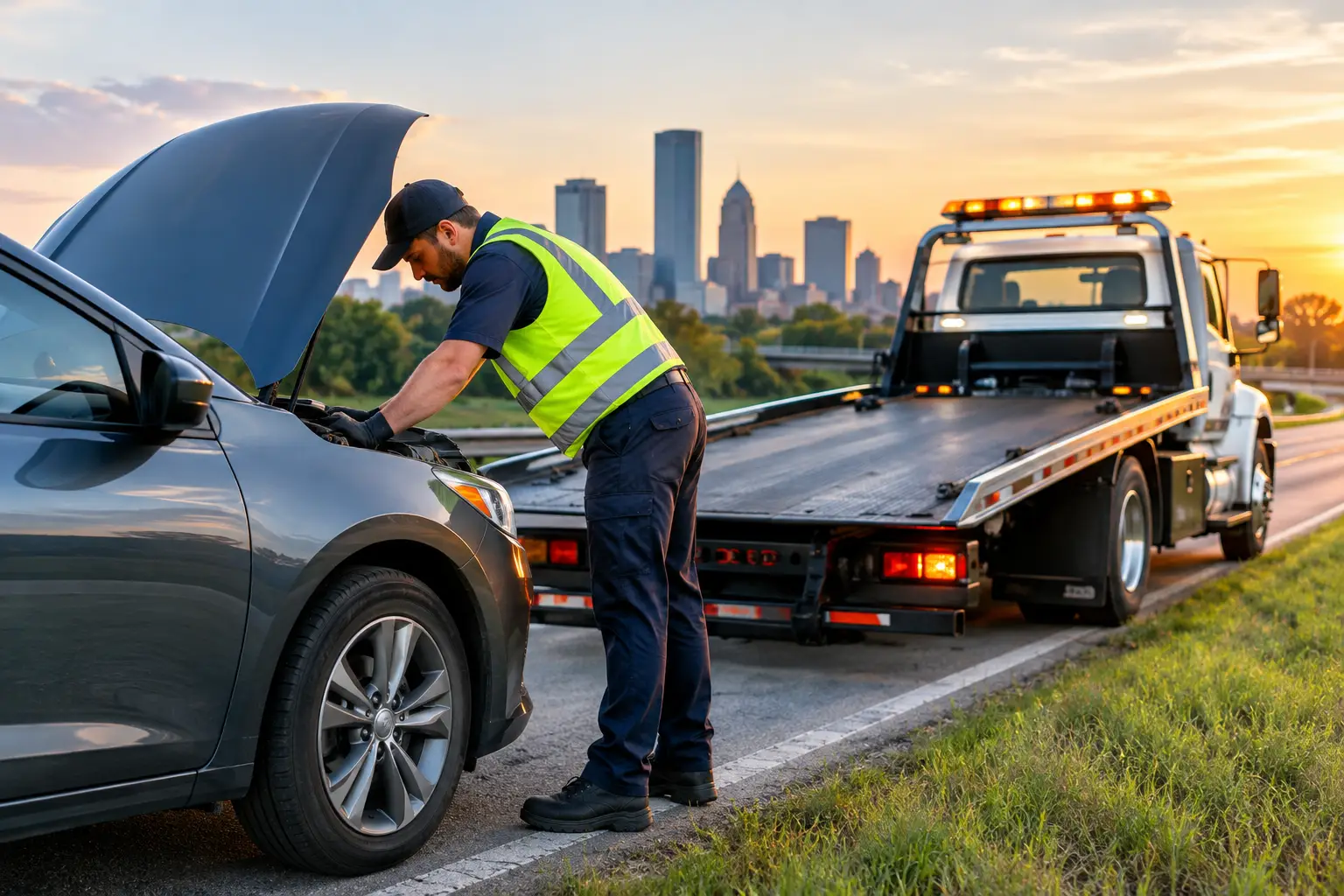
A flatbed allows the vehicle to be winched up in a controlled way. That is especially helpful after an accident or when a breakdown leaves the vehicle stuck in park, stuck in neutral, or unable to start. Instead of forcing the car to move in a way the drivetrain does not like, the operator can load it with less stress on the vehicle.
That same logic applies to vehicles stuck in garages, tight apartment lots, or awkward roadside positions. Good towing is not just about the truck. It is about angles, clearance, wheel condition, and knowing how to load the vehicle without creating a second problem.
Why AWD owners should be careful with dollies and wheel-lift towing
Tow dollies and wheel-lift setups can work for some vehicles, but AWD is where mistakes get expensive. If the wrong wheels are left on the ground, or the operator assumes the vehicle can be moved like a front-wheel-drive car, the tow can put stress on parts that were never meant to free-spin that way.
There are cases where extra steps can make a non-flatbed tow possible, but that usually depends on special procedures and exact manufacturer guidance. For most roadside situations, that is not the kind of gamble drivers want to take.
If you are standing next to a disabled AWD vehicle and trying to make a fast decision, the safer question is not what might work. It is what gives the vehicle the best chance of getting transported without added damage. Most of the time, that points back to a flatbed.
Real-world towing is about more than the drivetrain
Safety also comes down to vehicle stability in transport. Flatbeds generally provide a more secure ride for AWD vehicles because the whole vehicle is strapped down and carried level. That matters on city streets, highway ramps, uneven pavement, and rough turns.
In places around Tulsa, that can make a difference when a vehicle needs to be moved from a shoulder, shopping center, neighborhood street, or busy traffic corridor. The road conditions, traffic flow, and loading space all affect how careful the tow needs to be.
A proper flatbed setup also helps protect vehicles with larger wheels, performance tires, or sensitive suspension systems. That is one reason experienced operators prefer this method for newer SUVs, luxury models, and EVs. The less the disabled vehicle has to do during transport, the better.
How to know when your AWD vehicle needs a flatbed
If the owner’s manual says all four wheels must be off the ground, that settles it. If the vehicle will not start, has transmission trouble, has locked wheels, or was involved in an accident, a flatbed is usually the safest call. The same is true for many Teslas and other EVs, where improper towing can create serious damage.
If you are not sure, it is better to tell the towing company exactly what the vehicle is, what happened, and whether it still rolls. That gives the operator a chance to bring the right equipment from the start instead of trying to improvise on scene.
That straightforward approach is how careful towing should work. At Tulsa Towing, powered by Neptune Towing, the focus is on using proper flatbed equipment and loading techniques so the vehicle gets moved safely without unnecessary complications.
The short answer drivers actually need
So, is flatbed towing safer for AWD? In most situations, yes. It keeps all four wheels off the road, reduces stress on the drivetrain, and gives the operator better control during loading and transport.
When your vehicle is already disabled, the towing method should lower risk, not add to it. If there is any doubt about how an AWD vehicle should be moved, the safer path is the one that keeps the car fully supported and handled with care.