A breakdown on I-44 or a dead car in a Tulsa parking lot usually leads to the same question fast – how much does towing cost in Tulsa? The short answer is that it depends on the type of vehicle, where it is, how far it needs to go, and whether the job is a straight tow or a more difficult recovery. Most drivers are not looking for theory in that moment. They want a real idea of what they may pay and what can change the price.
How much does towing cost in Tulsa on a normal call?
For a standard local tow in Tulsa, many jobs fall into a general range of about $75 to $150, with longer tows, heavier vehicles, or more difficult loading situations pushing that number higher. A short city tow from a neighborhood street to a nearby repair shop will usually cost less than a highway pickup that requires extra time, traffic management, or specialized equipment.
That range is not a flat rule, and it should not be treated like one. Towing is not priced the same way every single time because not every disabled vehicle is sitting in an easy spot with all four wheels rolling freely. A car with a broken suspension, a locked steering column, or a flat tire in a tight garage can take more time and more care than a simple curbside load.
In Tulsa, pricing often starts with a base service call or hook-up fee, then changes based on mileage, vehicle type, and job difficulty. Some companies also build parts of that into one price for local service. The most useful thing for a driver is not chasing a number that sounds low at first. It is getting a clear price based on the actual situation.
What affects towing cost in Tulsa?
The biggest factor is usually distance. If your vehicle needs to go a few miles to a local shop, the price will usually stay on the lower end of the range. If it needs to be moved across town, out to Broken Arrow, Bixby, Jenks, or farther depending on availability, the cost can increase because the truck and driver are tied up longer.
Vehicle size matters too. A compact sedan is one thing. A heavy pickup, SUV, work truck, or electric vehicle can require different loading procedures, more truck capacity, and more attention during transport. EVs and low-clearance vehicles especially need proper handling. If the tow operator has to take extra steps to avoid underbody or wheel damage, that is time well spent, and it can affect the price.
The condition of the vehicle also changes the job. If the car rolls, steers, and can be loaded normally, that is a straightforward tow. If it is stuck in park, has front-end damage after a crash, or is sitting in a spot where the truck cannot line up easily, the job becomes more involved. Recovery work, winch-outs, and difficult extractions are not priced like simple tows because they are not simple jobs.
Time of day can matter as well. After-hours, late-night, weekend, and holiday calls may cost more depending on the company and current demand. That is common across towing because staffing, dispatch, and response logistics change outside normal business hours.
Typical Tulsa towing scenarios and price expectations
A short tow from Midtown to a nearby mechanic may be one of the more affordable calls, especially if the car is easy to access and there are no loading issues. A disabled car on US 75 during busy traffic can be different because the truck may need to work in a less safe area and complete the job quickly without careless handling.
An apartment complex tow can go either way. If the vehicle is parked in an open lot and rolls normally, pricing may stay close to standard local rates. If it is in a tight parking garage, backed into a narrow corner, or blocked by other vehicles, the difficulty goes up.
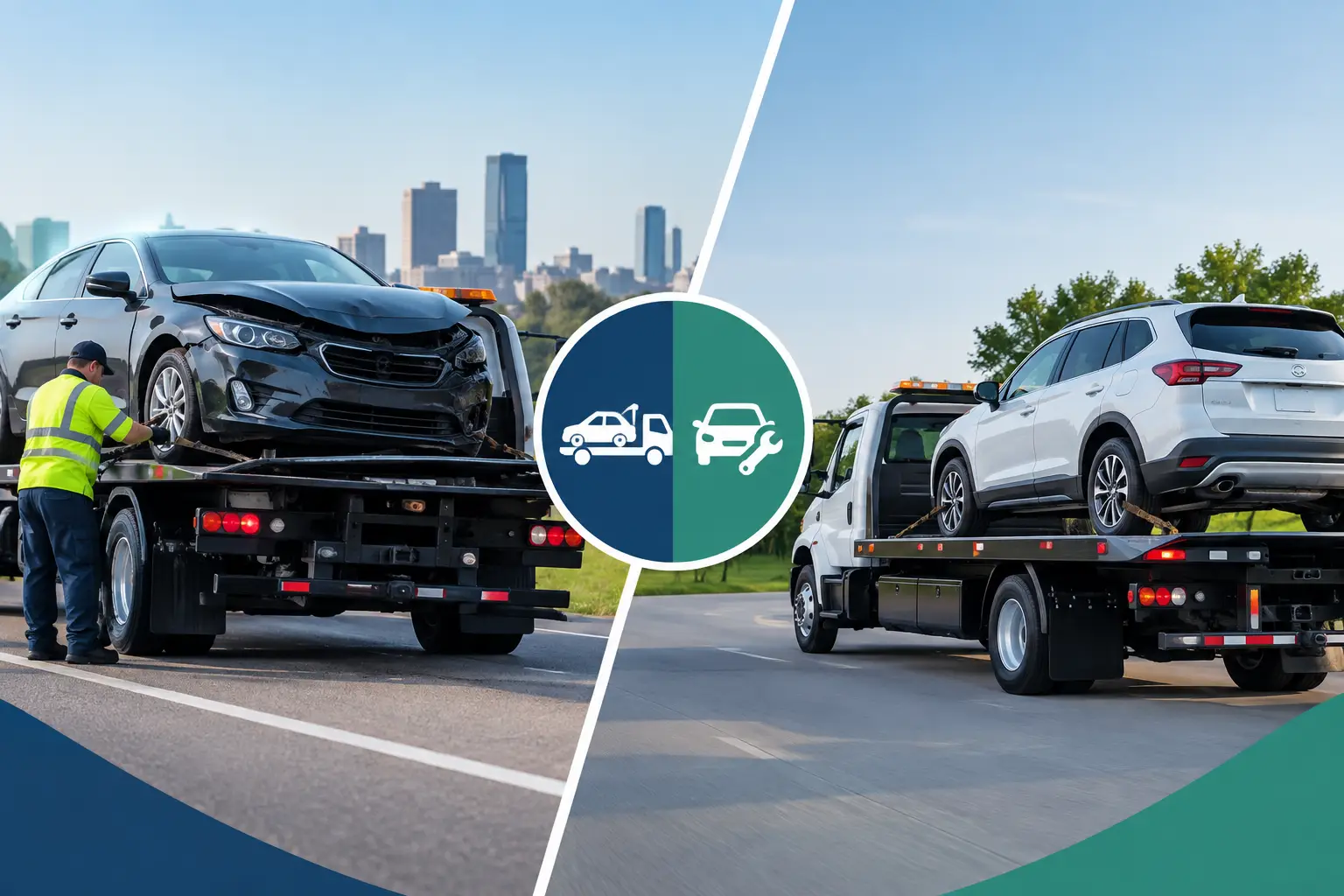
Accident towing is another case where price can vary. A lightly damaged vehicle that still rolls may be fairly straightforward. A car with broken axles, locked wheels, or major front-end damage often takes more setup time and more careful loading to avoid making things worse.
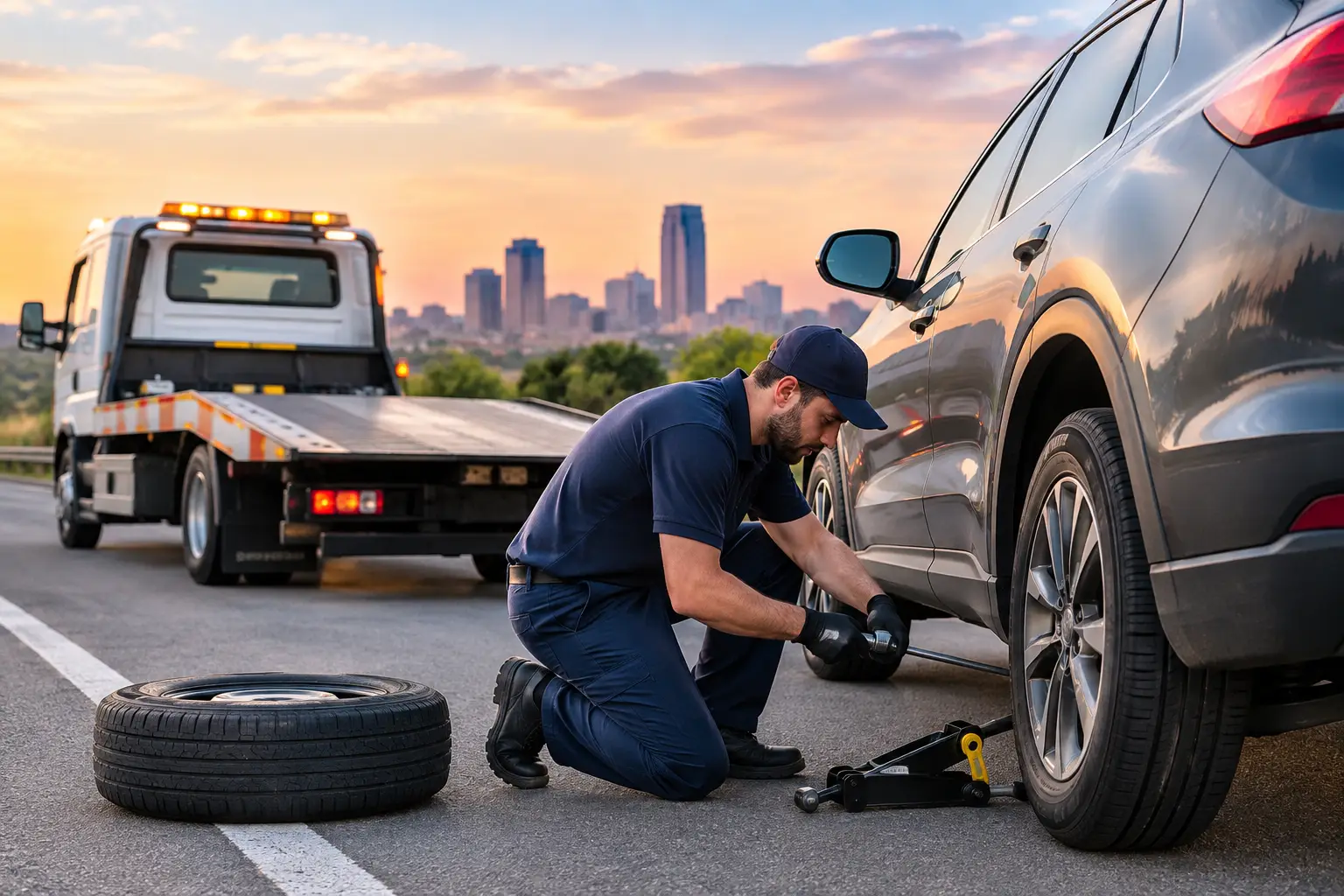
If the issue is not actually a tow situation, roadside assistance may cost less. A jumpstart, lockout, tire change, or basic on-site help is often cheaper than transporting the vehicle. That is worth asking about before assuming you need a full tow.
Why one towing quote can be different from another
If you call two companies and get two different prices, that does not always mean one is overcharging or one is a bargain. It often means they are pricing the job differently or using different equipment and service models.
A local owner-operated company that focuses on flatbed towing and direct service may quote based on the real handling involved. Another company may quote a low starting number but add charges after arrival once they see the vehicle does not roll, the area is tight, or special equipment is needed. That is why the cheapest number on the phone is not always the final number.
Clear communication matters here. If you tell dispatch exactly what is going on – where the vehicle is, whether it rolls, whether the keys are available, whether it is a Tesla, truck, or low-clearance car – you are much more likely to get an accurate price upfront.
How to avoid paying more than necessary
The best way to keep towing costs reasonable is to give good information early. Say where the vehicle is located, what kind of vehicle it is, and what happened. If the front wheels are damaged, mention it. If the car is in a garage or stuck on a curb, mention that too. Surprises at pickup are one of the fastest ways a simple tow turns into a more expensive job.
It also helps to ask one direct question before the truck is dispatched: what is included in the quoted price? A clear answer should tell you whether the quote covers hook-up, local mileage, and any likely extra labor based on the situation you described.
If you are deciding between a tow and roadside help, ask which one makes more sense. A dead battery may only need a jumpstart. A flat tire may only need a tire change if you have a usable spare. If the vehicle can be safely put back on the road without transport, that can save time and money.
When a higher towing cost may be justified
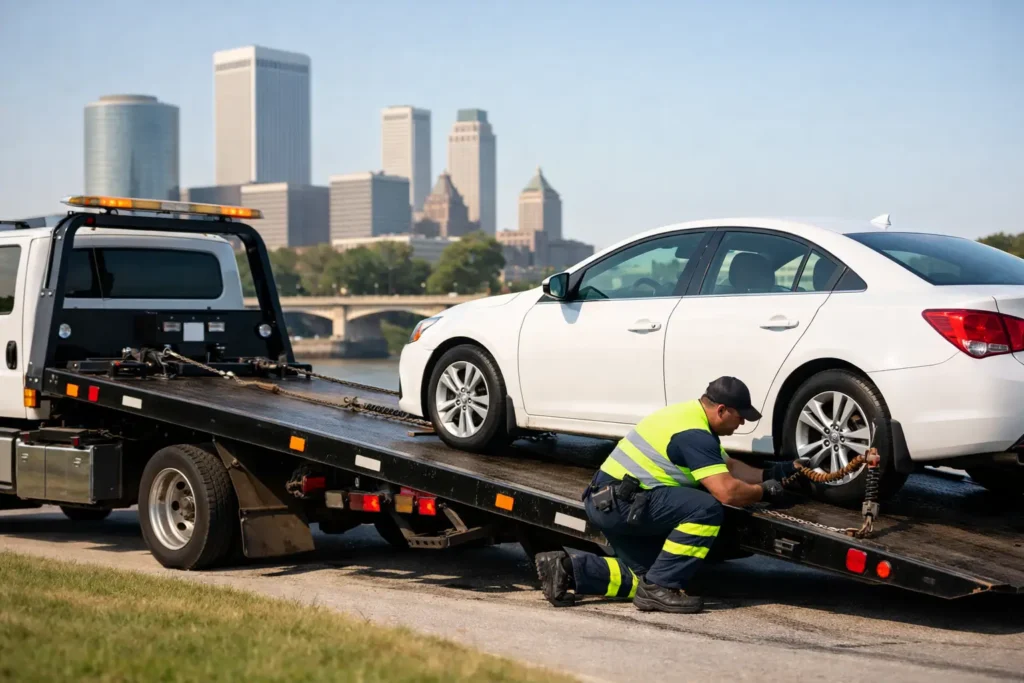
Not every higher quote is bad news. Sometimes the higher price reflects a safer approach. Flatbed towing, proper tie-downs, careful loading angles, and correct handling for EVs or damaged vehicles all matter. A rushed tow that drags a low car, mishandles a truck, or loads an electric vehicle the wrong way can cost much more later in repairs.
That is especially true with newer vehicles, all-wheel-drive systems, lowered cars, and Teslas. These are not vehicles to move by guesswork. In many cases, paying for the right equipment and experienced handling is the smarter call than trying to save a small amount upfront.
Tulsa drivers also deal with real location issues that affect the work. Busy roadside calls near Memorial, Riverside, or Tulsa Hills are not the same as loading a vehicle from a quiet residential street. Traffic, access, and safety conditions can all change how long the job takes and how the tow must be done.
Should you ask for a price before the tow truck arrives?
Yes. You should always ask for a clear estimate based on the details you can provide. No honest towing company can quote every job blindly with perfect accuracy, but they should be able to give a realistic local range or a firm price when the situation is straightforward.
If the answer is vague, ask what could change the price. That helps you understand whether the number depends on mileage, vehicle condition, recovery needs, or time of day. A good towing conversation should leave you less stressed, not more confused.
For drivers in Tulsa, the real answer to how much towing costs is simple: most normal local tows fall into a reasonable range, but the final price depends on the vehicle, the location, and how complicated the load is. The best call is the one that gives you a clear number, shows up prepared, and moves your vehicle safely the first time.