A breakdown rarely happens at a convenient time. It happens in traffic, in a parking lot after work, on the shoulder of I-44, or halfway through school pickup. If you’re asking what should I do after a breakdown, the first priority is not the car. It is your safety, your location, and making sure the next step does not turn a stressful situation into a dangerous one.
What should I do after a breakdown first?
Start by getting the vehicle as far out of traffic as possible if it will still roll safely. If the engine is running but the car is acting wrong, do not keep pushing it farther than necessary. A short move to a shoulder, parking lot, or side street is usually enough. If the vehicle will not move, leave it where it is and focus on staying visible.
Turn on your hazard lights right away. If it is dark, rainy, or visibility is poor, this matters even more. Other drivers need as much warning as possible. If you have reflective triangles or road flares and it is safe to place them, use them. If you do not, hazards are still your best first step.
Then decide whether you should stay in the vehicle or get out. It depends on where you are. On a busy highway with traffic moving fast, staying buckled inside the vehicle is often safer than standing near the road. In a parking lot or quiet shoulder with plenty of room, getting out on the side away from traffic may be the better option. The goal is simple – keep yourself out of the path of moving vehicles.
Check the problem without making it worse
Once you are in a safe spot, take a quick look at what happened. This is not the time for a full diagnosis. You are only trying to figure out whether the issue is something simple like a dead battery or flat tire, or something that means the vehicle should not be driven any farther.
If the car will not start at all, a weak battery may be the issue. If you heard a pop and the vehicle started pulling hard to one side, you may have a blown tire. If there is smoke, a strong burning smell, leaking fluid, or a loud knocking sound from the engine, stop there. Trying to restart or drive it can turn a repairable problem into a much bigger one.
Electric vehicles need the same careful approach, but with one difference. If the vehicle displays a high-voltage warning or serious system fault, do not try to force it to move or improvise a tow. EVs need proper handling and loading, especially low-clearance models.
When roadside assistance makes sense
Not every breakdown needs a tow truck. Some problems can be handled on site if the vehicle is otherwise safe to drive once the issue is fixed.
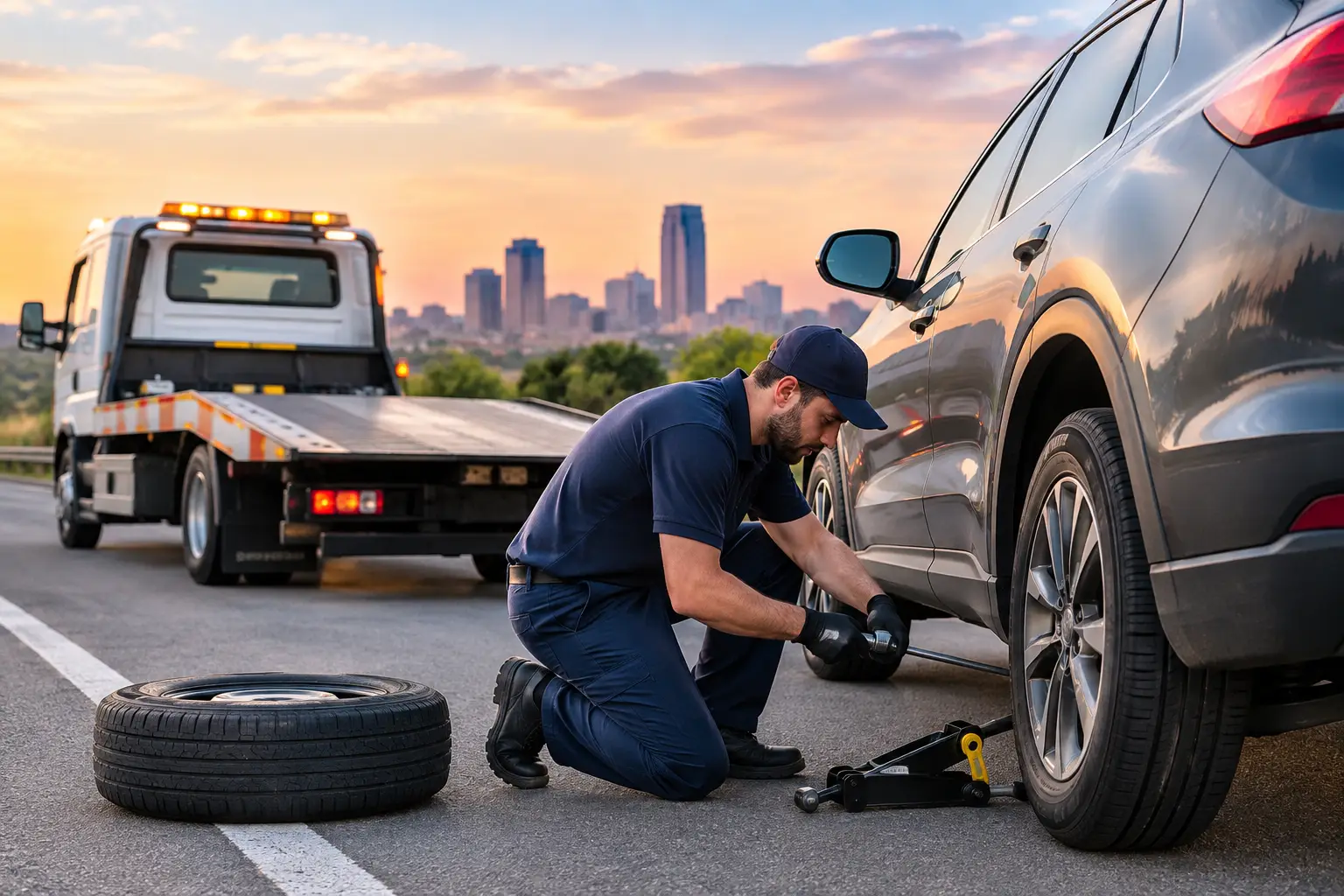
A jumpstart may solve the problem if the battery died after leaving lights on or if the battery is simply weak. Flat tire help can get you rolling again if you have a usable spare and the vehicle is in a safe place to work. Lockouts are frustrating, but they do not automatically mean towing is needed.
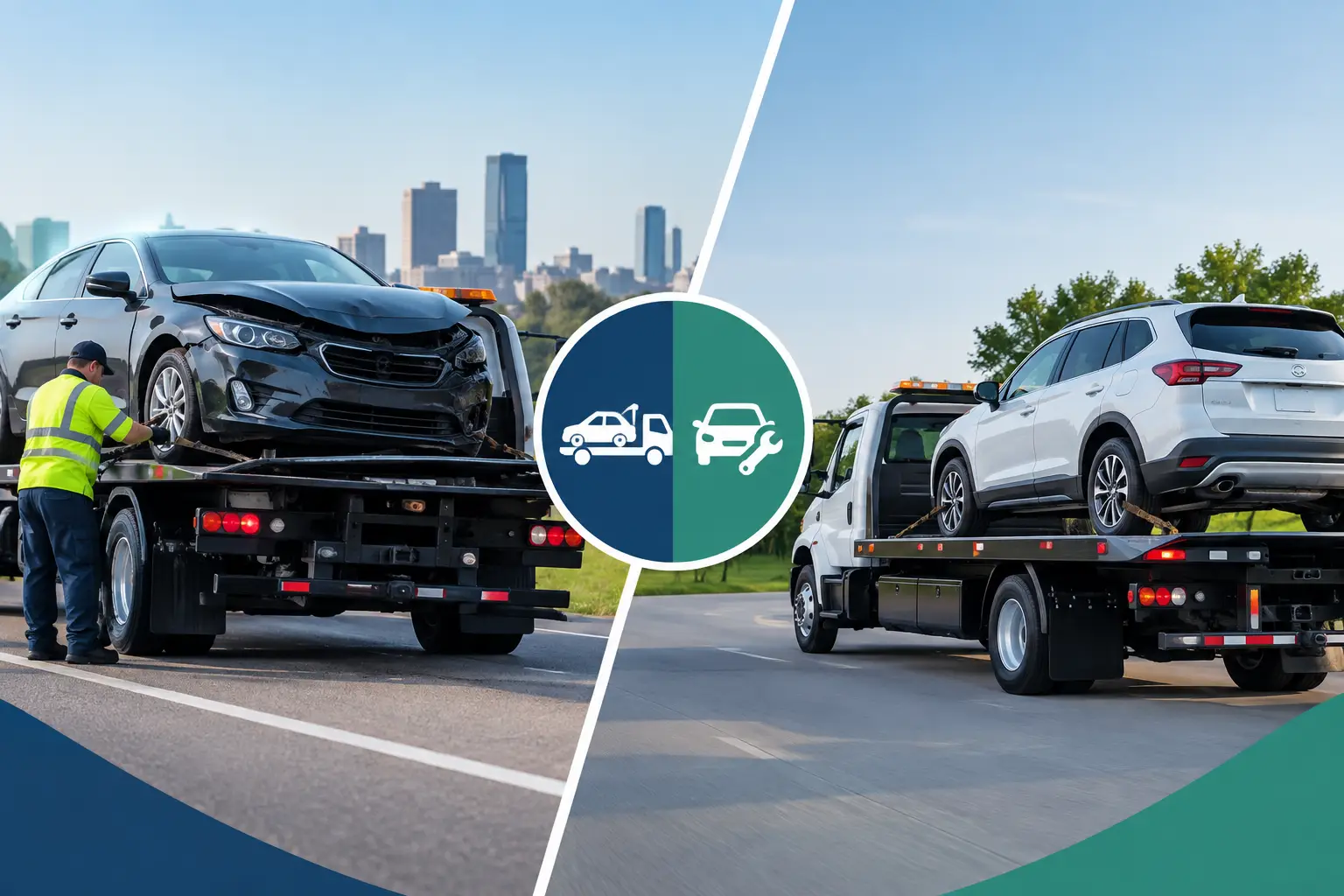
That said, roadside assistance is only useful when it truly fixes the issue. If the battery keeps dying, the tire damage is too severe, or the vehicle still shows warning lights after a jump, it may be smarter to tow it to a repair shop rather than risk another stop a few miles later.
When you should call for a tow
If the vehicle is overheating, leaking fluid, making severe engine or transmission noise, has steering or brake problems, or will not stay running, a tow is usually the right call. The same goes for vehicles that have hit a curb, debris, or another car and may have hidden suspension damage. A car can still move and still be unsafe to drive.
This is where drivers get into trouble. They think, it still starts, so I can probably make it. Sometimes that works. Sometimes it turns a tow bill into a major repair. If driving the vehicle feels uncertain, sounds wrong, or creates a safety risk, do not guess.
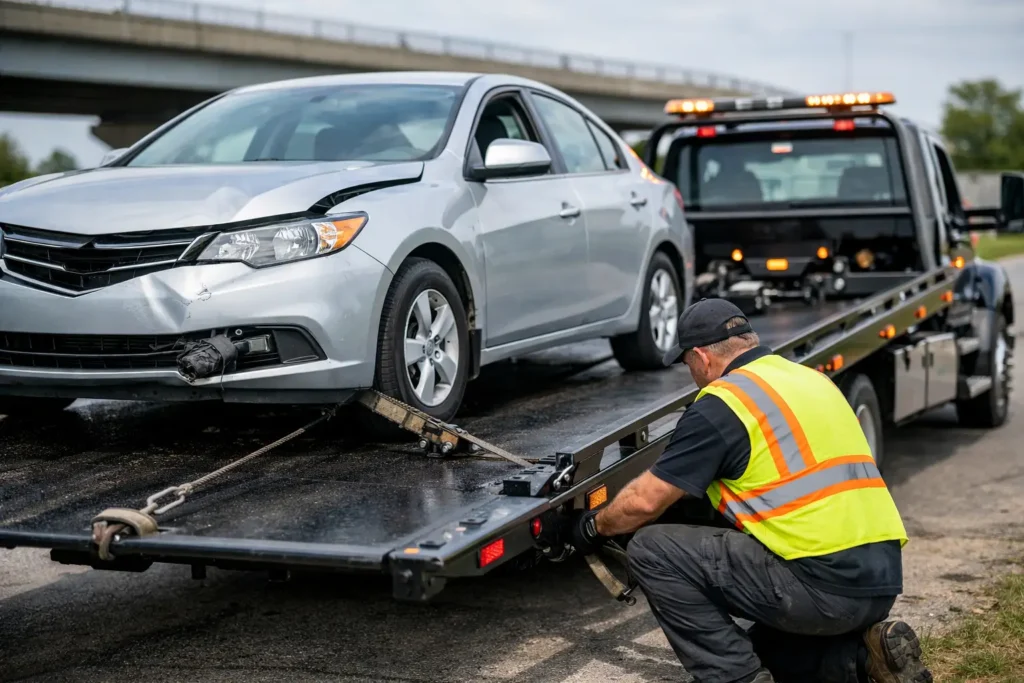
A proper tow also matters for the vehicle itself. Low-clearance cars, trucks with drivetrain issues, and electric vehicles should be moved with the right equipment. Flatbed towing is often the safest option when there is any question about damage, ground clearance, or whether the wheels should be rolling.
What to tell the towing company
The faster and clearer you are on the phone, the smoother the job usually goes. Give your exact location first. A highway name alone is not enough. Share the direction of travel, nearest exit, cross street, business name, or visible landmark.
Then explain what the vehicle is doing. Say whether it starts, whether it can roll, whether it is stuck in a garage, parked in a tight lot, or sitting on a narrow shoulder. If it is an EV, a lowered car, a heavy-duty pickup, or anything with special loading concerns, mention that early.
Also say where you want the vehicle taken. Some drivers already know the repair shop or dealership. Others just need the vehicle moved home or to a safe lot for now. Giving that information up front helps avoid confusion once the truck arrives.
Stay careful while you wait
After help is on the way, keep your phone nearby and watch for updates. If your location changes or you realize your original description was off, call back. Clear communication saves time.
If you are waiting on the roadside, stay visible and stay alert. Do not stand between your vehicle and traffic. Do not accept random help from passing drivers if the situation feels off. If someone does stop and you feel unsafe, stay in the locked vehicle and let them know help is already coming.
If children, older family members, or pets are with you, the safest move may be different depending on heat, cold, traffic, and where the car is stopped. In a parking lot, waiting outside the vehicle in a safe area may be fine. On a high-speed shoulder, staying inside is often better. There is no single answer for every breakdown, and that is why location matters so much.
What should I do after a breakdown if I am not sure the car was damaged?
Treat uncertainty like a warning sign. A lot of breakdowns are not dramatic. Sometimes the car just loses power, starts vibrating, or flashes a warning light and feels off. That can still point to a serious issue.
If you hit a pothole hard enough to bend a wheel, clipped road debris, or drove through standing water before the problem started, it is smart to be cautious. The damage may not be obvious from the driver’s seat. Towing the vehicle for inspection can be the safer choice than trying to limp it home.
The same goes for vehicles that shut off and restart. Intermittent problems are some of the hardest to judge on the roadside. The engine may come back on, but that does not mean the problem is gone.
Protect your vehicle during the tow
Once the truck arrives, you should know what is happening with your vehicle. Ask where it will be loaded from, where it is going, and whether there are any concerns with clearance or condition. A good operator will explain the plan in plain terms.
Before the tow begins, remove valuables, essential documents, medications, and anything you will need right away. If the car is going to a shop after hours, take what you need before it leaves. Check that the destination is correct and that your contact information is accurate.
For damaged or disabled vehicles, careful loading makes a real difference. That is especially true for lower cars, all-wheel-drive vehicles, and EVs. Rushed handling can create more problems than the original breakdown. Proper equipment and a careful approach are not extras. They are part of doing the job right.
After the vehicle is dropped off
Once the vehicle reaches the shop, dealership, or your home, take a minute to document what happened while it is still fresh. Note any warning lights, sounds, leaks, or events leading up to the breakdown. That information can help a mechanic find the issue faster.
If the vehicle broke down in Tulsa, Broken Arrow, Bixby, or nearby areas during heavy traffic or bad weather, mention that too if it affected what you noticed. A car that overheated sitting in traffic may point to a different issue than one that failed at full highway speed.
If you needed towing or roadside assistance, save the receipt and service details. If the repair is covered by insurance, warranty, or roadside coverage, you may need that information later.
The main thing is this – after a breakdown, do not rush into the next decision just because you want the problem over with. Get safe first, be honest about what the vehicle is doing, and choose the option that protects both you and the car. On most roadside calls, the best outcome comes from slowing down for two minutes and making the right call instead of the fastest guess.