A lot of roadside calls start the same way. The vehicle felt a little off, a warning light came on, or it hesitated once or twice – and then it stopped moving when the driver needed it most. The top causes of roadside breakdowns are usually not dramatic failures out of nowhere. Most are common problems that build up, get ignored, or show up at the worst possible time.
When you work around disabled vehicles every day, patterns show up fast. Some issues can be fixed on the shoulder or in a parking lot. Others mean the safest move is to stop trying to restart the vehicle and have it transported before more damage happens. Knowing the difference matters.
The top causes of roadside breakdowns usually start small
Most breakdowns are tied to a handful of systems that every vehicle depends on. Battery power, tires, fuel delivery, engine cooling, and the charging system account for a big share of calls. The problem is that drivers often get a warning and hope they can make one more trip.
That sometimes works. A lot of times it does not.
A vehicle that barely starts in the morning, pulls slightly to one side, or runs hotter than normal is already telling you something. The issue may still be manageable in your driveway, but on a busy road or highway it becomes a roadside problem fast.
Dead batteries and charging problems
Dead batteries are one of the most common reasons a vehicle will not start. In many cases, the battery itself is old, weak, or no longer holding a charge. Heat is hard on batteries, and Oklahoma weather does not do them any favors. A battery can seem fine one day and fail the next, especially if it was already near the end of its life.
But not every dead battery is really just a battery problem. Sometimes the alternator is not charging correctly, or there is an electrical draw draining power while the car is parked. That is why a jumpstart can be a short-term fix or only enough to get the vehicle loaded safely.
If the vehicle starts after a jump but dies again shortly after, the charging system may be the real issue. In that situation, continuing to drive can leave you stranded again a few miles later.
Flat tires and tire blowouts
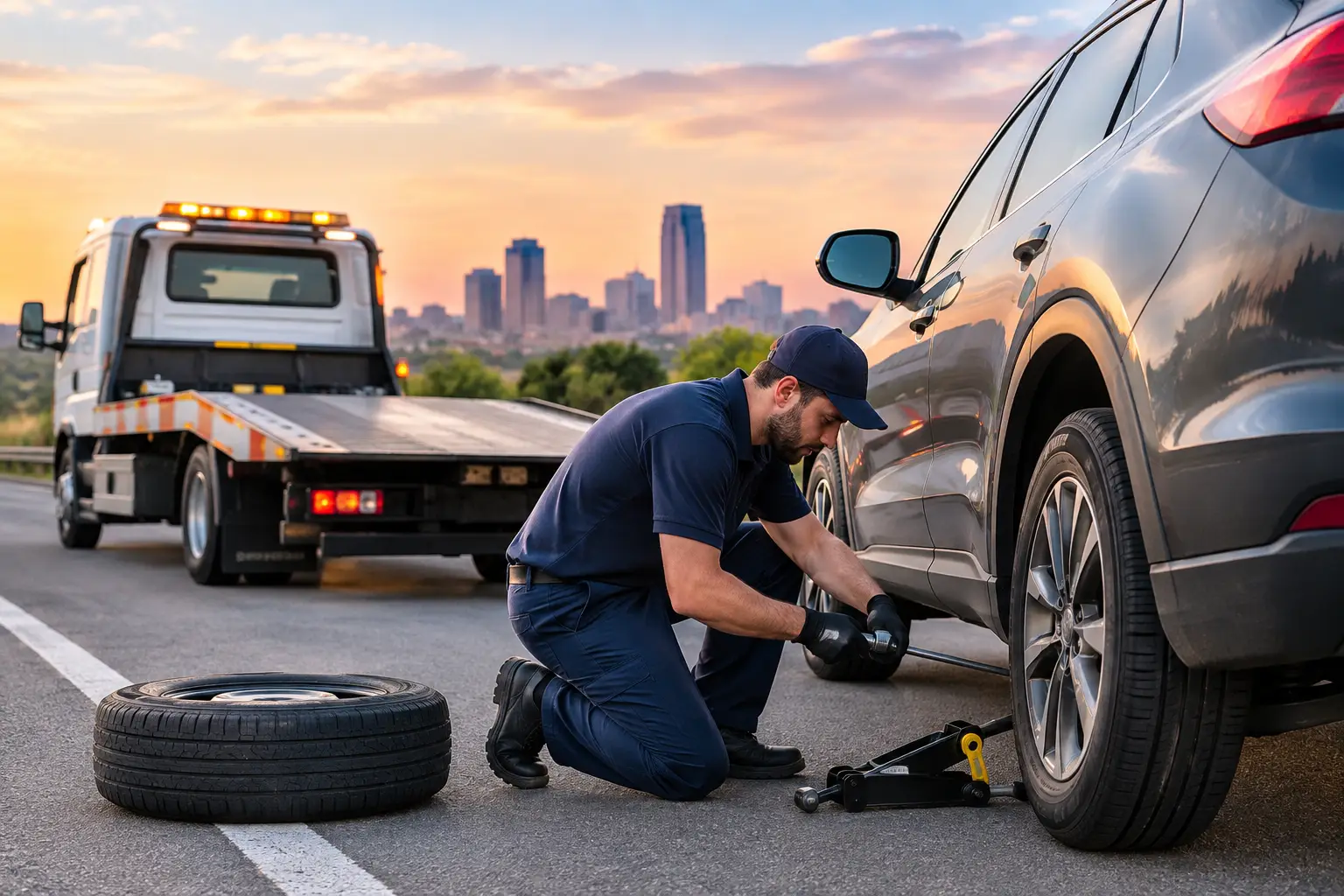
Tire problems stay near the top of any list of roadside calls because they happen fast and they happen everywhere. A nail in a parking lot, a damaged sidewall, low tire pressure, or a worn-out tire can all leave a car disabled.
A slow leak is one of the most overlooked problems. Drivers top the tire off once or twice and keep going, assuming it is not urgent. Then the tire goes flat during a commute, in traffic, or at night. Blowouts are more sudden, but they often have a buildup too. Underinflated tires run hotter, wear unevenly, and become more likely to fail.
Not every flat means you should try changing it yourself. If you are on a narrow shoulder, near fast traffic, or dealing with a heavy vehicle, safety comes first. A flat tire is frustrating. Getting hit while trying to fix it on the side of the road is far worse.
Overheating engines
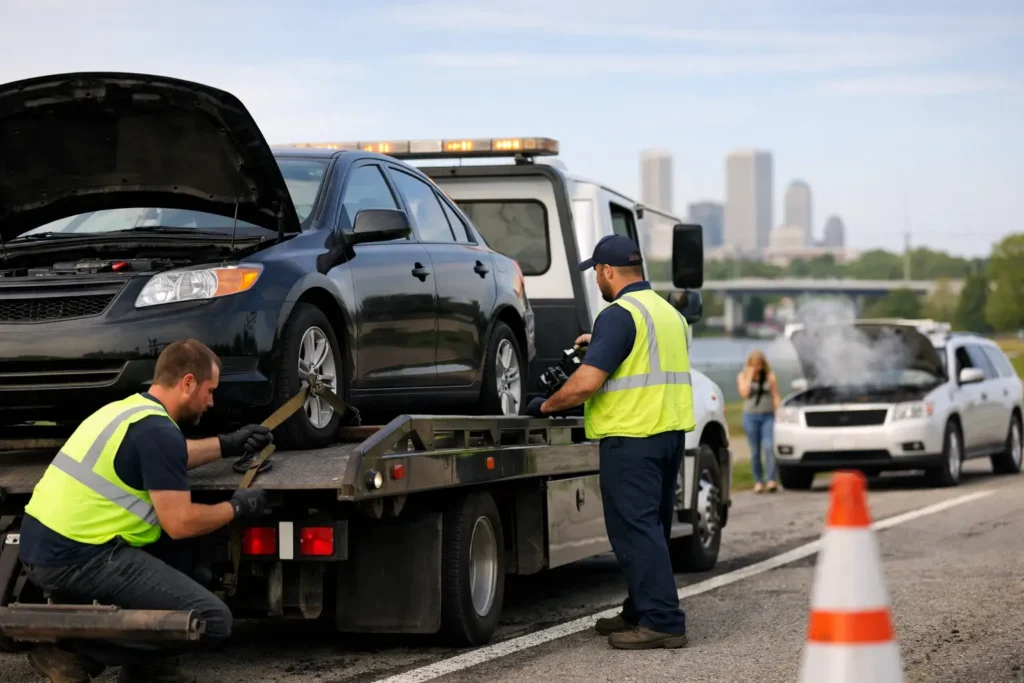
An overheating vehicle can go from drivable to disabled in a short amount of time. Cooling system problems are common, and they are often expensive when drivers try to push through them. A small coolant leak, a failing radiator fan, a bad thermostat, or a damaged hose may not seem serious at first. Once the temperature gauge climbs, though, you do not have much room to gamble.
If steam is coming from under the hood or the engine temperature spikes, pulling over quickly is the right move. Continuing to drive an overheating vehicle can lead to major engine damage. That turns a roadside issue into a much bigger repair.
This is one of those cases where waiting a few minutes and restarting is usually not a real solution. If the cooling system has failed, the problem is still there.
Fuel-related issues are more common than people think
Running out of gas happens more often than most drivers want to admit. It is easy to assume the fuel gauge is close enough, or that you can make it to the next stop. Then traffic gets backed up, a detour adds miles, or the gauge was less accurate than expected.
There are also situations where the tank has fuel, but the vehicle still will not run because of a fuel delivery problem. A failing fuel pump, clogged filter, or related issue can leave the engine cranking without starting. To the driver, it may feel sudden. In reality, there were often signs first, like sputtering, hard starts, or loss of power under load.
The trade-off here is simple. Running out of gas is usually a quick roadside fix. Mechanical fuel system problems are not. If the engine keeps cranking but never catches, repeated attempts usually do more to drain the battery than solve the problem.
Starter and ignition failures
Sometimes the battery is fine, but the vehicle still will not start. That is where the starter, ignition switch, or related electrical components come into play. Drivers may hear a single click, rapid clicking, or nothing at all when turning the key or pressing the start button.
These problems can be tricky because they look similar from the driver seat. A no-start condition may be caused by the battery, starter, alternator, or wiring. What matters most on the roadside is not guessing wrong and getting stuck longer than necessary.
If the dash has power but the engine will not crank, it may be more than a simple jumpstart issue. That is usually the point where roadside testing or towing makes more sense than continuing to try random fixes.
Mechanical failures that stop a vehicle from moving
Some breakdowns are not about starting the vehicle. They happen after the engine is running, when the car, truck, or SUV still will not move safely. Transmission trouble, broken belts, seized components, and steering or suspension failures can all leave a driver stuck.
This is where people sometimes make the situation worse by trying to force the vehicle home. If the transmission is slipping badly, the steering feels unstable, or there is a loud mechanical noise followed by loss of power, driving farther can add damage fast.
A serpentine belt failure is a good example. On many vehicles, that single belt helps run critical systems. Once it fails, you may lose charging, power steering support, or cooling performance. The vehicle might still move for a short distance, but that does not mean it should.
Lockouts and stuck vehicles count too
Not every roadside problem is a full mechanical breakdown. Lockouts, vehicles stuck in mud or soft ground, and cars that cannot be moved safely after hitting a curb or debris are all common service calls. The driver is still stranded, even if the engine itself is fine.
These situations matter because they often happen in places where the wrong recovery method can damage the vehicle. Low-clearance cars, heavy-duty trucks, and electric vehicles all need the right approach. This is one reason experienced local operators matter. A rushed hookup or careless pull can create a second problem on top of the first.
Warning signs drivers should not ignore
When people ask about the top causes of roadside breakdowns, the better question is often what signs show up first. A weak battery usually gives slow starts. Tire trouble shows up as low pressure, vibration, or uneven wear. Cooling issues show up as temperature changes, coolant smell, or puddles under the vehicle.
Pay attention to warning lights, but also pay attention to changes in how the vehicle feels. Hard starts, rough idling, dim headlights, squealing belts, and repeated need for jumpstarts are not random. They are early notice.
That does not mean every warning turns into a breakdown the same day. It does mean the risk goes up the longer the issue is ignored.
When roadside help is enough and when a tow is safer
Some problems can be handled on site. A jumpstart, flat tire help, lockout service, or a simple recovery may get you moving again without a tow. Other situations call for a different decision.
If the vehicle is overheating, leaking heavily, will not stay running, has steering or brake concerns, or is stuck in an unsafe location, towing is usually the better call. The same goes for EVs and low-clearance vehicles that need proper handling. Getting the vehicle transported safely is often the fastest way to stop the problem from getting more expensive.
For drivers in Tulsa, Jenks, Bixby, or Broken Arrow, local roads and traffic make that decision even more practical. A vehicle that dies on I-44 or US 75 is not something to troubleshoot for half an hour on the shoulder. In those situations, clear communication and careful loading matter more than guesswork.
If your vehicle is giving warning signs now, take them seriously before they turn into a full stop later. And if it already has, the best next step is the one that keeps you safe and gets the vehicle where it needs to go without adding more damage.