A dead battery in a grocery store lot needs one kind of help. A car that lost a wheel bearing on I-44 needs another. That is where roadside assistance versus towing matters. If you call for the wrong service, you can lose time, add stress, and in some cases make the situation less safe.
Most drivers do not think about the difference until they are stuck. They just know the vehicle will not do what it is supposed to do. Sometimes the right move is a quick fix on site. Other times the vehicle needs to be loaded and moved without trying to force it another mile.
Roadside assistance versus towing – what is the difference?
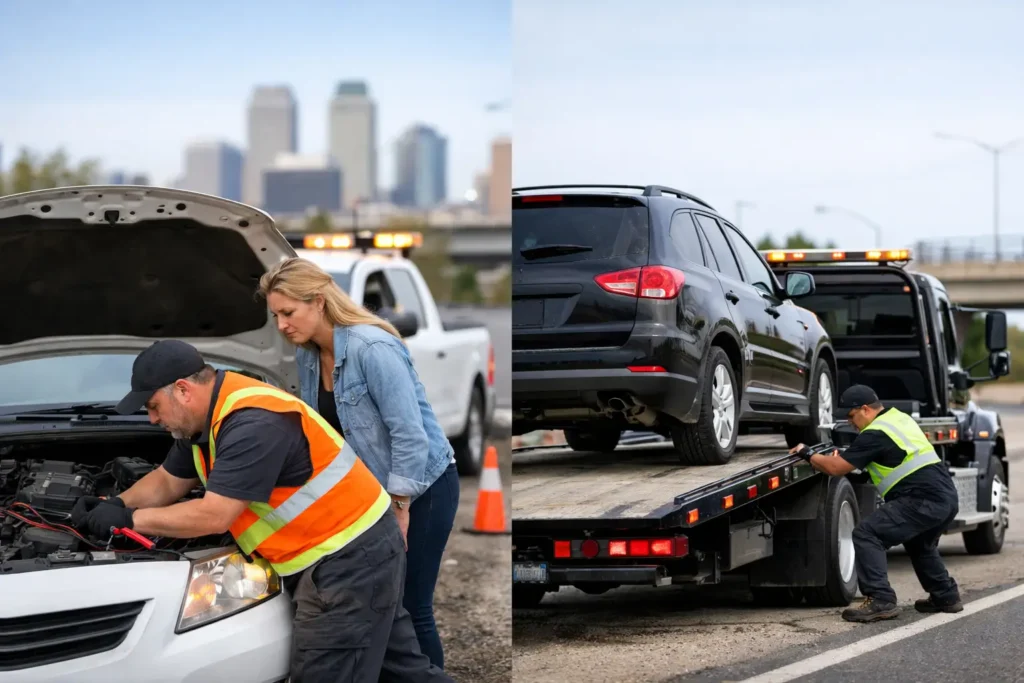
Roadside assistance is meant to get you moving again without transporting the vehicle. It is the service for problems that can often be handled where the car sits, as long as the vehicle is otherwise safe to drive once the issue is fixed.
That usually means a jumpstart, flat tire help, a lockout, or a winch-out when a vehicle is stuck but not damaged in a way that keeps it from driving. The goal is simple. Solve the immediate problem on site and let you continue your trip if the vehicle is safe.
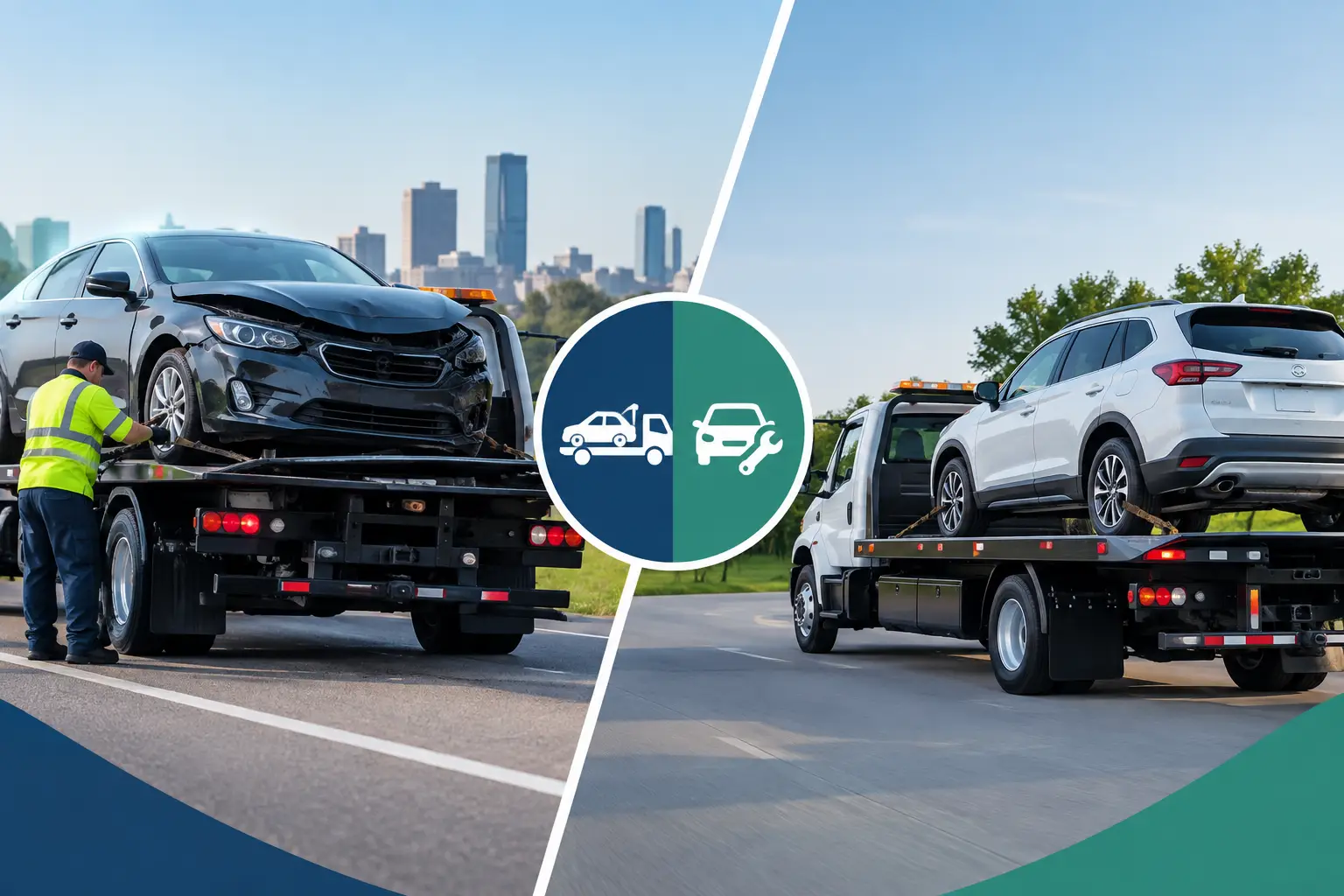
Towing is different. Towing means the vehicle should not be driven, cannot be driven, or is better off being transported to a repair shop, dealership, home, or another destination. In many real breakdowns, towing is not just more convenient. It is the safer choice.
When roadside assistance is enough
There are a lot of situations where you do not need a tow truck for transport. You need help getting past one specific problem.
Dead battery
If the battery is drained because of age, weather, or lights left on, a jumpstart may be all you need. If the vehicle starts and keeps running normally, you may be able to drive it to have the battery or charging system checked.
That said, it depends on why the battery died. If the alternator is failing, the car may start and then shut back down. In that case, the jump only confirms a deeper issue, and towing becomes the better call.
Flat tire
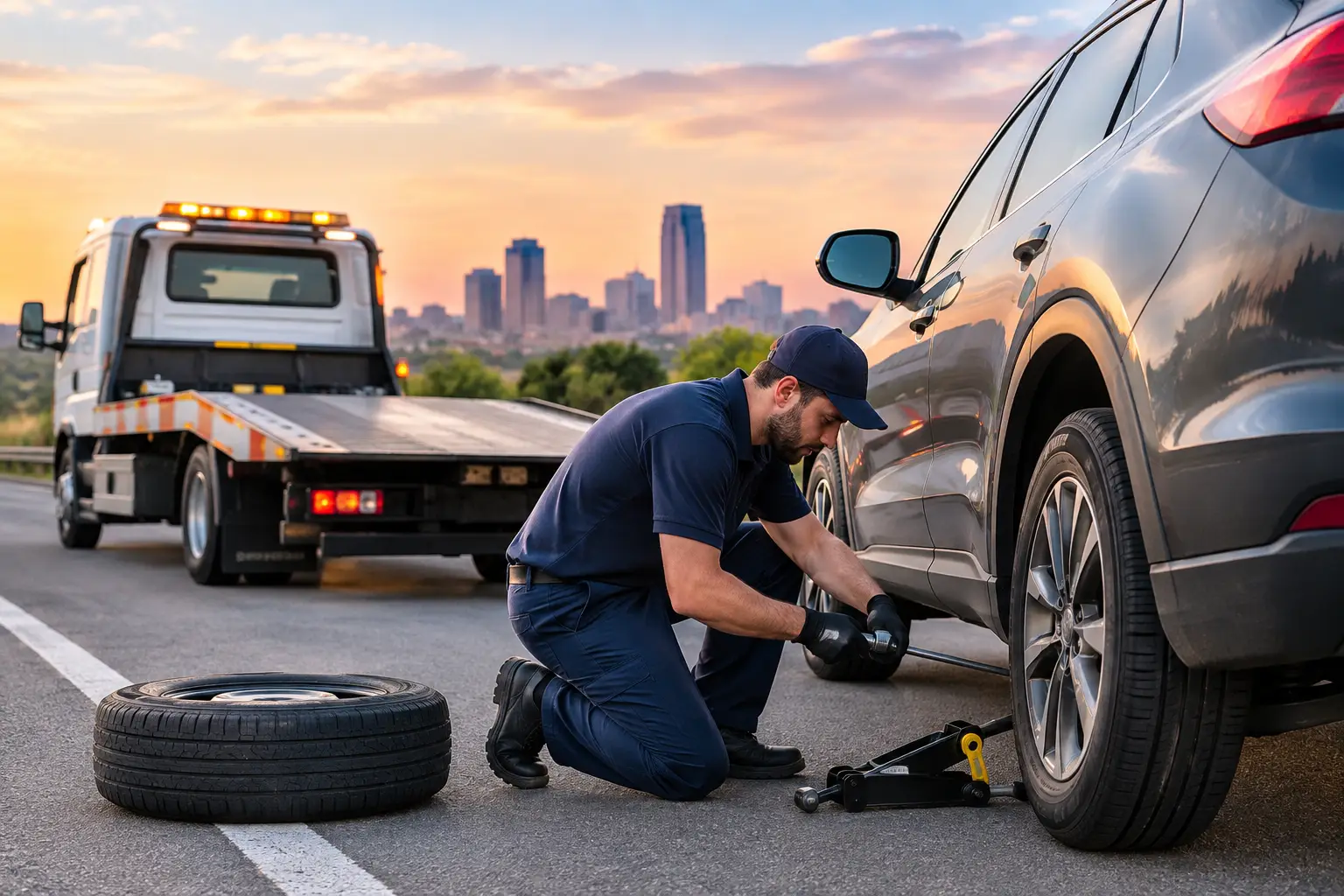
If the tire is damaged but you have a usable spare and the lug nuts can be removed safely, roadside service may solve it right there. That is often the fastest option in a parking lot, driveway, or shoulder with enough room to work.
But not every flat tire is a simple roadside job. Some vehicles do not carry a spare. Some locking lugs are missing the key. On a busy highway shoulder, changing a tire may not be the safest move at all.
Vehicle lockout
If the keys are in the car and the vehicle itself is fine, roadside assistance is the clear fit. There is no reason to tow a vehicle that just needs to be opened carefully.
Winch-out service
If your vehicle slid into mud, a ditch, or a soft shoulder and there is no major damage, a winch-out may be enough to pull it back to solid ground. Once it is out, the vehicle may be able to drive normally.
The key detail is whether the vehicle is only stuck or actually disabled. If it is stuck and damaged, or if it cannot move safely after recovery, then a tow is usually the next step.
When towing is the better call
Some problems are not roadside problems. They are transport problems.
The vehicle will not move safely
If the engine overheated badly, the transmission failed, the steering feels loose, the brakes are gone, or a warning light is tied to a serious drivability issue, do not try to limp it down the road. A tow prevents more damage and reduces the risk of getting stranded in a worse spot.
There was an accident
Even when damage looks minor, a collision can affect suspension, steering, alignment, wheel position, sensors, or underbody components. A car that rolls does not always mean a car that should be driven. Towing keeps you from guessing.
The vehicle is low, all-wheel drive, electric, or otherwise sensitive
Some vehicles need proper loading and transport methods to avoid damage. Low-clearance cars, trucks with drivetrain issues, and EVs are good examples. In those cases, careful flatbed towing is often the safest answer, even if the vehicle technically still moves.
A roadside fix would be temporary at best
Sometimes a jumpstart gets the engine running, but everyone involved knows it probably will not stay that way. Sometimes the tire is shredded and there is no spare. Sometimes the car comes out of the ditch but the steering wheel is off-center and something feels wrong. Those are towing situations.
The biggest mistake drivers make
The most common mistake is focusing on whether the car can move at all instead of whether it should. A vehicle that starts is not automatically roadworthy. A vehicle that rolls is not automatically safe.
This matters on busy roads around Tulsa where drivers are already dealing with traffic, narrow shoulders, and pressure to clear out fast. Trying to save a tow can end up costing more if the vehicle breaks down again, gets damaged further, or creates a safety risk in traffic.
How a tow company decides between roadside help and a tow
A good dispatch conversation should narrow the problem down quickly. What is the vehicle doing? What happened right before it stopped? Is it in a safe location? Is there visible damage? Do you have a spare? Is the car stuck, disabled, or both?
The answer is not always obvious from the first sentence. “My car will not start” could mean a dead battery, a starter problem, engine damage, or an electrical issue. “I have a flat” could mean a simple tire change or a wheel that is bent and unsafe. The goal is to match the service to the situation, not force every call into the same category.
Roadside assistance versus towing costs less only if it solves the problem
A lot of people ask which option is cheaper. On paper, roadside assistance is often less expensive than towing because it is a smaller job. But that only holds true if the problem is actually fixed on site.
If you pay for a jumpstart and the vehicle dies again ten minutes later, now you still need a tow. If you force a damaged car to drive and it tears up a tire, axle, or underbody part, the original savings disappear fast.
The better question is not just what costs less right now. It is what gets the vehicle handled safely with the fewest extra problems.
Why proper equipment matters in towing situations
When towing is the right call, how the vehicle is moved matters. Not every disabled vehicle should be dragged, and not every loading situation is simple. Tight parking garages, low-clearance cars, heavy-duty pickups, and EVs all require experience and the right setup.
That is why flatbed towing is often the safest route for damaged or disabled vehicles. It keeps the vehicle fully off the road during transport and reduces the chance of added wear or drivetrain issues. For drivers already dealing with one problem, the last thing they need is rough handling creating another one.
What to tell dispatch so help arrives prepared
You do not need mechanical knowledge to make the right call. Just describe what is happening as clearly as you can. Say whether the car starts, whether it moves, whether there was an accident, whether a tire is flat, whether you are stuck off the road, and whether the vehicle is in a garage, shoulder, driveway, or parking lot.
If you drive a low car, a truck, or an EV, mention that too. Those details help the truck arrive with the right plan instead of figuring it out after the fact.
For drivers in Tulsa, Jenks, Bixby, or Broken Arrow, local road conditions and traffic patterns can also affect what is safest. A tire change in a quiet lot is one thing. The same issue on US 75 during heavy traffic is another.
The right service depends on what happens next
If the vehicle can be safely fixed where it sits and driven without risk, roadside assistance makes sense. If there is any real doubt about safety, drivability, or further damage, towing is usually the smarter move.
That is the practical difference in roadside assistance versus towing. One gets you going if the problem is minor and contained. The other gets the vehicle where it needs to go when driving it is not worth the risk. When you are stuck, the best call is the one that solves the problem without creating a second one.