You usually figure out when should a car be towed at the worst possible time – on the shoulder of I-44, stuck in a parking lot, or after a fender bender when the car technically still moves but does not feel right. In those moments, the real question is simple: is it safe to drive, or are you about to turn a bad situation into a more expensive one?
A lot of drivers wait too long because the engine still starts, the car creeps forward, or they only need to go a few more miles. That is where trouble starts. If the vehicle cannot operate normally, cannot be controlled safely, or shows signs that driving could cause more damage, towing is the safer call.
When should a car be towed instead of driven?
The short answer is this: a car should be towed when driving it puts you, other drivers, or the vehicle at risk. Sometimes that is obvious, like after a crash or a complete breakdown. Other times it is less clear, like a warning light combined with a strange noise, or a flat tire that shredded before you could pull over.
If the car will not start, will not stay running, overheats, leaks fluid heavily, has steering or brake problems, or was involved in an accident, it should usually be towed. The same goes for vehicles that are stuck, disabled, or no longer roadworthy even if they can still move under their own power.
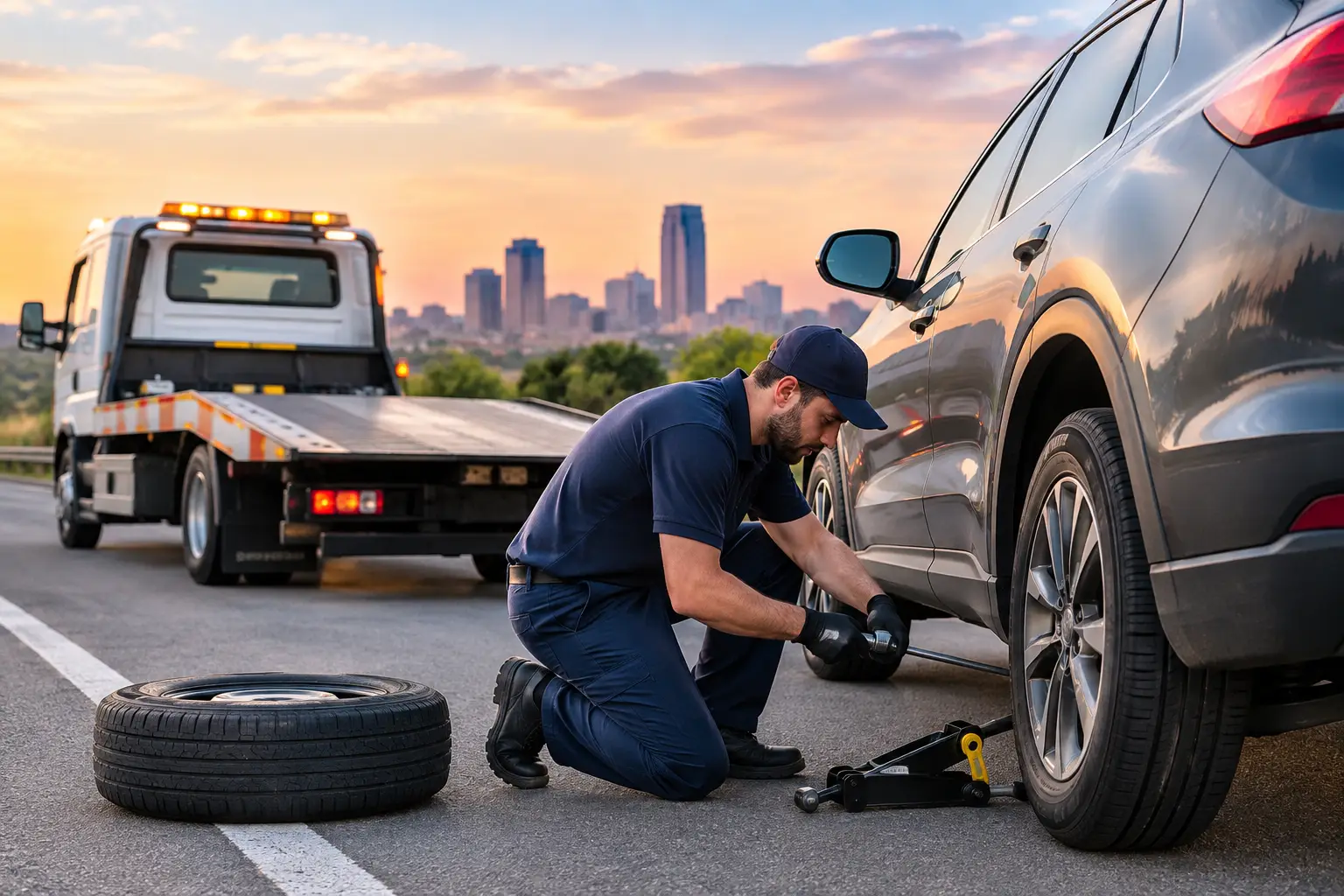
Roadside assistance can solve some problems on site. A dead battery, minor flat tire, or lockout may not require a tow. But once the issue affects safe operation, towing is the right move.
Signs your car is not safe to drive
A vehicle does not have to be completely dead to need a tow. Some of the most common towing calls come from cars that still run, but should not be on the road.
Overheating engine
If the temperature gauge is climbing, steam is coming from under the hood, or the engine overheated once and starts heating up again, stop driving. Continuing to drive an overheating car can damage the head gasket or engine itself. A tow is a lot cheaper than replacing major engine parts.
Brake or steering trouble
If the brake pedal goes soft, the car pulls hard while braking, the steering wheel becomes difficult to turn, or the vehicle wanders unpredictably, it should not be driven. These are direct safety issues, not wait-and-see problems.
Transmission failure
If the car will not shift correctly, slips between gears, jerks badly, or suddenly loses power while moving, towing is usually the safer option. A failing transmission can leave you stranded in traffic with little warning.
Severe tire or wheel damage
A simple flat can often be handled roadside if you have a usable spare and safe conditions. But if the tire blew out, the wheel is bent, the sidewall is torn, or the car was driven on the flat long enough to damage the rim, it may need a tow. Driving on a damaged wheel setup can make the repair bill worse fast.
Warning lights with symptoms
A dashboard light by itself does not always mean tow it immediately. But if a warning light comes on along with rough running, smoke, fluid leaks, loss of power, or unusual noises, that changes the situation. The light is one thing. The way the vehicle is acting is what matters most.
After an accident, can you still drive it?
This is one of the biggest gray areas. A lot of cars can move after a collision, but that does not mean they should.
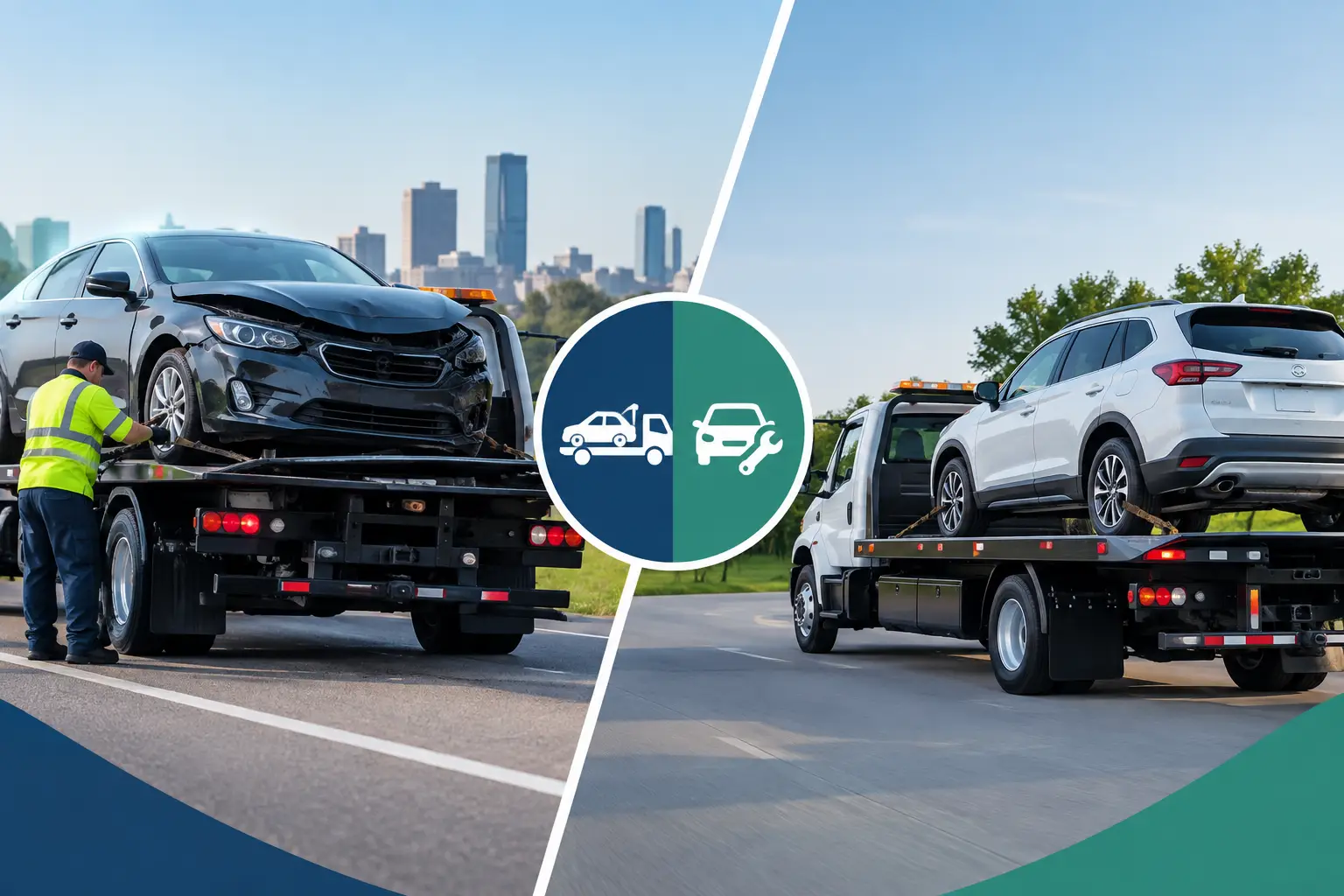
If airbags deployed, fluid is leaking, a wheel is pushed out of position, the bumper is rubbing a tire, the hood will not latch, or the car pulls to one side, it should be towed. The same applies if lights are broken badly enough that the vehicle is no longer safe or legal to drive, especially at night or in traffic.
Even in a minor accident, hidden damage matters. A bent suspension part or damaged radiator may not stop the car immediately, but it can create a bigger problem a mile down the road. If there is any doubt about steering, braking, cooling, or wheel alignment, towing is the safer choice.
What if the car still feels mostly normal?
If the damage appears truly cosmetic and the vehicle drives normally, some drivers choose to drive it a short distance. But that only makes sense if there are no leaks, no rubbing, no safety system damage, and no handling issues at all. If you are second-guessing it, that usually tells you enough.
When roadside assistance is enough
Not every call needs a tow truck for transport. Sometimes the right fix is quick and done where the vehicle sits.
A jumpstart may get you moving if the battery is dead but the rest of the car is fine. A flat tire change can help if the spare is in good shape and the lug nuts are not seized. Lockout service handles a different kind of emergency without moving the vehicle at all.
The key is whether the issue ends once that immediate problem is solved. If a jumpstart works but the car dies again right away, towing makes more sense. If the spare is damaged, underinflated, or not suitable for highway driving, towing may still be the better call. Roadside help and towing are not opposites – sometimes one leads to the other.
When should a car be towed for damage prevention?
There is the safety side, and then there is the damage side. Plenty of cars get towed not because they are impossible to drive, but because driving them would make the repair much worse.
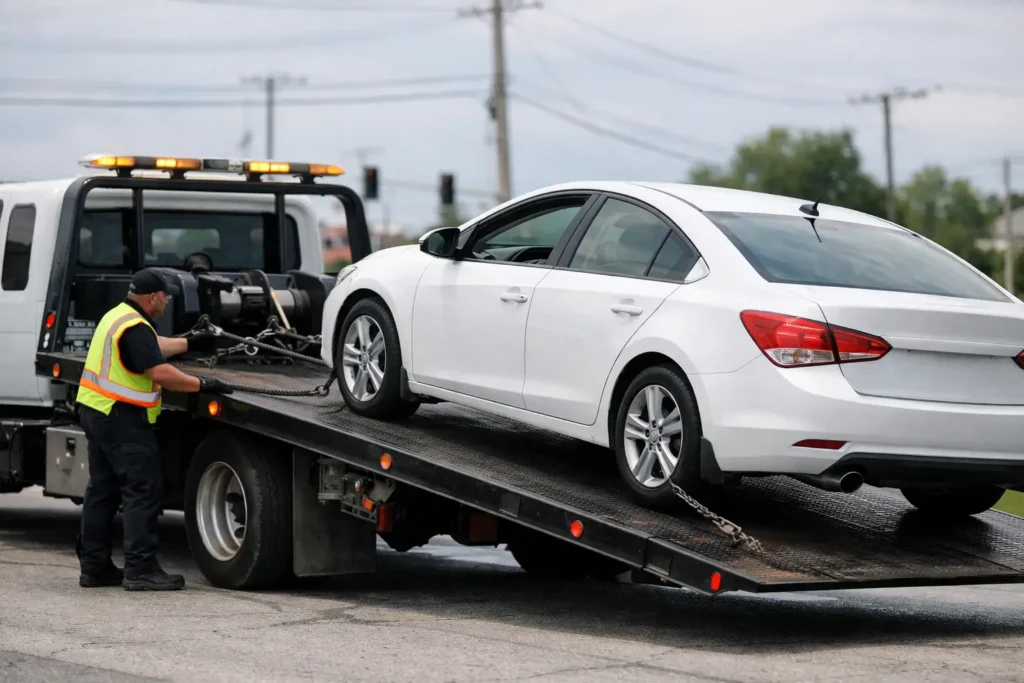
Low-clearance vehicles, all-wheel-drive systems, electric vehicles, and cars with suspension damage need extra care. For those vehicles, proper towing method matters too. Flatbed towing is often the safest choice because it keeps the vehicle fully off the ground and avoids added wear or drivetrain damage.
That is especially true for EVs and some newer cars with sensitive drivetrains, limited ground clearance, or specific manufacturer handling requirements. Guesswork is where damage happens. If the vehicle already has a mechanical issue, the wrong towing setup can add to it.
Situations where waiting is the wrong move
Drivers often delay calling because they are hoping the problem clears up, or because they do not want the hassle of a tow. That hesitation is understandable, but some situations get riskier by the minute.
If your car is disabled in a traffic lane, on a narrow shoulder, in a blind curve area, or on a busy road like US 75 or Highway 169, your first concern is safety, not diagnosis. Turn on your hazards, move over if you safely can, and call for help. A car that is only partly disabled in heavy traffic is still a dangerous situation.
The same goes for being stuck in mud, a ditch, or a soft shoulder. Spinning the tires harder rarely fixes it. More often, it buries the vehicle deeper or damages something underneath. A winch-out or tow is usually the cleaner solution.
How to make the call when you are unsure
If you are on the fence, ask yourself a few simple questions. Can the car be driven safely at normal speed? Can it steer and stop normally? Are there any leaks, smoke, grinding noises, overheating signs, or visible wheel damage? Was it in an accident, even a minor one? Are you trying to nurse it somewhere just because it is close?
If the answer raises doubt, towing is the safer decision. You do not need a full mechanical diagnosis on the side of the road. You just need to know whether moving the car under its own power is a risk.
That is usually where an experienced tow operator helps most – not just by hauling the vehicle, but by recognizing when roadside help is enough and when transport is the smarter option. For drivers in Tulsa, Jenks, Bixby, or Broken Arrow, that kind of clear answer matters when traffic is moving and stress is already high.
A good rule to remember is simple: if driving the car might make the problem worse, or if you are not confident it can be driven safely, have it towed and deal with the repair from a stable place instead of the side of the road.