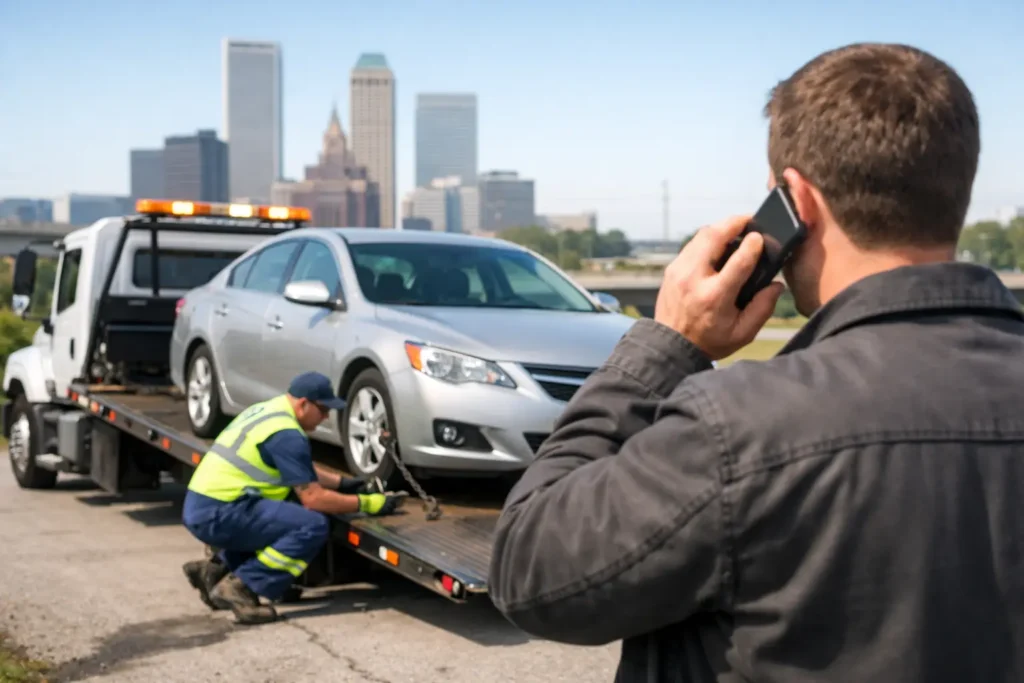
A breakdown usually happens at the worst time – on the shoulder of I-44, in a packed parking lot, or right before work. If you need to know how to call a tow truck, the goal is simple: stay safe, give clear information, and get the right truck sent out the first time.
Most drivers only call for a tow a few times in their life, so it is normal to feel rushed or unsure. The problem is that small mistakes can slow everything down. If the location is vague, the vehicle details are wrong, or the issue is not explained clearly, the truck that shows up may not be the one your vehicle actually needs.
How to call a tow truck without slowing things down
Before you make the call, take a breath and look at the situation. If your vehicle is in a traffic lane, on a narrow shoulder, or in a spot where you do not feel safe standing outside, your first priority is distance from traffic. Turn on your hazard lights, stay visible, and move to a safer spot if you can do that without putting yourself at risk.
When you call, the dispatcher needs practical details, not a long story. Start with your exact location. A highway name alone is usually not enough. Give the direction of travel, the nearest exit, cross street, landmark, or business name. If you are in Tulsa, saying “US 75 southbound near 71st” is a lot more useful than saying “I am on the highway.”
Next, explain what vehicle you have. The year is helpful if you know it, but the make, model, and whether it is a car, SUV, pickup, or EV matter more. A low-clearance sedan, a lifted truck, and a Tesla are not all loaded the same way. Good towing starts with sending equipment that fits the job.
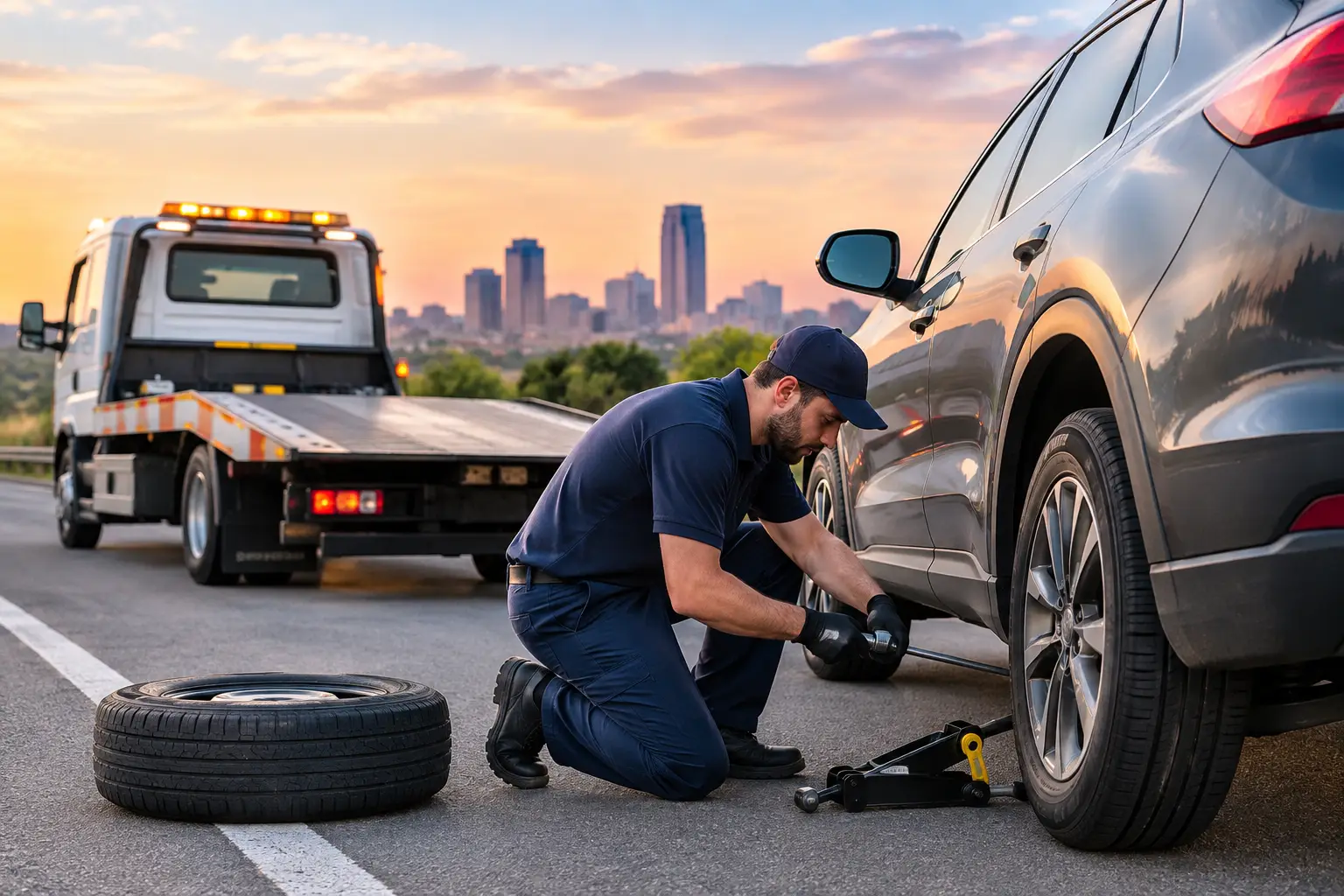
Then explain what the vehicle is doing. If it will not start, say that. If it was in an accident, say whether the wheels turn. If you hit a curb and blew a tire, mention that too. A tow company may be able to help on site with a jumpstart, flat tire change, lockout, or winch-out instead of a full tow. The more accurate you are, the easier it is to dispatch the right help.
What information to have ready
The fastest calls are usually the clearest ones. You do not need a perfect script, but you should be ready with a few basics.
Your exact location
This is the detail that causes the most delay when it is missing. Use your phone map if needed. Look for mile markers, street signs, nearby stores, apartment entrances, garage levels, or gate codes if your car is inside a private lot. In busy areas like Memorial, Riverside, or Tulsa Hills, one wrong turn can waste time.
Vehicle details
Give the make, model, color, and license plate if asked. If the car is stuck in park, has a flat on the drive axle, is lowered, or has damage from a crash, say that early. Those details affect how the vehicle is loaded and whether a flatbed is the right call.
Where the vehicle needs to go
If you already know the repair shop, dealership, home address, or parking area where the vehicle needs to be delivered, have that ready. It helps with dispatch timing and lets the driver plan the route instead of sorting it out after arrival.
A callback number
Use the number you can answer right away. If the driver cannot find you in a large parking lot or needs to confirm a location pin, a missed call can turn a quick pickup into a longer wait.
What to say when you call
You do not need special towing language. Plain English works best. Tell them where you are, what you are driving, what went wrong, and where you want the vehicle taken. That is enough to start.
A simple example sounds like this: “I am on Highway 169 northbound near 21st Street. I have a white Ford F-150 that won’t start. It is on the right shoulder. I need it towed to a repair shop in Midtown, and my number is this one.”
That kind of call gives the dispatcher what they need fast. It also lowers the chance of getting a truck that is not set up for your vehicle.
When it might not be a full tow
A lot of drivers assume every roadside problem means towing. Sometimes it does. Sometimes it does not.
If the battery is dead, a jumpstart may solve it. If you locked your keys inside, a lockout service may be enough. If you have one flat tire and a usable spare, that can often be handled on site. If your vehicle slid into mud, grass, or a curb edge and cannot move under its own power, a winch-out might be the real job.
This is why your description matters. Saying “my car is stuck” is less helpful than saying “the right front tire is off the pavement and it will not move forward.” One tells the company very little. The other points to the actual equipment needed.
Safety while you wait
After the call is made, focus on staying safe and easy to find. At night, keep your hazard lights on. If you are on a busy roadside and can safely wait away from the vehicle, do that. If the area feels unsafe, stay aware of your surroundings and keep your phone charged.
If you are on a highway shoulder, do not stand between your vehicle and moving traffic. Do not try to fix the problem yourself if it puts you in a dangerous position. A tow call is already stressful. Getting clipped by traffic while waiting makes it worse fast.
In parking lots, garages, and apartment complexes, visibility can be the bigger issue. Let the driver know if you are behind a building, below street level, or in a tight access area. Those details matter more than people think.
How to avoid a bad towing situation
Calling a tow truck is not just about speed. It is also about making sure your vehicle is handled correctly. That matters even more with low-clearance cars, all-wheel-drive vehicles, heavy-duty pickups, and electric vehicles.
Ask what type of truck is being sent if you are unsure. A flatbed is often the safer choice for damage-free transport, especially when a vehicle cannot roll normally or has clearance issues. If your car is an EV, mention it clearly. Electric vehicles have specific loading and transport requirements, and that is not something to leave until the truck arrives.
It also helps to confirm the destination and basic pricing before the truck is dispatched. Not every tow is the same. Distance, access, vehicle condition, and whether the job is a roadside service or full transport can all affect the total. Clear communication up front usually means fewer surprises later.
Local conditions can change the call
In and around Tulsa, where traffic backs up fast and access points are not always obvious, good location details save time. A vehicle on the shoulder near a busy ramp is different from a disabled car in a downtown garage or a pickup stuck in a muddy lot after rain. Same tow request, different setup.
That is where local experience helps. A company that knows the area can usually picture the scene faster from a short description and bring the right equipment without a lot of back-and-forth. Tulsa Towing handles calls with that kind of practical, local approach – straight information, proper equipment, and careful loading.
If you are too stressed to think clearly
That happens more often than people admit. If you were just in an accident, your car quit in traffic, or you have kids in the vehicle, it is normal to feel scattered. In that moment, keep it basic. Say where you are, what you drive, whether the vehicle can move, and whether you are in a safe spot.
The rest can be sorted out from there. You do not need to have every answer immediately. You just need enough information to get the right help moving toward you.
A good tow call is not complicated. It is clear, specific, and focused on safety first. If you remember that, you will make the process easier on yourself and give the driver a better chance to get your vehicle loaded and moved without extra delay.