A lot of towing mistakes still happen the same way – someone treats an EV like a gas car, hooks it up fast, and creates a bigger problem than the breakdown itself. That is why electric vehicle towing trends matter right now. More drivers are switching to EVs, and more roadside calls involve vehicles that need a different approach from the moment the truck arrives.
For drivers, the biggest shift is simple. EV towing is becoming less about brute force and more about correct handling, correct equipment, and knowing what not to do. If a disabled electric vehicle is moved the wrong way, the damage can be expensive and completely avoidable.
How electric vehicle towing trends are changing roadside service
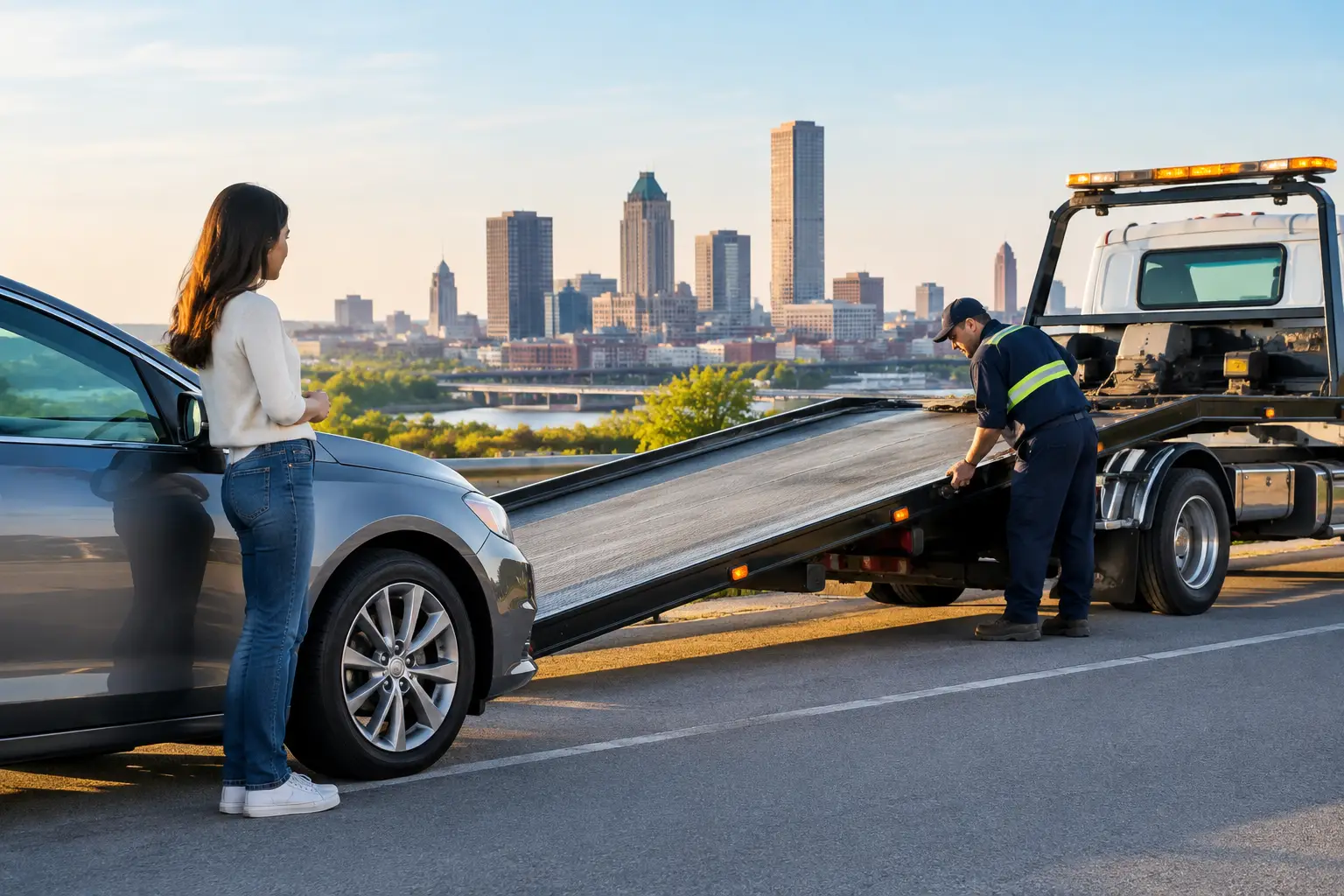
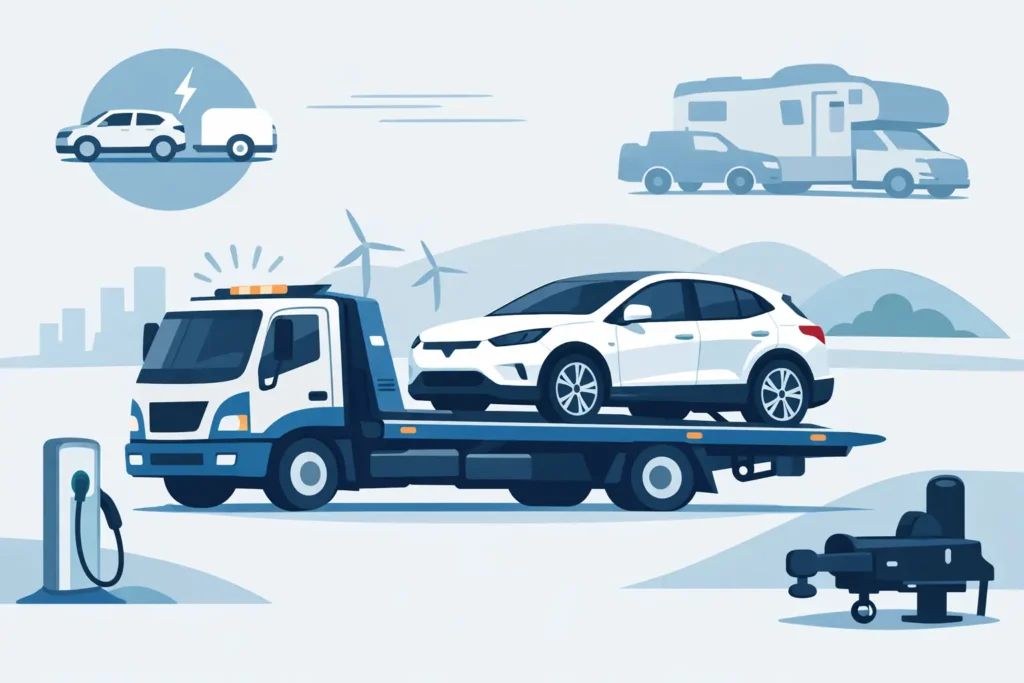
The first clear trend is the move toward flatbed-first towing for electric vehicles. That is not a marketing angle. It is the safe way to transport many EVs because wheel-lift or drag-style towing can create drivetrain damage on models that are not designed to roll freely while powered down.
That matters in real breakdown situations. If a Tesla, Rivian, Hyundai Ioniq 5, Ford Mustang Mach-E, or another EV loses power in traffic or will not shift into transport mode, the tow is not just about getting it off the road fast. It is about getting it loaded correctly without scraping low body panels, damaging wheels, or forcing the driveline.
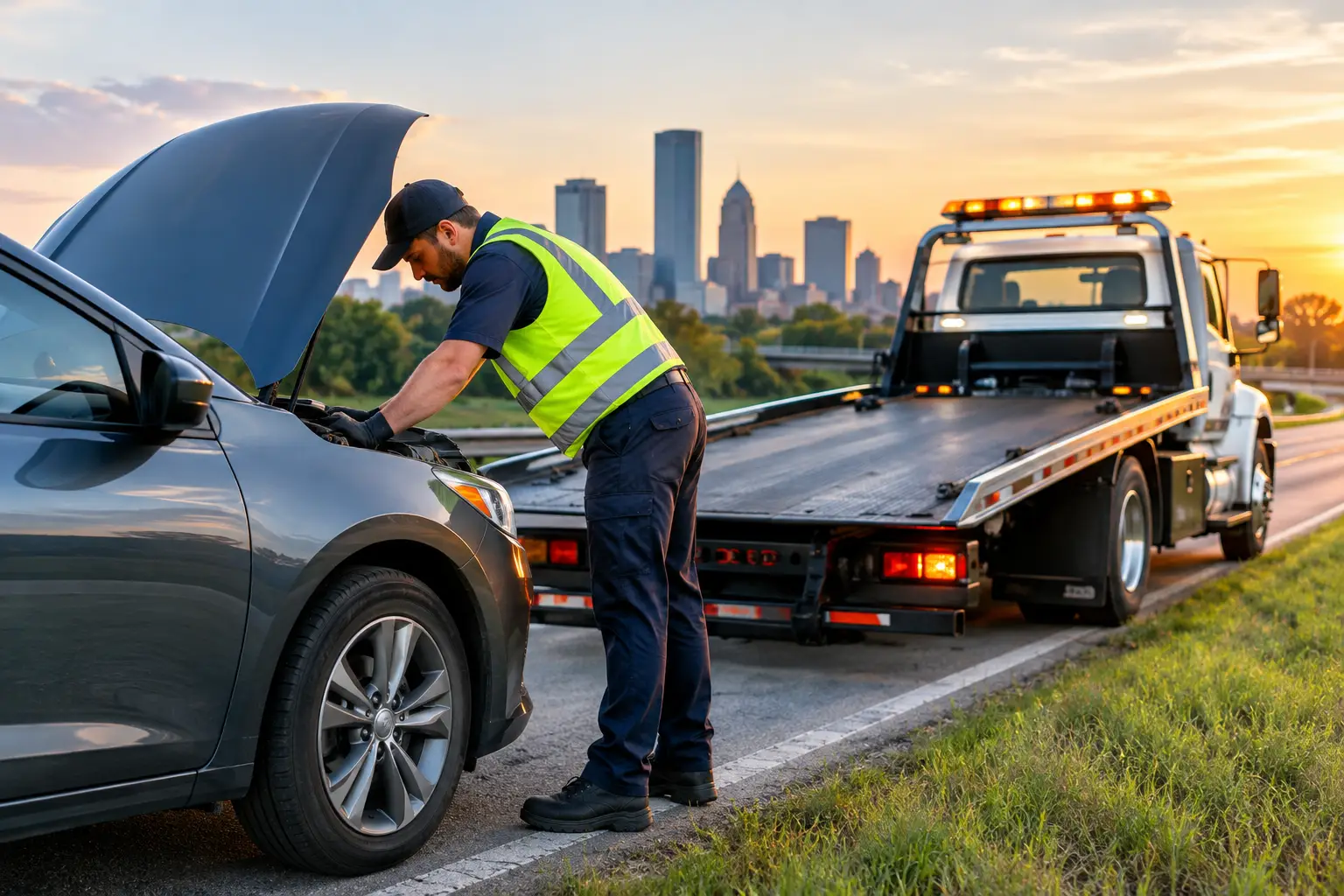
Another trend is that more tow calls now involve battery-related issues that are not always total battery failure. Sometimes the high-voltage system is fine, but the 12-volt battery is weak and the vehicle will not wake up, unlock properly, or go into neutral. To the driver, it feels like the whole vehicle died. To an experienced tow operator, that changes how the vehicle is approached on scene.
That distinction saves time. In some cases, a jump on the low-voltage system may help the car enter transport mode. In others, it still needs a flatbed because the vehicle cannot be safely moved under its own power.
More EVs on the road means more specialized tow calls
As EV ownership grows, tow companies are seeing more variety in the calls. Early on, most people thought of Tesla first. Now the mix is wider. There are electric pickups, compact crossovers, luxury sedans, and delivery vehicles, and they do not all behave the same during a breakdown.
This is one of the most important electric vehicle towing trends for everyday drivers. The badge on the hood matters less than the tow points, ground clearance, wheel setup, and whether the vehicle can be placed in neutral or transport mode. Some EVs are straightforward when the system still has power. Others become difficult quickly if the screen is dead or the car is locked down electronically.
That is why real towing experience matters more than generic vehicle knowledge. An operator needs to know where to load from, how to avoid underbody damage, and when to stop forcing a process that is not working.
In places with heavy traffic, this has become even more noticeable. A disabled EV on a shoulder, in a tight parking garage, or at a charger creates a different kind of recovery job than a standard breakdown in an open lot. Space is limited, the vehicle may not roll normally, and loading angles matter.
Battery concerns are shaping EV towing decisions
Range anxiety gets a lot of attention, but the real towing issue is what happens after the battery is too low to move the car safely. Some drivers make it to a charger and find the vehicle will not start charging. Others run low, pull over, and then learn that towing options are more limited if the vehicle cannot enter the correct transport setting.
That is pushing a trend toward faster dispatch and better communication before the truck arrives. Drivers need to describe whether the car is completely dead, whether it is stuck in park, and whether there are warning messages on the screen. Small details can change what equipment is needed.
There is also a growing focus on where the vehicle is being towed. For an EV, the destination is not always the nearest repair shop. It may need to go to a dealership, a certified repair facility, or a home charging location depending on the issue. That makes clear communication more important than ever.
Damage-free handling is becoming the standard expectation
One of the biggest electric vehicle towing trends is that EV owners are paying close attention to how their vehicle is loaded. That is not being picky. Many EVs have low clearance, exposed trim, unique jacking points, and heavy battery packs mounted low in the chassis. Careless loading can lead to scrape damage, wheel damage, or worse.
This is where proper flatbed equipment makes a real difference. The right setup helps control approach angle, reduce contact with low front ends, and keep the vehicle fully supported during transport. On some jobs, the hard part is not the drive to the destination. It is the first few feet of loading.
There is also more awareness around underbody protection. EV battery packs sit where mistakes can get expensive fast. Even if there is no visible damage during loading, improper contact underneath the vehicle can create problems later. A careful operator treats that risk seriously from the start.
For drivers, this trend is good news. It means more people are asking the right question before agreeing to a tow – will the vehicle be transported on a flatbed and handled correctly for an EV?
Training matters more than brand familiarity
A common assumption is that a tow company only needs EV experience if it handles one specific brand. That is not really how roadside calls work. The bigger issue is whether the operator understands disabled electric vehicles as a category.
An EV tow can involve electronic parking systems, hidden manual releases, transport mode procedures, recovery points, and loading limitations that are easy to miss if someone is rushing. Brand familiarity helps, but training and hands-on experience matter more because roadside situations are rarely clean and simple.
That is especially true after collisions or curb strikes. Even when the vehicle looks drivable, the safest move may still be a flatbed if there is possible suspension damage, wheel damage, or battery pack impact. With EVs, you do not guess your way through that.
What drivers should expect from EV towing now
The practical side of these trends is straightforward. Drivers should expect more questions when they call for a tow, not fewer. That is usually a good sign. The right questions help confirm if the vehicle rolls, whether it has power, where it is located, and what kind of access is available.
They should also expect EV towing to be more deliberate than old-school hook-and-go service. If the operator pauses to check tow points, loading angle, or transport mode, that is part of doing the job right. Fast response matters, but rushing the wrong process does not help anyone.
In local service areas like Tulsa, this is becoming part of everyday towing work rather than a rare specialty call. More EVs are showing up in neighborhoods, office parking lots, shopping centers, and along major roads, so the demand for proper handling is only going one direction.
For companies that already use flatbeds, focus on damage-free transport, and deal with real roadside situations every day, that shift is manageable. It is not about reinventing towing. It is about applying the right method to a vehicle that gives you less room for error.
Where electric vehicle towing trends are heading next
The next phase will likely be less about novelty and more about standard procedure. More tow operators will treat EV handling as normal part of the job, and more drivers will know enough to ask for the right equipment upfront.
At the same time, vehicles are getting heavier, more software-dependent, and more particular about transport settings. That means towing is not getting simpler. The basics still matter – clear communication, proper loading, and safe transport to the right destination.
If your EV breaks down, the main thing to remember is this: the tow itself should not become the second problem. A careful flatbed tow, done by someone who understands how these vehicles behave when they are disabled, is still the safest path from roadside stress to getting the vehicle where it needs to go.