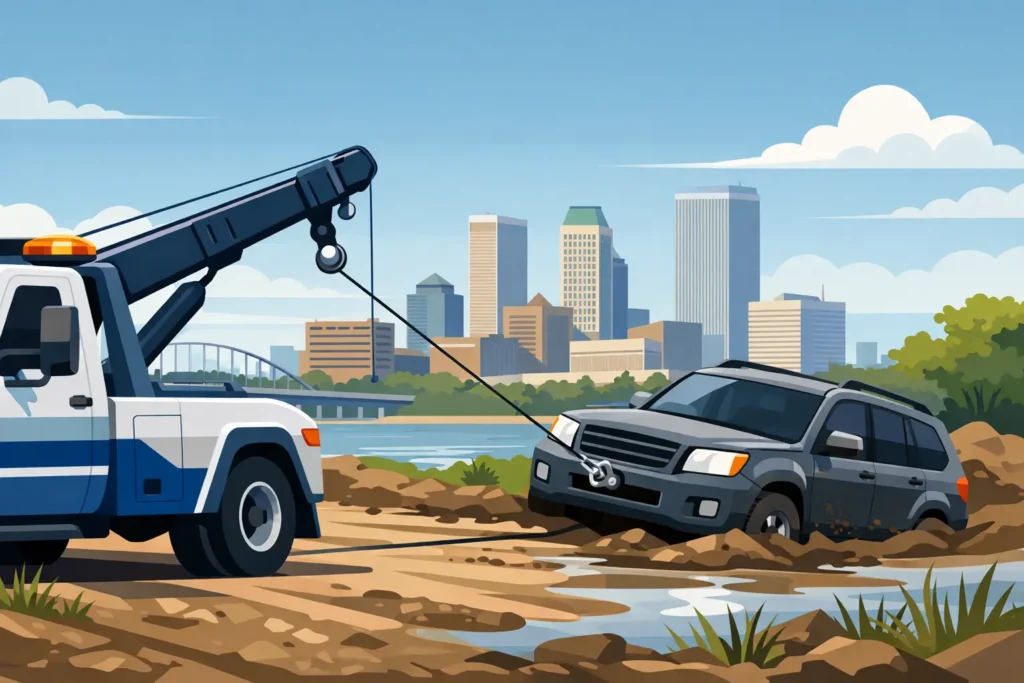
A vehicle does not have to be buried to the frame to need a winch out. In Tulsa, a lot of stuck calls come from simple situations that turn into bigger problems fast – a car slid off a wet shoulder, a truck sank into soft ground after rain, or a driver pulled too far into a ditch trying to avoid traffic. When you need a stuck vehicle winch out Tulsa service, the main concern is not just getting the vehicle moving again. It is getting it out safely without tearing up the vehicle in the process.
That is where experience matters. A winch out is not the same as hooking up and pulling hard. The angle of the pull, the condition of the ground, the type of vehicle, and the recovery points all matter. If any of that is handled carelessly, a bad situation can get more expensive very quickly.
When a stuck vehicle winch out in Tulsa is the right call
Some vehicles are obviously stuck. Others are in that gray area where the tires still spin, but the vehicle is not going anywhere without help. That happens a lot on muddy shoulders, uneven lots, loose gravel, construction edges, and grassy areas that look solid until the weight of the vehicle drops in.
A proper winch out is usually the right move when traction is gone or when trying to drive out will make the situation worse. Spinning the tires can dig the vehicle deeper. It can also overheat components, damage tires, or push the vehicle farther off level ground. That is especially true with front-wheel drive cars and heavier trucks that settle quickly in soft areas.
Sometimes the vehicle is technically movable, but not safely. If the car is close to a ditch, angled toward a fence, or sitting on a slippery slope, forcing it out without equipment can shift the vehicle in the wrong direction. In those cases, controlled recovery is the safer option.
What a proper winch out actually involves
Most drivers picture a tow truck pulling a cable and dragging the vehicle free. The real job is more controlled than that.
First, the situation has to be assessed. How stuck is the vehicle? Is it on mud, sand, wet grass, a curb edge, or a drainage slope? Is the vehicle low clearance? All-wheel drive? Electric? Is there safe access for the truck to position without causing more risk? Those details decide how the recovery should be done.
The next step is setting up the pull correctly. A careful operator looks at the pull angle, chooses proper connection points, and stabilizes the recovery so the vehicle comes out as straight and smoothly as possible. The goal is not speed for the sake of speed. The goal is controlled movement with as little stress on the vehicle as possible.
In some cases, a winch out is enough and the vehicle can continue driving once it is back on stable ground. In other cases, the safer move is to winch it free and then load it for transport. That depends on what caused the problem in the first place and whether the vehicle may have undercarriage, tire, or suspension issues after being stuck.
Why rushed recoveries cause damage
A lot of damage during a recovery does not come from the original problem. It comes from bad technique.
Pulling from the wrong point can bend parts underneath the vehicle. Using the wrong angle can yank the vehicle sideways instead of guiding it out. On low cars, careless handling can scrape bumpers, undertrays, or rocker panels. On trucks and SUVs, the weight involved means a rough pull can put unnecessary force on steering and suspension components.
This is also why the right equipment matters. Flatbed-capable operators and experienced roadside teams are used to handling different vehicle types, including low clearance vehicles, pickups, and EVs that cannot be treated like every other car on the road. A careful recovery takes a little more judgment, but it helps avoid turning one service call into multiple repairs.
Common stuck situations around Tulsa
Local driving conditions create more winch-out calls than most people expect. After heavy rain, shoulders near major roads can look stable but give way under the weight of a vehicle. Parking along uneven grass or dirt can also go bad fast, especially after a storm or during freeze-thaw cycles.
Another common situation is a driver trying to turn around in a soft area near a neighborhood entrance, apartment edge, or commercial lot. The front tires drop, the rear tires lose traction, and now the vehicle is angled awkwardly with no room to power out. The same thing happens near drainage ditches, curb cutouts, and sloped roadside areas.
Busy corridors add another layer of stress. If a vehicle is stuck near I-44, US 75, Memorial, Riverside, or Tulsa Hills, drivers are not just worried about the vehicle. They are worried about traffic, safety, and getting the problem handled before it gets worse. In those situations, clear communication and quick local dispatch matter as much as the recovery itself.
What to do while you wait for a winch out
If your vehicle is stuck, the first thing to avoid is making repeated hard attempts to drive out. That usually deepens the problem. If the tires are spinning and the vehicle is not moving, stop. Every extra attempt can dig in more or push the vehicle into a worse position.
If it is safe to do so, turn on your hazard lights and stay aware of traffic around you. If the vehicle is close to a travel lane or sitting on unstable ground, do not put yourself in a risky spot trying to inspect underneath it. A quick description of what happened, where the vehicle is sitting, and whether it is blocking traffic helps the towing operator bring the right approach from the start.
Photos can help too, especially if the vehicle is off the road or tucked into a hard-to-see area. A clear picture of the angle, ground condition, and surrounding obstacles can save time and help avoid surprises when the truck arrives.
How long a stuck vehicle winch out in Tulsa can take
It depends on access and how buried the vehicle is. A simple shoulder pull may only take a short time once the truck is on scene. A vehicle that is deep in mud, boxed in by curbs, or positioned on a slope will take more setup and more care.
That extra time is usually a good thing. Fast is helpful but rushed is not. The right operator will take a minute to line up the recovery, choose the safest pull path, and avoid causing new damage. That is especially important when the vehicle is already sitting awkwardly or when traffic is close.
Response time also depends on location and traffic flow at the time of the call. A city-focused company that knows Tulsa streets, common trouble spots, and the surrounding areas can usually move more efficiently than a service running jobs across a much wider region.
Not every stuck vehicle should be driven afterward
This is one of the more overlooked parts of a winch-out call. Just because the vehicle is back on pavement does not always mean it should be driven away.
If the vehicle went into a ditch hard, bottomed out, or spent time spinning while stuck, there may be damage you cannot see right away. Tires can be packed with mud, underbody panels can come loose, and alignment issues may show up once the vehicle starts moving again. If there is any doubt, towing it to a shop is often the safer call.
That is one reason Tulsa Towing handles winch outs with the bigger picture in mind. Sometimes the job ends once the vehicle is free. Sometimes the safer move is recovery plus transport. Either way, the focus stays the same – clear communication, proper equipment, and careful handling from start to finish.
If your vehicle is stuck, the best next step is usually the simplest one: stop trying to force it out, keep yourself safe, and get the right help on the way before a small recovery turns into a bigger repair.