A flat tire on a side street is one thing. A disabled vehicle on I-44 at rush hour is a different problem entirely. This guide to roadside emergencies is built for drivers who need to make smart decisions fast, stay safe around traffic, and avoid turning a bad situation into a worse one.
When a vehicle stops moving the way it should, the first priority is not the repair. It is your location, your visibility, and whether the vehicle can stay where it is without creating more danger. That part gets overlooked all the time, especially when people are stressed and trying to figure out what failed.
Guide to roadside emergencies: what to do first
Start by judging whether the vehicle can be moved safely. If it still rolls and you can get to a shoulder, parking lot, or side street without forcing the issue, do that. If moving it means crossing traffic, driving on a shredded tire, or continuing with smoke, grinding, or steering problems, stop where you are and put safety first.
Turn on your hazard lights right away. If it is dark, raining, or visibility is poor, that matters even more. Drivers coming up behind you need as much warning as possible, especially on roads like US 75, Highway 169, or any busy Tulsa corridor where traffic does not give you much room.
If you are on a highway shoulder, it usually makes sense to stay inside the vehicle with your seat belt on, especially if traffic is moving fast and there is no safe space to stand. If you are in a safer area, like a parking lot or wide shoulder away from traffic, you may be able to step out carefully and assess the issue. It depends on the location more than the problem itself.
Once you are safe, call for help and be ready with useful details. Your exact location matters more than a general guess. Street name, nearest intersection, direction of travel, and visible landmarks all help speed up dispatch. Saying you are “near downtown” is less useful than saying you are on the right shoulder of eastbound I-44 near an exit.
The roadside emergencies that need help now
Some problems are inconvenient. Others mean the vehicle should not be driven another foot. Knowing the difference can prevent extra damage and keep you from getting stuck in a worse spot.
A dead battery is often straightforward if the vehicle has no other issue. A jumpstart may get you moving again, but not always for long. If the battery is old or the alternator is failing, the engine may die again after a short drive. That is why it helps to think beyond getting it started. You need to know whether it can stay running long enough to get somewhere safe.
A flat tire also depends on the situation. If you are in a safe place with the right tools and a usable spare, changing it may be reasonable. But if you are on a narrow shoulder, the lug nuts are seized, or the tire came apart and may have damaged the wheel, it is usually smarter to call for roadside help. Saving ten minutes is not worth getting hit by traffic or damaging the car further.
Overheating is one of the easiest problems to make worse. If the temperature climbs into the red, pull over and shut the engine off. Do not keep driving and hope it clears up. That can turn a cooling system problem into major engine damage. The same goes for oil pressure warnings, smoke from under the hood, or transmission issues that make the vehicle slam, slip, or stop pulling.
Steering or brake problems are immediate stop situations. So are accidents, even low-speed ones, if the vehicle no longer tracks straight, leaks fluid, or has suspension damage. What looks drivable at a glance is not always safe to move under its own power.
How to stay safe while waiting
Most roadside emergencies are made more stressful by traffic, weather, and uncertainty. A few simple decisions can make the wait safer.
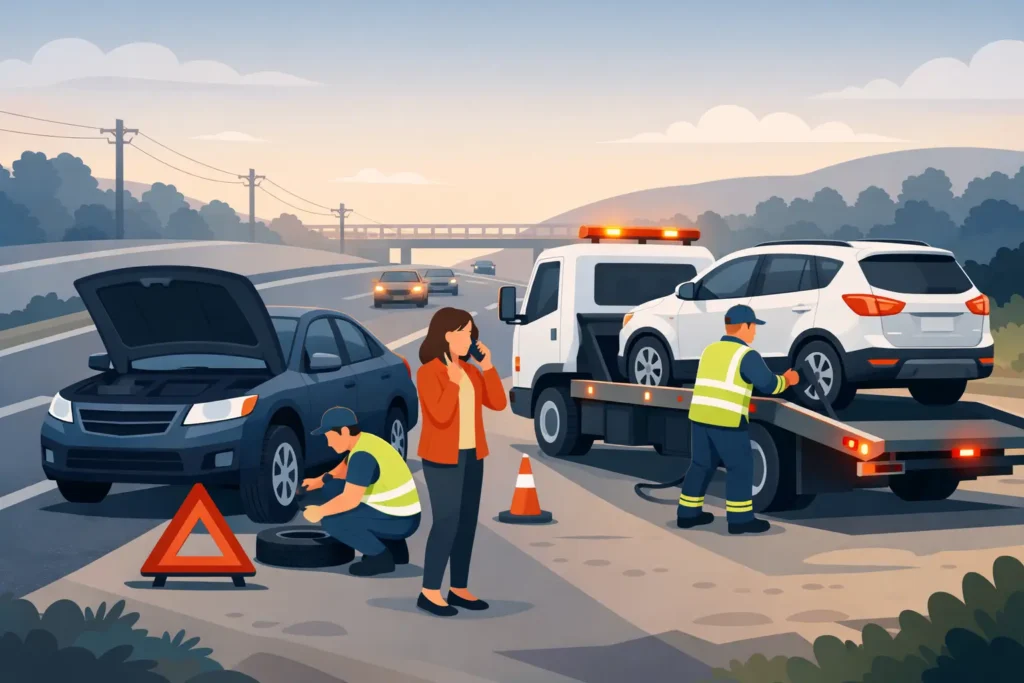
Keep your hazard lights on. If you have reflective triangles or flares and it is safe to place them, use them. At night or in heavy rain, visibility becomes part of the emergency.
Be careful with where you stand. On busy roads, standing next to the vehicle on the traffic side is one of the worst places you can be. If you must exit, use the side away from traffic when possible. If the area is not safe to stand outside, stay in the vehicle.
It also helps to keep your phone charged and within reach. If your battery is low, avoid using it for anything except updates and calls. A basic car charger or power bank is one of those items people do not think about until they need it.
What to tell a towing or roadside service
Clear information saves time. It also helps the right equipment get sent the first time.
Give the exact location, the vehicle make and model, and what the vehicle is or is not doing. If the wheel is broken, say that. If the car is stuck in mud, in a parking garage, or facing the wrong direction on a shoulder, mention it. If it is an all-wheel-drive vehicle, a low-clearance car, a heavy-duty truck, or an EV, that matters too because loading and transport need to be handled correctly.
This is where experience makes a real difference. A simple breakdown call can still involve tight access, traffic exposure, or a vehicle that cannot be towed the wrong way without causing damage. Proper equipment and proper loading matter more than most drivers realize in the moment.
Roadside emergencies and damage prevention
One of the biggest mistakes drivers make is trying too hard to limp the vehicle somewhere. Sometimes you can. Sometimes that short drive is what turns a repairable issue into a much bigger bill.
Driving on a flat can damage the wheel. Continuing after an overheating warning can damage the engine. Pulling an EV incorrectly can create expensive problems that do not show up until later. Even a vehicle stuck against a curb or in a steep driveway needs to be handled carefully if you want to avoid scraping bumpers, undercarriage damage, or suspension issues.
That is why the goal is not just getting the vehicle moved. It is getting it moved the right way. For many breakdowns, especially in traffic or after hours, the safest move is controlled transport to a repair shop, dealership, or home rather than guessing your way through it.
A practical guide to roadside emergencies in Tulsa traffic
Local roads change the decision-making. A dead battery in a driveway is manageable. The same issue in Tulsa Hills on a busy weekend, or on Memorial during heavy traffic, becomes more urgent because room is limited and drivers are distracted. On highways and major corridors, the risk often comes from the location as much as the vehicle problem.
That is why local response matters. Someone familiar with Tulsa, Jenks, Bixby, and Broken Arrow knows the common choke points, the narrow shoulders, the parking garage limitations, and how traffic moves at different times of day. That does not fix the breakdown, but it does help get the situation handled faster and more safely.
Tulsa Towing handles these calls with that exact mindset – get the truck dispatched, keep communication clear, and move the vehicle without adding damage or confusion.
What to keep in your vehicle
You do not need to carry a full mechanic’s setup. But a few basics make roadside emergencies easier to manage.
Keep a charged phone cable, flashlight, reflective vest or warning triangles, bottled water, and your insurance and registration easy to access. If you have a spare tire, make sure you also have the jack and lug wrench that fit your vehicle. In Oklahoma heat, having those items where you can reach them without unloading half the trunk is worth thinking about now, not later.
If you drive an EV, know the basics for your model before anything goes wrong. Not every disabled EV should be moved the same way, and that is not something you want to figure out on the shoulder.
When not to try fixing it yourself
There is nothing wrong with handling simple problems when the conditions are safe and you know what you are doing. But the roadside is not your garage.
If traffic is too close, the ground is uneven, the vehicle is in a blind spot, or you are not sure what failed, do not force it. The same goes for lockouts, winch-out situations, and vehicles that are partly disabled after an accident. A rushed roadside fix often creates more delay, not less.
A calm response usually works better than a fast guess. Get the vehicle visible, get yourself safe, and get the right help on the way. Most roadside problems feel chaotic in the first few minutes. Once the right steps are taken, they usually become a lot more manageable.