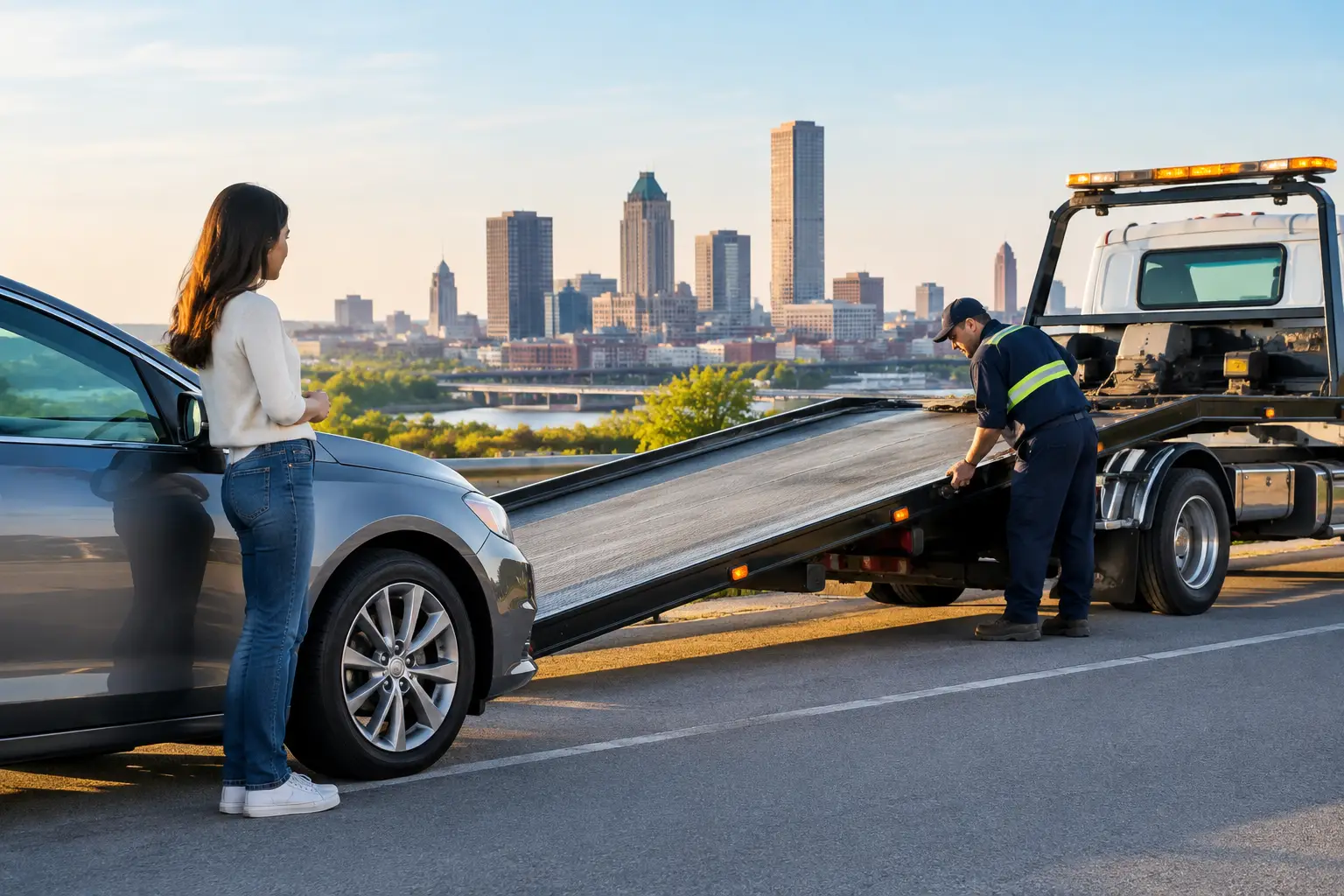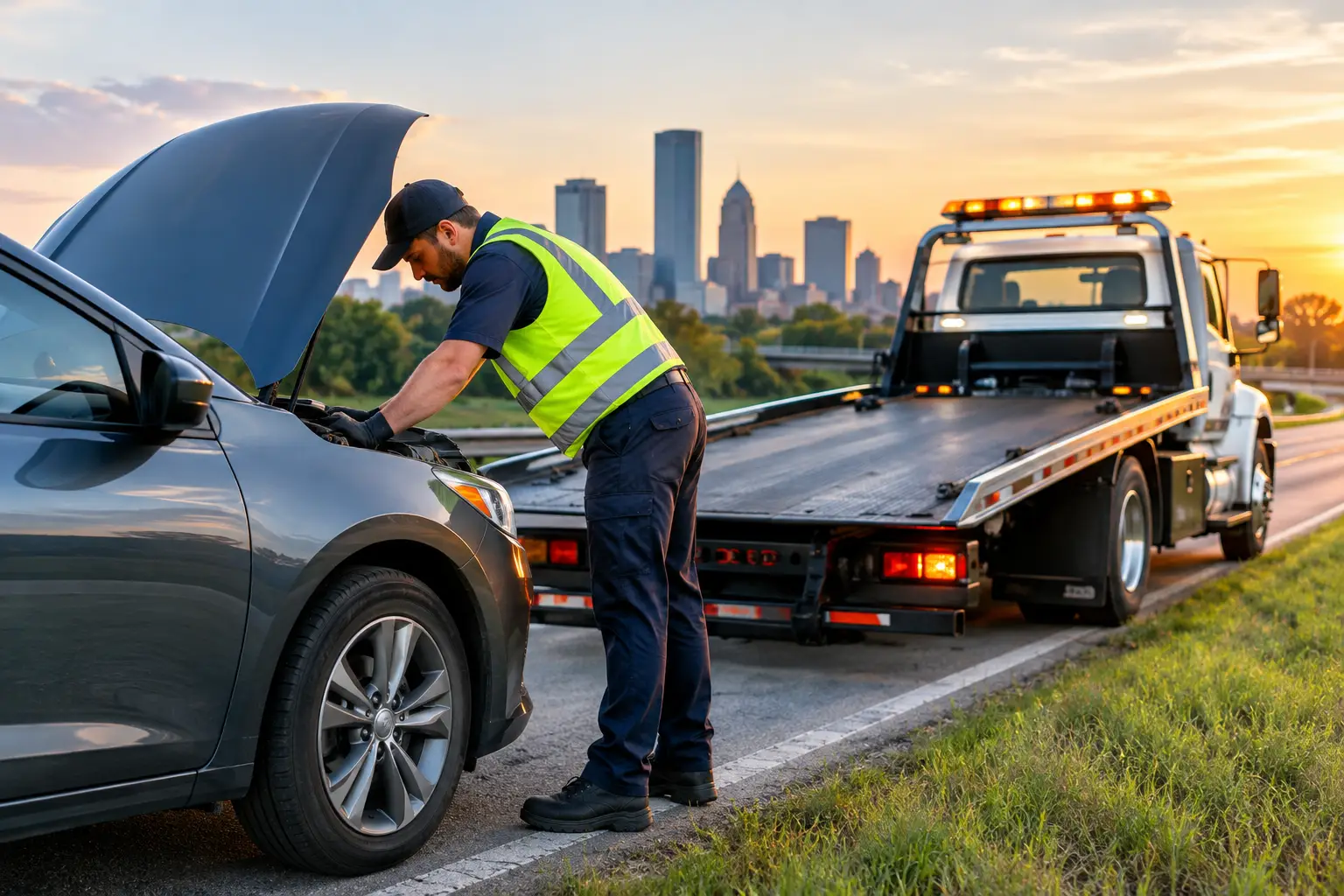
A breakdown on I-44, US 75, or a busy Tulsa parking lot is stressful enough. The best ways to avoid tow damage start before the truck arrives: give accurate information, use the right towing method, and make sure the operator understands what makes your vehicle different. A careful tow is not just about getting the vehicle from point A to point B. It is about loading, securing, and unloading it without creating a second problem.
Start With the Right Towing Method
For most passenger vehicles, a flatbed is the safest choice. The vehicle is loaded fully onto the bed, so all four tires are off the road during transport. That reduces wear on the drivetrain, lowers the chance of bumper or undercarriage contact, and gives the operator more control over how the vehicle is positioned.
This matters even more for all-wheel-drive vehicles, electric vehicles, low-clearance cars, and vehicles with transmission trouble. Pulling a vehicle with the drive wheels on the ground can damage components if it is not done according to the manufacturer’s instructions. A flatbed avoids many of those concerns, but only when the loading process is handled correctly.
A flatbed alone does not make a tow damage-free. The angle of the bed, the placement of ramps, the winch line, the securement points, and the operator’s judgment all matter. A car that sits low to the ground may need a slower approach, extended ramps, or additional clearance protection. Rushing that part is how a front bumper, air dam, or exhaust component gets scraped.
When Another Method May Be Needed
There are situations where a wheel-lift or dollies may be appropriate, especially in a tight parking garage, narrow apartment lot, or location where a flatbed cannot safely access the vehicle. The key is matching the equipment to the vehicle and the space available. A good operator explains the plan before moving the car rather than forcing a setup that does not fit the situation.
Give Dispatch the Details That Change the Job
When you call for a tow truck, a few clear details can prevent the wrong equipment from being sent. You do not need to know towing terminology. Just explain what happened and what the vehicle can or cannot do.
Tell dispatch the year, make, and model, whether the vehicle is all-wheel drive or electric, and whether it is lowered, modified, or has unusually low clearance. Let them know if a wheel is damaged, the steering is locked, the keys are unavailable, or the car is stuck in park. These details affect how the vehicle can be loaded safely.
Location matters too. A vehicle on the shoulder near Riverside or Memorial is a different setup from one parked in a downtown garage or sitting in mud after a storm. Mention whether the vehicle is facing uphill, blocked in, near traffic, or unable to roll. That gives the driver a chance to arrive prepared instead of trying to solve an avoidable equipment issue after reaching you.
Keep the Vehicle in Its Current Condition Until Help Arrives
Drivers sometimes make a bad situation worse while trying to get the vehicle into a better position. If the car overheated, has a damaged wheel, makes grinding noises, or will not shift normally, avoid repeatedly trying to drive it. A short move can turn a manageable repair into more extensive damage.
If you are in a safe place, put the vehicle in park, set the parking brake if appropriate, turn on the hazards, and wait where you are visible but out of traffic. If the vehicle is on a busy roadway, your personal safety comes first. Move away from traffic when possible and follow directions from emergency personnel.
Do not hook chains, straps, or a personal recovery rope to the vehicle unless you know the correct recovery point. Modern cars have plastic bumper covers, underbody panels, sensors, and components that can be damaged by an improper pull. The visible metal underneath is not always a safe place to attach equipment.
Check the Owner’s Manual for Special Instructions
Manufacturer towing instructions are especially useful for electric vehicles, all-wheel-drive models, luxury vehicles, and cars with electronic parking brakes. Some vehicles require a specific transport mode. Others have designated tow eye locations, a procedure for releasing the electronic parking brake, or restrictions on how far the vehicle can be moved with the wheels on the ground.
Tesla and other EV owners should be particularly careful here. Battery placement underneath the vehicle means incorrect lifting, dragging, or securement can create expensive problems. A trained operator will use approved loading points and avoid contact with the battery area, but it still helps to tell dispatch that the vehicle is electric before the truck is sent.
If you have access to the manual through your phone, you can check it while waiting. Do not worry if you cannot find it. The main thing is to avoid guessing, and to tell the tow operator about any warning messages, damaged tires, locked wheels, or special vehicle settings.
Watch for Clearance Problems During Loading
Low-clearance damage is one of the most common concerns drivers have, and for good reason. Front spoilers, splitters, side skirts, aftermarket exhaust parts, and lowered suspension can all sit close to the pavement. Even a normal driveway entrance or a steep flatbed angle can be a problem if it is handled too quickly.
Before loading begins, point out anything that hangs low or has already been damaged. Let the operator know if the vehicle has an aftermarket body kit, oversized tires, or air suspension. A careful driver can adjust the bed angle, use ramps or blocks for added clearance, and winch the vehicle on slowly instead of driving it up abruptly.
The same goes for unloading. A vehicle can clear the bed when it is loaded but scrape when it comes off at a different angle. Good towing work stays careful through the final few feet, not just until the car is secured.
Make Sure Securement Is Done at the Tires
The best ways to avoid tow damage include asking how the vehicle will be secured. On a flatbed, wheel straps or tire baskets are generally preferred because they hold the vehicle by the tires rather than placing unnecessary pressure on suspension components, axles, or fragile body parts.
Proper securement keeps the car from shifting during turns, stops, and uneven road surfaces. It also protects the vehicle from damage caused by loose straps flapping against painted panels or wheels. The operator should check the straps after loading and make sure the vehicle is stable before leaving.
There are exceptions. A vehicle with severe wheel damage, missing wheels, or certain accident damage may require a different approach. In those cases, the operator should assess the condition on site and explain how the vehicle will be stabilized. The safest method depends on what is damaged and whether the car can roll or steer.
Take a Quick Walkaround Before Transport
A brief walkaround is worth doing when conditions allow. Look for existing bumper damage, cracked glass, flat tires, loose panels, or parts hanging underneath. Take a few photos with your phone, especially after an accident. This is not about assuming something will go wrong. It gives everyone a clear record of the vehicle’s condition before it is moved.
Point out any damage you are concerned about, including areas that are easy to miss in poor light. If the car was in a collision, tell the operator which corner took the hit and whether fluids are leaking. That can change where equipment is placed and how the vehicle is loaded.
Once the vehicle is on the truck, remove personal items you need before it leaves. Grab your keys, wallet, medication, work bag, garage remote, and any paperwork the repair shop may need. Opening doors or searching through the vehicle later is much harder once it is secured.
Choose Clear Communication Over Assumptions
The towing company should know where the vehicle is going, whether the repair shop is open, and if there are special drop-off instructions. Confirm the destination address, not just the name of the shop. Large dealership lots and multi-building repair centers can have several entrances, and a wrong drop-off can create delays or leave the car in an inconvenient spot.
For drivers in Tulsa, Jenks, Bixby, and Broken Arrow, local route knowledge can also help avoid unnecessary complications around heavy traffic, construction, and tight access points. Tulsa Towing approaches each transport with the vehicle condition and loading location in mind, not a one-size-fits-all setup.
If something does not look right to you, ask before the vehicle is moved. A straightforward question about the towing method, clearance, or securement is reasonable. The right operator will give you a clear answer and handle the vehicle with the same care they would expect for their own.