
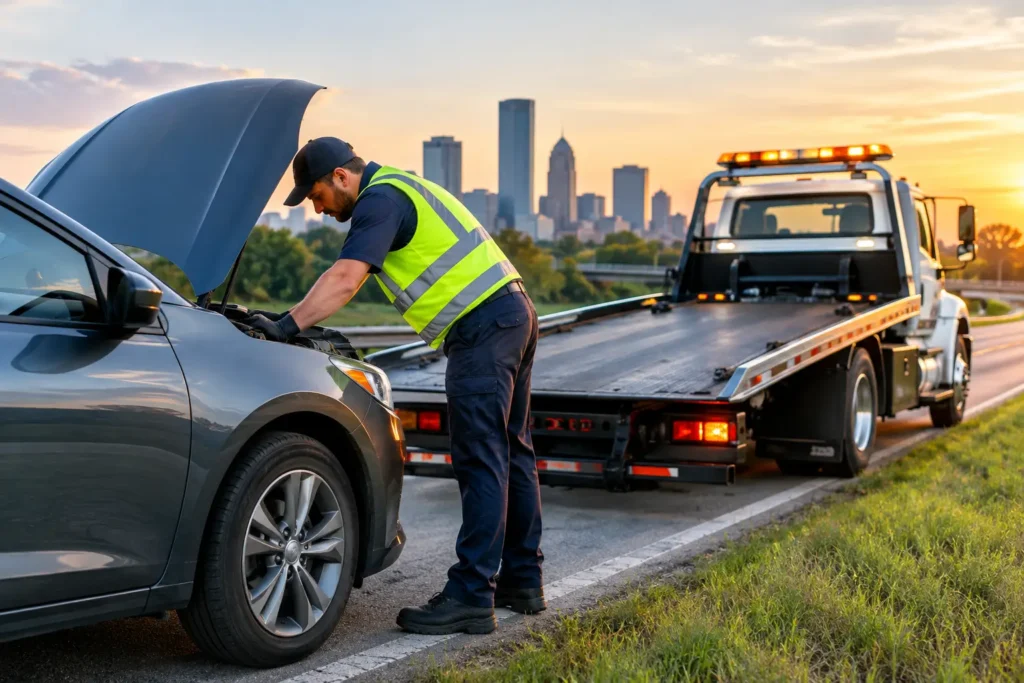
A car can feel almost normal right up until it is not safe to move another foot. You may be sitting on the shoulder of I-44, stranded in a Tulsa Hills parking lot, or stuck in your own driveway in Midtown. The question is simple: when should I call roadside assistance? Call when the next step is uncertain, unsafe, or likely to create more damage than the original problem.
Roadside help is not only for a vehicle that is completely dead. A quick jumpstart, tire change, lockout service, or winch-out can get some drivers moving again. Other situations need a tow immediately, especially when driving could harm the vehicle, put you in traffic, or leave you stranded somewhere worse.
Call Roadside Assistance When You Cannot Safely Continue
Safety comes first, even if you are only a few blocks from home. A vehicle stopped near fast traffic on US 75, Highway 169, Memorial Drive, or Riverside Drive is more than an inconvenience. It is a roadside hazard. If you cannot move the vehicle safely to a parking lot, wide shoulder, or other secure place, turn on your hazard lights and request help.
You should also call if you are in an unfamiliar area, it is dark, weather is limiting visibility, or you have children or other passengers with you. Trying to diagnose a problem beside moving traffic is rarely worth the risk. A roadside technician can assess whether the vehicle can be fixed where it sits or needs to be transported.
If possible, pull as far from traffic as you safely can. Stay inside the vehicle with the doors locked unless the vehicle is in immediate danger, such as smoke, fire, or an unsafe traffic position. Do not stand between your vehicle and the road.
When a Roadside Fix Makes Sense
Some problems are frustrating but straightforward. Roadside assistance can often solve them without sending your vehicle to a repair shop.
Your battery is dead, but the vehicle was running normally
A jumpstart may be the right call if the engine will not crank, the lights are weak, or you left an interior light on. But a jump is not always the full answer. If the battery is old, the vehicle needed a jump recently, or warning lights appeared before it died, it may shut off again after you leave.
After a successful jumpstart, drive directly to a safe place for the battery and charging system to be checked. Do not assume the issue is fixed just because the engine started once.
You have a flat tire and a usable spare
Flat tire help is practical when the vehicle is parked in a safe location and the spare is properly inflated. A roadside provider can replace the flat with your spare so you can get off the road and arrange a permanent tire repair or replacement.
There are limits. Many newer vehicles do not carry a spare, and a temporary spare has speed and distance restrictions. If the tire damage is severe, multiple tires are flat, the wheel is damaged, or the vehicle is sitting in a dangerous place, towing is usually the better call.
You are locked out
A lockout is a clear reason to call roadside help, especially when keys are inside the vehicle and there is no safe backup option. Modern keys, electronic locks, and child safety features make do-it-yourself entry attempts risky. Forcing a door or using improvised tools can damage weather seals, window trim, and lock components.
Call for professional lockout service rather than turning a simple inconvenience into a door repair.
Your vehicle is stuck but not damaged
A winch-out can help when a vehicle has slipped into mud, a ditch, loose gravel, or a slick patch of grass and cannot get traction. This happens more often than drivers expect after heavy rain, especially along unpaved shoulders, construction areas, and soft ground near residential streets.
Before calling, avoid spinning the tires repeatedly. Spinning can dig the vehicle in deeper, overheat components, or damage the bumper if someone attempts an unsafe pull. A proper recovery depends on where the vehicle is stuck, how it is sitting, and where it can be safely pulled.
Call for a Tow When Driving Could Cause Damage
Not every breakdown announces itself with a loud noise or a cloud of smoke. Sometimes the vehicle will still move, but moving it is the wrong decision.
Call for a tow if the engine is overheating, the oil pressure warning light is on, the transmission is slipping badly, the steering feels loose, the brakes are not responding normally, or you smell burning fluid. Pull over as soon as it is safe. Continuing to drive can turn a repairable issue into major engine, transmission, or brake damage.
A tow is also the right choice if the vehicle has a broken belt, a coolant leak, a damaged suspension part, or a wheel that is visibly tilted, rubbing, or unstable. Do not try to limp a vehicle through South Tulsa, Downtown, or across town to a shop if it is not handling correctly. The repair bill can climb quickly when a damaged vehicle is forced to keep moving.
For low-clearance cars, all-wheel-drive vehicles, heavy-duty pickups, and electric vehicles, transport method matters. A flatbed tow keeps all four wheels off the ground and avoids problems that can come from dragging, improper wheel lifting, or rushed loading. That is especially relevant for EVs, including Tesla vehicles, which should be handled according to their towing requirements.
After an Accident, Do Not Guess
Even a minor collision can leave hidden damage. A car may start and roll, but that does not mean it is safe for the road. A cracked bumper can hide damage behind it. A hard hit to a wheel can affect steering, alignment, suspension, or a tire sidewall.
Request a tow when fluid is leaking, airbags deployed, a wheel is damaged, the hood will not latch, lights are broken, or the vehicle pulls sharply after impact. If you are unsure, treat it as a tow situation. Getting the vehicle to your preferred repair shop or dealership safely is better than discovering a handling problem in traffic later.
Take photos and exchange the necessary information before the vehicle is moved when it is safe to do so. Then focus on getting yourself out of the roadway and the vehicle transported without adding damage.
What to Tell the Roadside Dispatcher
Clear details help the right truck arrive prepared. You do not need to know the mechanical diagnosis. Describe what happened, what the vehicle is doing now, and whether it is in a safe place.
Be ready to provide the vehicle year, make, model, color, and exact location. Mention whether you need a jumpstart, flat tire help, lockout service, winch-out, or tow. If the vehicle is an EV, has low ground clearance, is all-wheel drive, has oversized tires, or is inside a parking garage, say so upfront.
It also helps to explain access issues. Is the vehicle blocked in? Is it in a narrow apartment lot in East Tulsa? Is it on a busy highway shoulder? Does it roll, steer, and shift into neutral? Those details affect equipment choice and safe loading.
Do Not Wait for a Small Problem to Become a Roadside Emergency
Drivers sometimes wait because they hope a warning light will clear, the tire will hold air a little longer, or the engine will cool down enough to make it home. That decision can work occasionally, but it is a gamble when the signs point to a real mechanical issue.
Call earlier when the vehicle is losing power, making a new grinding or knocking sound, leaking fluid, overheating, or handling differently. A short tow across Tulsa is often easier than dealing with a breakdown in a worse location later.
Tulsa Towing handles roadside assistance and damage-free flatbed transport across Tulsa, with nearby calls in Jenks, Bixby, Broken Arrow, and Glenpool handled when availability allows. The goal is straightforward: assess the situation, handle what can be safely handled on site, and tow the vehicle when it should not be driven.
If you are stuck deciding whether to keep going, use the safest test: if driving feels like a risk to you, your passengers, or the vehicle, stop and call for help. A calm decision on the roadside can prevent a much bigger problem down the road.

