
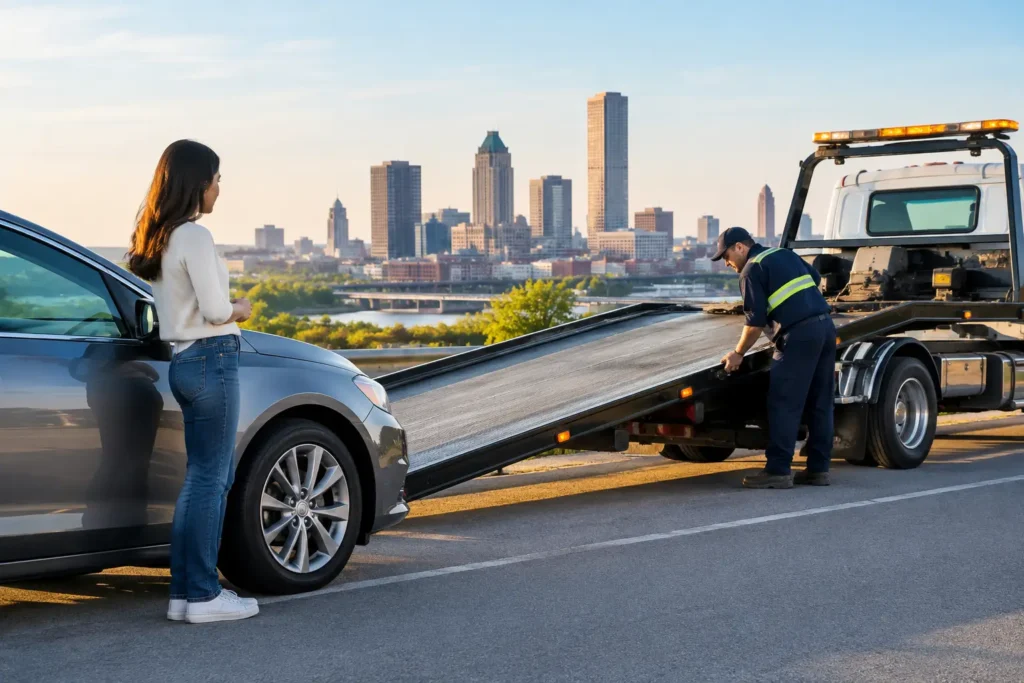
A locked car can turn a normal stop at a grocery store, office, or gas station into a real problem fast. If you are asking how long does roadside lockout take, the honest answer is usually two parts: how long it takes for help to reach you, and how long it takes to get the vehicle open once the technician arrives.
For most straightforward lockouts in Tulsa, the actual entry work often takes only a few minutes. The wait for the service truck is usually the larger variable. Traffic, your exact location, weather, and the type of vehicle all matter.
How Long Does Roadside Lockout Take From Start to Finish?
A typical roadside lockout may be handled in roughly 30 to 60 minutes from the time you call, but that is a general working range, not a promise. A technician who is already nearby in Midtown or Brookside may arrive sooner. A call during rush-hour traffic on I-44, US 75, Memorial Drive, or Highway 169 can take longer simply because getting safely to the vehicle takes longer.
Once on site, many standard passenger-car lockouts are completed in about 5 to 15 minutes. Some vehicles take longer because the locks, door seals, electronic systems, or key setup require a more careful approach. The goal is not to rush the door open. It is to get you back into the vehicle without damaging the glass, weather stripping, door frame, or locking mechanism.
If the vehicle is running with a child or pet inside, tell the dispatcher immediately. If anyone inside is in distress or the situation is unsafe, call 911 first. Roadside help is useful, but emergency services are the right first call when there is an immediate safety risk.
What Affects Lockout Response Time?
The best estimate comes from the dispatcher after they know where you are, what you drive, and whether the vehicle is in a safe place to access. These are the main factors that change the timeline:
- Your location and traffic conditions. A vehicle in a South Tulsa parking lot is generally easier to reach and work around than one stopped on a narrow shoulder near a busy interchange. Downtown traffic, construction, accidents, and severe weather can all slow travel time.
- Current call volume. Roadside demand rises during heavy rain, summer heat, freezing weather, and commute periods. A provider may be finishing a jumpstart, flat tire call, or tow before heading your way.
- Vehicle make, model, and condition. Older manual-lock vehicles can be very different from newer cars with electronic deadlocks, keyless entry, double-lock systems, or tight door seals. A truck, luxury vehicle, or EV may need a specific approach.
- Where the car is parked. A vehicle in an open lot is simpler to access than one in a parking garage, behind a security gate, or positioned close to a wall, curb, or another vehicle.
Clear information at the start prevents wasted time. Let the dispatcher know the nearest cross street, the vehicle color and model, whether it is running, and whether you are in a lot, driveway, garage, or on the roadside.
The Entry Method Matters
A professional lockout is not just about getting a door to pop open. The technician has to choose an access method that fits the vehicle. On many modern cars, that means working carefully around side-curtain airbags, electronic wiring, sensitive door hardware, and painted surfaces.
Forcing a door or using the wrong tool can bend a frame, tear a seal, scratch paint, or create a window problem that costs far more than the lockout service. That is why a careful entry can take a few extra minutes on certain vehicles. It is time spent avoiding a second problem.
Electric vehicles and newer luxury models deserve particular care. Their flush handles, electronic latches, and low-clearance design do not make them impossible to handle, but they do make guesswork a bad idea.
Why a Simple Lockout Can Take Longer Than Expected
Not every locked-out vehicle is truly a simple door lockout. Sometimes the keys are visible but the vehicle is double-locked. Sometimes the fob battery is dead, the keys are in the trunk, or the car has an aftermarket alarm. A lockout technician may need to verify the safest way to gain access before starting work.
There can also be a practical delay if the driver is not with the vehicle. For safety and ownership reasons, you may be asked for identification or proof that you are authorized to access the car. If your wallet and ID are locked inside, explain that when you call. In many cases, there may be another way to verify ownership once the vehicle is opened, but being upfront saves time.
A vehicle that is stopped in an active traffic lane, on a highway shoulder, or in a tight garage adds another layer. The service provider has to consider where to park, how to work without creating a hazard, and whether the vehicle needs to be moved or towed instead. On busy roads near Tulsa Hills or the Broken Arrow Expressway, safe positioning comes before speed.
What to Do While You Wait for Lockout Help
Stay near the vehicle if it is safe to do so. Keep your phone charged, watch for calls or texts from the driver, and make sure the vehicle description and location are accurate. If it is dark, turn on your phone flashlight or hazard lights if you can do so safely, especially in a large lot or along a roadway.
If you are parked on the shoulder of I-44, US 75, or another high-speed road, move away from traffic when possible. Stand well clear of passing vehicles and avoid trying to open the door yourself beside an active lane. Do not pry at the door with coat hangers, screwdrivers, wedges, or anything that can damage the vehicle. What looks like a quick fix often leads to a bent frame, torn seal, or broken lock.
If you have roadside coverage through your insurer, vehicle manufacturer, credit card, or auto club, check whether it can dispatch assistance. If time matters, ask for the estimated arrival window and whether they can handle your specific make and model. The lowest-cost option is not always the quickest option when you are stuck outside your running car in bad weather.
When a Lockout Becomes a Tow Situation
Most lockouts end with the door opened and the driver back on the road. But there are times when the vehicle still will not move afterward. The key may be lost, the fob may have failed, the battery may be dead, or a mechanical issue may be keeping the car from starting.
In that case, it makes sense to handle the immediate access issue first, then decide whether the vehicle needs a jumpstart or damage-free transport to a repair shop, dealership, or home. A flatbed is often the right choice for a vehicle that cannot be safely driven, especially a low-clearance car or EV.
Tulsa Towing, powered by Neptune Towing, handles lockout calls with the same practical approach used for roadside assistance and flatbed towing: get the location right, communicate clearly, use the proper equipment, and avoid creating damage while solving the problem.
If you are locked out in Tulsa, Jenks, Bixby, or Broken Arrow, give the dispatcher the clearest location you can and keep yourself safely out of traffic. A good lockout call should feel simple once help arrives: verify the vehicle, use the right method, get you back inside, and let you get on with your day.

