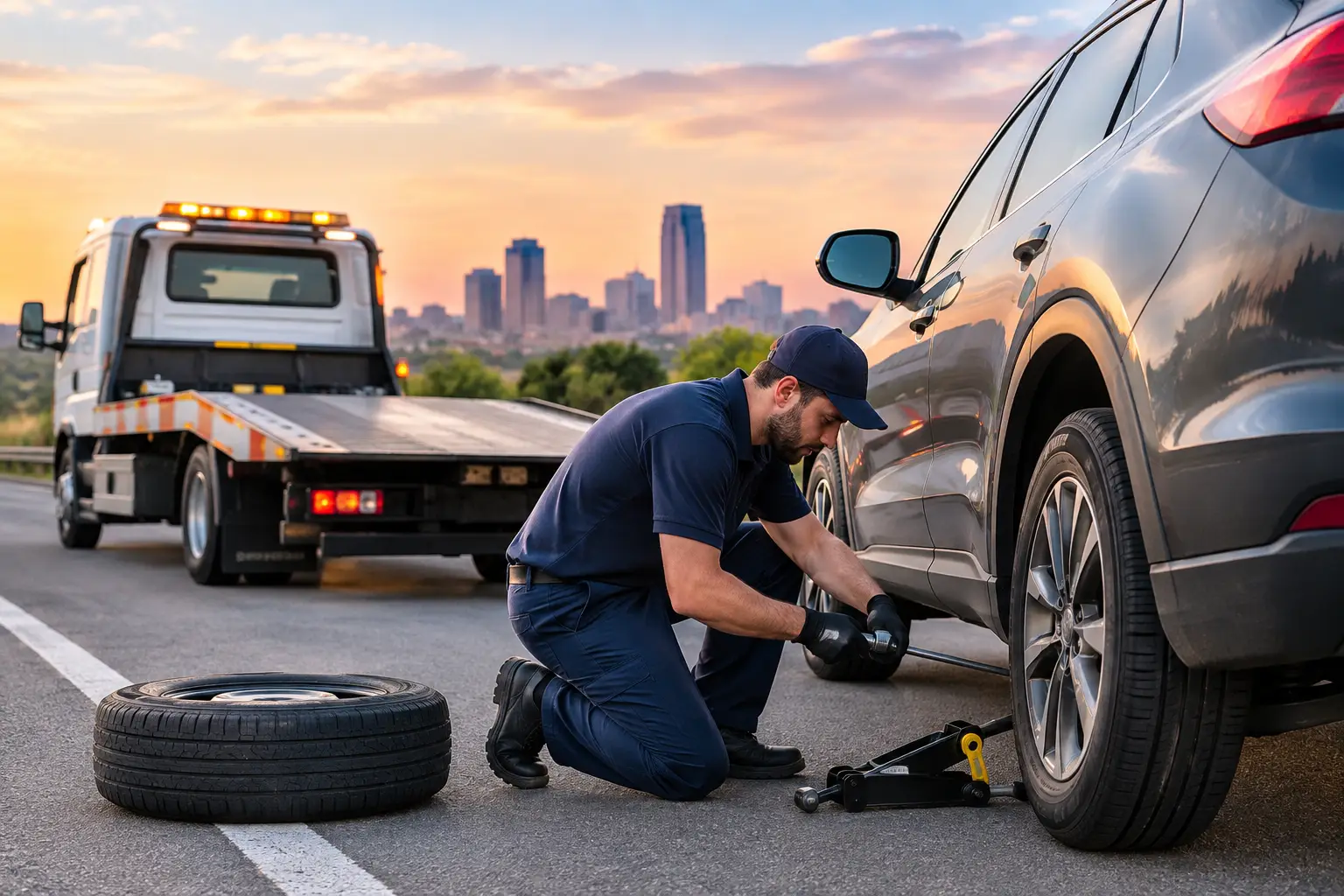
A vehicle that will not start in a grocery store lot needs a different plan than a car disabled on I-44 after an accident. Knowing how to arrange vehicle transport starts with one decision: make the situation safe, then give the towing provider enough accurate information to send the right truck and equipment.
The goal is not just getting a vehicle from point A to point B. It is getting it there without added damage, confusion, or wasted time. A careful transport begins before the tow truck arrives.
Start by securing the vehicle and its location
If the vehicle is on a busy road, move it out of traffic only if it can be done safely. Turn on hazard lights, keep occupants away from moving traffic, and avoid standing between the vehicle and the road. On highways, a safe place behind a guardrail is better than waiting beside the driver-side door.
Do not try to push a disabled vehicle through traffic or force it into a parking space if steering, braking, or visibility is limited. A vehicle stuck in a ditch, soft ground, or an awkward parking-garage spot may need a winch-out before it can be loaded. Explaining that upfront helps prevent the wrong setup from being dispatched.
Your exact location matters as much as the vehicle problem. A street address is useful, but details such as the nearest cross street, direction of travel, highway exit, parking-lot entrance, or level of a garage can save time. In Tulsa, a vehicle on US 75 northbound near an exit is much easier to find when the direction and closest landmark are included.
Give the towing company the details that affect the job
When arranging transport, be ready to describe the vehicle and what it is doing. This is not paperwork for paperwork’s sake. It determines how the vehicle can be loaded safely.
Share the year, make, model, and color, along with the plate number if you have it handy. Mention whether it is a car, SUV, pickup, van, heavy-duty truck, or electric vehicle. Low-clearance vehicles, modified cars, vehicles with oversized tires, and EVs all deserve special handling.
Then explain its condition. Can it roll? Do the wheels turn? Is the transmission in park? Is a tire flat? Is there collision damage, a locked steering wheel, or a wheel pushed into the fender? A car that rolls freely can usually be loaded quickly. A vehicle with damaged suspension or wheels that will not turn may need additional equipment and a more careful loading plan.
Be direct about where the keys are and whether someone will be present. If the vehicle is in a gated apartment complex, a secured office lot, or a garage with a clearance restriction, say so before dispatch. These details help the driver arrive prepared instead of discovering a problem after getting there.
Choose the right type of vehicle transport
For most disabled cars and trucks, flatbed towing is the safest choice. The vehicle is loaded fully onto the bed instead of being pulled with two wheels on the road. That reduces wear and avoids many of the concerns that come with a disabled drivetrain, low bumper, or unknown mechanical issue.
Flatbed transport is especially useful for all-wheel-drive vehicles, electric vehicles, accident-damaged cars, and vehicles that should not be driven. It is also a smart option when a car has a flat tire, transmission trouble, or a problem that makes rolling it questionable.
There are situations where the vehicle needs more than a standard hookup. A car stuck in mud, a steep driveway, or a tight parking area may need to be winched into a safe loading position. The important part is not using one method for every vehicle. Proper transport depends on the vehicle’s condition, the space around it, and the destination.
Electric vehicles need specific attention
Electric vehicles, including Tesla models, should not be treated like any other disabled car. The tow operator needs to know it is an EV before arrival because battery condition, tow mode, ground clearance, and manufacturer handling guidance can affect the loading process.
If an EV has been in a collision, has visible underbody damage, or is showing battery warnings, tell the towing provider. Do not guess at how to put it in tow mode or force it to move if the vehicle will not respond. Careful flatbed loading is the right approach when there is any doubt.
Confirm the destination before the truck is on the way
A tow is only as useful as its destination. Decide whether the vehicle is going to your home, a repair shop, dealership, tire shop, or another location that can accept it. Check the shop’s hours if possible. Dropping a vehicle at a closed business may still be possible, but the driver needs clear instructions on where it can be safely left.
Provide the complete destination address and the name of the business or contact person. If the repair shop has a preferred drop area, after-hours key box, or narrow entrance, pass that along. A dealership service lane and a body shop lot may have different access points, and the right instruction keeps the drop-off simple.
Also think about your own transportation. If the vehicle is going to a shop and you are not riding with the tow truck, arrange a ride before the truck arrives when possible. Tow truck passenger policies can vary based on equipment, space, and safety conditions, so it is better to ask instead of assuming.
Prepare the car for loading and drop-off
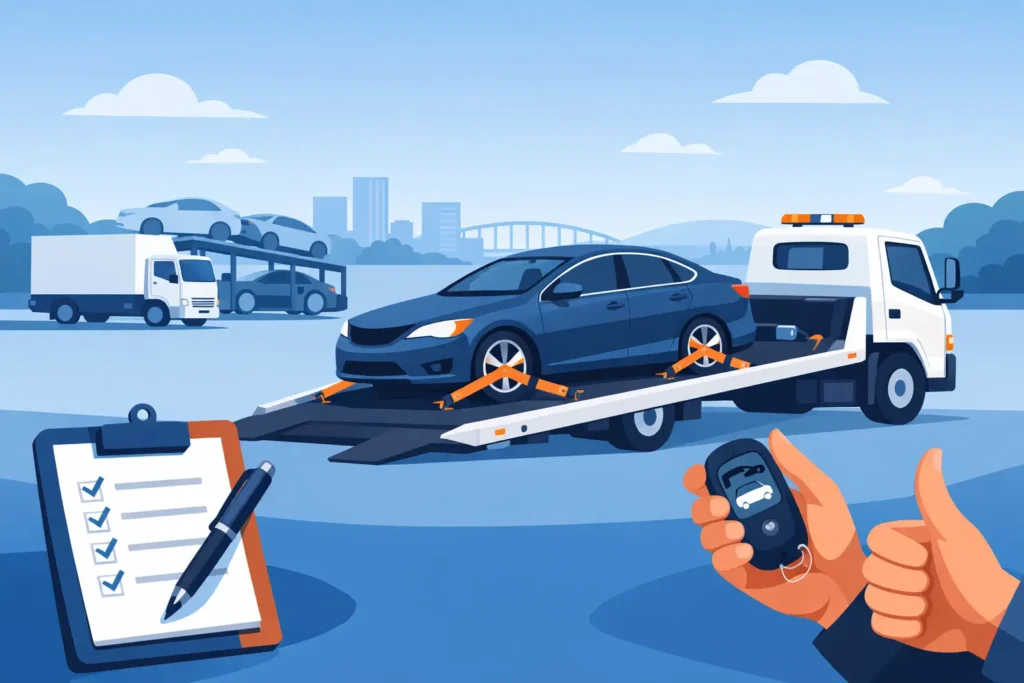
Take personal items, valuables, documents, garage remotes, medications, and work equipment out of the vehicle if you can do so safely. Keep the keys available and have any repair-shop instructions ready. If the car has a known issue, such as a brake problem or battery that dies immediately, write it down or send it to the shop so the information does not get lost in a stressful moment.
Take a few photos of the vehicle before transport, especially after an accident. This is a practical record of its condition and can help when communicating with a repair shop or insurance company. It is not about expecting a problem. It is simply good practice when a vehicle has already been damaged or disabled.
Make sure the towing driver knows about special concerns before loading begins. Mention a low front bumper, a damaged wheel, an aftermarket spoiler, a loose body panel, or a vehicle that cannot be shifted normally. A careful operator can work around these issues when they know about them early.
Ask clear questions when arranging a tow
You do not need to know towing equipment to arrange the job correctly. You only need clear answers about what will happen next. Ask what type of truck will be sent, whether the vehicle condition requires special handling, and where the driver plans to load it if the location is tight or unsafe.
It also helps to confirm the estimated arrival window and how the driver will contact you. Keep your phone nearby after dispatch. If you move to a safer location, the vehicle gets relocated, or the destination changes, notify the company right away.
A straightforward towing provider should explain the plan in plain language. At Tulsa Towing, the focus is on sending the appropriate flatbed setup, communicating clearly, and getting the vehicle to the requested local destination without turning a breakdown into a bigger problem.
How to arrange vehicle transport after an accident
An accident adds a few extra steps. First, follow directions from emergency responders and do not interfere with traffic control or an active investigation. Once you are allowed to arrange transport, tell the towing provider whether the vehicle has collision damage, deployed airbags, leaking fluids, or wheels that are blocked from turning.
If you are using insurance roadside coverage, confirm whether you need an authorization number or whether you can choose the towing company. Keep the claim information available, but do not delay getting to a safe location just to sort out every detail at the roadside.
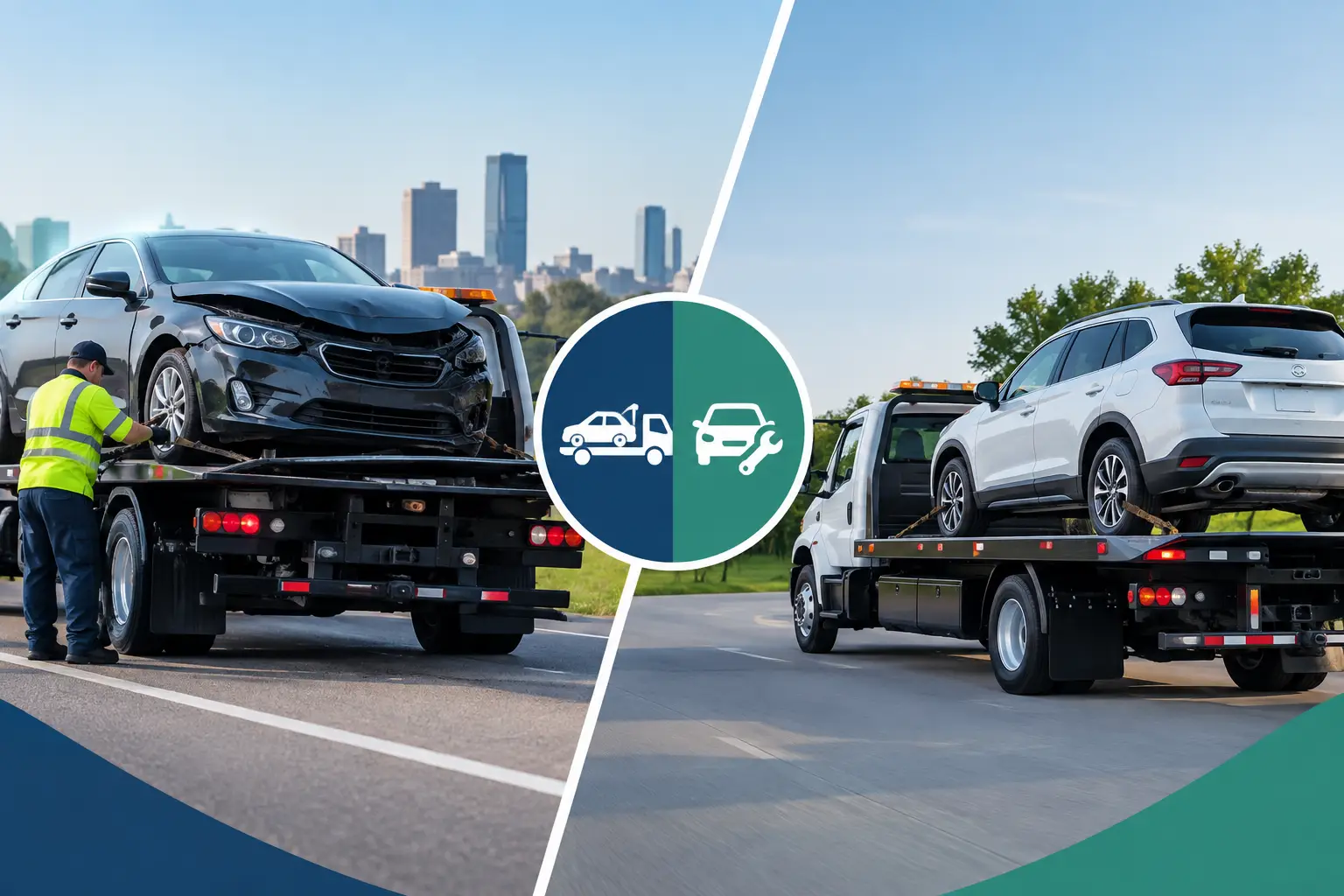
For a damaged vehicle, flatbed towing is often the practical choice because it keeps all four wheels off the road. The driver can assess the damage at pickup and use the right loading approach rather than dragging a vehicle that should not be pulled.
When the vehicle cannot move, the best next step is simple: get yourself safe, provide accurate details, and let an experienced operator handle the transport method. Clear information at the start gives your vehicle the best chance of arriving exactly where it needs to be, in the same condition it was in when help arrived.