A wreck on I-44 or Memorial is not the time to guess whether your vehicle needs an accident tow or a trip to the repair shop. Accident transport versus repair delivery comes down to one question: Is the vehicle being moved because the scene is unsafe or it cannot be driven now, or is it being moved later to get the repair process started?
The difference matters because the vehicle condition, destination, timing, and loading method can all change. A clear plan helps prevent a damaged car from being driven when it should not be, or sent somewhere that does not fit the next step in the repair process.
What Accident Transport Means
Accident transport is the immediate movement of a vehicle after a collision. The car may be blocking traffic, sitting on the shoulder, leaking fluid, have damaged steering, or simply be unsafe to drive. Even damage that looks minor can hide a problem with a wheel, suspension, tire, cooling system, or electric components.
This is common around busy Tulsa roads such as US 75, Highway 169, Riverside Drive, and the streets around Downtown. When traffic is moving around a disabled vehicle, the priority is getting everyone out of harm’s way and loading the vehicle correctly.
An accident tow is usually time-sensitive, but that does not mean it should be rushed. The vehicle needs to be inspected before it is moved. A bumper dragging on the ground, a wheel turned at an odd angle, or a damaged undercarriage can change how the vehicle is loaded. Flatbed towing is often the right choice because it keeps all four wheels off the pavement and avoids putting more stress on damaged parts.
The destination should match the situation
After an accident, the right destination depends on what you know at the time. If you already have a body shop or repair facility selected, taking the vehicle there may keep the process moving. If the shop cannot receive the vehicle yet, or you need time to speak with your insurer and review repair options, another safe, authorized destination may make more sense.
Before the truck arrives, it helps to confirm the shop name, address, and whether it handles collision repairs. A general repair shop may be right for a mechanical breakdown, but collision damage often requires a body shop with the proper equipment and inspection process.
If law enforcement is on scene, follow their directions about when the vehicle can be moved and where it can go. The driver should also communicate any special concerns, such as deployed airbags, fluid leaks, a wheel that will not turn, or a vehicle that will not shift into neutral.
What Repair Delivery Means
Repair delivery is planned transport to a repair shop, dealership, tire shop, or body shop after the immediate emergency has passed. The vehicle may be parked at your home in South Tulsa, at work in Midtown, or at a location where it was left after a problem was diagnosed.
This type of tow is still important, but the urgency is different. You may have already booked an appointment, spoken with the shop, or received direction from an insurance adjuster. The goal is to get the vehicle to the right repair location without adding mileage, causing further damage, or turning a small problem into a larger one.
A repair delivery is often the better fit when the vehicle is not safe to drive but is not currently creating a roadside hazard. Examples include a car with an overheating issue, a no-start condition, a broken suspension component, a flat tire without a usable spare, or collision damage discovered after you got the vehicle home.
A planned tow gives you time to prepare
With repair delivery, you can confirm the shop’s hours, after-hours drop-off procedure, and the name under which the vehicle should be received. You can also remove personal items, gather keys and claim information, and tell the tow operator about low clearance, locked wheels, or other loading concerns.
This is especially useful for electric vehicles and low-profile cars. A Tesla or other EV should not be handled as if it were a standard disabled sedan. Proper loading points and flatbed equipment matter. The same goes for trucks with suspension damage, all-wheel-drive vehicles, and cars sitting too low to clear a basic loading angle.
Accident Transport Versus Repair Delivery: The Main Differences
The two services can look similar from the outside because both involve a tow truck and a destination. The real difference is the condition of the vehicle and the reason it needs to move.
Accident transport starts at the collision scene. It is focused on safety, traffic exposure, visible damage, and getting a non-drivable vehicle off the road. The destination may need to be decided quickly, and the tow operator has to account for damage that can make loading more complicated.
Repair delivery starts after the immediate incident. It is focused on getting a vehicle from one stable location to a repair facility at the right time. There is usually more opportunity to coordinate with the shop, insurer, or dealership before the tow is dispatched.
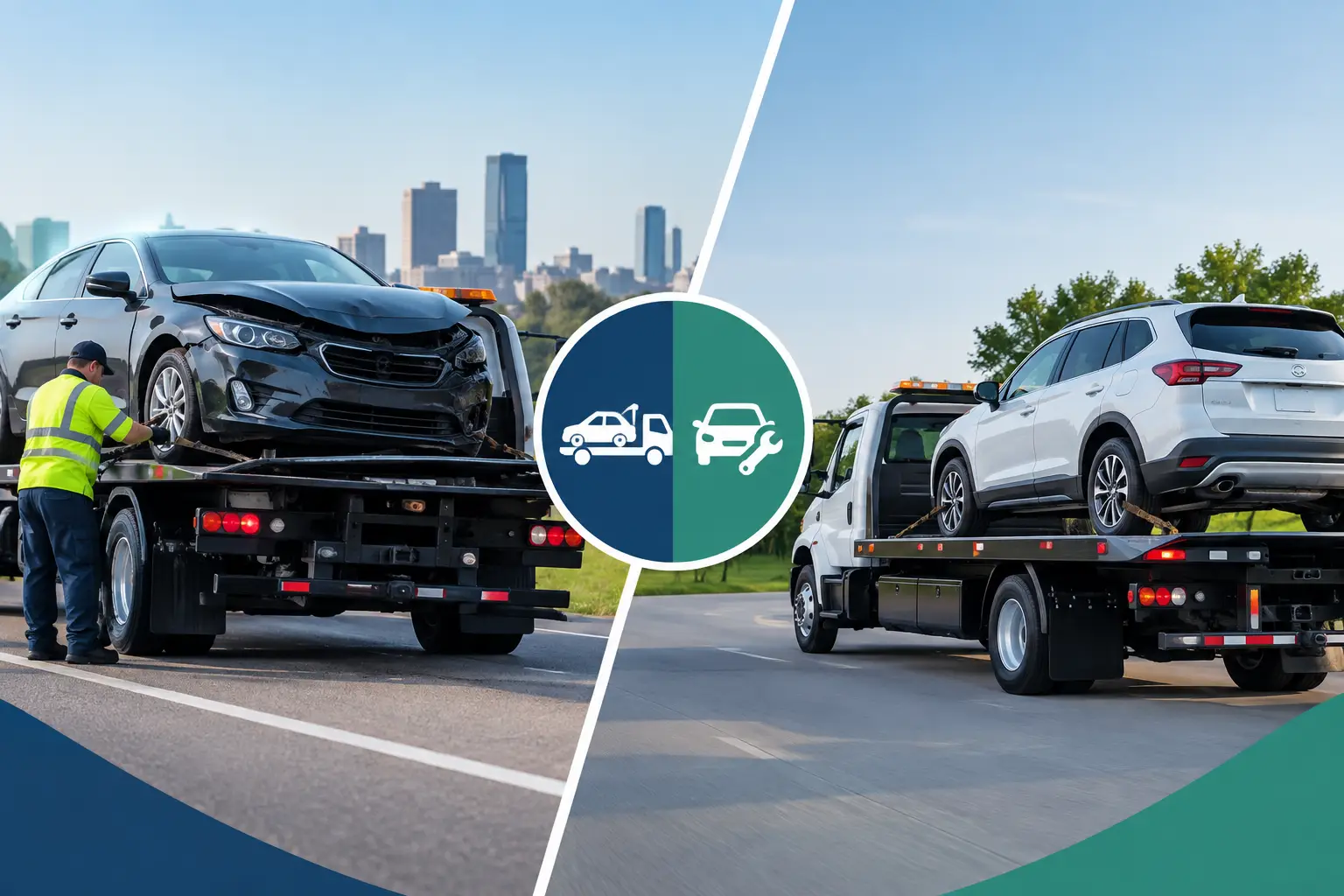
There is also overlap. A vehicle damaged in an accident may be taken directly to a collision center, which makes it both accident transport and repair delivery in one trip. On the other hand, a car may be moved from the accident scene to a location you choose and later transported to the shop once repair arrangements are in place.
Neither option is automatically better. The right call depends on vehicle safety, the shop’s availability, the severity of damage, and whether you have already chosen where repairs will be done.
When You Should Not Drive It to the Shop
Many drivers try to limp a vehicle to a repair facility because the damage does not look severe. That can be a costly decision. Do not drive the vehicle if a tire is rubbing, a wheel is bent or pointed incorrectly, the steering feels loose, fluids are leaking, the hood will not latch, warning lights are active after impact, or body panels are dragging.
You should also avoid driving if the vehicle was hit underneath. A curb strike, pothole impact, or collision near the wheels can damage parts that are not obvious from the driver’s seat. A short drive from Broken Arrow or Bixby into Tulsa can put more strain on damaged suspension or drivetrain components than expected.
For EVs, take extra care after a collision involving the underside, battery area, or charging components. Do not make assumptions based on whether the vehicle still powers on. Tell the towing provider what happened so the correct handling method can be used.
What to Tell the Tow Operator
Clear information makes the dispatch and loading process smoother. You do not need to know every mechanical detail. Explain where the vehicle is, whether it was in an accident or simply will not run, and whether it can roll, steer, and shift normally.
Also mention the make and model, especially if it is an EV, all-wheel-drive vehicle, low-clearance car, lifted truck, or heavy-duty pickup. Give the exact repair destination if you have one, including any gate, service entrance, or after-hours instructions from the shop.
If you are on a highway shoulder or in a high-traffic area, focus first on your own safety. Move to a safe place if you can do so without risk, stay aware of traffic, and avoid standing near the vehicle while waiting for help.
Choose the Move That Protects the Vehicle
The best transport decision is usually the one that keeps a damaged vehicle from moving under its own power and gets it to the next appropriate location without confusion. For an active crash scene, that means a careful accident tow. For a vehicle already parked and waiting on service, that means a scheduled repair delivery.
Tulsa Towing, powered by Neptune Towing, handles both situations with proper flatbed equipment, clear communication, and attention to the condition of the vehicle. Whether you are stranded near Tulsa Hills or arranging a shop delivery from Jenks, having the destination and vehicle details ready helps get the job done safely.