A tire blowout on I-44, US 75, or the Broken Arrow Expressway can turn routine traffic into a dangerous situation in seconds. The sound is loud, the vehicle may pull hard to one side, and the first instinct is often to hit the brakes. That is exactly when calm, steady driving matters most. Handling a tire blowout safely starts with keeping control of the vehicle before worrying about the damaged tire.
A blowout is more than an ordinary flat. A flat tire may lose air slowly enough that you notice a rough ride or a warning light. A blowout is a sudden failure, sometimes caused by road debris, a hard impact, underinflation, tire damage, or a worn-out tire that can no longer hold together at highway speed. Whether it happens near Midtown, South Tulsa, or on a quieter neighborhood street, the first few seconds should be handled the same way.
What to Do the Moment a Tire Blows Out
Hold the steering wheel firmly with both hands and keep the vehicle pointed straight ahead. You may feel the steering pull toward the failed tire, especially with a front tire blowout. Do not jerk the wheel back or make a sharp correction. Small, steady adjustments are what keep the vehicle in its lane.
Take your foot off the accelerator gradually. Do not slam on the brakes. Hard braking shifts weight forward and can make a pulling vehicle harder to control, particularly at highway speeds. Let the vehicle slow down naturally while you maintain a straight path.
Once the vehicle is stable and beginning to slow, turn on your hazard lights. Check mirrors, signal, and move carefully toward the right shoulder or the nearest safe place off the road. On a busy stretch of Highway 169 or Memorial Drive, it may take a little time to find a safe opening. That is okay. Keeping control is more important than getting off the road immediately.
If you have enough room, continue slowing until you are well away from moving traffic. Park on level ground when possible, shift into park, and set the parking brake. If you are on a narrow shoulder with traffic passing close by, stay inside the vehicle with your seat belt on unless there is an immediate danger such as fire or smoke.
Handling a Tire Blowout Safely at Highway Speed
Highway blowouts feel more violent because of the speed, wind, and nearby traffic. A pickup pulling a trailer, a loaded SUV, and a compact car can all react differently. The same basic rule applies: steer straight, ease off the gas, and avoid sudden braking.
Some drivers have heard that they should accelerate after a blowout. That advice is often misunderstood. A brief, controlled application of throttle can sometimes help a vehicle stay balanced during a severe pull, but it is not the right move for every driver or every situation. For most everyday drivers, the safer focus is maintaining a firm grip, avoiding panic braking, and allowing the vehicle to slow smoothly. Do not try to diagnose the pull while traffic is moving around you.
Avoid trying to cross several lanes at once to reach an exit or a wide shoulder. If the right shoulder is not safely reachable, take the first safe area available. A parking lot, side street, or broad ramp area is better than forcing a risky maneuver through fast traffic.
After You Pull Over, Check the Scene Before the Tire
Once stopped, take a minute to look at where you are. A tire problem on a residential street in Bixby is very different from one on the shoulder of US 75 during rush hour. The safest next step depends on traffic, visibility, weather, the condition of the vehicle, and whether you have a usable spare.
Do not stand between your vehicle and passing traffic. If you need to get out, use the passenger-side door when it is safer to do so. Keep children and passengers away from the roadway. At night, during rain, or on a tight shoulder, changing a tire may not be worth the risk.
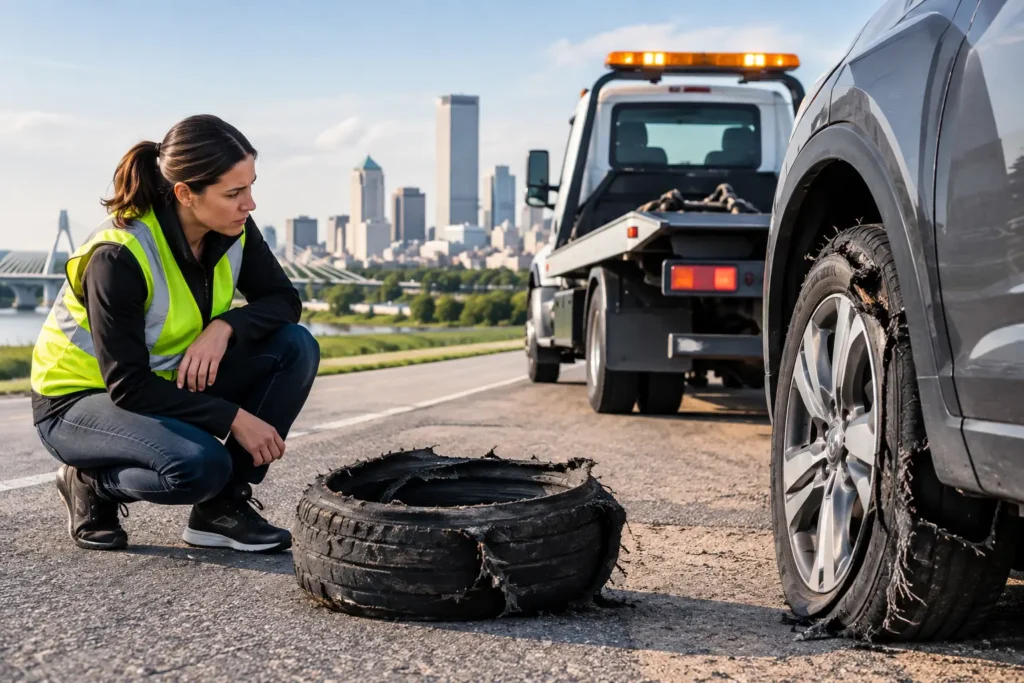
Look at the damaged tire only after the vehicle is secure. A true blowout can damage more than the tire itself. The wheel may be bent, the tire sidewall may be shredded, or loose pieces may have damaged a fender liner, brake line, or suspension component. Driving again on a damaged wheel can create a larger repair and may leave you stranded a second time.
When a Spare Tire Makes Sense
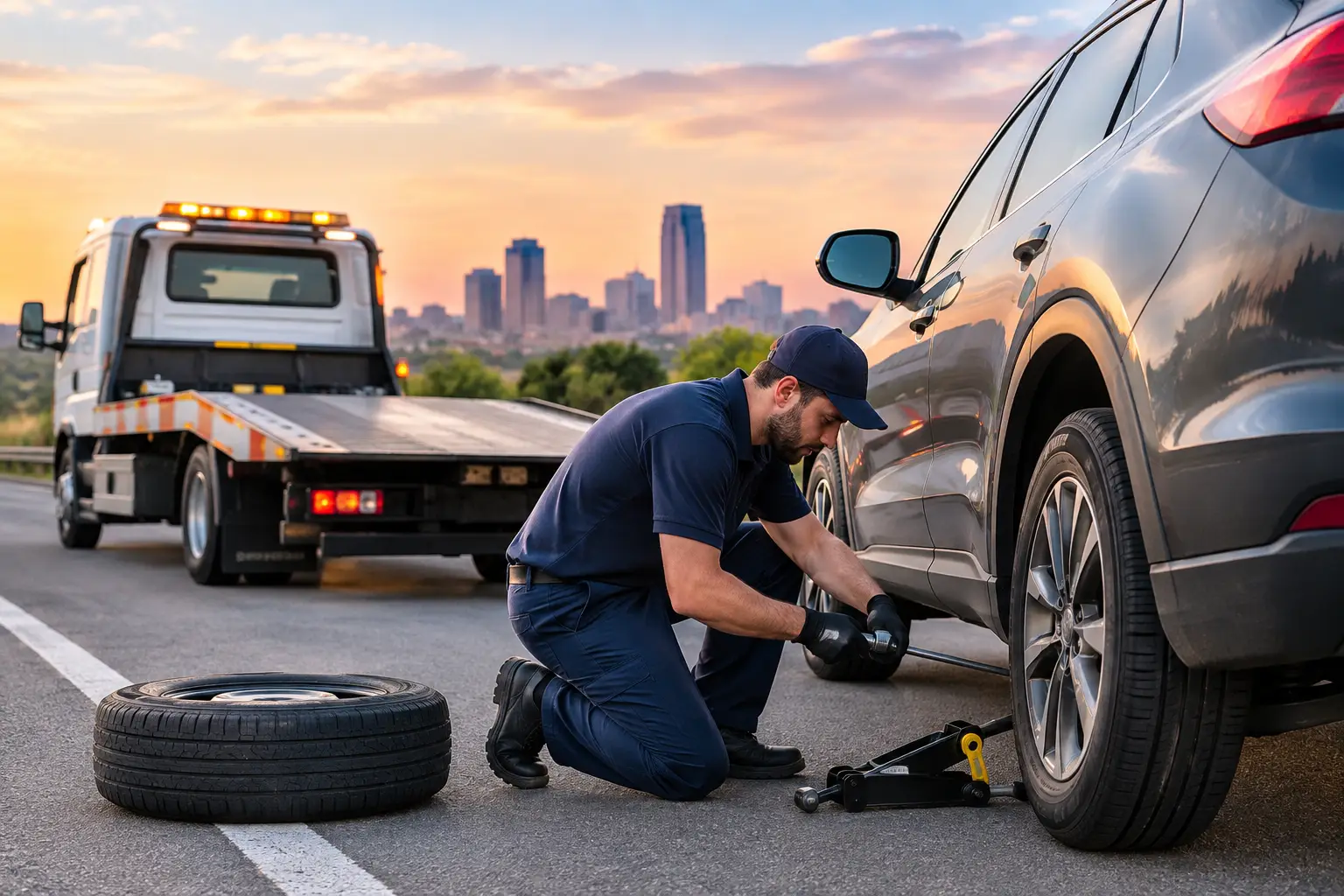
A spare can get you moving when you are parked in a safe location, have the right tools, and can clearly see that the wheel itself is not damaged. Before installing it, check that the spare is inflated and in usable condition. Many vehicles have a compact temporary spare, which is not designed for normal speeds, long distances, or heavy loads.
Follow the speed and distance limits printed on the spare tire or listed in your owner’s manual. Do not treat a temporary spare as a permanent repair. It is meant to get you to a tire shop or repair location, not carry you through several days of regular driving.
If the vehicle is on a slope, close to traffic, carrying a heavy load, or equipped with a damaged wheel, calling for roadside help is the better call. The same is true if you do not have a spare, do not know where the jack points are, or are unsure whether the lug nuts can be safely removed.
When You Should Not Drive It
Do not drive on the flat tire to reach a safer place unless moving a very short distance is necessary to avoid immediate danger. Even a few hundred feet on a deflated tire can destroy the tire, damage the wheel, and affect components around it.
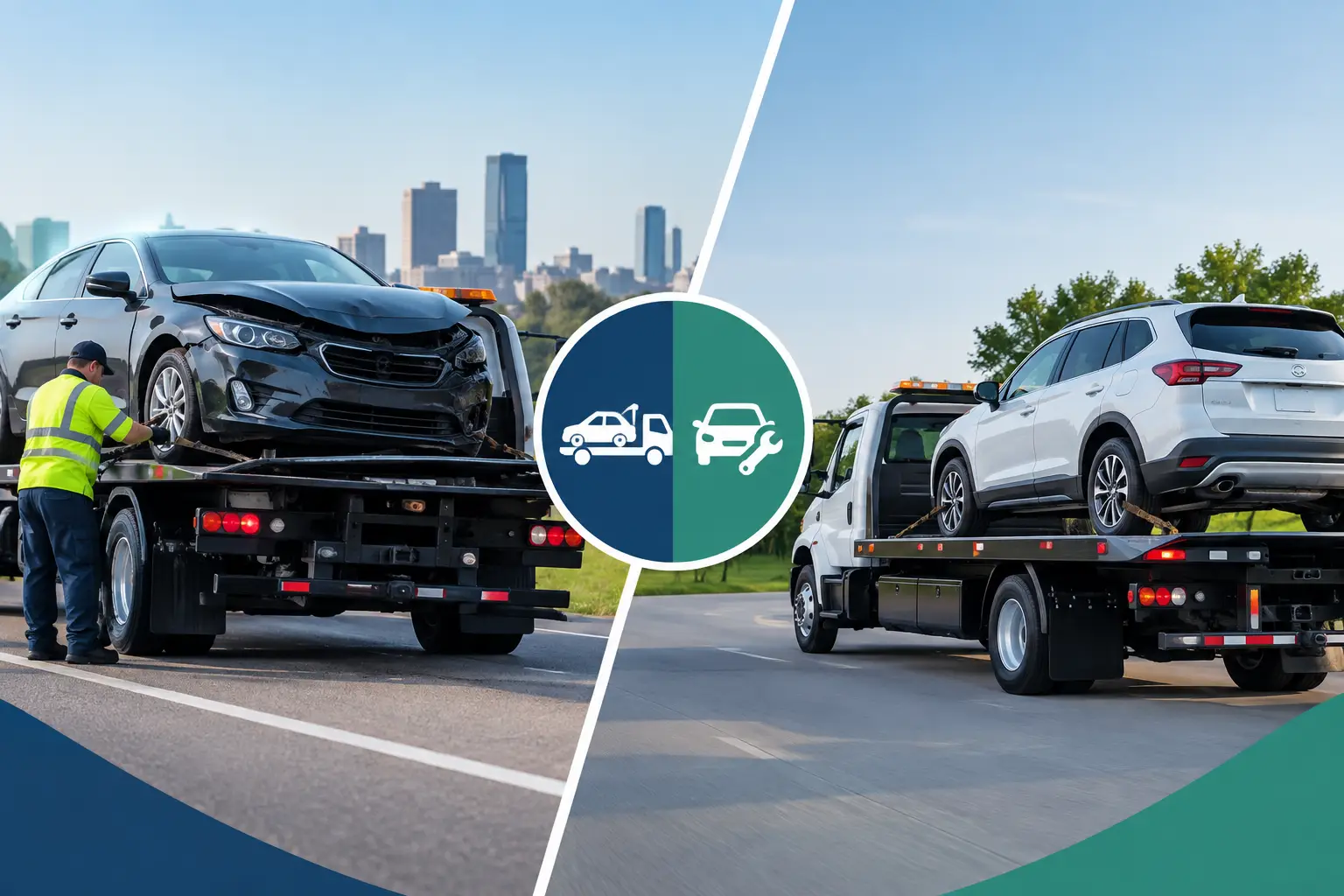
A tow is usually the right answer when the tire has come apart, the rim is contacting the ground, two tires are damaged, or the vehicle cannot safely take a spare. Electric vehicles deserve extra care here. Their weight, low clearance, and manufacturer handling requirements mean improper lifting or dragging can cause additional damage. A proper flatbed keeps all four wheels off the ground and avoids turning one roadside problem into a more expensive one.
Common Mistakes That Make a Blowout Worse
The biggest mistake is panic braking. It is understandable, but braking hard before the vehicle is stable can increase the pull and reduce your ability to steer. Another common mistake is overcorrecting. A sharp steering input can send a vehicle into another lane, a curb, or a guardrail.
Drivers also sometimes stop where they are because they are focused on the noise or warning light. If the vehicle is still controllable, use that control to get to the safest practical location. Finally, do not assume every flat can be fixed with a can of sealant. Sealant is not appropriate for a shredded sidewall, a separated tire, or damage caused by driving on the tire while flat.
Reduce the Chances of a Future Blowout
Not every blowout is preventable. Road debris, potholes, and sudden impacts can damage a good tire without warning. Still, routine checks reduce the risk. Check tire pressure when tires are cold, inspect tread and sidewalls for cracks or bulges, and replace tires before they are worn down to the point that they cannot handle heat and road stress.
Pay attention after hitting a pothole or curb. If the vehicle begins pulling, vibrating, or losing pressure, have it checked before taking another highway trip. Tires also age even when tread looks acceptable, so a tire’s condition matters as much as its visible tread depth.
A blowout is stressful, but the job is simple once it happens: keep the vehicle straight, slow down smoothly, get to a safe location, and do not take chances beside fast traffic. If the wheel or tire is badly damaged, roadside assistance or a careful flatbed tow is a safer solution than trying to force the vehicle back on the road.