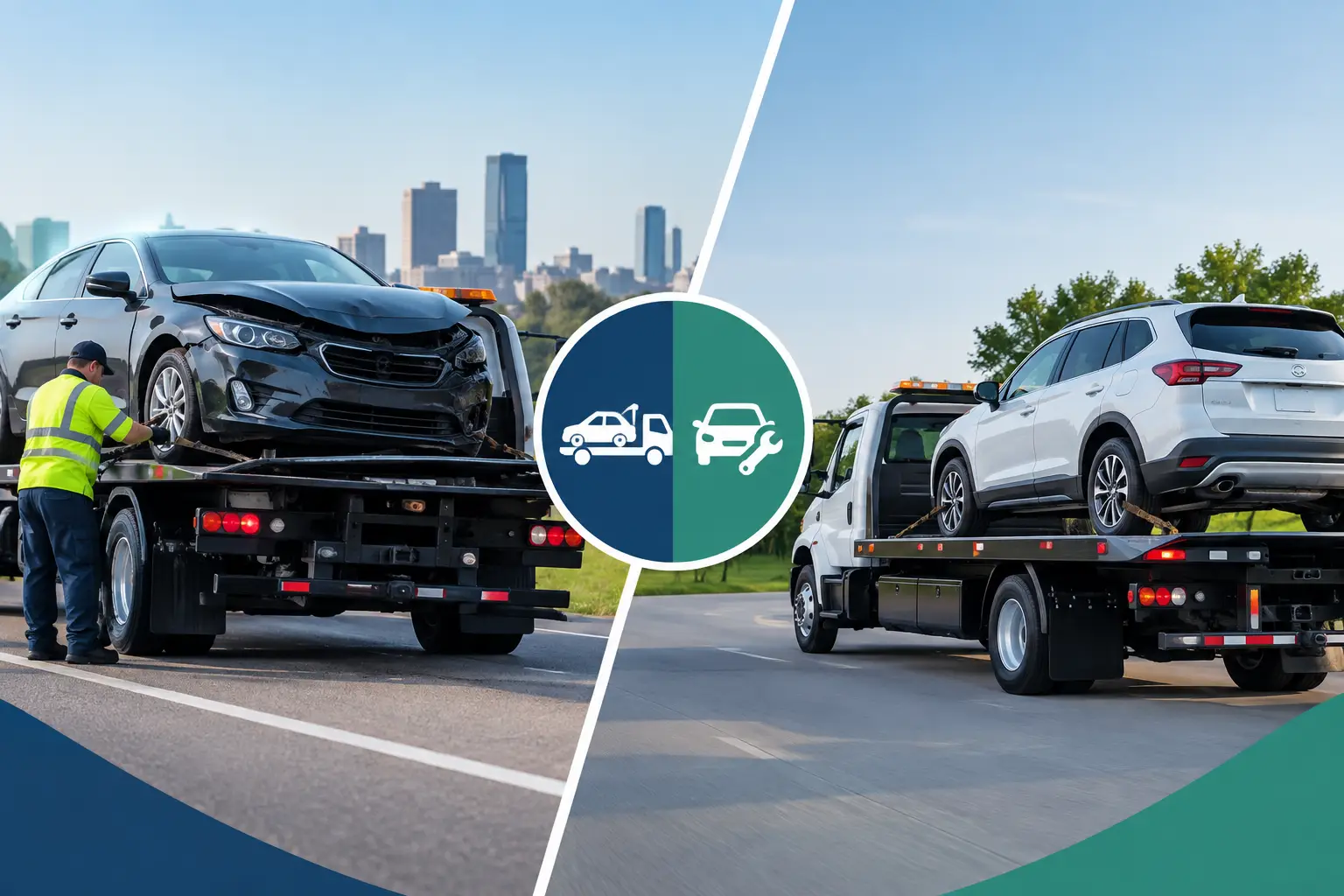
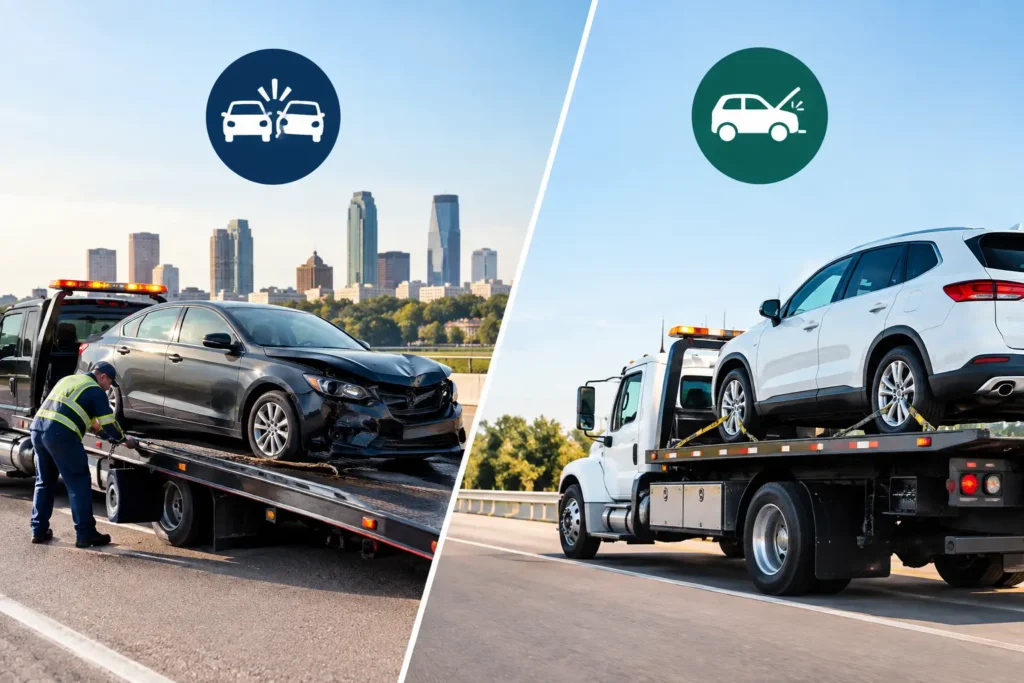
A stalled car on Memorial Drive and a damaged car after a crash on I-44 may both need a tow truck, but the job is not handled the same way. Accident tow versus breakdown tow comes down to one main question: is the vehicle simply unable to run, or has an impact made it unsafe or unpredictable to move? Knowing the difference helps you make better decisions when you are already dealing with enough stress.
The Main Difference Between an Accident Tow and Breakdown Tow
A breakdown tow is for a vehicle that cannot continue under its own power or cannot be driven safely because of a mechanical issue. The engine may not start, a battery may be dead, a tire may be damaged, the transmission may be slipping, or the vehicle may have overheated. In many of these calls, the vehicle is otherwise structurally sound and can be loaded in a fairly straightforward way.
An accident tow involves a vehicle that has been damaged in a collision. The visible damage is only part of the picture. A bumper may be loose, a wheel may no longer point straight, fluids may be leaking, suspension components may be bent, or an airbag may have deployed. Even a low-speed collision in a Midtown parking lot can cause damage that makes driving or conventional towing a bad idea.
Both situations call for careful handling, but collision damage adds more unknowns. The tow operator has to assess whether the wheels roll, whether the steering is locked or damaged, whether the vehicle sits at a normal height, and whether anything is hanging underneath. That assessment determines how the vehicle is loaded and secured.
What Happens During a Breakdown Tow
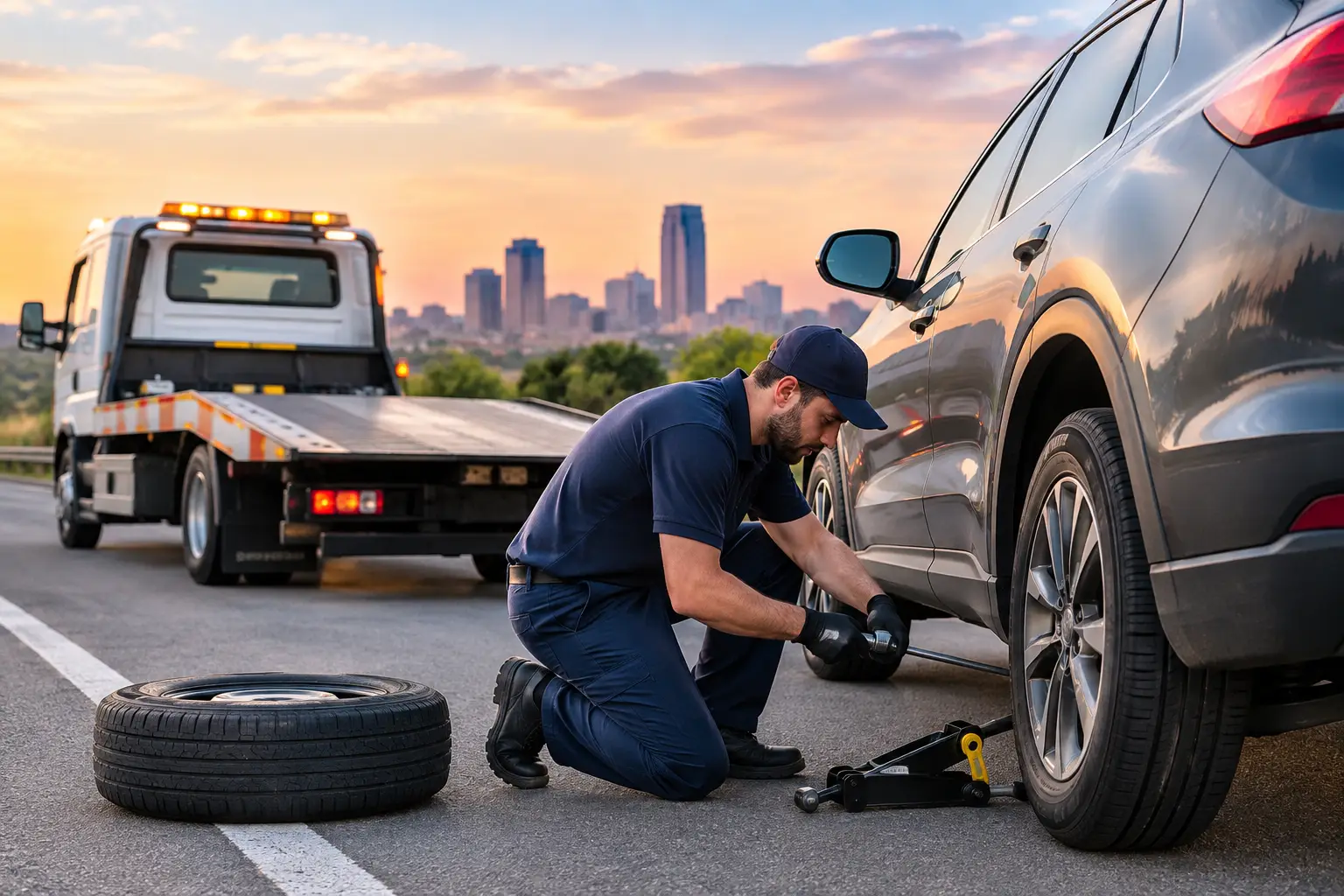
With a breakdown, the first step is often figuring out whether roadside assistance can get the vehicle moving safely. A jumpstart may solve a dead battery. Flat tire help may be enough if there is a usable spare and no wheel damage. A lockout can be resolved without moving the car at all.
If the issue cannot be safely fixed on site, the vehicle is transported to the destination you choose, such as a repair shop, dealership, home, or trusted mechanic. A flatbed is a good fit for most breakdown tows because all four wheels stay off the road. That matters for all-wheel-drive vehicles, low-clearance cars, trucks, and electric vehicles that should not be pulled with their drive wheels rolling.
A typical breakdown tow is simpler when the car can be put in neutral, the tires hold air, and the steering works. Still, simple does not mean rushed. A vehicle with a transmission issue, an overheating problem, or an electrical fault can be made worse by trying to drive it farther than necessary. If you are stuck near Tulsa Hills, Downtown, or South Tulsa traffic, getting the car out of the travel lane safely is usually the immediate priority.
When a Breakdown May Need More Than a Standard Tow
Not every mechanical failure is routine. A vehicle that has lost a wheel, has a locked-up tire, sits very low, or is stuck in mud or a ditch may need a different loading approach. Winch-out equipment, dollies, or extra care during the load may be needed before it can go onto the flatbed.
Electric vehicles also deserve special attention. If a Tesla or another EV will not power up, has underbody damage, or cannot be shifted normally, the loading process should follow the vehicle’s safe transport requirements. The goal is not just to get it moving. It is to avoid creating damage while getting it to the right service location.
What Changes With an Accident Tow
After a collision, protect yourself before worrying about the car. Move to a safe area if you can do so without putting yourself or anyone else at risk. Turn on hazard lights, watch traffic, and follow directions from emergency personnel when they are on scene. On busy roads such as US 75, Highway 169, or I-44, staying clear of moving traffic matters more than checking every scratch.
Once the scene is safe, the tow operator needs a clear look at the vehicle. Accident damage can affect loading in ways that are not obvious from the driver’s seat. A car may look drivable but have a bent tie rod, a damaged control arm, a leaking radiator, or a wheel that is no longer properly attached. Driving it even a short distance can turn repairable damage into a larger repair.
For that reason, a flatbed is often the safest choice for accident towing. It keeps the damaged vehicle fully off the road and avoids placing extra stress on wheels, tires, suspension, or drivetrain parts that may already be compromised. If a wheel will not roll or the car cannot be placed in neutral, the operator may need to use equipment that allows the vehicle to be loaded without dragging it.
There is also a practical difference in where the car goes. After a breakdown, you may already know your repair shop. After an accident, you may need a moment to decide whether the vehicle should go to a body shop, dealership, repair facility, or another location. If you have insurance coverage for towing, your carrier may have instructions, but you still need clear information about the vehicle’s destination before it is transported.
Accident Tow Versus Breakdown Tow: What You Should Tell the Dispatcher
Clear details make a real difference in both types of calls. When you call for a tow, say whether the vehicle was in an accident or simply broke down. Then describe what you can see without putting yourself in danger.
For a breakdown, share the vehicle’s year, make, model, current location, and what happened. Mention if it is in a garage, has a flat tire, will not shift into neutral, is all-wheel drive, or is an EV. A low-clearance car in a tight Downtown parking garage is a different job than a pickup stopped on Riverside Drive.
For an accident, explain whether the wheels turn, whether a tire is flat, whether fluids are leaking, and whether parts are hanging or dragging. Let the dispatcher know if the car is blocking traffic, sitting on a shoulder, or positioned somewhere difficult to access. You do not need to diagnose the damage. Straight answers about what you see help the right equipment arrive prepared.
It also helps to have the destination ready when possible. Repair shops may have limited after-hours access, and dealerships may have specific drop-off procedures. If you are unsure where the vehicle should go, say so. It is better to take a minute to confirm the plan than to move a damaged vehicle twice.
Choosing Safety Over a Quick Drive
Many drivers try to nurse a car home after a breakdown or collision because they are close to home. Sometimes that works. Often, it is not worth the risk.
A dead battery is one thing if a jumpstart gets the engine running and there are no other problems. But an overheating engine, flashing warning light, transmission failure, loose wheel, or damaged front end is different. Continuing to drive can leave you stranded in a worse location, create additional mechanical damage, or make a collision-damaged vehicle harder to control.
The same judgment applies after a minor crash. If a bumper is loose or a headlight is hanging, it may be tempting to secure it and go. But if the steering pulls, a tire rubs, a wheel looks crooked, or fluid is leaking, stop driving it. Those are signs that the vehicle needs a tow, not a test drive.
A Safer, Simpler Plan When Your Vehicle Will Not Move
Whether you need an accident tow or a breakdown tow, keep the process simple. Get yourself to a safe spot if possible, turn on hazards, note your location, and call for help. Do not stand between your vehicle and traffic, and do not crawl underneath the vehicle to inspect damage on the roadside.
A careful tow starts with the right information and ends with the vehicle delivered where it needs to be. For drivers in Tulsa, including Broken Arrow, Bixby, and Jenks when availability allows, Tulsa Towing focuses on clear communication and damage-free flatbed handling so a bad roadside situation does not become a bigger one.