A vehicle problem rarely happens at a convenient time. It happens leaving work in Midtown, heading home through South Tulsa, or sitting on the shoulder near I-44 with traffic moving a few feet away. When the car will not start, has a flat, overheats, or cannot be driven safely, calling a towing company is usually the fastest way to turn a stressful situation into a clear next step.
The key is knowing when roadside help is enough and when the vehicle needs to be loaded and moved. Trying to force a car home or to a repair shop can turn a manageable problem into more expensive damage. A careful tow gets the vehicle where it needs to go without adding another issue to the day.
When a Towing Company Is the Safer Call
Some breakdowns are obvious. If your vehicle has been in an accident, has a damaged wheel, is leaking fluid, will not shift properly, or will not move under its own power, it should be towed. Driving it even a short distance can damage the transmission, suspension, tires, or engine.
Other situations are less clear. A car that overheats may seem fine once it cools down, but there is a reason it overheated. A vehicle with a flashing check-engine light can have an active misfire that risks catalytic converter damage. A tire that went flat after hitting debris may have wheel damage that is not easy to see from the roadside. If there is any doubt about whether the vehicle is safe to drive, towing is the safer choice.
This matters on busy Tulsa roads. Stopping along US 75, Highway 169, Memorial Drive, or Riverside Drive puts you close to fast-moving traffic. The priority is getting yourself to a safer position if possible, turning on hazard lights, and arranging help rather than trying to diagnose a serious problem beside the road.
After an Accident or Hard Impact
A vehicle can look mostly normal after an accident and still be unsafe to drive. A bumper may be loose, a wheel may be pushed out of alignment, or a fluid line may be damaged underneath the vehicle. Even a low-speed impact in a parking lot can leave parts hanging where they can drag or catch while driving.
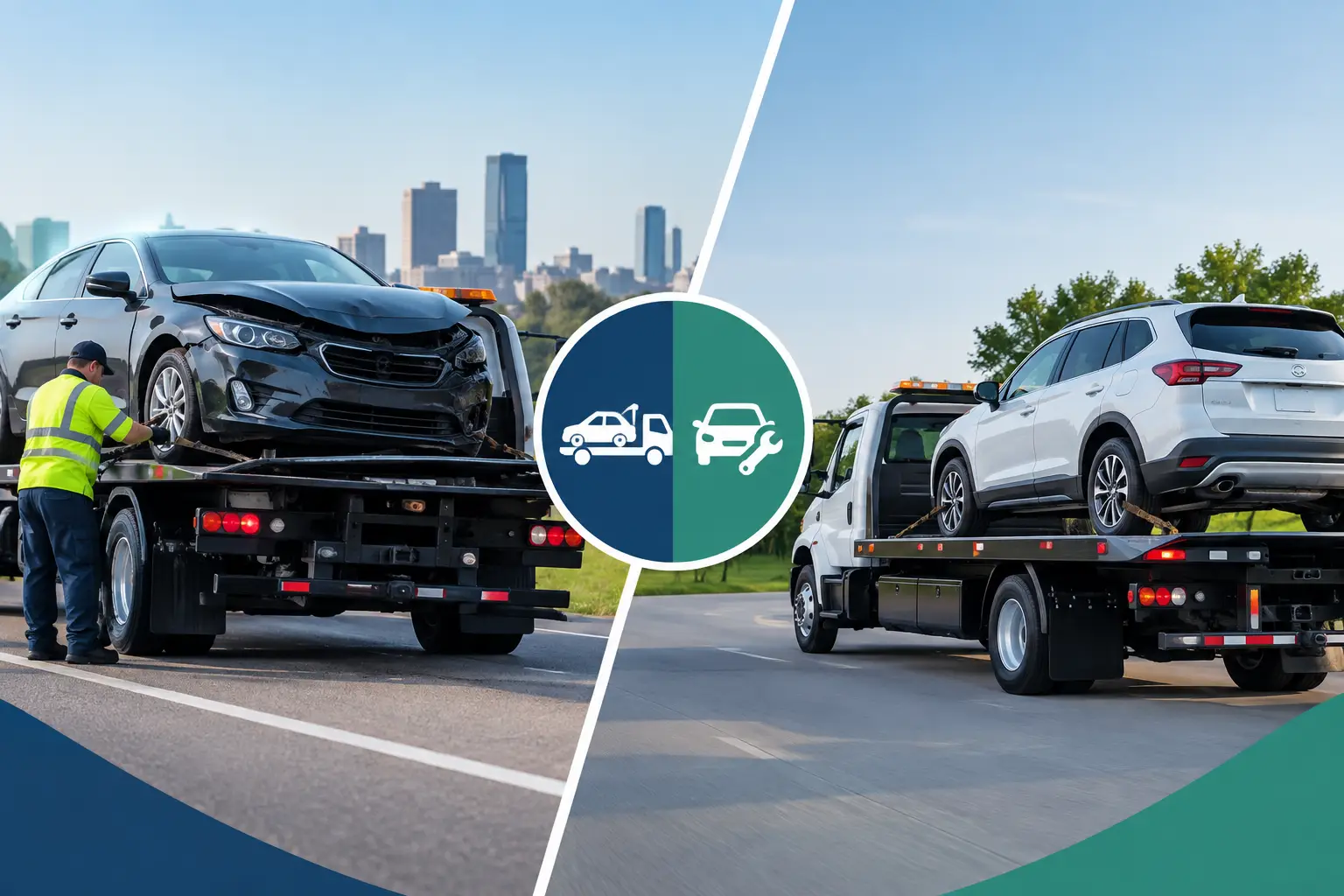
If airbags deployed, the steering feels different, a tire is rubbing, fluids are leaking, or the vehicle will not track straight, do not drive it. Flatbed towing keeps all four wheels off the ground and avoids putting more stress on damaged components. It is also the right approach when a car needs to go from the accident scene to a local body shop, dealership, or repair facility.
When the Vehicle Has Mechanical Trouble
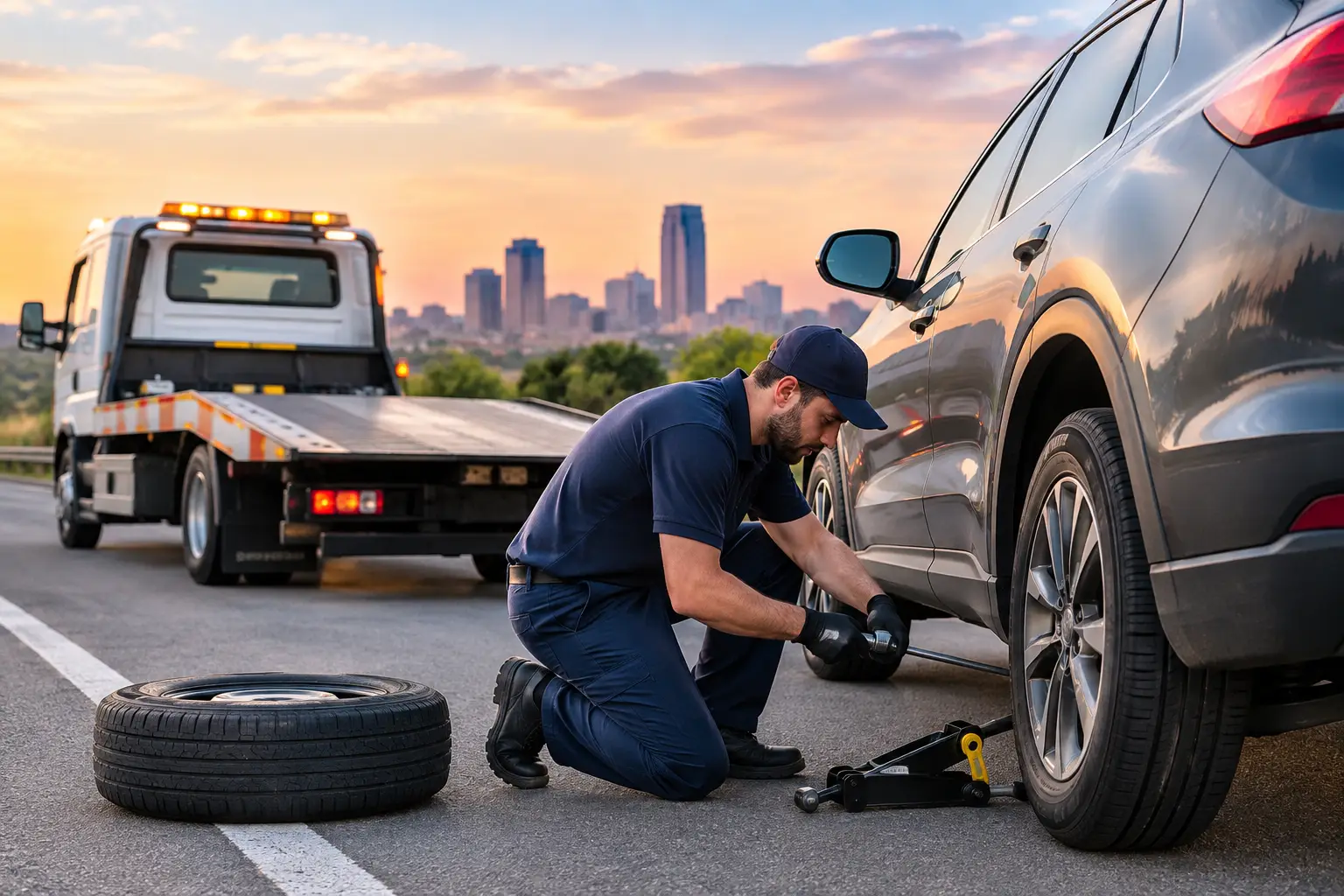
A dead battery, flat tire, or lockout may be handled on site. A jumpstart can get a vehicle moving when the battery is simply discharged. Flat tire help can work if you have a usable spare and the vehicle is in a safe place to service. A lockout can often be resolved without damaging the door, glass, or weather stripping.
But roadside assistance has limits. If the vehicle starts after a jump but immediately dies, the charging system may have failed. If the spare is missing, damaged, or not safe for highway driving, towing makes more sense. If a tire blowout damaged the wheel or suspension, installing a spare will not solve the underlying issue.
A good operator will look at the actual situation, explain what can be done safely, and tell you when transport is the better option. The goal is not to tow a vehicle that can be safely helped on site. The goal is to avoid leaving you stranded again a mile down the road.
Why Flatbed Towing Makes a Difference
Not every vehicle should be pulled with two wheels on the ground. Modern vehicles often have lower bumpers, all-wheel-drive systems, electronic parking brakes, and sensitive drivetrains. Electric vehicles add battery placement and manufacturer-specific towing requirements to the equation.
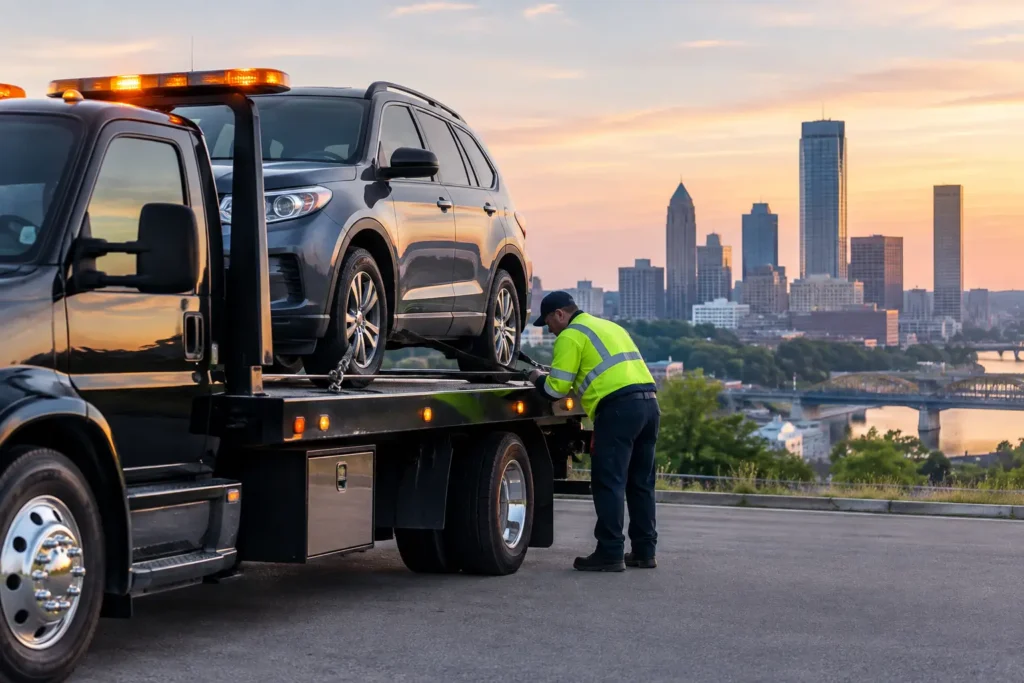
Flatbed towing is the preferred method for many cars, trucks, SUVs, and EVs because the vehicle is fully loaded onto the bed. It reduces wear on the drivetrain and keeps damaged or non-rolling wheels off the pavement. For a Tesla or another electric vehicle, proper loading is especially important. Incorrect recovery points or careless winching can cause damage that is avoidable with the right equipment and experience.
Low-clearance vehicles need the same attention. A steep loading angle, rushed placement, or improper securement can scrape a bumper or underbody. The right approach may involve using ramps, careful positioning, and slow loading rather than forcing the vehicle onto the truck.
Heavy-duty pickups also require more than guesswork. Their weight, length, and wheelbase change how they should be loaded and secured. A tow truck operator needs to account for the vehicle itself, the location, traffic conditions, and where the vehicle is being delivered.
What to Do While You Wait for a Tow Truck
Once you have called for help, focus on staying safe and making the pickup easier. If the vehicle can move, pull as far away from traffic as possible without risking further damage. In a parking lot, leave enough space around the vehicle for the tow truck to line up and load it.
Keep your hazard lights on when appropriate, especially near moving traffic or in low light. If you are on a highway shoulder and it is safe to exit the vehicle, move away from traffic and stand behind a guardrail when one is available. Do not remain in the vehicle if it is exposed to traffic and there is a safer place nearby.
Have the basic details ready when you call: your location, vehicle make and model, the problem you are seeing, whether the vehicle rolls and steers, and where it needs to go. A clear location is more useful than a vague description. Mention nearby cross streets, store names, exits, or landmarks. In Downtown Tulsa or a tight parking garage, tell the dispatcher about height restrictions, blocked access, or any issue that could affect which truck is sent.
It also helps to remove valuables, gather your keys, and know the destination before the truck arrives. If you want the car taken to a particular shop or dealership, confirm the address and whether the location can accept the vehicle after hours.
Choosing a Local Towing Company Without Guesswork
When you search for a tow truck near me, the first result is not always the right fit for the situation. Ask a few direct questions before dispatch: Can you handle my vehicle type? Is a flatbed available? Can you help at my location? Where will the vehicle be taken? What information do you need from me?
Clear answers matter. You should know whether the issue can be handled with a jumpstart, tire change, lockout service, winch-out, or tow before the truck arrives whenever possible. You should also know that the vehicle is being transported to the destination you choose, whether that is a repair shop in Tulsa, your home, or a dealership in Broken Arrow.
A focused local service area can make a real difference. Drivers in Tulsa, Jenks, Bixby, Broken Arrow, and Glenpool need someone familiar with local traffic, access roads, crowded commercial lots, and the common places vehicles become stuck. A car stopped near Tulsa Hills requires a different pickup plan than one parked in a narrow Midtown apartment lot or a garage downtown.
Tulsa Towing, powered by Neptune Towing, focuses on straightforward local towing and roadside assistance rather than storage or impound work. That means the job stays simple: assess the problem, handle what can be handled safely, and move the vehicle carefully when it needs transport.
A Tow Is Often the Cheaper Decision
It can feel tempting to drive a vehicle a few more miles to avoid calling for a tow. Sometimes that works. Sometimes it turns a failed hose into an overheated engine, a bad tire into suspension damage, or a minor collision issue into a more complicated repair.
Towing is not only for completely disabled vehicles. It is for the moments when driving is uncertain, unsafe, or likely to cause more damage. If your vehicle is not operating the way it should, taking the careful route can protect both the vehicle and the people inside it.
When you are stuck, you do not need a long explanation or added runaround. You need a clear answer, proper equipment, and someone who will handle the vehicle carefully from pickup to drop-off.