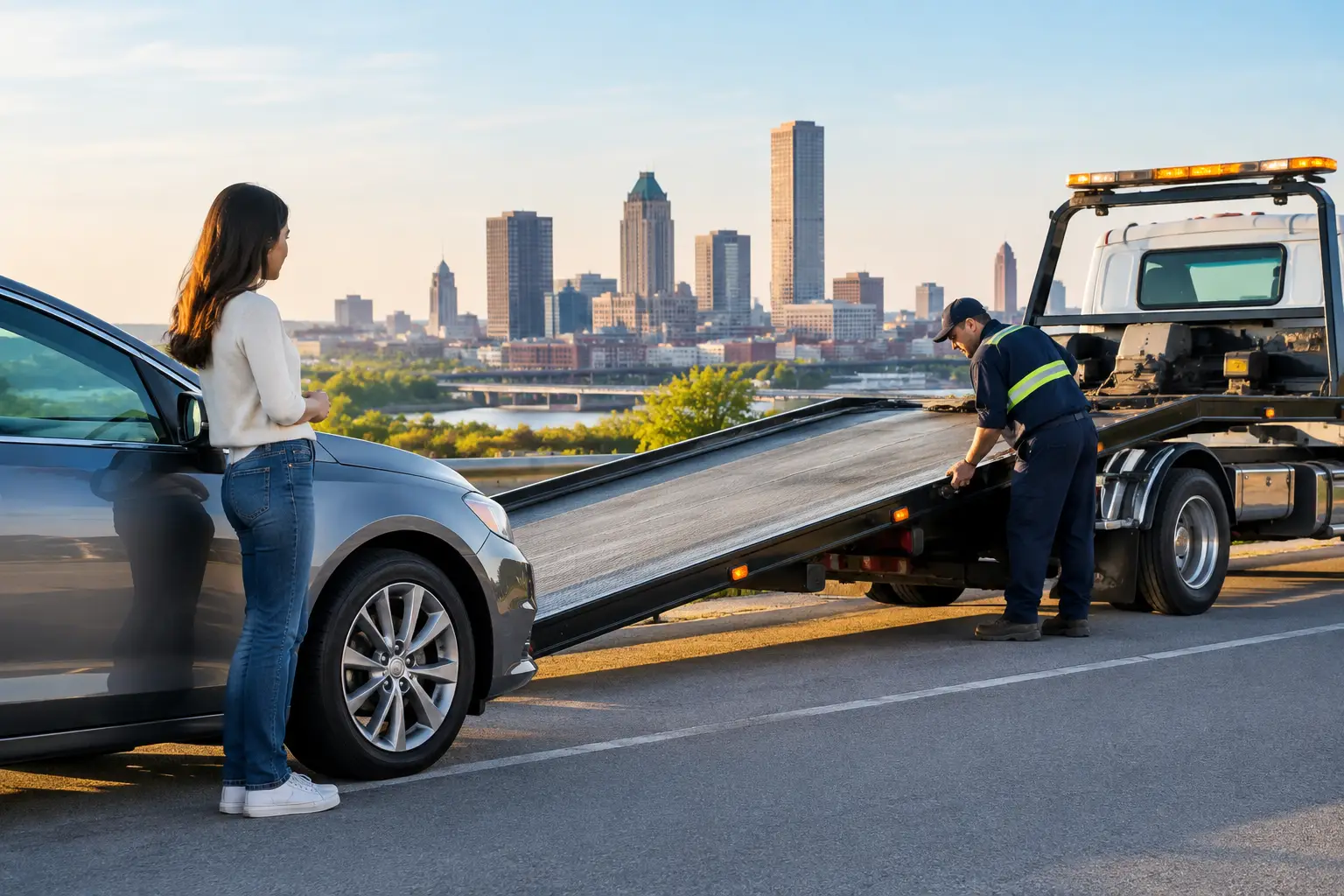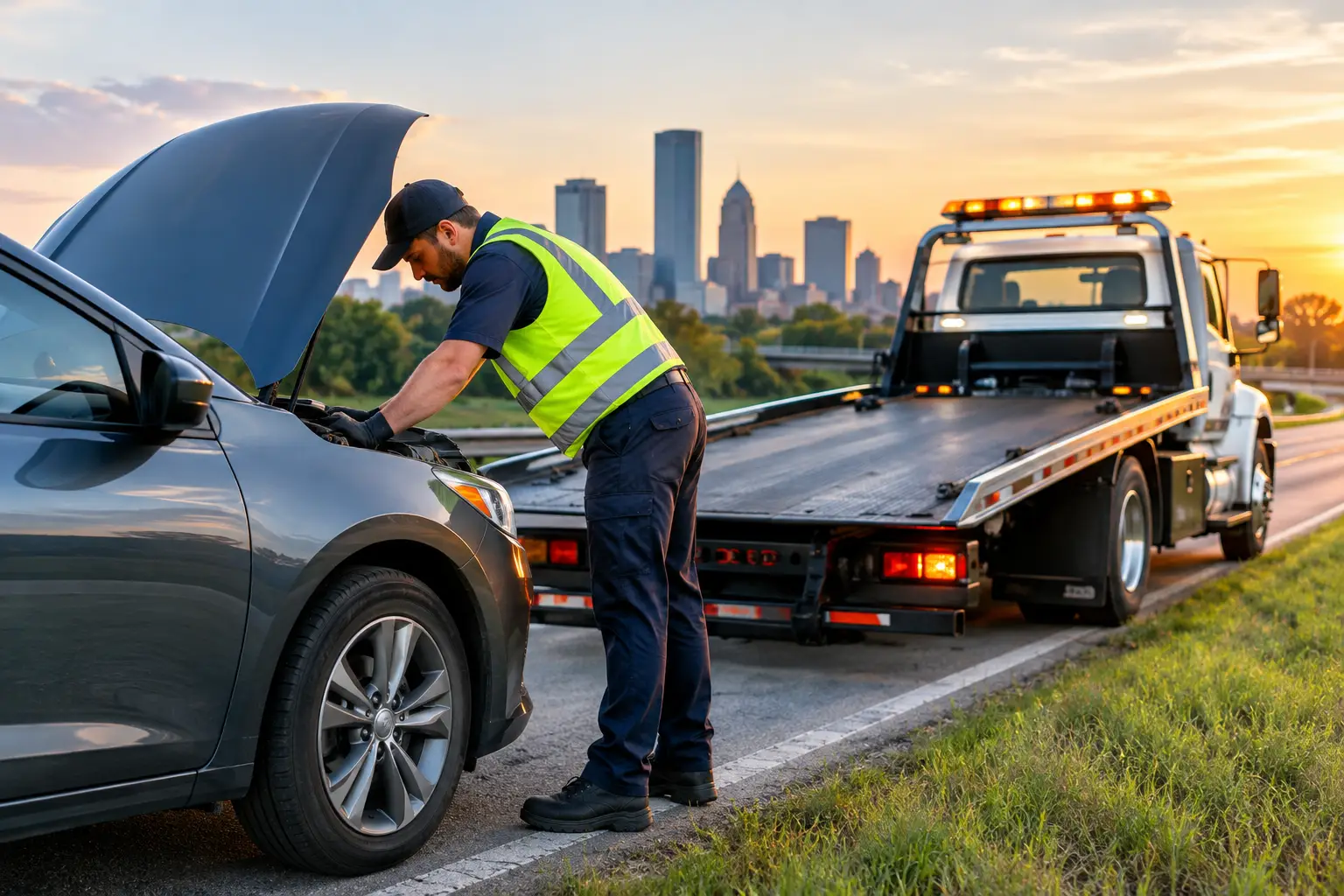
A disabled car in Broken Arrow usually does not fail at a convenient time. It quits in a turn lane, sits dead in an apartment lot, or stops moving right when traffic is building. When you need Broken Arrow disabled vehicle towing, the main concern is simple – get the vehicle moved safely, without damage, and without turning a bad day into a bigger problem.
That is where the right towing setup matters. A non-running vehicle is not just a car that needs a ride. It may have steering issues, a dead battery, collision damage, a locked transmission, a flat tire, or suspension damage that changes how it needs to be loaded. The job is not only about showing up fast. It is about knowing how to move that specific vehicle the right way.
When disabled vehicle towing is the right call
Some roadside problems can be handled on site. A jumpstart, tire change, or lockout service can get you moving again if the issue is minor and the vehicle is otherwise safe to drive. But there are plenty of situations where driving it is the wrong move.
If the engine will not start, the transmission will not engage, the wheel is damaged, or the vehicle has been in an accident, towing is usually the safer option. The same goes for overheating, major fluid leaks, electrical failure, or any issue that makes the vehicle unpredictable in traffic. In those cases, trying to limp it to a shop can cause more damage than the original breakdown.
A lot of drivers wait too long because the car still moves a little. That can be a costly mistake. A vehicle that barely rolls is often harder to tow correctly because the condition gets worse by the minute. Getting it loaded early is usually the cleaner, safer call.
Broken Arrow disabled vehicle towing for real roadside situations
Not every disabled vehicle call looks the same. One driver is stuck in a grocery store parking lot with a battery that dropped completely dead and an electronic shifter that will not release. Another is on the shoulder near a busy road with front-end damage after a collision. Someone else has a pickup that will start but cannot be driven because the steering feels wrong.
These are all towing jobs, but they are handled differently. A low-clearance sedan needs attention to approach angle and loading. A truck with suspension damage may need extra care before it is even safe to pull onto the bed. An electric vehicle brings its own set of rules, especially if it cannot be shifted normally or has wheel or underbody damage.
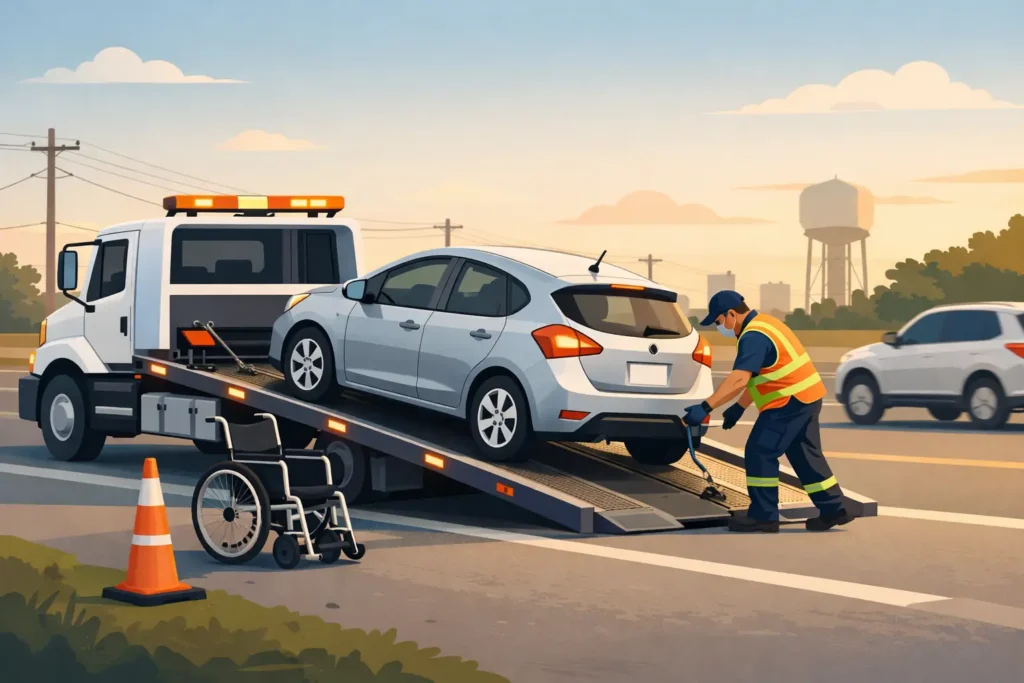
That is why proper flatbed towing matters. For a disabled vehicle, the goal is controlled loading and full transport off the ground. It reduces risk during pickup, avoids wear from dragging, and gives better protection for vehicles that already have mechanical or body damage.
Why flatbed towing makes a difference
For disabled vehicles, flatbed towing is usually the safest choice because the whole vehicle is loaded and secured instead of being pulled with two wheels on the road. That matters when a car will not roll freely, has drivetrain problems, or has damage that makes standard towing a bad fit.
It also matters for newer vehicles. Many cars, SUVs, and EVs have lower front ends, more sensitive drivetrains, and less room for sloppy handling. A rushed hookup can scrape bumpers, stress components, or create problems that were not there before the tow started.
A flatbed gives more control, but only if the operator knows how to use it properly. Winching angle, wheel position, clearance, tie-down points, and the vehicle’s condition all matter. Good towing is usually quiet and uneventful. That is the point.
Common vehicles that need disabled towing
Broken Arrow disabled vehicle towing covers more than older cars that just stopped running. It also includes daily drivers, work trucks, family SUVs, and EVs that cannot move under their own power.
Gas vehicles often need towing after overheating, alternator failure, fuel system problems, transmission issues, or collision damage. Trucks may need transport because of steering problems, broken suspension parts, or driveline failure. Electric vehicles can need towing for battery-related shutdowns, impact damage, or situations where the car will not shift into transport mode.
Each one needs a slightly different approach. A heavy-duty pickup is not loaded like a compact sedan. A Tesla is not handled like an older rear-wheel-drive car. Experience shows up in those details.
EV towing is not guesswork
Electric vehicles are becoming more common in Broken Arrow and across the Tulsa area, and they require careful handling when disabled. Some cannot be towed with drive wheels on the ground. Others need specific procedures before they can even be rolled or winched.
This is where many drivers get nervous, and for good reason. If the vehicle is loaded the wrong way, the damage can get expensive fast. Proper EV towing means using the right equipment, paying attention to clearance, and avoiding shortcuts.
The same principle applies to hybrid vehicles and newer luxury models. The badge on the hood matters less than understanding how that vehicle should be moved.
What to expect when you call for a disabled tow
When your vehicle is stuck, clear communication matters almost as much as the truck itself. The first thing that helps is explaining what the vehicle is doing – or not doing. Does it start? Will it roll? Is it in a safe spot? Was there an accident? Are any wheels damaged or turned awkwardly?
Those details help determine what equipment and loading approach will be needed. A car in a parking lot is one thing. A disabled vehicle on a tight shoulder or in a garage is another. The more accurate the information, the smoother the tow usually goes.
Once on site, the goal should be straightforward. Confirm the issue, check the vehicle’s condition, load it carefully, secure it correctly, and transport it to the repair shop, dealership, home, or other approved destination. Simple is better when someone is already dealing with enough stress.
Choosing the right tow for a non-running vehicle
Most people searching for a tow truck are not comparing equipment specs. They want someone who answers, shows up, and handles the vehicle carefully. That is reasonable. Still, a few things are worth paying attention to when the car cannot move on its own.
First, ask whether the tow will be done on a flatbed. For many disabled vehicles, that is the safer option. Second, make sure the company understands the type of vehicle involved, especially if it is low clearance, oversized, or electric. Third, look for clear communication. If the conversation feels rushed or vague, that usually carries over into the job.
There is also a difference between simply moving a vehicle and transporting it without adding new problems. A disabled vehicle is already in a vulnerable state. The last thing you need is bumper damage, scraping, or poor securement during the tow.
Local conditions can change the tow
Broken Arrow calls come from busy intersections, neighborhood streets, apartment complexes, shopping centers, and roadside shoulders where space is tight and traffic does not slow down much. That affects how the job is handled.
A vehicle stopped in a parking garage may need a different approach than one sitting on level pavement. A breakdown near a high-traffic route may require a faster, more controlled loading process for safety. Rain, low visibility, and uneven ground can all make a basic tow more technical.
That is one reason local experience matters. Familiarity with the area helps with access, routing, and safer loading decisions under pressure. Tulsa Towing, powered by Neptune Towing, works with the same practical approach on these calls – keep communication clear, use the right equipment, and move the vehicle without adding damage or confusion.
The main goal is simple
When your car will not move, you do not need a long sales pitch. You need a tow that makes sense for the vehicle’s condition and gets it where it needs to go safely. Broken Arrow disabled vehicle towing should feel straightforward from the first call to the final unload.
If the vehicle is dead, damaged, stuck, or unsafe to drive, the best next step is usually the one that prevents more trouble. Get it loaded properly, get it transported carefully, and get yourself out of the road and onto a better plan.