A heavy-duty pickup is not a standard tow. A 2500 or 3500-series truck can be long, tall, heavy, and loaded with tools, equipment, or a trailer hitch setup that changes how it needs to be handled. When one breaks down on I-44, US 75, or a busy Tulsa street, rushing the recovery can turn a repair problem into body, suspension, or drivetrain damage. This guide to towing heavy duty pickups covers what safe transport should look like and what information helps a tow operator send the right equipment.
Why Heavy-Duty Pickups Need a Different Tow Plan
The first issue is weight. Depending on the cab, bed length, engine, four-wheel-drive system, and what is in the truck, a heavy-duty pickup can weigh far more than a typical passenger vehicle. The tow truck, bed, winch, tie-down system, and loading approach all need to match that weight.
Size matters just as much. Long-bed crew-cab trucks have more overall length and a wider turning path. Lifted trucks may have clearance concerns. A truck with a utility bed, aftermarket bumpers, large tires, toolbox, ladder rack, or loaded trailer may require extra planning before anyone starts pulling it onto a bed.
This is why a quick look is not enough. Proper towing starts with identifying the truck, its condition, its location, and whether it can roll and steer. The goal is simple: get it loaded securely and delivered without adding damage.
Start With the Truck’s Actual Condition
Before arranging a tow, look at what the truck can and cannot do. If it starts but will not shift, has a locked wheel, has a broken axle, or has major front-end damage after an accident, say so when you call. Those details change the recovery plan.
A truck that rolls freely and can be placed in neutral is usually more straightforward to load. A truck that cannot roll may need careful winching, skates, dollies, or a different loading angle. If the steering is locked, the tires are damaged, or the truck is sitting low after a collision, forcing it into position can cause more problems.
Four-wheel-drive and diesel pickups deserve particular attention. The transfer case position, drivetrain condition, and manufacturer instructions can affect whether the vehicle can be moved with wheels on the ground. When there is any doubt, flatbed transport is the safer choice. It keeps the truck off the road and avoids relying on a damaged or improperly configured drivetrain.
Do Not Assume Four-Wheel Drive Can Be Towed Any Way
Many owners know their truck has a neutral setting in the transfer case, but that does not mean every roadside situation is safe for a wheel-lift tow. A failed driveline component, transmission issue, locked wheel, or collision damage can change the answer.
The practical approach is to treat the truck as a full-load vehicle unless its condition and towing procedure are clearly known. A flatbed keeps all four tires off the pavement and gives the operator more control during transport. That matters when the destination is only a few miles away as much as it does for a longer move across Tulsa or out toward Broken Arrow, Jenks, or Bixby.
Check What Is Attached to the Pickup
A heavy-duty truck is often carrying more than the truck itself. Before loading, account for trailer connections, cargo, bed-mounted equipment, and accessories that may affect clearance or weight distribution.
If a trailer is attached, tell the dispatcher before the truck arrives. A pickup and trailer combination may require separate handling or a different recovery plan. Do not disconnect a loaded trailer on the shoulder of a busy roadway unless it can be done safely and the situation has been assessed.
Items in the bed also matter. Loose tools, coolers, ramps, generators, and jobsite materials can shift during winching or transport. Secure what you can, but do not climb around the truck if it is stopped near moving traffic. On a highway shoulder, personal safety comes before organizing cargo.
Aftermarket parts deserve a mention too. Large bumpers, running boards, oversized tires, low-hanging steps, and long receiver hitches can affect the approach angle and tie-down points. A careful operator checks those areas rather than hooking to whatever is easiest to reach.
Safe Loading Is More Than Pulling It Onto a Bed
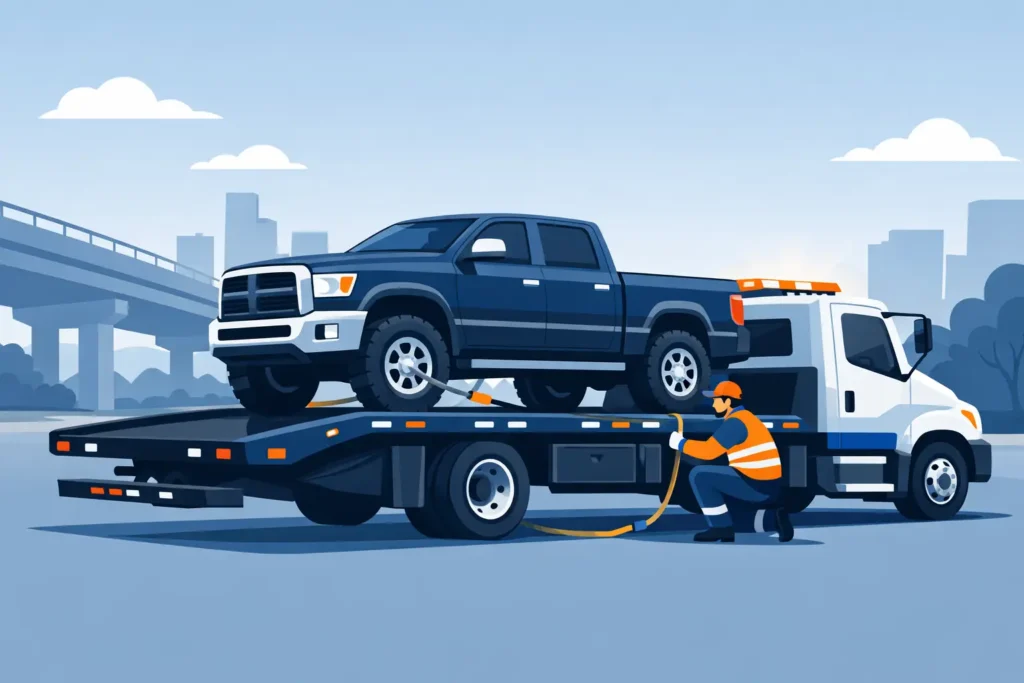
Loading a heavy-duty pickup safely depends on alignment, traction, clearance, and controlled winching. The truck should be positioned as straight as possible with the flatbed. Pulling at an angle may be necessary in tight spaces, but it increases the need for careful control.
The operator should use proper attachment points and wheel restraints designed for the job. Straps and chains should secure the vehicle without contacting vulnerable brake lines, steering components, painted surfaces, or parts that are already damaged. The truck also needs to sit correctly on the bed so its weight is balanced for travel.
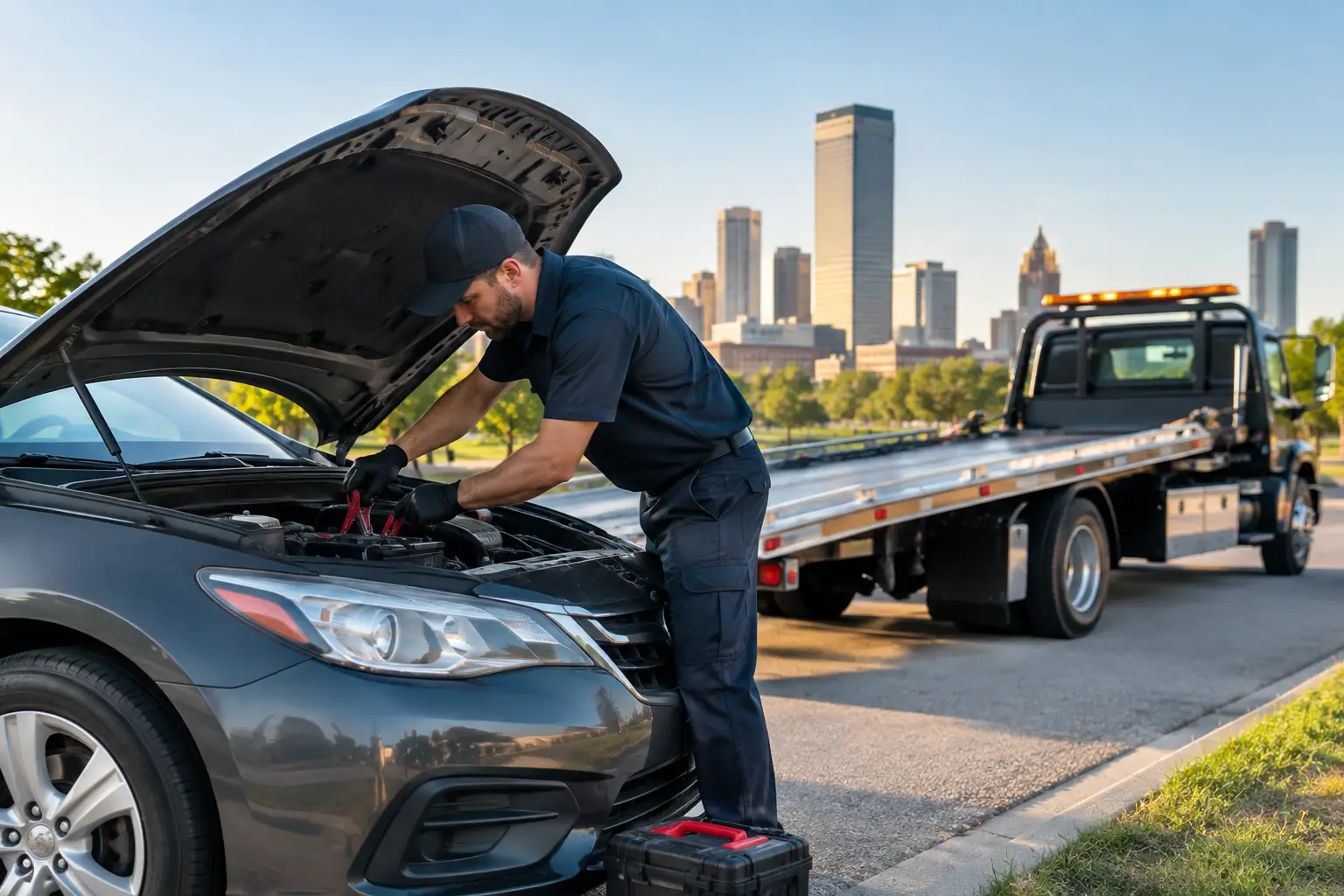
A low battery, dead engine, or electronic parking brake issue can make loading slower. That is normal. Taking time to release the brakes correctly, keep the truck centered, and avoid scraping the front valance or rear hitch is better than forcing the process to save a few minutes.
For a pickup that is stuck in mud, a ditch, a parking lot curb, or soft ground, the work starts before towing. The truck may need a controlled winch-out to get it onto stable ground. Trying to drive it free repeatedly can bury it deeper, overheat the transmission, or damage the tires and suspension.
What to Tell the Tow Dispatcher
Clear information helps get the right truck to you and prevents surprises at the scene. You do not need to know every technical detail. Give the basics: the year, make, model, whether it is a 2500 or 3500, two-wheel or four-wheel drive, and whether it has a long bed, lift kit, oversized tires, or significant equipment in the bed.
Also explain why it needs towing. “It will not start” is useful, but “it will not start and the steering is locked” is better. Let the dispatcher know if the truck is in a garage, backed into a tight driveway, on a highway shoulder, attached to a trailer, or blocked by another vehicle.
If there has been an accident, mention the visible damage. A damaged wheel, leaking fluid, deployed airbags, or a bent front end can change how the pickup is loaded. Photos can help when requested, but do not delay calling for help just to document every angle.
Protect Yourself While You Wait
If the pickup is disabled in traffic, get out of the travel lane if the truck can be moved safely. Turn on hazard lights, stay aware of approaching vehicles, and avoid standing between the truck and traffic. On high-speed roads, move to a safe location away from the roadway when possible.
Do not crawl underneath the truck to inspect a leak or try to disconnect a damaged driveline. Heavy-duty pickups have enough weight and ground clearance to make a roadside inspection risky, especially after a failure or collision. Leave the underbody assessment to the repair shop and let the tow operator focus on stabilizing and loading the vehicle.
Remove personal items, work equipment, and important documents if it is safe to do so. Keep the keys available and know where you want the truck taken, whether that is your home, a dealer, or a local repair shop. A clear destination keeps the call moving once the truck is secured.
When a Flatbed Is the Right Answer
For most disabled heavy-duty pickups, a flatbed is the safest, cleanest option. It is especially appropriate when the truck has drivetrain trouble, collision damage, a flat tire that cannot be changed safely, locked steering, or an unknown mechanical issue. It also makes sense for trucks with low front-end clearance, expensive aftermarket parts, or a concern about keeping all four wheels off the road.
There are situations where another method may be possible, but that depends on the specific pickup and the reason it is disabled. The right decision comes from the truck’s condition, not from trying to use the fastest-looking method.
Heavy-duty pickups are built to work, but that does not make them immune to towing damage. If your truck is stranded, give the tow operator accurate information, stay safe while waiting, and let proper equipment do the hard part. A careful load at the roadside is the first step toward getting your truck repaired without creating another issue.