A curbside loading space can look like an easy place to pull over when your car starts acting up downtown. It usually is not. In a busy part of the city, that curb may be needed for deliveries, building access, buses, or traffic flow. This Downtown Tulsa curbside loading guide explains how to handle a vehicle problem without turning a breakdown into a blocked lane, damaged car, or unsafe situation.
Downtown streets around the Blue Dome District, East Village, Deco District, and the Tulsa Arts District can change quickly during business hours, events, and rush traffic. If your vehicle will not move, the priority is not finding the most convenient curb. It is getting yourself out of danger and getting the vehicle handled correctly.
What Curbside Loading Areas Are For
Curbside loading areas are intended for active loading and unloading. That can mean a delivery truck dropping off supplies, a contractor moving equipment, a rideshare passenger getting in or out, or a business receiving inventory. The signs, curb markings, posted time limits, and the situation on the street determine how that specific space can be used.
They are not general parking spaces, and they are not a good place to leave a disabled vehicle while you decide what to do. A car sitting in a loading area can block commercial traffic, force drivers into another lane, and make it harder for emergency or service vehicles to reach the block.
If you are only stopping briefly to pick someone up or unload something small, check the signs before pulling in. A loading zone may have restrictions that are different during certain hours or days. When the signs are unclear, do not make assumptions based on what other drivers are doing.
Downtown Tulsa Curbside Loading Guide for Breakdowns
A breakdown is different from a planned stop. A dead battery, flat tire, overheated engine, collision damage, or transmission problem may leave you with no choice but to stop where the vehicle quits. In that case, use common sense, stay visible, and avoid making a risky move just to reach a loading zone.
If the car is still drivable enough to move safely, pull to the nearest legal and low-risk location. That may be a side street, parking lot entrance, private lot with permission, or a wider curb area away from an intersection. Do not force a damaged vehicle farther than it can safely go. Driving on a flat tire, continuing with an overheating engine, or trying to move a car after a collision can cause more damage.
If your vehicle is already in a curbside loading area and cannot move, turn on your hazard lights. Stay aware of traffic, especially if you are near a travel lane or a busy corner. If it is safe, move passengers away from the traffic side of the vehicle and keep them out of the roadway.
Then call for the type of help you actually need. A jumpstart can solve a battery issue. Flat tire help may get you moving if you have a usable spare and the vehicle is in a safe location. If the car will not start, has warning lights, has collision damage, or cannot be driven without risk, a flatbed tow is often the right call.
Do Not Block the Things That Keep Downtown Moving
Downtown Tulsa has tight blocks, one-way streets, parking garage entrances, active construction areas, and event traffic. A stopped vehicle becomes more serious when it blocks a lane, alley access, bus stop, crosswalk, fire lane, or driveway.
Avoid stopping close to corners. Drivers turning onto the street may not see your vehicle until the last second, particularly at night or in rain. Also avoid parking in front of garage entrances. Buildings in areas such as the Blue Dome District and East Village often rely on limited access points for residents, deliveries, and service vehicles.
If you need a tow, give the dispatcher a clear location. The street name matters, but details help even more: the nearest cross street, building number, parking garage name, which side of the street you are on, and whether you are in a loading zone or blocking a lane. Let them know if the vehicle is in a low-clearance garage, has a flat tire, is locked, or is an EV. Those details affect how the job is approached.
When a Tow Truck Needs Curbside Room
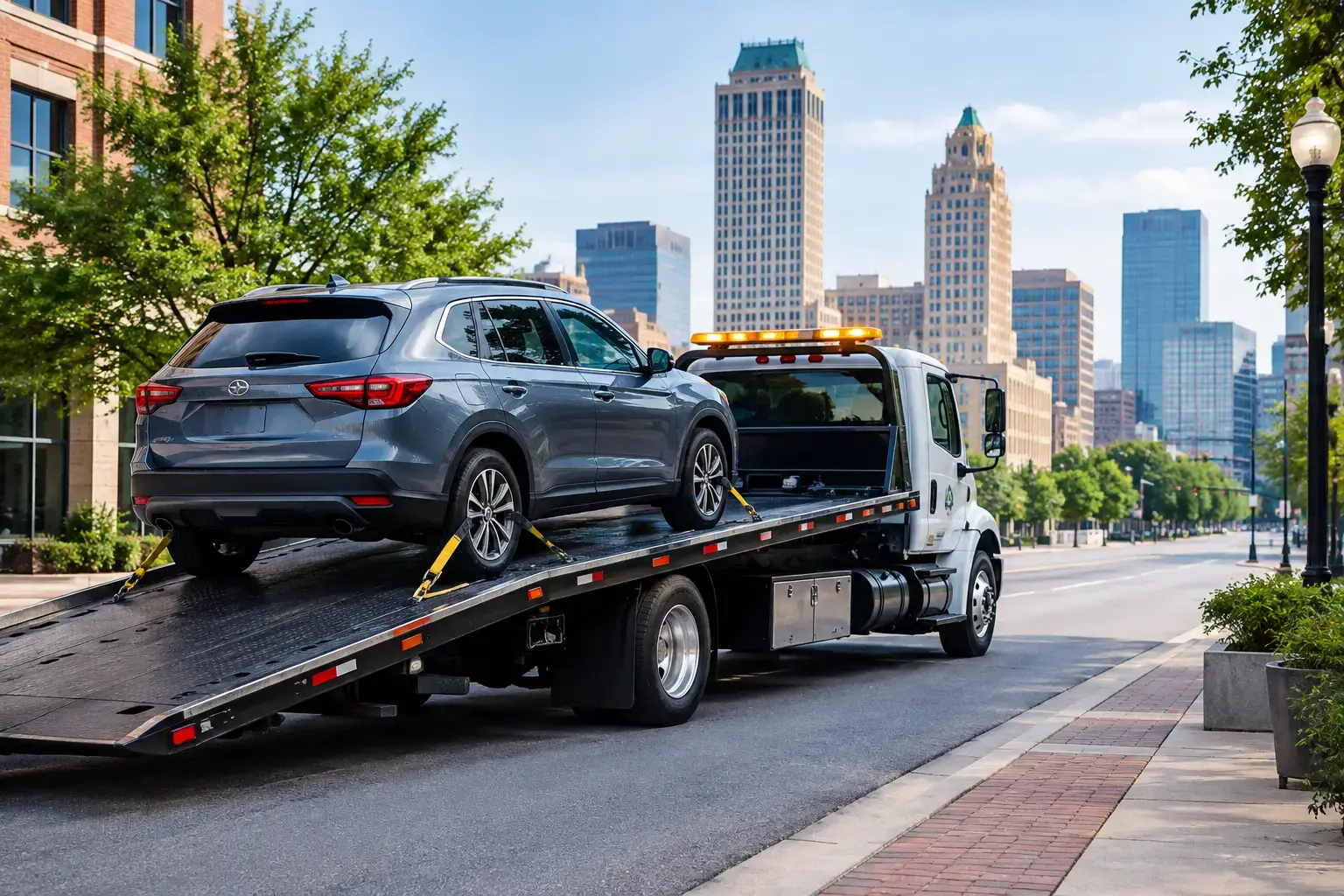
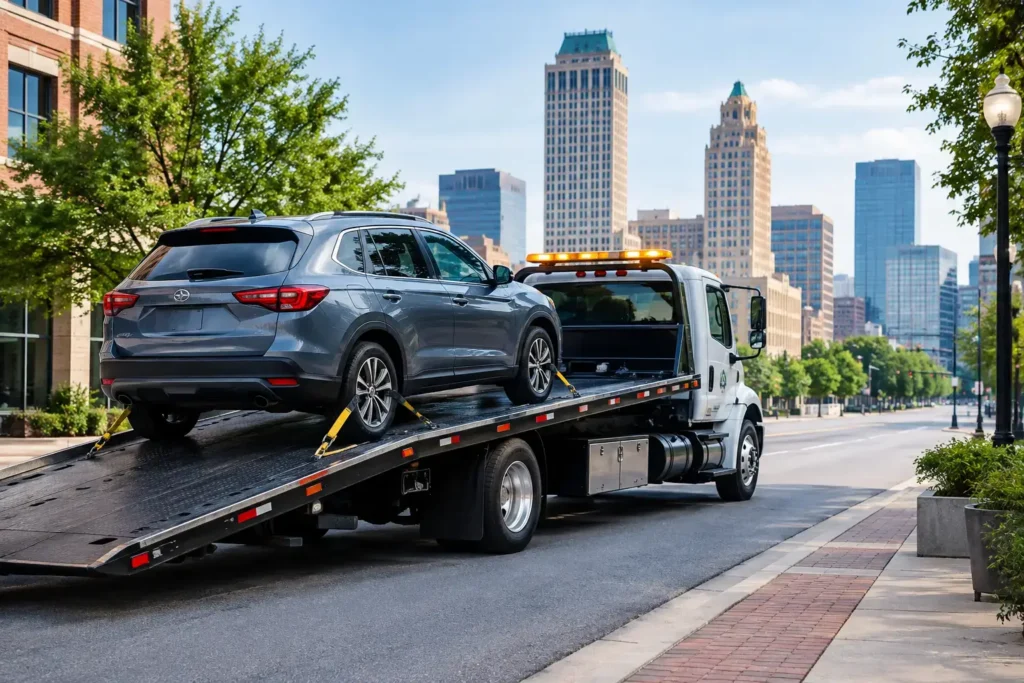
A tow truck cannot safely load every vehicle from every curb. Flatbed towing needs enough room to position the truck, lower the bed, load the vehicle in line, and pull away without striking nearby cars, posts, or curbs. On a narrow downtown street, that may mean waiting for a break in traffic or coordinating a safer loading position.
This is especially true for low-clearance cars, all-wheel-drive vehicles, heavy-duty pickups, and electric vehicles. A rushed hook-up or improper loading angle can damage the bumper, underbody, wheels, or drivetrain. The right equipment and a careful setup matter more than shaving off a few minutes.
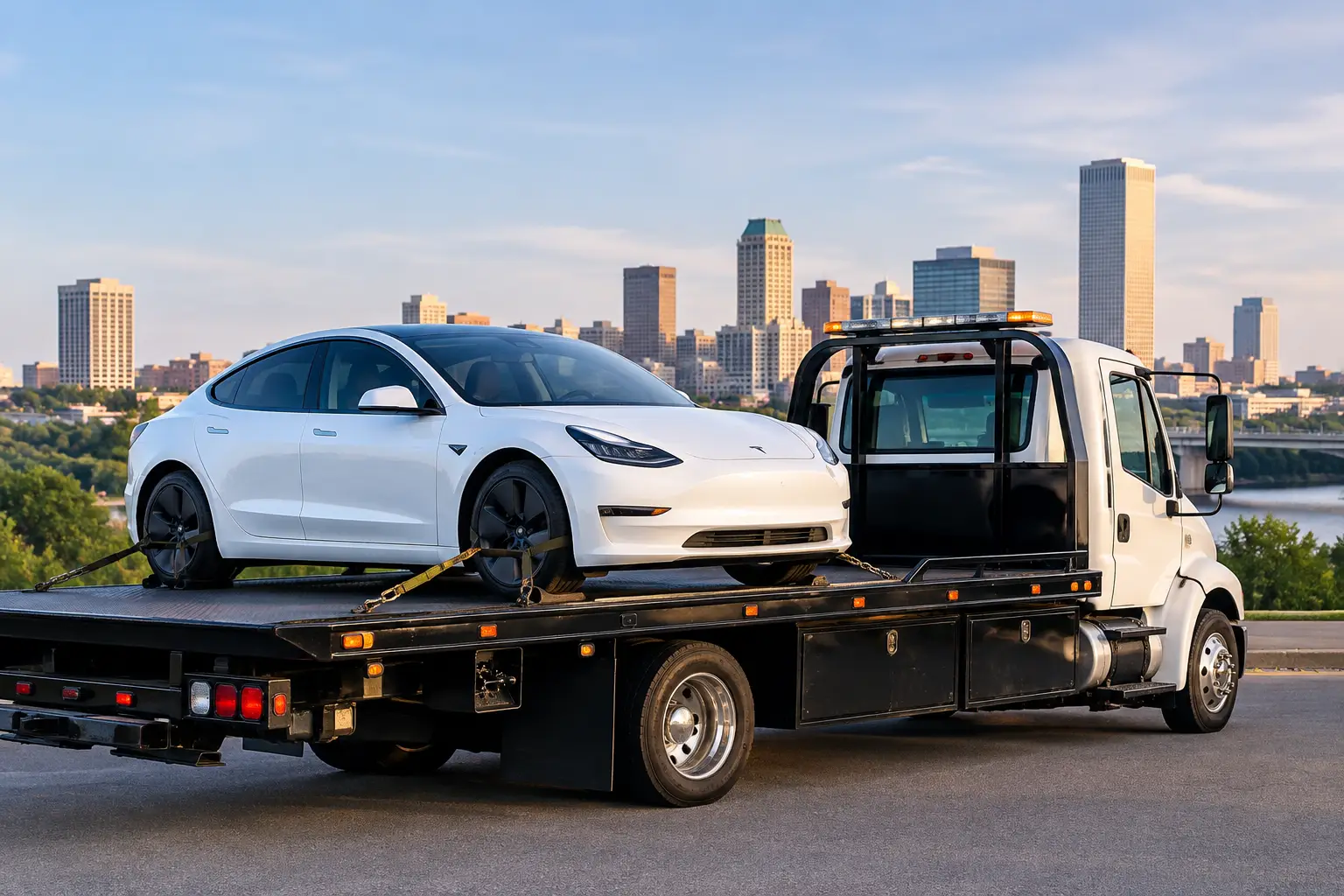
For an electric vehicle, tell the towing company what you drive before the truck arrives. EVs have specific handling requirements, and many should be transported on a flatbed rather than pulled with two wheels on the ground. If the vehicle is low on battery or stuck in park, mention that too.
If you are in a garage, confirm the clearance before requesting a standard tow truck. Some parking structures in downtown Tulsa do not provide enough height for a flatbed to enter. In that situation, the vehicle may need to be moved out of the garage first, if it can be done safely, or handled with equipment suited to the space.
A Safer Way to Wait for Help
Once help is on the way, do not keep trying fixes that could make the problem worse. Repeatedly jumpstarting a vehicle with damaged battery connections, adding coolant to a hot engine, or trying to drive on a failed tire can turn a manageable roadside call into a larger repair.
If you are safely parked, remain where you can watch for the truck without standing in traffic. Keep your phone on, since downtown blocks can be confusing when a driver is trying to find the exact curb position. If your vehicle is in a place where it presents an immediate hazard, tell the dispatcher that directly.
Have the destination ready as well. It could be your preferred repair shop, a dealership, your home, or another safe location in Tulsa. Clear instructions prevent delays after the vehicle is loaded. A local tow operator should be able to assess the curb, traffic, and vehicle type, then explain the safest way to get the job done.
Signs That It Is Time to Stop Trying to Move the Vehicle
Some drivers hesitate to call because they are only a few blocks from home or a shop. Downtown traffic is not the place to gamble with a vehicle that is already showing signs of failure. Stop and arrange a tow if the engine is overheating, the vehicle has a serious fluid leak, the steering or brakes feel wrong, a tire is shredded, collision damage affects a wheel, or the car will not shift normally.
The same goes for a vehicle that starts but will not stay running. It may move just enough to get you into a worse position. A careful tow from a loading area or nearby curb is usually less stressful than being stranded in a travel lane after the vehicle quits completely.
Tulsa Towing handles local breakdown and disabled-vehicle transport with flatbed equipment and a focus on damage-free loading. The goal is simple: assess the spot, communicate clearly, and get your vehicle where it needs to go without adding another problem to your day.
When a downtown curb is crowded and your vehicle is not cooperating, take the safe option. Get out of the traffic flow if you can, respect the purpose of the loading area, and let the vehicle be moved properly rather than forcing it farther down the road.