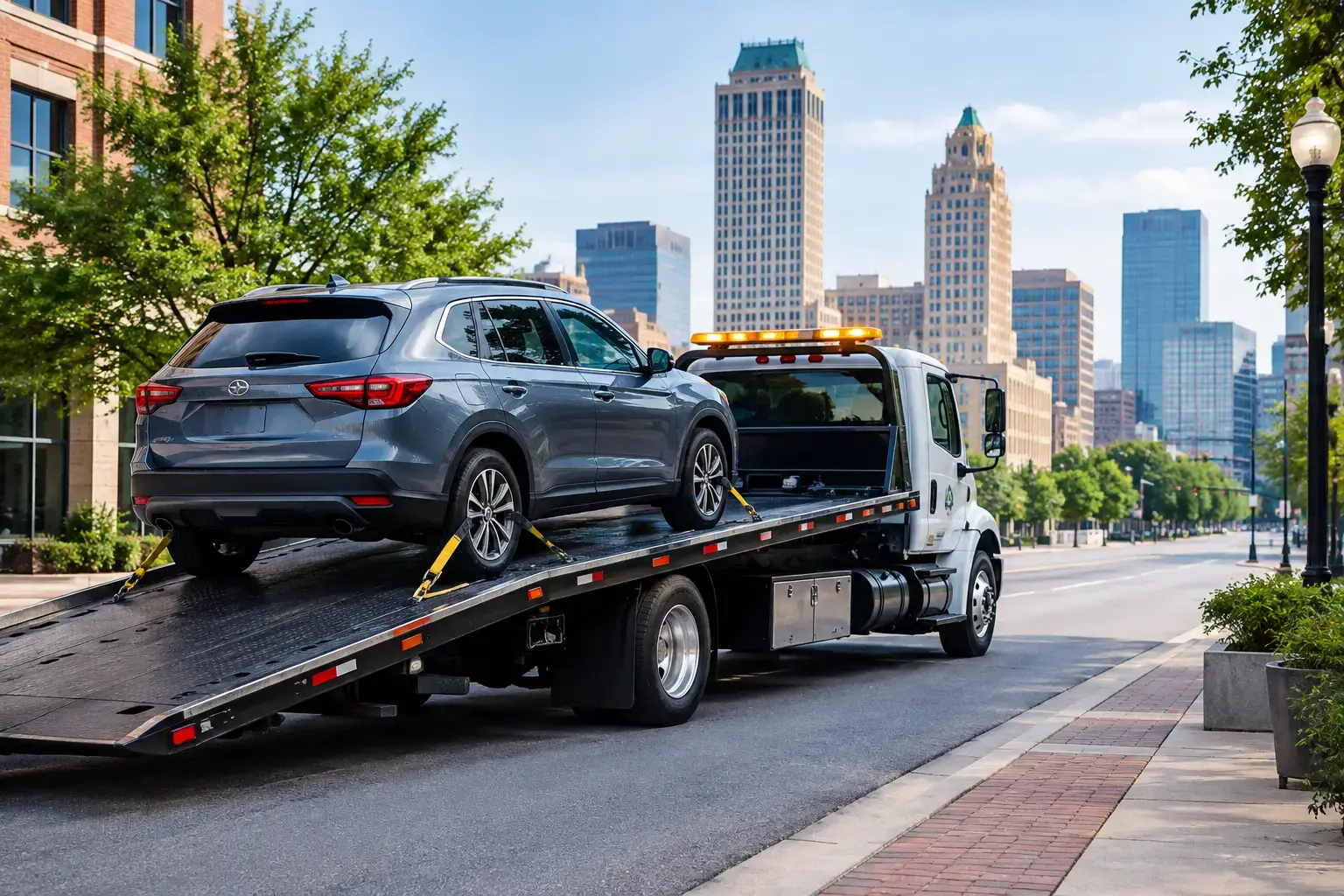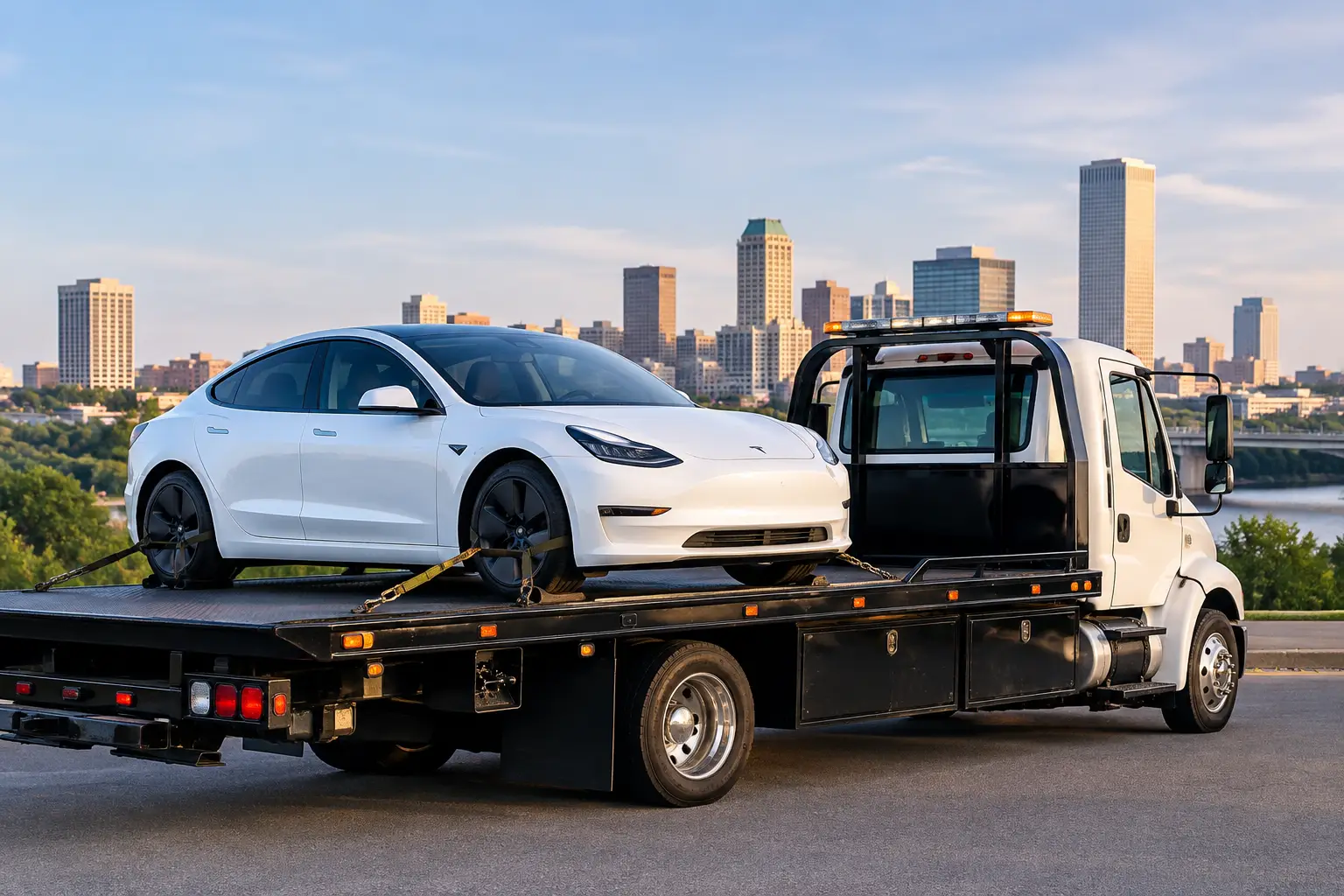
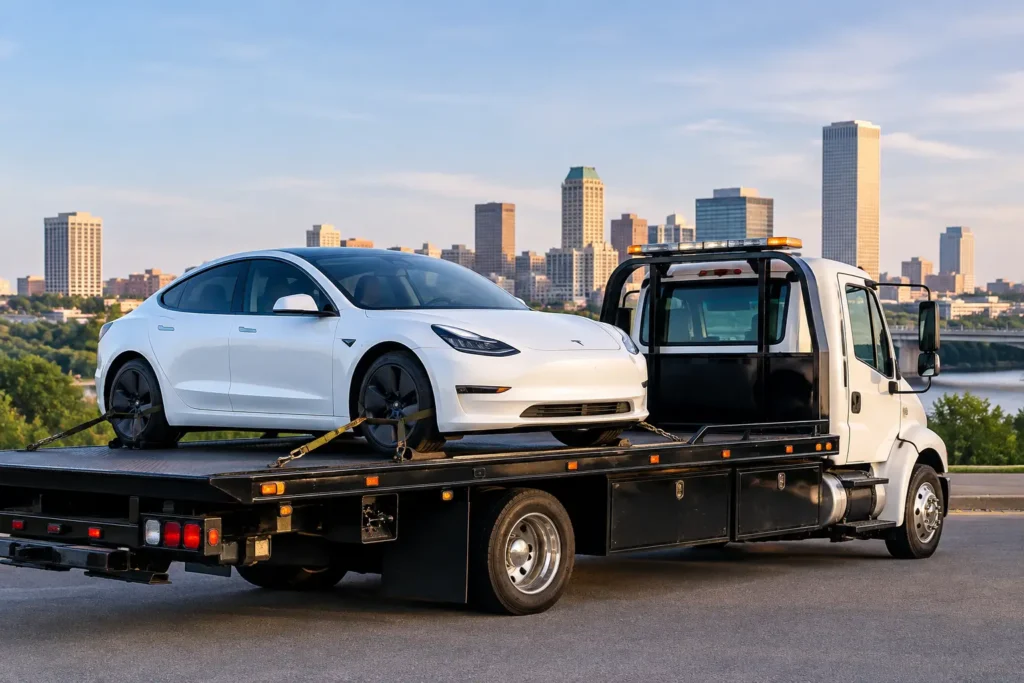
A Tesla that will not move on I-44, in a Downtown parking garage, or outside a South Tulsa grocery store needs different handling than a typical gas vehicle. Tesla towing is not a job for dragging the car onto a truck or lifting one end and heading down the road. These vehicles have low ground clearance, electric drivetrains, and battery systems that need careful transport from the first minute on scene.
When the vehicle is loaded correctly on a flatbed, it can be moved safely to a home, repair shop, body shop, or dealership. When it is handled carelessly, a simple breakdown can turn into unnecessary damage. That is why the equipment, loading method, and driver experience matter.
Why Tesla Towing Is Different
The biggest issue is that a Tesla should not be towed with its wheels rolling on the ground. Unlike many conventional vehicles that can sometimes be moved with a wheel-lift tow truck, an EV needs to stay fully off the road during transport. A flatbed keeps all four tires up, avoids drivetrain problems, and gives the operator control during loading and unloading.
Ground clearance is another concern. Tesla sedans sit low, and even SUVs can scrape if the bed angle is too steep or the loading approach is rushed. Proper ramps, a controlled bed angle, and careful winching help prevent contact with the front bumper, underbody panels, and battery area.
The battery pack is mounted low in the vehicle. It is protected, but it is also a major reason to avoid guessing. A tow operator should know where to place wheel straps, how to guide the vehicle up the bed, and why attaching equipment to the wrong part of the vehicle can create a problem.
What a Proper Tesla Tow Looks Like
A safe Tesla tow starts before the vehicle moves. The operator checks the vehicle’s condition, whether it can be placed in the correct transport setting, where it is sitting, and whether there is enough room to load safely. A disabled Tesla on the shoulder of US 75 presents a different challenge than one parked in a tight Midtown garage.
The preferred setup is a flatbed with the vehicle secured by the wheels. This keeps tie-down equipment away from sensitive suspension and underbody components. The vehicle is winched onto the bed in a controlled manner rather than driven aggressively up the ramps.
Once loaded, the Tesla is centered on the flatbed and checked for clearance. The driver should also account for steep driveways, sharp entrances, and uneven pavement at the destination. Getting the vehicle onto the truck safely is only half the job. It needs to come off safely too.
Transport Mode Can Matter
Teslas have a Transport Mode intended for situations where the vehicle must be moved without normal driving operation. Depending on the model and condition of the car, this setting may allow the wheels to roll for loading. It is not something to activate blindly, and the steps can vary by model and software version.
If your screen is working, follow the towing or Transport Mode instructions shown in your Tesla owner’s manual. If the screen is off, the low-voltage system has failed, or the vehicle will not enter the needed mode, tell the tow operator before loading begins. That information helps determine the safest way to proceed.
Do not assume a dead main battery means the car can be treated like any other disabled vehicle. A Tesla may still have power in some systems, or it may have a separate low-voltage issue that affects doors, shifting, and access to Transport Mode.
Common Reasons a Tesla Needs a Tow
Not every Tesla tow starts with an empty drive battery. Drivers around Tulsa also call for accident transport, damaged tires, curb strikes, warning messages, suspension concerns, and vehicles that will not shift or move.
A flat tire is a common example. If the tire damage is minor and the vehicle is in a safe location, roadside tire help may be enough. But if the sidewall is damaged, the wheel is bent, there is underbody contact, or the car is stopped in an unsafe area, flatbed transport is usually the better call.
A collision can require extra caution even when the Tesla looks drivable. Damage beneath the vehicle, a fluid leak, a warning light, or contact near the battery area should be treated seriously. Avoid trying to force the car to move. Keep clear of traffic, park at a safe distance if possible, and arrange transport to the repair facility selected by your insurance company or preferred shop.
A Dead Battery Is Not Always the Whole Story
If the main battery is depleted, the immediate question is whether the car can be charged where it sits or needs transport to a charging location. This depends on the location, the remaining range, traffic conditions, and whether the vehicle can be safely moved.
A Tesla stopped in a residential driveway in Bixby is very different from one that has lost power on Highway 169 during busy traffic. In the second situation, getting the vehicle out of the travel area safely comes first. Do not keep trying to restart or shift the vehicle while exposed to traffic.
A separate low-voltage battery issue can also make a Tesla seem completely unresponsive. Doors may not operate normally, the screen may stay dark, and the vehicle may not release from Park. This is a situation where clear communication with the tow operator is especially useful. Explain what happened, what warnings appeared, and whether the car has been in an accident.
What to Tell the Tow Truck Driver
A few details can make a Tesla tow faster and safer. When calling for service, say that the vehicle is a Tesla and provide the model if you know it. Mention whether it is parked, on a roadway, in a garage, or blocked by another vehicle.
Also explain whether the car is in Park, whether the screen turns on, and whether you can access Transport Mode. If a tire is flat, a wheel is damaged, or the vehicle hit something underneath, say so. These are not small details. They affect how the vehicle is approached and loaded.
If you have a preferred destination, have the address ready. That could be your home in Jenks, a local collision center, a tire shop, or a Tesla service location. A clear destination prevents delays after the vehicle is already on the bed.
What Not to Do While Waiting
Do not crawl underneath the car or attempt to attach a chain, strap, or cable to a random point under the vehicle. The underside of a Tesla is not the place for trial and error. Avoid allowing anyone to pull the vehicle with another car unless the situation is an immediate safety emergency and the instructions are coming from qualified responders.
If you are on a busy road, turn on hazard lights if they work, move yourself away from traffic, and stand in a safe location. On high-speed roads, staying inside a disabled vehicle can be dangerous if it is exposed to passing traffic. Use your judgment based on your exact location and follow emergency responder instructions if they are on scene.
Remove personal items you need before the tow begins. Keep your key card or phone available, along with registration and insurance information if needed. If the Tesla has a valet PIN or other access setting that could affect loading, let the operator know.
Choosing the Right Tow for Your Tesla
The right question is not simply, “Can someone tow my Tesla?” Most tow trucks can reach the location. The better question is whether the operator will use a proper flatbed, load it carefully, and communicate clearly about what the vehicle needs.
For Tesla towing in Tulsa, a flatbed-first approach protects the vehicle and keeps the process straightforward. Tulsa Towing, powered by Neptune Towing, handles EV transport with damage-free loading methods suited to low-clearance vehicles and real roadside conditions.
If your Tesla will not move, focus on getting out of danger, sharing the vehicle details, and arranging proper transport. A careful flatbed tow is a lot easier to deal with than repairing damage that did not need to happen.