A breakdown can go from inconvenient to dangerous in a few seconds, especially when traffic is moving quickly beside you. If you are looking up how to stay safe during a breakdown, the first priority is not diagnosing the vehicle. It is getting yourself, your passengers, and your vehicle out of immediate danger.
On I-44, US 75, Highway 169, or a busy stretch of Memorial, drivers may have very little room to work with. A flat tire, overheating warning, dead battery, or sudden loss of power can leave you stressed and rushed. Slow down, make deliberate decisions, and focus on creating space between your vehicle and traffic.
How to Stay Safe During a Breakdown on the Road
The safest place for a disabled vehicle is usually off the travel lane and away from moving traffic. As soon as you notice a serious problem, turn on your hazard lights. Do this even if the vehicle is still moving normally. Hazards give drivers behind you an early warning that you may be slowing down or changing position.
If the vehicle will still move, do not stop in the first spot you see unless it is truly unsafe to continue. Ease toward a wide shoulder, parking lot, side street, gas station, or other open area. A few extra seconds of controlled driving can make a major difference if it gets you away from a narrow shoulder or blind curve.
Avoid braking hard unless there is no other safe option. Keep both hands on the wheel, reduce speed steadily, and look for a place where a tow truck can safely reach you. A vehicle tucked into a parking lot or wide frontage road is generally easier and safer to load than one sitting inches from highway traffic.
If you lose power steering, power brakes, or the engine shuts off, the vehicle may take more effort to control. Keep steering straight, press the brake pedal firmly, and use your momentum to reach the safest available location. Do not turn the ignition fully off while the vehicle is moving, since that can lock the steering wheel on some vehicles.
When You Cannot Get Fully Off the Road
Sometimes there is nowhere safe to go. Construction zones, narrow bridges, rush-hour traffic, and certain highway shoulders leave little room. Pull as far right as possible, keep your hazard lights on, and avoid getting out on the traffic side of the vehicle.
If the vehicle is stopped in an active lane, near a curve, or in another position where it is likely to be hit, call 911. The same applies if there is smoke, fire, a fuel leak, an injury, or a crash. Roadside help can handle the vehicle, but emergency services should handle an immediate hazard.
Do not stand behind your vehicle to inspect it, wave down traffic, or wait for a tow truck. Drivers may not see you in time, particularly at night or in rain. If you can exit safely, use the passenger-side door and move well away from the roadway. If leaving the vehicle would put you directly next to moving traffic, stay buckled inside with the doors locked until help arrives.
Make Yourself Easier to See
Hazard lights are the starting point, not the whole safety plan. At night, during heavy rain, or when visibility is poor, turn on the interior dome light if you are waiting inside. This helps other drivers see that the vehicle is occupied. Keep your headlights on if the battery and electrical system are still working, but do not drain a weak battery by running unnecessary accessories for a long time.
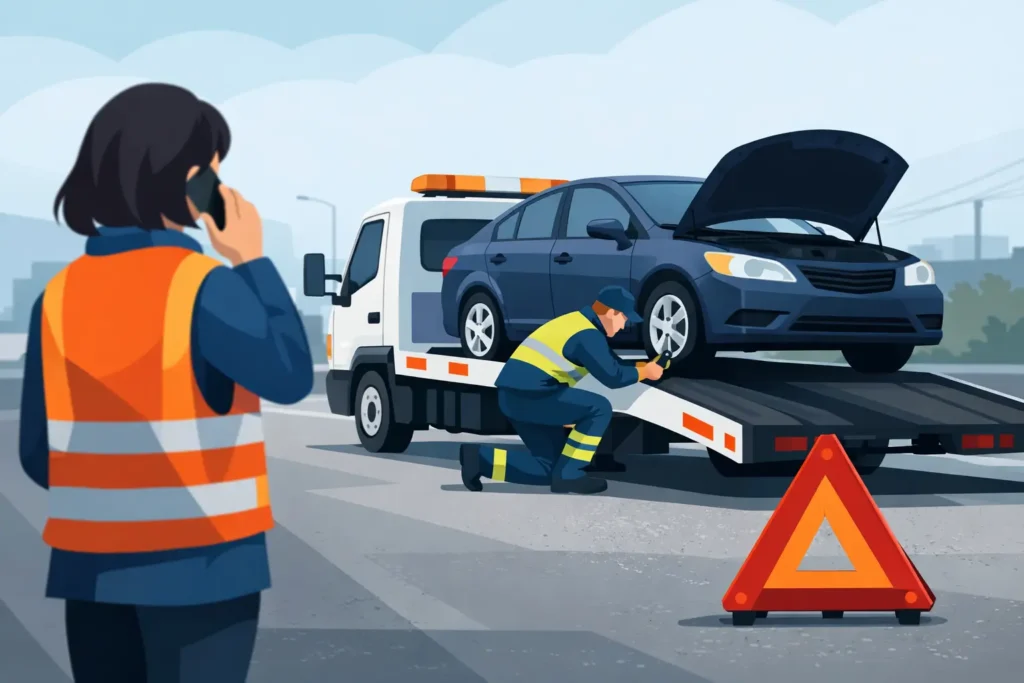
Reflective triangles or road flares can help when used correctly, but only place them if you can do so without walking near traffic. On a busy Tulsa highway, it is often safer to skip that step than to risk being struck. A reflective vest is useful if you must be outside, though it does not make a roadside shoulder safe.
At night, be cautious about accepting help from strangers. A well-meaning person may offer a jumpstart or tire change, but you are allowed to decline and wait for the service you called. Keep doors locked, crack the window only if necessary, and let the person know help is already on the way.
Call for the Right Kind of Help
Before calling roadside assistance or a tow truck, take a moment to identify your exact location. Look for cross streets, exit numbers, nearby businesses, mile markers, or recognizable landmarks. “Near Riverside” is helpful, but “northbound US 75 near the 61st Street exit” gives a dispatcher much more to work with.
Explain what happened in plain terms. Say whether the vehicle starts, whether it has a flat tire, whether it is locked, or whether it is stuck. Mention if you are in a garage, on a narrow shoulder, or in a place with limited access. The right information helps send the proper equipment and prevents delays once the truck arrives.
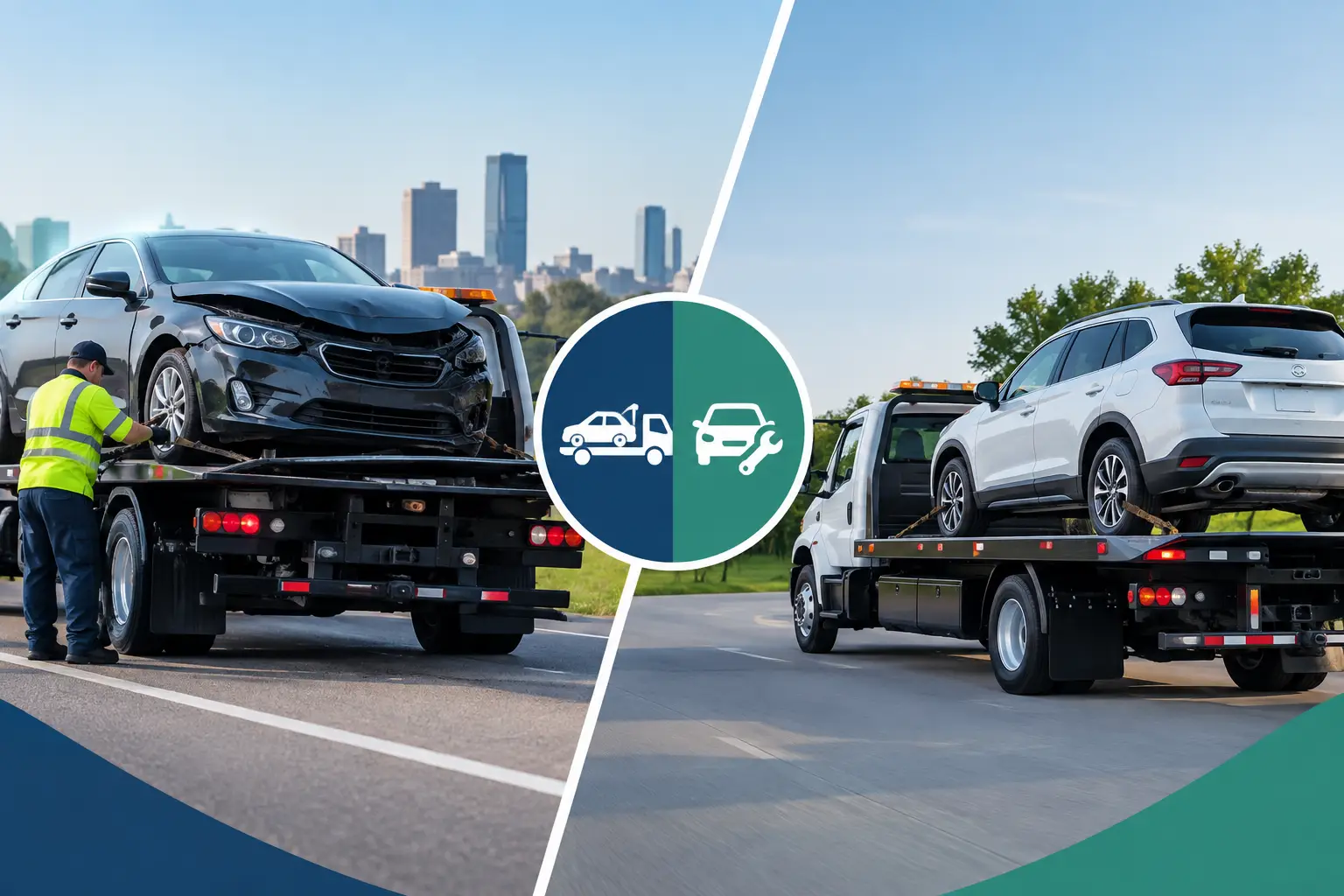
Also tell the dispatcher what you drive. Low-clearance cars, all-wheel-drive vehicles, heavy-duty pickups, and electric vehicles should not all be handled the same way. A flatbed is often the safest choice for a vehicle that cannot be driven, has accident damage, has drivetrain concerns, or needs careful EV transport.
If you are waiting with children, an older passenger, or someone with a medical concern, mention that too. It may affect the safest plan while you wait. In extreme Oklahoma heat or severe cold, the decision to remain inside the vehicle depends on your location, traffic exposure, and whether the vehicle can safely provide heat or air conditioning.
Waiting Safely for the Tow Truck
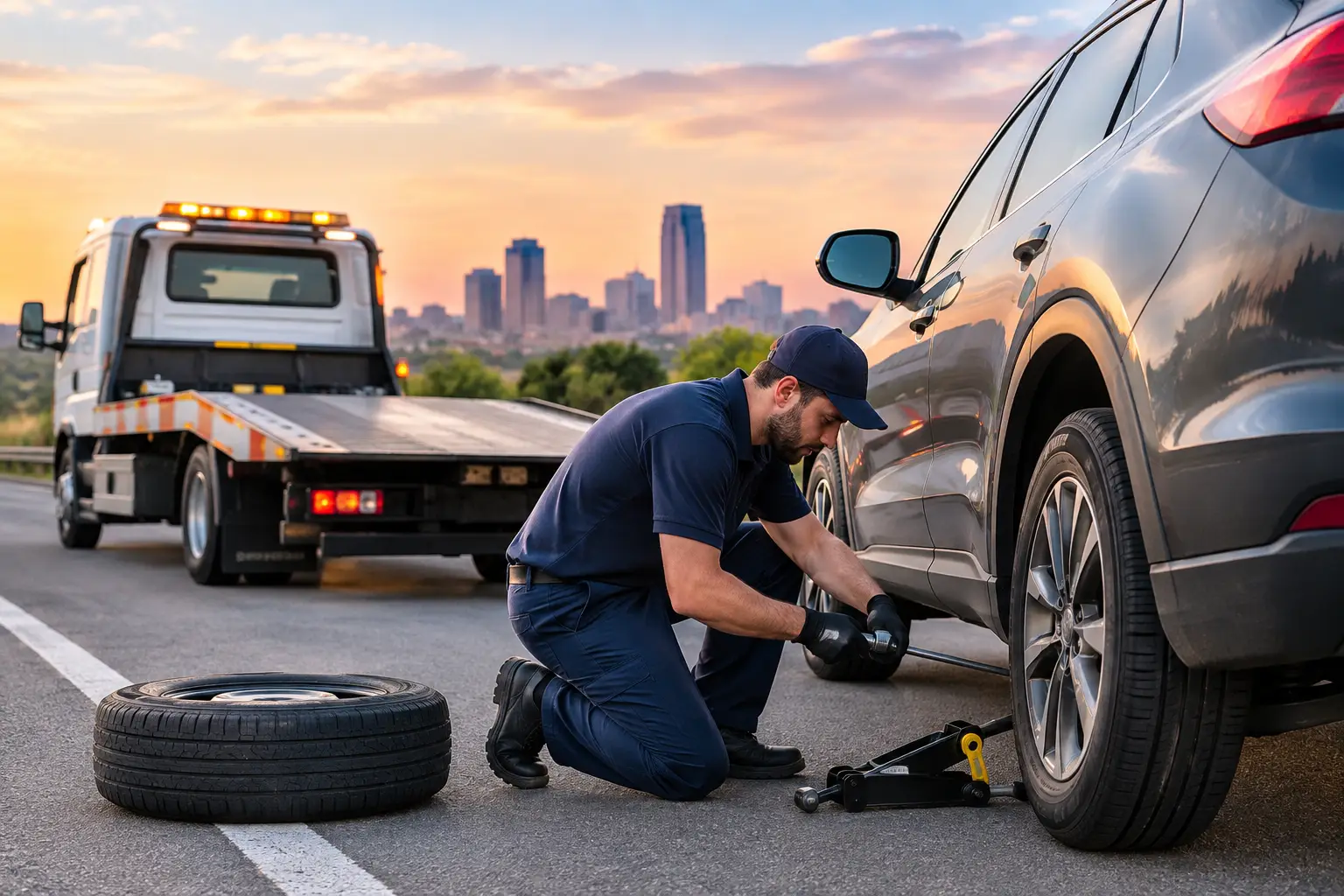
Once help is on the way, avoid trying multiple repairs unless the problem is simple and you are safely off the road. Repeated jump attempts can drain the battery further. Changing a tire on a soft shoulder, steep incline, or tight roadway can be more dangerous than the flat tire itself. A quick repair is not worth taking a risk next to traffic.
Keep your phone charged if possible and pay attention to your surroundings. If you need to use the phone, stay aware of vehicles, people approaching the car, and changing weather. Put away valuables that are visible through the windows, especially if you are stranded in a parking lot after dark.
When the tow truck arrives, confirm that it is the service you called before unlocking the vehicle or handing over keys. A professional operator should be able to identify the company, explain the plan, and tell you where the vehicle will be taken. Clear communication matters when your car is disabled and you are making decisions under pressure.
Let the operator know about any special concerns before loading starts. This includes a vehicle that is in park and will not shift, a damaged wheel, an electric vehicle, low ground clearance, or items you need to remove from the cabin. Do not remain inside the vehicle while it is being loaded unless the operator specifically directs you to do so for a safe reason.
A Few Items That Make Breakdowns Less Stressful
You do not need a full mechanic’s shop in the trunk. A small roadside kit can make waiting safer and more comfortable. Keep a charged phone cable, flashlight, water, basic first-aid supplies, reflective vest, rain jacket, and a paper copy of important contact information in the vehicle.
A tire pressure gauge and portable inflator can be useful for a slow leak when you are safely parked. Jumper cables can help in the right situation, but modern vehicles have sensitive electrical systems, and incorrect connections can create a more expensive problem. If you are unsure, wait for a trained roadside operator.
It also helps to keep your spare tire and jack accessible. If the trunk is packed so tightly that the spare cannot be reached, a routine flat becomes harder to handle. Check your spare periodically, because a flat spare does not solve much on the side of the road.
Safety Comes Before the Vehicle
Most breakdowns are manageable when the driver does not rush into a risky fix. Get visible, get out of traffic when possible, provide a clear location, and wait in the safest position available. That is the practical answer to how to stay safe during a breakdown.
For drivers in Tulsa and nearby communities, local road conditions can change quickly with traffic, storms, and construction. Tulsa Towing, powered by Neptune Towing, approaches each roadside call with the same goal: handle the vehicle carefully and help the driver get out of a difficult situation without adding another problem.
Your car can be repaired, transported, or dealt with later. Your first job at a breakdown scene is simply to make sure everyone gets home safely.