A car does not have to be stranded on the side of I-44 to need a tow. A lot of short distance towing Tulsa calls come from parking lots, apartment complexes, driveways, and repair shop runs across town. The problem is usually simple. The vehicle will not move safely, and you need it transported without turning a small issue into body damage, suspension damage, or a bigger repair bill.
That is where local towing matters. Short city tows sound easy, but they are often the jobs where careful handling makes the biggest difference. Moving a disabled car three miles to a shop is still a real tow. The equipment still needs to fit the vehicle. The loading angle still matters. And the driver still needs to know how to get in, load up, secure it properly, and deliver it where it needs to go without wasting time.
When short distance towing in Tulsa makes sense
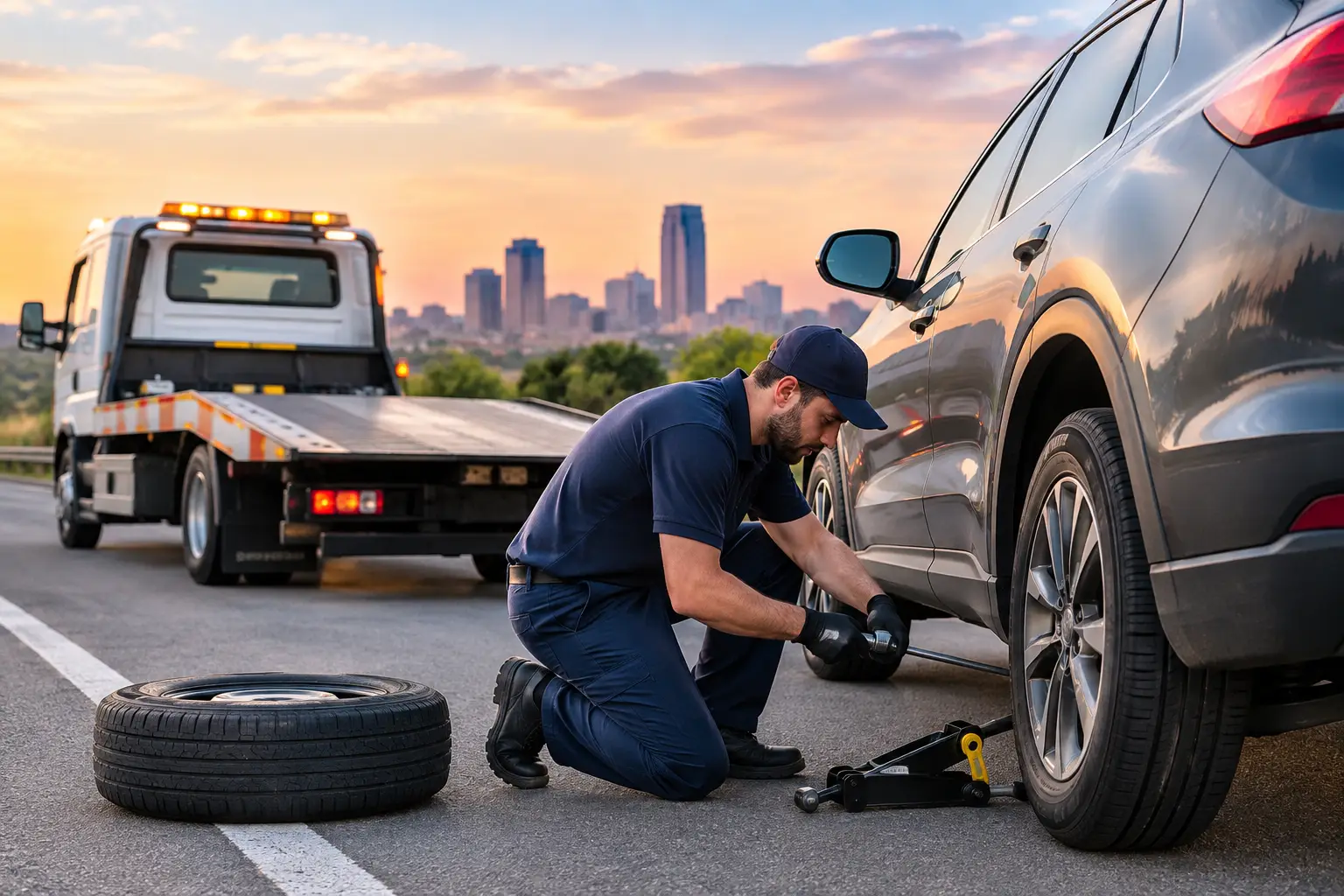
Short tows are common when a vehicle is close to home, close to a mechanic, or stuck somewhere it cannot stay. That includes dead batteries that turned into a no-start issue, overheating in traffic, flat tires without a usable spare, minor accident damage, steering or suspension problems, and vehicles that simply quit in a parking lot.
A lot of people assume a friend with a strap can handle a short move. Sometimes that is exactly how damage happens. If the brakes are weak, the steering is compromised, or the transmission is already having trouble, dragging it even a short distance is a risk. The same goes for low clearance cars, trucks with wheel damage, and electric vehicles that should not be pulled the wrong way.
In Tulsa, these calls often happen in real everyday spots – outside an office near Memorial, in a crowded retail lot around Tulsa Hills, on a narrow street in Midtown, or in stop and go traffic along US 75. The tow may be short, but the loading conditions are not always simple.
Why a short tow still needs the right equipment
One of the biggest misunderstandings with short distance towing tulsa searches is the idea that a local move can be handled with whatever truck is available. That is not a good assumption. Distance does not change the basics of safe towing.
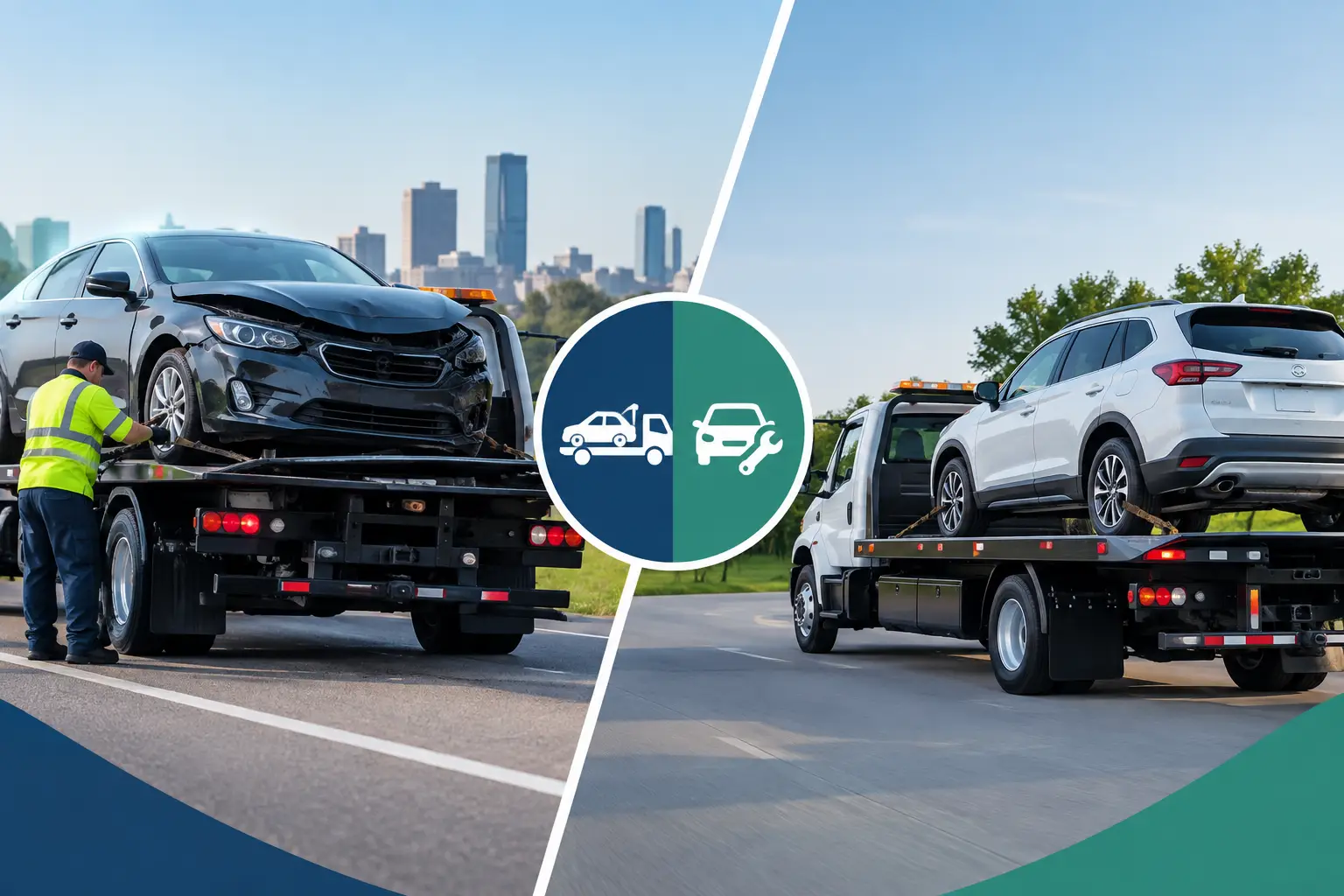
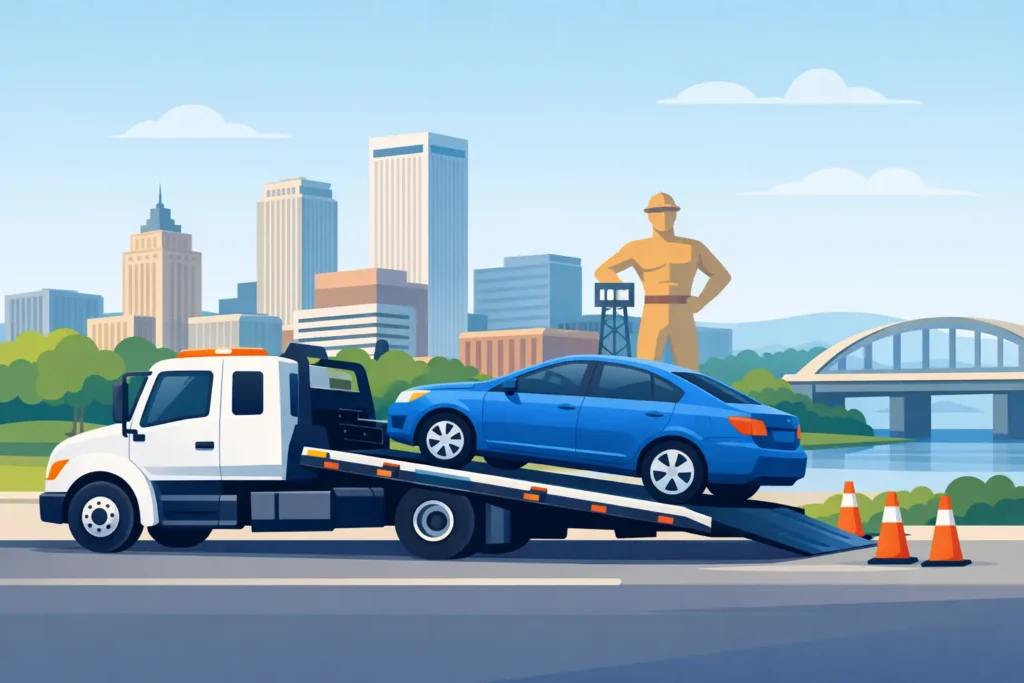
A proper flatbed matters because it keeps the vehicle fully off the ground during transport. That is especially important for all-wheel drive vehicles, EVs, low profile cars, and vehicles with damage that makes rolling or pulling unsafe. If the car is already in a vulnerable condition, the wrong tow method can add stress to parts that are already compromised.
Short tows also tend to involve tighter spaces. Parking garages, apartment lots, alley access, and packed curbside locations leave less room for rushed decisions. A careful operator looks at approach angle, wheel position, vehicle height, ground clearance, and where the car is being delivered before the truck even starts loading.
That is the difference between just moving a vehicle and moving it the right way.
What happens during a short distance towing Tulsa call
The process should be straightforward. You call, explain where the vehicle is, what it is doing, and where it needs to go. From there, the goal is to dispatch the right truck, not just the nearest one. If the car is in a garage, has front end damage, will not shift into neutral, or is an EV, that matters right away.
Once on site, the tow operator confirms the condition of the vehicle and the safest loading method. In some cases, roadside help solves the issue and a tow is not needed. In others, the vehicle is loaded directly onto the flatbed and secured for transport to a local shop, dealership, tire store, body shop, or home.
For city towing, communication matters almost as much as equipment. If you are stuck in a busy area, you want to know what is happening, how the vehicle will be handled, and where it is going. Clear answers reduce stress fast.
Short distance towing is often about preventing more damage
Many local tows start with a vehicle that technically still moves, but should not be driven. That could be a car that overheated and cooled down, a truck with a tire that shredded near the rim, or a vehicle that was bumped in a collision and now pulls hard to one side. It may be possible to limp it down the road. That does not mean it is a good idea.
Driving a damaged vehicle a few extra miles can turn one repair into several. A bad wheel bearing can lock up. A cooling issue can turn into engine damage. A suspension problem can affect steering control. Even something as basic as a low tire in city traffic can ruin a wheel if the distance is ignored because it is only a couple of miles.
Short towing works best when it is treated as a preventative step, not a last resort.
The vehicles that need extra care
Not every vehicle loads the same way. That matters more than people think, especially on shorter jobs where there is a temptation to rush through the setup.
Low clearance sedans and sports cars need the right loading angle to avoid scraping. Pickup trucks can be heavier and harder to position in tight areas. Electric vehicles need proper handling based on drivetrain and manufacturer requirements. A Tesla, for example, should not be treated like a basic gas sedan with a simple pull and go approach.
Even standard daily drivers can become tricky when they are locked up, parked awkwardly, or disabled in a place with little room around them. Experience shows up in those moments. The job is not just getting the vehicle onto the bed. It is doing it without adding cosmetic damage or creating a new mechanical problem.
Local response matters on a short tow
A short tow should feel simple for the customer. The problem is local, the destination is local, and the route is local. That is exactly why familiarity with Tulsa roads, traffic patterns, and common breakdown areas helps.
If a vehicle is stuck near Riverside during heavy traffic, outside a downtown garage, or on a busy stretch of Highway 169, response and access are part of the job. So is knowing the practical route to a nearby repair shop without adding unnecessary delays. The same goes for service in Jenks, Bixby, or Broken Arrow when availability allows and a local transport is the right fit.
Short distance towing is usually time sensitive, not because of the mileage, but because the vehicle is in the way, unsafe to drive, or sitting somewhere it cannot stay long.
How to know if you need a tow or roadside help
There are times when roadside service is enough. A jumpstart, tire change, lockout service, or winch-out can solve the issue without loading the vehicle. But if the vehicle still will not move safely after that, towing is the better call.
A good rule is simple. If driving it could risk your safety or worsen the damage, tow it. If the vehicle cannot steer correctly, brake correctly, stay running, or roll normally, it should not be pushed through city traffic just because the destination is close.
That is also why many local drivers prefer a company focused on transport and roadside help rather than adding extra complications. Tulsa Towing, powered by Neptune Towing, keeps the process straightforward – dispatch the truck, handle the problem on site if possible, or transport the vehicle safely where you want it to go.
What drivers usually want to know before they call
Most people dealing with a short local tow want quick answers to a few basic questions. Can the truck reach the vehicle where it is parked? Can it handle my type of car or truck? Can it take the vehicle to my mechanic, dealership, or house? And how soon can someone get there?
Those are the right questions. A towing call should not feel complicated. The main thing is making sure the operator understands the vehicle condition, the pickup spot, and the destination before arriving. That avoids delays and helps the tow go smoothly from the start.
If your vehicle is disabled and the destination is only a few miles away, that does not make it less of a towing job. It just means the job needs to be done efficiently, carefully, and without adding more stress than you already have.
When a car will not move, close by is still too far to risk driving it. Getting it loaded the right way and delivered safely is usually the fastest path back to normal.