A dead battery in a store parking lot is one thing. A car that shut off in traffic on US 75 is something else entirely. When drivers search for tow truck or roadside assistance, they are usually trying to make a fast decision under stress, and the right call depends on whether the vehicle can be safely fixed where it sits.
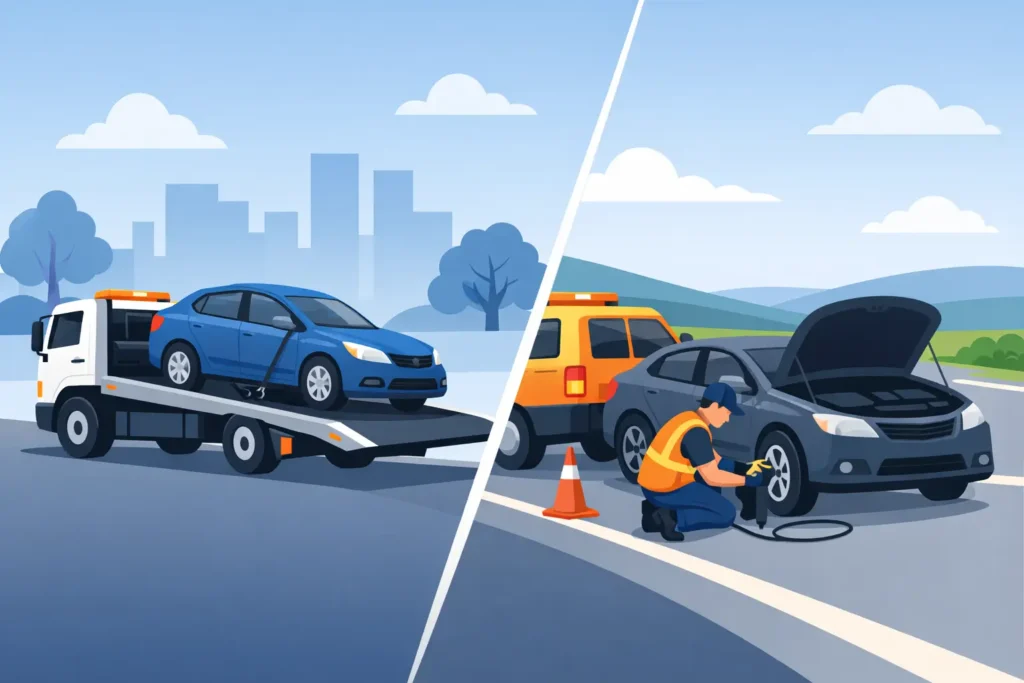
Tow truck or roadside assistance: what is the difference?
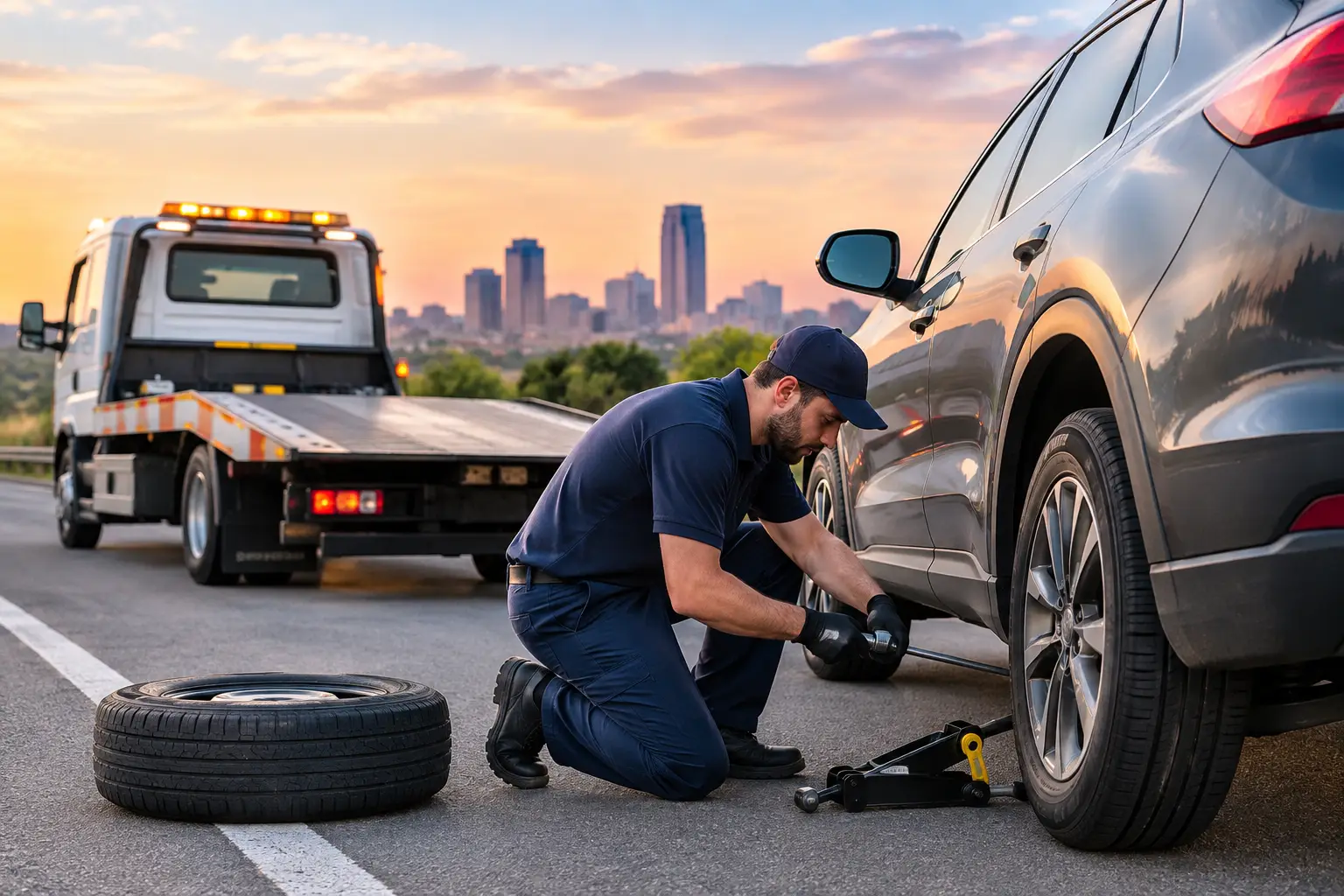
Roadside assistance is for problems that can often be handled on site. That usually means a jumpstart, flat tire help, a lockout, or a winch-out if the vehicle is stuck but otherwise drivable. The goal is simple – get you moving again without needing transport.
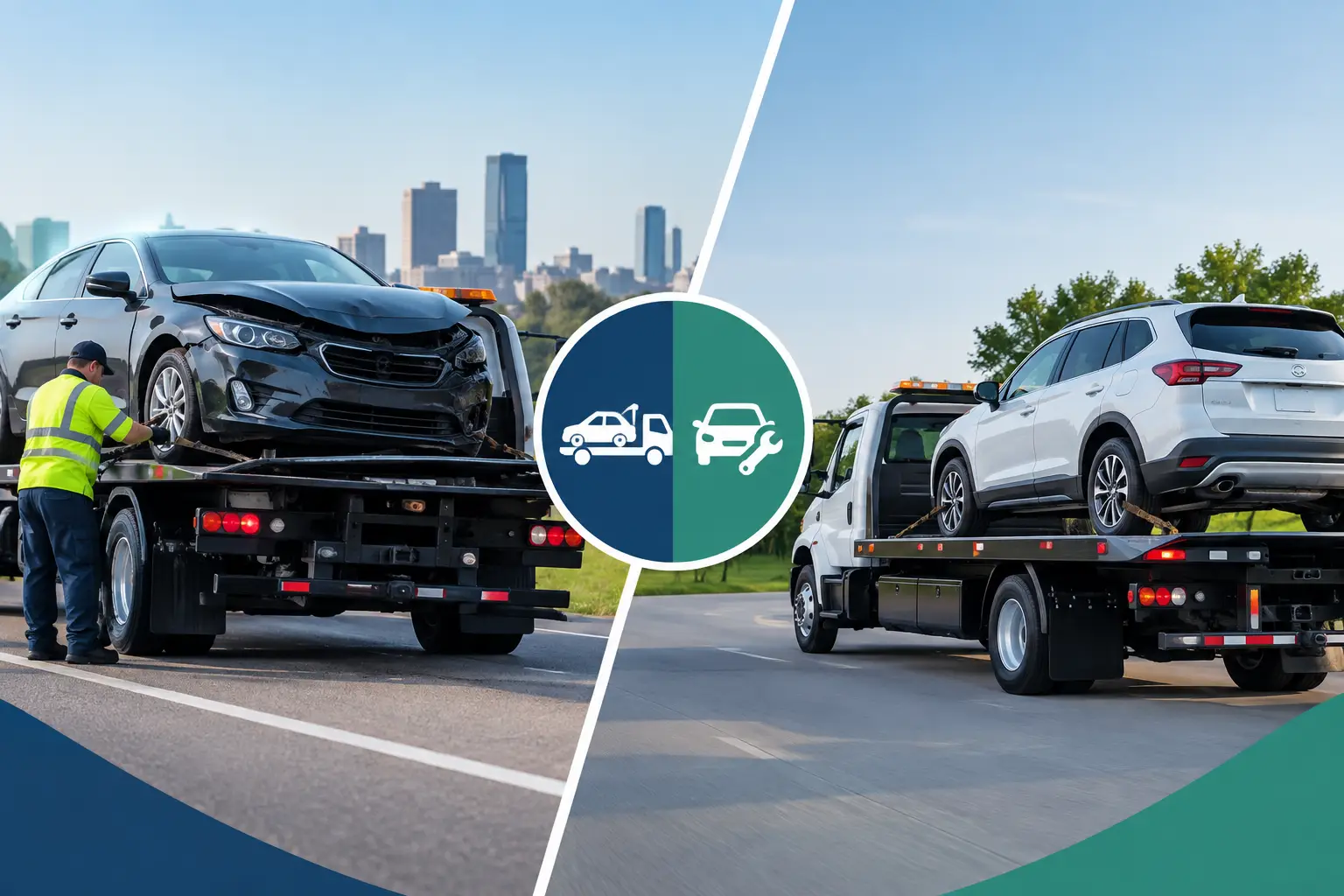
A tow truck is the better choice when the vehicle is not safe to drive, will not restart, has collision damage, has a mechanical failure, or needs to go to a shop or dealership. In those cases, trying to force a roadside fix can waste time and create more risk.
The confusion comes from the fact that both services often start with the same phone call. A driver may not know whether the issue is a dead battery, a failed starter, a blown tire, or something more serious. That is why clear communication matters. An experienced dispatcher or operator should ask the right questions and help narrow down whether the issue can be solved on site or whether transport is the safer move.
When roadside assistance makes sense
If the problem is isolated and the rest of the vehicle is in good shape, roadside assistance is usually the practical option. A battery that died because interior lights were left on can often be handled with a jumpstart. A flat tire can sometimes be changed on site if the spare is usable and the vehicle is in a safe location. Lockouts are another common call where a tow is unnecessary.
There are also situations where a vehicle is stuck rather than broken. After heavy rain, cars slide off shoulders, get hung up in soft ground, or end up in spots where they cannot move under their own power. In that case, a winch-out may be all that is needed if the vehicle did not suffer damage and can still be driven safely afterward.
The trade-off is that roadside assistance only works if the problem is limited. If the battery is not the real issue, if the tire damage is worse than it first looked, or if the vehicle has suspension or steering damage, the call can shift from roadside to towing pretty quickly.
A few signs roadside help may be enough
If the engine ran normally before the battery died, if you know the tire issue is limited to one flat, or if you simply locked the keys inside, roadside service is usually the first place to start. The vehicle stays where it is, the issue gets addressed, and you avoid an unnecessary tow.
That said, location matters. A simple flat tire on a quiet residential street is very different from a flat on I-44 shoulder traffic. Even a basic roadside job can become unsafe depending on where the vehicle is sitting.
When a tow truck is the better call
A tow is the right move when there is doubt about whether the vehicle should be driven at all. If the engine overheated, if the transmission failed, if the car was in an accident, or if warning lights came on along with loss of power, getting it transported is usually the smarter choice.
This is especially true with modern vehicles. Some cars will start but still should not be driven. Low oil pressure, cooling system failure, electrical issues, or drivetrain faults can turn a short trip into a major repair bill. Electric vehicles add another layer. They need to be handled correctly, and not every disabled EV should be dragged or moved like a standard gas vehicle.
A proper flatbed tow also matters for low-clearance cars, all-wheel-drive vehicles, heavy-duty pickups, and vehicles with wheel or suspension damage. The issue is not just getting the car from point A to point B. It is getting it there without scraping, pulling, or causing more damage in the process.
Situations where towing is usually the safer answer
If the vehicle will not stay running, if there was an accident, if you hear grinding or knocking, or if a wheel, axle, or suspension part looks off, a tow is usually the right call. The same goes for any situation where the car is stranded in a place that creates a safety problem for you or other drivers.
In busy Tulsa traffic areas, that can matter more than the original breakdown. A car stopped near an exit ramp, in a tight parking garage, or along a major corridor may need to be loaded and moved quickly even if the repair itself seems minor.
The safety question matters more than the symptom
Drivers often focus on the problem they can see – flat tire, dead battery, stuck vehicle. What matters just as much is where the vehicle is and what condition it is in overall. A jumpstart in a secure parking lot is straightforward. A jumpstart on a narrow shoulder at night is not.
That is one reason experienced towing companies do not treat every call the same. The answer is not always based on the symptom alone. It depends on traffic, vehicle type, weather, road position, and whether the vehicle can be handled without putting anyone at risk.
Sometimes the fastest option is roadside assistance. Sometimes the faster overall solution is to tow it immediately instead of spending extra time trying a fix that may not hold. If a car keeps stalling, if a damaged tire cannot support the vehicle, or if a battery jump only gets it running for a minute, the tow saves time in the long run.
Why proper equipment changes the decision
Not every disabled vehicle should be handled the same way. That is where experience and equipment come in. Flatbed towing is often the safest choice for damage-free transport, especially for vehicles with low ground clearance, EVs, trucks, and cars with unknown mechanical issues.
A rushed hookup can create a second problem on top of the first one. Scraped bumpers, underbody damage, and improper loading usually happen when the operator treats every vehicle like a standard pull-and-go job. Real towing work is more specific than that.
Roadside assistance also has limits. If a lug nut is seized, if the spare is unsafe, if the battery is completely failed, or if the vehicle is in a position that cannot be worked on safely, the call may still end in a tow. That is not a mistake. It is part of making the right decision based on the actual condition of the vehicle.
What to tell the dispatcher
If you are trying to decide between tow truck or roadside assistance, the best thing you can do is give a clear description of what happened. Say whether the car starts, whether it moves, whether there was an accident, and where the vehicle is sitting. Mention if it is an EV, a truck, a low-clearance car, or if it is stuck in mud, a curb, or a garage.
Those details help determine what equipment needs to be sent and whether the problem can likely be handled on site. It also helps avoid delays from sending the wrong setup first.
One thing drivers appreciate is simple answers. If the issue can be solved on scene, that should be the plan. If it needs transport, that should be explained clearly. Tulsa Towing, powered by Neptune Towing, is built around that kind of straightforward service – assess the situation, send the right truck, handle the vehicle carefully, and keep the process simple.
The right choice is the one that gets you out safely
If the vehicle can be fixed where it sits and driven safely afterward, roadside assistance makes sense. If it cannot, or if there is any real question about safety, a tow truck is usually the better call. The goal is not to force one option. It is to solve the problem without adding another one.
When you are stranded, the best decision is the one that gets the vehicle handled correctly the first time and gets you out of traffic, out of uncertainty, and on to the next step.