A dead battery in a grocery store lot is one thing. Losing power on I-44 with traffic moving fast around you is different. In either case, this guide to emergency towing is built for the moment when your vehicle will not move safely and you need to make the next decision without wasting time.
Most drivers do not think about towing until they actually need it. That is usually when the stress starts. You are trying to stay safe, figure out what failed, decide whether roadside help is enough, and make sure your vehicle is handled the right way. The towing part should make things simpler, not add more problems.
What emergency towing actually means
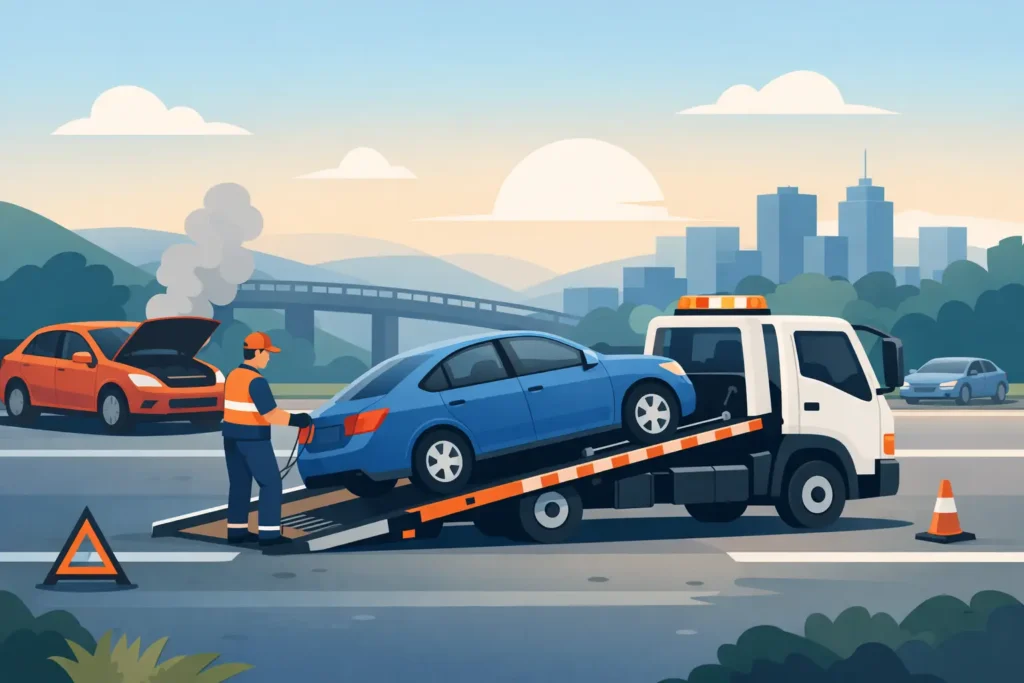
Emergency towing is not just any tow. It usually involves a breakdown, accident, disabled vehicle, or a situation where the car cannot stay where it is. Sometimes that means a no-start in a parking lot. Sometimes it means a truck with front-end damage on a busy road. In other cases, the vehicle is stuck, has a blown tire in a bad location, or has an electrical issue that makes it unsafe to drive.
The main question is simple. Can the vehicle be moved safely under its own power? If the answer is no, towing is often the right call.
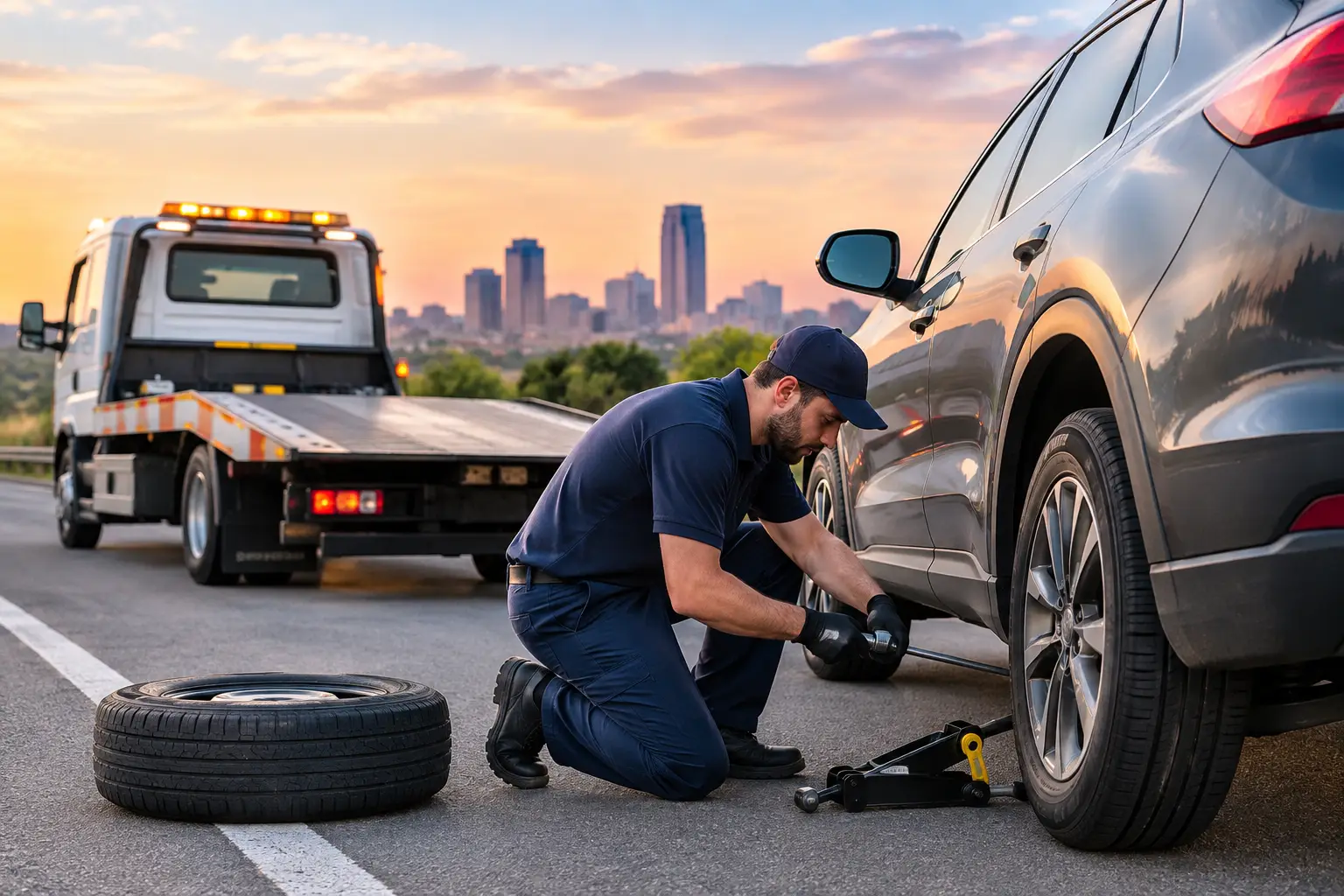
That does not mean every problem needs a full tow. A jumpstart, tire change, lockout service, or winch-out may solve it on site. But when the vehicle has mechanical damage, collision damage, steering problems, suspension issues, or drivetrain trouble, trying to force it to move can make the situation worse.
First steps before emergency towing begins
If your vehicle stops in traffic or on the shoulder, safety comes first. Turn on your hazard lights right away. If you can move the vehicle out of traffic without causing more damage or putting yourself at risk, do that. If you cannot, stay calm and avoid standing near moving traffic.
If you are in a relatively safe spot, gather the basic details before you call for help. Know your location as clearly as possible. Highway, cross street, nearby business, direction of travel, or a recognizable landmark all help. In Tulsa, that can make a real difference when you are on a corridor like US 75, Memorial, or Highway 169 and traffic is moving.
You should also be ready to describe the vehicle and the problem. The year, make, and model matter. So does whether it is all-wheel drive, oversized, lowered, electric, or damaged in a way that affects loading. That information helps send the right truck and avoid delays.
A practical guide to emergency towing decisions
One of the biggest mistakes drivers make is assuming any tow truck can handle any vehicle. That is not how it works in the real world. A compact sedan with a dead battery is one kind of call. A heavy-duty pickup with suspension damage or an EV with special towing requirements is another.
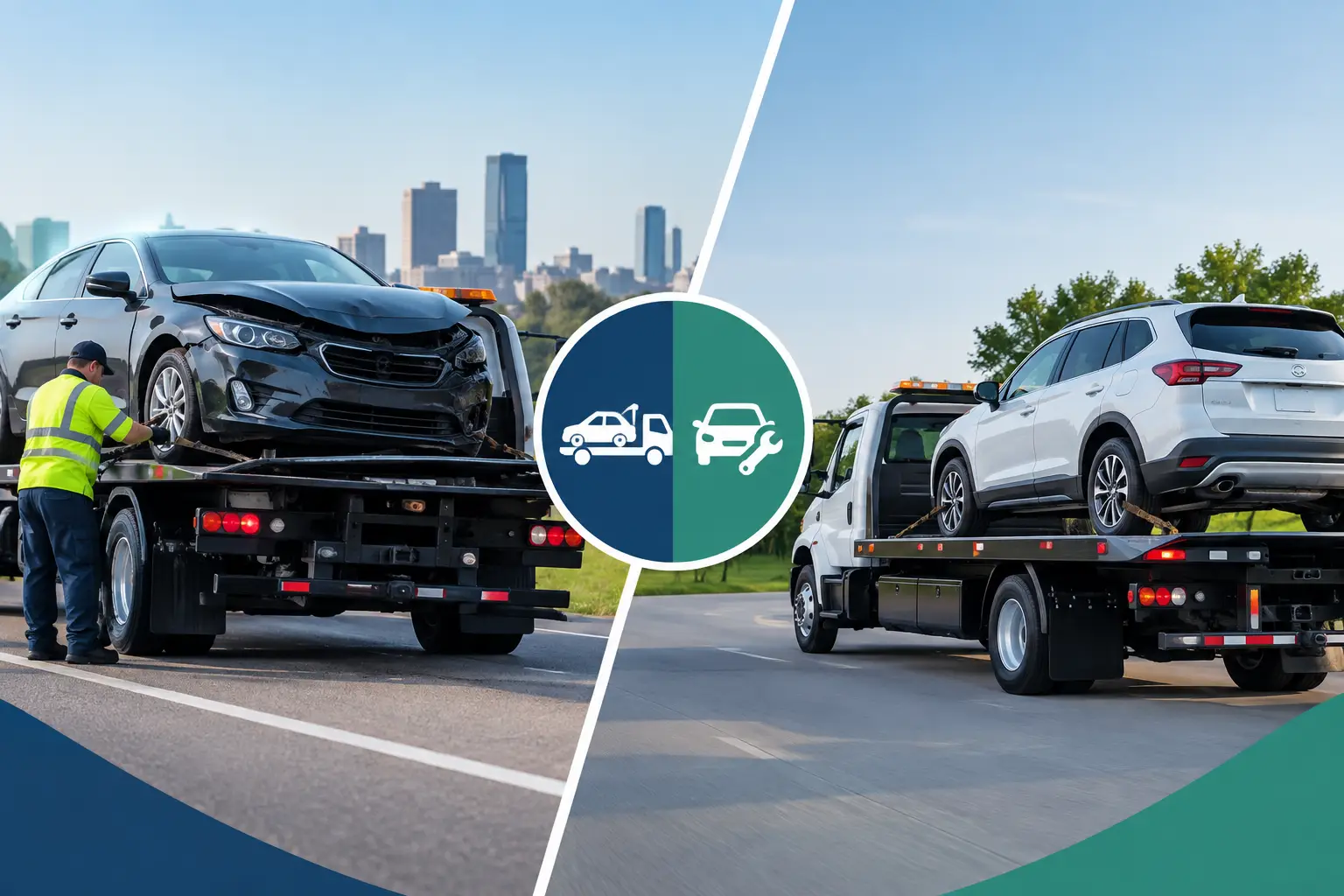
Flatbed towing is often the safest choice for emergency situations because the entire vehicle is loaded off the ground. That matters when a car has unknown mechanical damage, low ground clearance, accident damage, or wheels that should not be rolling. It also matters for many electric vehicles, where improper towing can create expensive problems fast.
The trade-off is that proper loading can take a little more care, especially in tight places like parking garages, steep driveways, or crowded apartment lots. That extra care is usually a good thing. Fast is important, but rushed handling is not the same as efficient handling.
If the issue might be solved roadside, it is reasonable to ask whether on-site help is possible first. But if the vehicle is clearly not safe to drive, asking for a tow upfront can save time and prevent repeat calls.
What to expect when you call
A good emergency towing call should feel straightforward. You explain where you are, what the vehicle is, and what happened. From there, the dispatcher or driver should tell you what kind of help makes sense and where the vehicle can be taken.
You may be asked whether you want the vehicle brought home, to a repair shop, or to a dealership. If you already know where it needs to go, say that early. If you are not sure, it helps to mention whether the problem seems electrical, collision-related, or mechanical, since that can affect where the vehicle should be delivered.
Clear communication matters more than people realize. If your car is stuck in a parking deck, facing the wrong direction on a shoulder, or locked in park, that changes how the job is handled. The more accurate the details, the smoother the tow usually goes.
How to protect your vehicle during an emergency tow
Drivers are often worried about one thing above all else – that the tow itself will cause damage. That concern is fair. Emergency towing should solve a problem, not create a second one.
Before loading starts, remove anything you need right away from the vehicle if it is safe to do so. That may include your phone charger, wallet, medication, work bag, or child items. Take a quick look around the vehicle and note any obvious damage if the car has been in an accident or is already scraped up. It is not about making the scene more complicated. It is about staying aware.
If your vehicle has special features, mention them. Low spoilers, disabled air suspension, aftermarket wheels, push-button ignition, and EV battery concerns can all affect loading. The right equipment and the right approach matter a lot more than people think.
This is also where experience shows. Loading a standard sedan is different from loading a Tesla, a long-wheelbase truck, or a vehicle with broken steering components. The process should look controlled, not improvised.
Common emergency towing situations
Breakdowns are the most common reason people need an emergency tow, but they are not all the same. An overheated engine may still roll normally but should not keep driving. A transmission failure may leave the vehicle unable to move at all. After an accident, even minor-looking damage can hide bent components or fluid leaks that make driving unsafe.
Tire problems are another gray area. If you have a safe place to stop and a usable spare, roadside tire help may be enough. If the tire failure damaged the wheel, happened in an unsafe location, or affected multiple tires, towing may be the better move.
Winch-out situations also come up more than people expect, especially after rain, on soft shoulders, or in uneven residential areas. Sometimes the vehicle is not broken. It is just stuck in a position where trying to power out only makes it worse.
Local conditions can change the right call
Emergency towing decisions depend on where the vehicle is sitting. A breakdown in your driveway gives you more options than a disabled car in traffic near downtown or on a narrow shoulder during rush hour. Time of day, road layout, and weather all matter.
In Tulsa and nearby areas like Jenks, Bixby, and Broken Arrow, a vehicle on a major route can go from manageable to risky fast. That is why local route knowledge helps. Knowing the access points, traffic flow, and safe loading areas can shorten the overall job even when the tow itself requires extra care.
That local part is easy to overlook until you need help in a bad spot. A simple breakdown can become a safety issue when the vehicle is blocking traffic, sitting on a curve, or stranded in a place with limited shoulder space.
When roadside help is enough and when it is not
It depends on what failed and where you are. A dead battery, lockout, or simple flat tire can often be handled on site. That is the fastest outcome when it works. But roadside service is not the right answer if the vehicle has damage that affects steering, braking, drivetrain operation, or safe movement.
A lot of drivers try to avoid a tow because they hope the car will make it one more mile. Sometimes it does. Sometimes that decision turns a manageable repair into a much larger one. If the vehicle is making harsh noises, leaking fluid, dragging, overheating badly, or refusing to shift correctly, stop pushing it.
That is where an experienced towing company earns trust. Not by making the situation sound dramatic, but by being clear about what can be handled safely on site and what should be transported without risking more damage. Tulsa Towing is built around that kind of straightforward service.
The best thing you can do in an emergency towing situation is keep the next step simple. Get yourself safe, give clear details, and choose help that knows how to move your vehicle without adding to the problem. When a car is already having a bad day, careful handling matters just as much as quick response.