A breakdown in Bixby usually happens at the worst possible time. It might be on the way to work, after school pickup, or while trying to get home before traffic gets worse on Memorial or US 75. When you need emergency towing Bixby area service, the main question is simple: how fast can someone get there, handle the vehicle correctly, and get it where it needs to go without adding more stress to the situation?
That is what matters in a real tow. Not fancy promises. Not a long sales pitch. Just clear communication, proper equipment, and a driver who knows how to load your vehicle safely.
When emergency towing in the Bixby area is the right call
Some situations are obvious. If the car will not start, will not stay running, has been in an accident, or cannot be driven safely, towing is the right move. The same goes for steering issues, overheating, major tire damage, suspension problems, or anything leaking underneath the vehicle.
Other situations are less clear. A car might still move, but that does not always mean it should be driven. If the vehicle is making a grinding noise, dragging low, showing battery or charging faults, or feels unstable in traffic, trying to push it a few more miles can turn a manageable problem into a more expensive one.
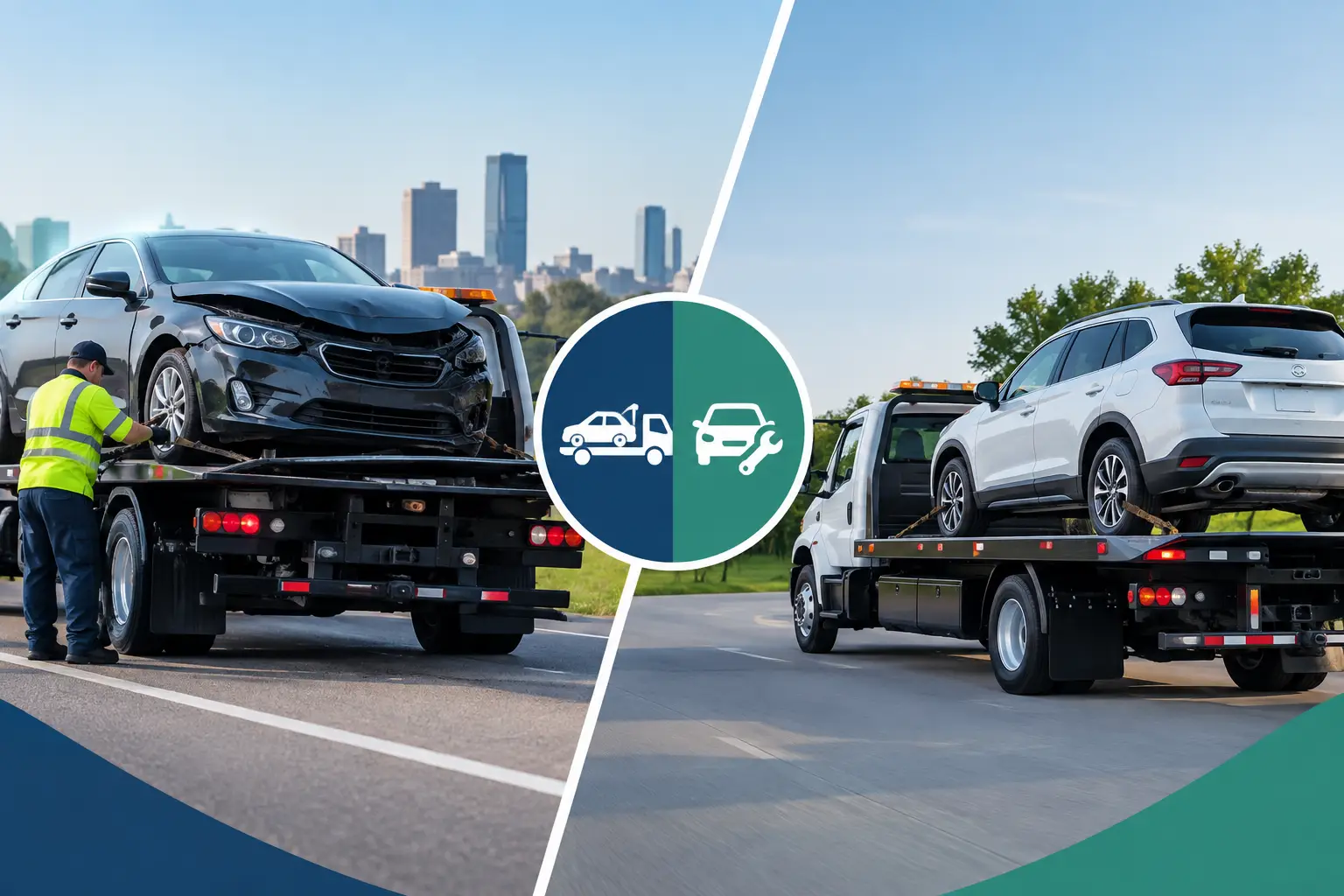
That is especially true with newer vehicles, low-clearance cars, trucks, and EVs. These are not vehicles you want rushed onto the wrong equipment. In many cases, flatbed towing is the safest option because it keeps all four wheels off the road and reduces the chance of added wear or damage during transport.
What drivers usually need in an emergency towing Bixby area call
Most emergency calls are not complicated. The driver needs help now, wants to know whether service is available, and needs a straight answer on what happens next. That usually starts with a few basic details: your location, the type of vehicle, what the problem is, and where you want the vehicle taken.
If the vehicle is stuck in a parking lot, on the shoulder, in a neighborhood, or in a tight area, that matters too. Access changes how the truck approaches the job. A tight apartment lot is different from a wide roadside shoulder. A pickup with front-end damage is different from a Tesla with low clearance. The details help the tow operator bring the right setup and avoid delays.
Good emergency service should also include clear communication. If you are waiting with kids in the car, standing near traffic, or stuck somewhere after dark, you do not want vague updates. You want to know a truck has been dispatched, what kind of help is coming, and what to do while you wait.
Why proper towing equipment matters more than people think
A lot of towing problems do not come from the original breakdown. They come from how the vehicle gets handled afterward.
That is why equipment matters. Flatbed towing gives more control during loading and transport, especially for all-wheel drive vehicles, EVs, lowered cars, and vehicles with accident damage. It also helps in situations where rolling the vehicle normally could make things worse.
The other part is experience. A tow operator should know how to deal with low approach angles, locked steering, dead batteries, damaged wheels, and vehicles that cannot be shifted easily. On paper, towing sounds simple. On the street, every job is a little different.
A careful operator looks at the angle, the ground surface, the wheel position, and the condition of the vehicle before loading. That extra minute matters. It is often the difference between a clean tow and avoidable damage.
Common emergency situations around Bixby
In and around Bixby, emergency towing calls usually come from a few familiar situations. Commuter traffic, school routes, shopping areas, and connector roads all create their own problems. A dead battery in a driveway is one thing. A disabled vehicle near a busy intersection or along a high-traffic route is another.
Accident towing is one of the more urgent examples. Even if the damage looks minor, the vehicle may not be safe to drive. Bumpers rub on tires, coolant starts leaking, or the steering is off just enough to make the next mile risky. In those cases, getting the vehicle loaded and moved to a repair shop or dealership is usually the smart call.
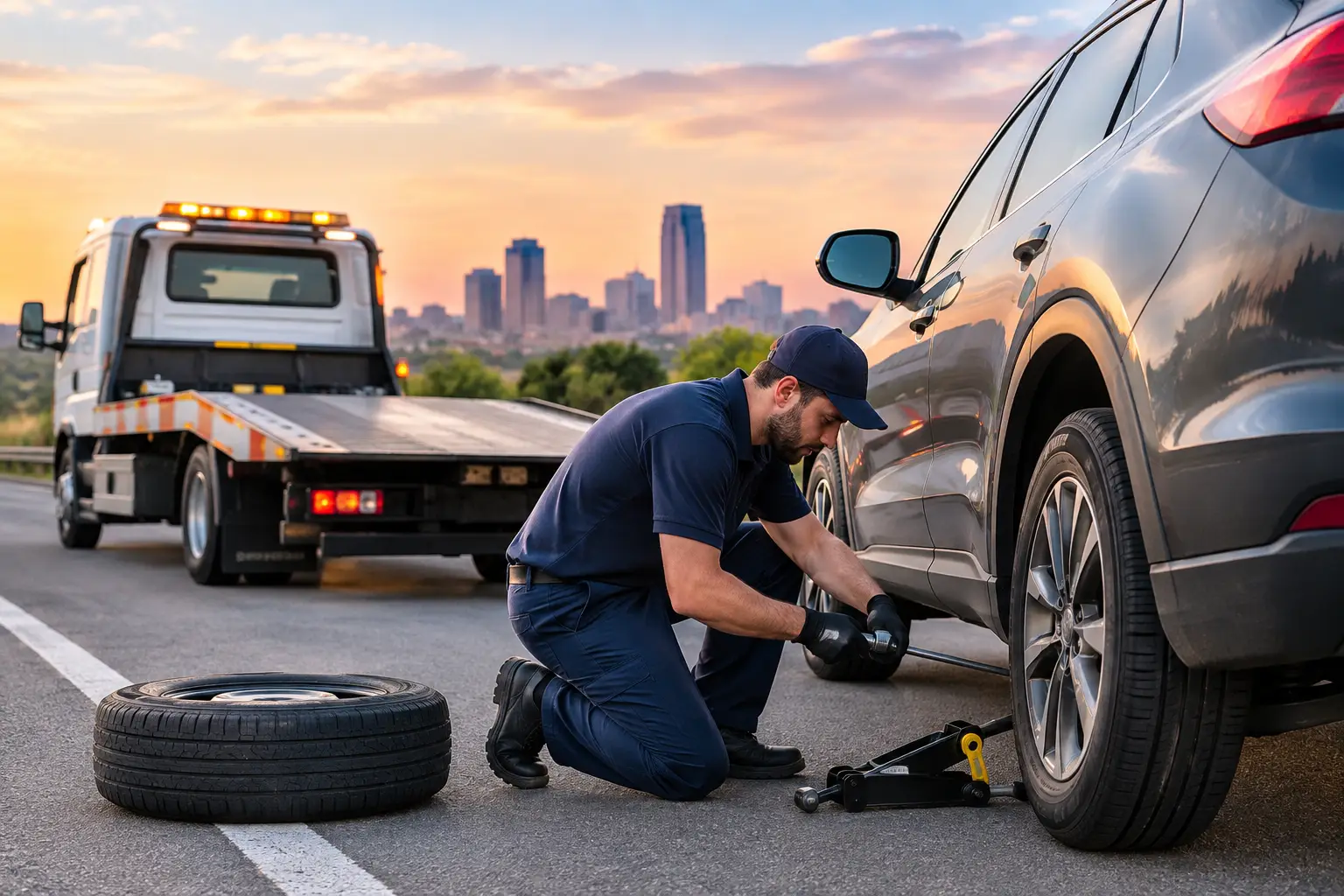
Breakdowns are just as common. Starter failure, overheating, blown tires, suspension issues, and no-start conditions happen every day. Sometimes roadside assistance solves it on site with a jumpstart or tire change. Sometimes the problem goes beyond that and the vehicle needs transport.
There are also winch-out situations. A vehicle may be stuck in mud, off pavement, or in a position where it cannot move out safely on its own. That takes a controlled recovery, not guesswork.
What to do while you wait for the tow truck
If your vehicle is in a safe location, stay with it unless the area feels unsafe. If you are close to moving traffic, your safety comes first. Move away from the roadway if possible and keep passengers out of danger. Turn on hazard lights if they still work.
When you call, give the most accurate location you can. Nearby intersections, business names, landmarks, or the side of the road you are on can all help. In an emergency towing call, small details save time.
It also helps to remove anything urgent from the vehicle before transport, like medication, wallets, keys, or work items you need right away. If the car is going to a repair shop, make sure you know the destination before the truck arrives. That keeps the process moving.
If the vehicle has special conditions, mention them early. That includes all-wheel drive, low clearance, a dead battery, collision damage, or if the wheels are locked. None of that is unusual, but it does affect how the job is handled.
Local response matters in the Bixby area
Towing is one of those services where local coverage really matters. The closer and more focused the service area, the easier it is to dispatch efficiently, avoid confusion, and get to the job without wasting time.
That is especially true in the Tulsa and Bixby area, where traffic patterns can change quickly depending on the time of day, school traffic, road construction, and highway congestion. A local operator has a better feel for how to reach a disabled vehicle safely and which routes make sense for transport afterward.
That local knowledge also helps with loading conditions. Some vehicles are stuck in parking garages. Others are in tight residential drives, apartment lots, or uneven roadside shoulders. These are normal calls, but they go smoother when the person handling the truck has real experience with the area and with the kind of vehicles drivers actually use here.
Not every emergency call ends with a full tow
Sometimes the fix is simple. A dead battery can be jumped. A flat tire can be changed. A lockout can be handled on site. If the problem can be solved safely without transport, that saves time and gets you moving again.
But it depends on the condition of the vehicle. If the battery is fully failed, the tire damage is severe, or the vehicle has another issue behind the first one, towing may still be the safer choice. The goal is not to force a tow when roadside help will do. The goal is to handle the situation correctly and avoid a second breakdown ten minutes later.
That practical approach matters when people are already stressed. They do not need extra complications. They need someone to assess the problem honestly and explain the next step in plain language.
Choosing a towing service when you need help now
When drivers search for emergency towing in the Bixby area, they are usually looking for three things right away: availability, clear communication, and confidence that the vehicle will be handled carefully. Those are the basics, but they are what matter most when you are stranded.
A good towing company should be able to tell you whether they service your location, what kind of assistance fits the problem, and what the process looks like from pickup to drop-off. That is true whether the vehicle is going to your house, a local shop, or a dealership.
Tulsa Towing, powered by Neptune Towing, is built around that kind of straightforward service. The focus is on flatbed towing, emergency calls, and roadside help handled the right way, without turning a stressful situation into a bigger one.
If your vehicle is disabled, the best next step is usually the simplest one. Get it handled safely, get it moved properly, and get yourself out of the roadside problem before it gets worse.