A lot of towing damage happens before the truck even leaves the scene. The real difference in flatbed towing versus wheel lift is how the vehicle is supported, how much contact it has with the road, and how much risk comes with the move. If your car is low, all-wheel drive, electric, or already damaged, that difference matters fast.
Flatbed towing versus wheel lift: what changes on the road
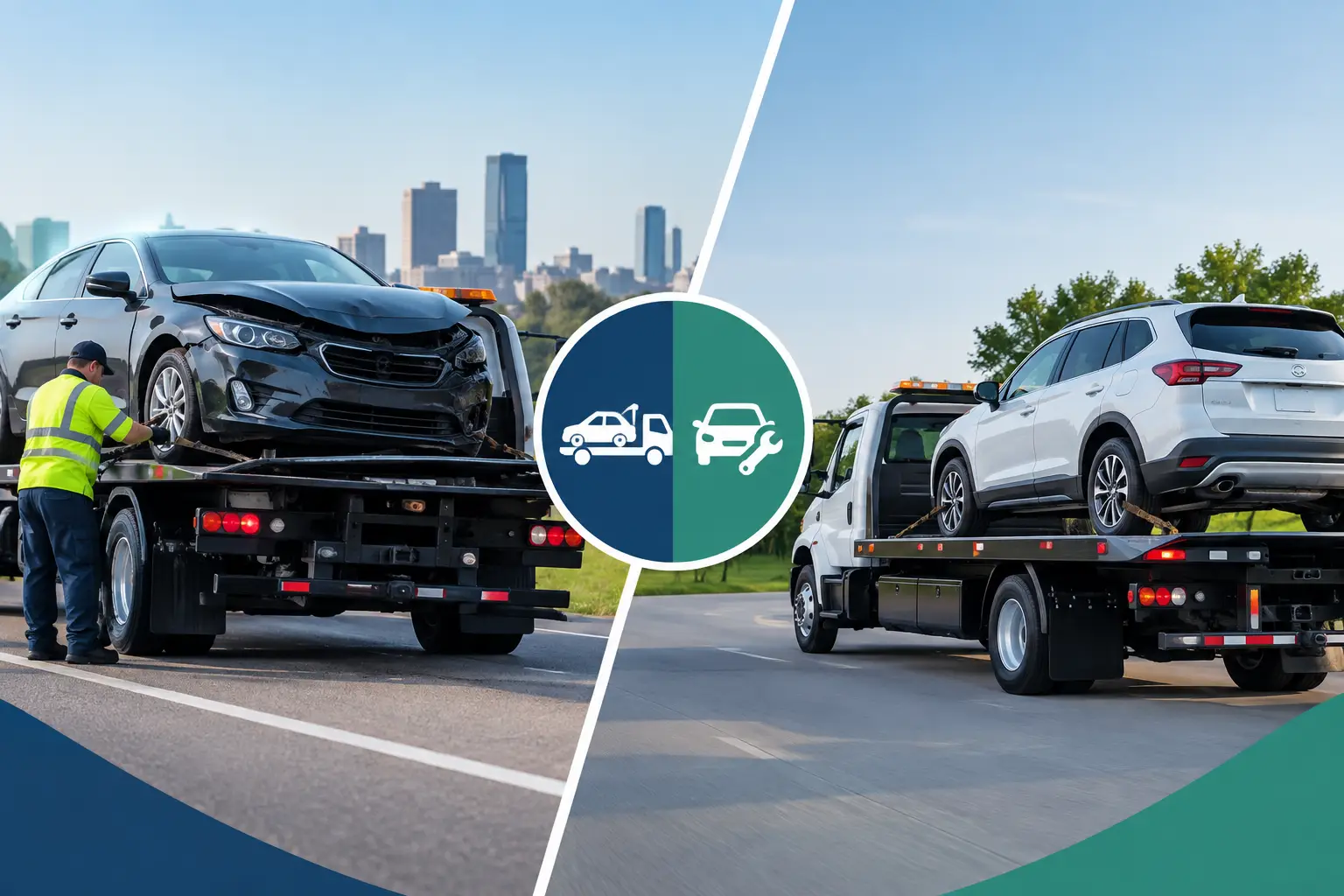
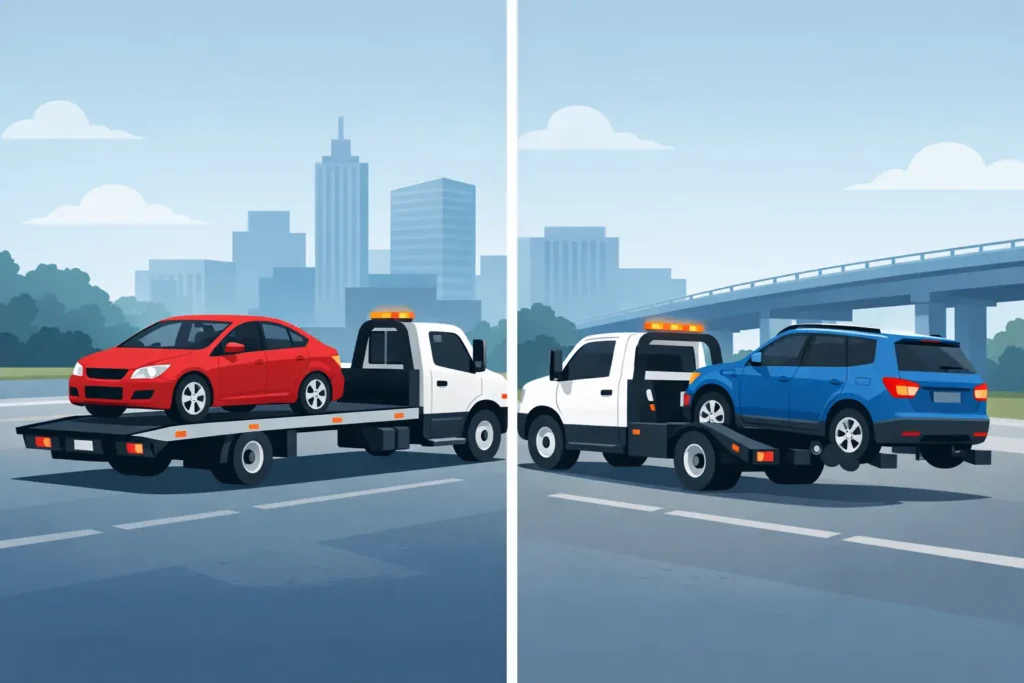
A flatbed carries the entire vehicle off the ground. The car is loaded onto a platform, secured at the tires, and transported without rolling down the road. A wheel lift raises one end of the vehicle while the other end stays on the ground and rolls during transport.
That basic difference affects almost everything else. It changes how the vehicle handles bumps, how much stress goes through the suspension and drivetrain, and how safe the tow is for damaged or disabled vehicles. For some cars, either method can work. For others, the wrong choice can create expensive problems.
In real towing work, this is not just about preference. It is about matching the tow method to the vehicle, the condition it is in, and the pickup location.
Why flatbed towing is usually the safer option
Flatbed towing gives the operator more control from the start. The vehicle is winched or driven onto the bed, positioned correctly, and secured for full transport. Once it is loaded, all four tires are off the road.
That matters for vehicles with transmission issues, steering problems, broken suspension parts, or accident damage. If a car cannot roll normally or cannot track straight, dragging two tires down the road is not a small detail. It can make the problem worse.
Flatbeds also make more sense for low-clearance cars. Front bumpers, side skirts, and undercarriage components sit close to the ground. A careful flatbed setup with the right loading angle helps avoid scraping that can happen during hookup or transport.
This is also why flatbeds are the better fit for many newer vehicles. All-wheel drive systems, electric vehicles, and heavier SUVs often need full support during towing. With EVs especially, proper handling is not optional. The vehicle needs to be moved in a way that protects the drivetrain, battery area, and body panels.
Where wheel lift towing still has a place
Wheel lift towing is not automatically wrong. In the right situation, it is a practical method. It is often useful when space is tight and the tow has to be done quickly and carefully, such as in a narrow lot, parking deck, or crowded street.
A wheel lift can also work for certain short-distance tows when the vehicle is front-wheel drive or rear-wheel drive and otherwise in stable condition. If the car rolls freely, has normal ground clearance, and does not have damage that affects how it tracks, a wheel lift may be a workable option.
The issue is that workable and ideal are not always the same thing. A vehicle might be movable with a wheel lift, but that does not always mean it is the best way to protect it.
The biggest trade-offs between the two
The clearest advantage of a wheel lift is maneuverability. It can be easier to position in tight spaces and may allow a quicker hookup in some city situations. If a car is blocking traffic or stuck in an awkward spot, that flexibility can help.
The trade-off is vehicle exposure. Two tires stay on the road, and more of the car remains affected by bumps, turns, and road surface conditions during transport. On a healthy vehicle that may be fine for a short tow. On a damaged one, it can add risk.
Flatbeds are more controlled, but they do require enough room to load correctly. The operator has to account for bed angle, approach space, and the condition of the vehicle. In some places, that setup takes a little more planning. Still, for damage-free transport, the extra care is often worth it.
Which vehicles should usually go on a flatbed
Some vehicles should strongly lean toward flatbed service. That includes all-wheel drive vehicles, many electric vehicles, low-profile cars, luxury cars, motorcycles, heavily damaged vehicles, and anything with a mechanical failure that affects wheels, brakes, steering, or suspension.
A car with a dead battery is one thing. A car with a locked wheel, broken axle, or front-end damage is different. In those situations, keeping the whole vehicle off the road is simply the safer move.
The same applies after an accident. Even if the damage looks limited, there may be issues underneath that are not obvious from a quick look in a parking lot or on the shoulder. A flatbed reduces the chance of creating more damage while moving a vehicle that is already compromised.
Flatbed towing versus wheel lift for EVs and AWD vehicles
This is where the choice gets more serious. Flatbed towing versus wheel lift is not just a preference question for many EV and AWD owners. It can be a vehicle protection issue.
All-wheel drive systems are designed to move power through multiple wheels and components that need to stay in sync. Towing with two wheels on the ground can create drivetrain stress if the vehicle is not handled exactly as required. Some models have very specific towing instructions, and ignoring them can lead to expensive repairs.
Electric vehicles bring another layer. They are often heavier than expected, sit low, and have sensitive components underneath. They also may require special handling if the vehicle will not power on or shift normally. For many of these jobs, a flatbed is the right answer because it removes guesswork.
Why low-clearance cars are where experience really shows
A low car can be easy to damage with rushed towing. The problem is usually not the tow itself. It is the loading angle, the approach, and whether the operator knows how to avoid scraping the bumper or underbody.
This is one reason many drivers ask for a flatbed specifically. Sports cars, Teslas, lowered sedans, and some luxury models need a slower, more deliberate setup. A proper flatbed tow gives more control over that process.
In busy areas around Tulsa, where breakdowns happen in shopping centers, apartment lots, or along roads with uneven surfaces, that extra control matters. The vehicle may already be in a bad position. Choosing the method that reduces contact and keeps the full car supported can save a lot of trouble.
When the right answer depends on the scene
There are situations where the pickup location matters almost as much as the vehicle type. A car stuck in a tight garage may need to be repositioned before it can be loaded fully. A vehicle on a shoulder near I-44 or US 75 may need the fastest safe removal method because traffic is a factor. A disabled truck in a narrow residential street may call for a different approach than a sedan in an open lot.
That is why good towing is not just about equipment. It is about judgment. The operator needs to look at the vehicle, the damage, the drivetrain, the ground clearance, and the space available, then choose the method that protects the vehicle while getting it moved safely.
For many calls, that leads back to flatbed towing because it gives the cleanest transport with the least road contact. Tulsa Towing focuses on flatbed work for that reason. It is the better fit for damage-free towing, especially when the customer is already dealing with enough stress.
What drivers should ask before the tow starts
If you are waiting on a tow, you do not need a long technical explanation. You just need to know your vehicle is being handled the right way. Ask what kind of truck is being sent, whether your vehicle should ride on a flatbed, and if there are any concerns based on your car’s drivetrain, clearance, or damage.
A clear answer tells you a lot. If the company can explain the setup in simple terms, that usually means they understand the job. If the vehicle is low, all-wheel drive, electric, or damaged, asking about flatbed service is a smart move.
The best tow method is the one that fits the real situation, not the one that is quickest to hook up. When your vehicle already cannot move under its own power, the last thing you need is a towing method that adds another repair to the list.