A Tesla on the side of the road is not a vehicle you want handled by guesswork. If you are asking can a Tesla be towed safely, the short answer is yes – but only when it is done the right way. With electric vehicles, the towing method matters more than it does on many gas cars, and using the wrong setup can lead to expensive damage fast.
Most Tesla towing problems start when someone treats it like a regular disabled car. That is where mistakes happen. These vehicles have low ground clearance, sensitive drivetrains, and specific manufacturer instructions for transport. If the car will not move, has a dead battery, or is involved in an accident, the safest approach is usually a flatbed tow with proper loading procedures.
Can a Tesla Be Towed Safely on Any Tow Truck?
Not every tow truck is the right truck for a Tesla. The answer to can a Tesla be towed safely depends heavily on the equipment being used and whether the operator understands EV handling.
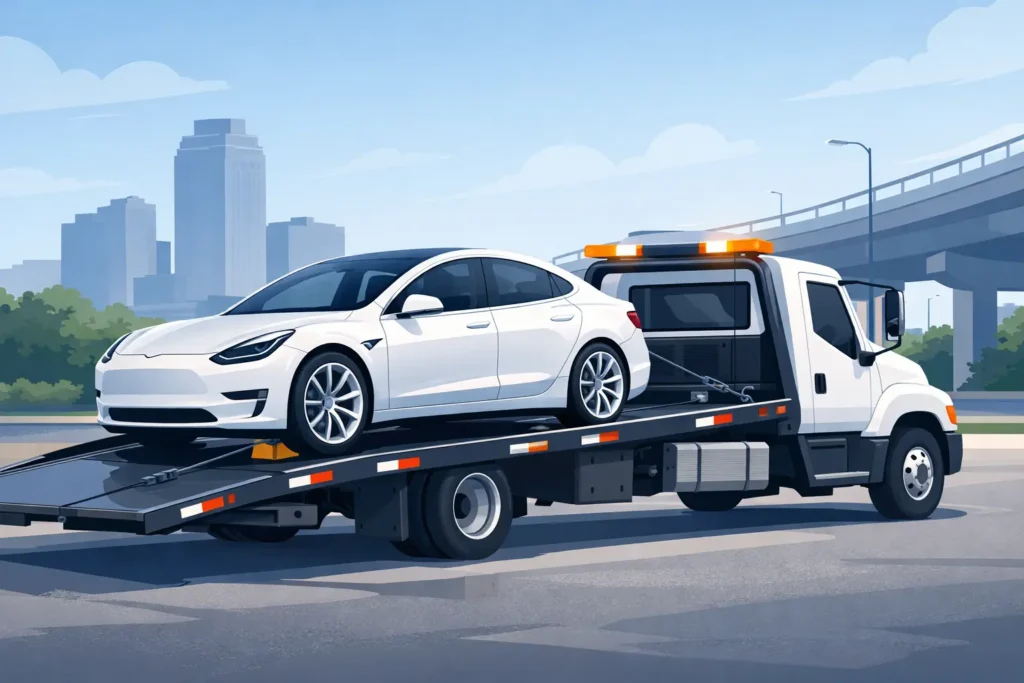
A flatbed is the preferred method in most situations because it keeps all four wheels off the ground. That matters with Tesla vehicles because rolling them incorrectly can damage the drive unit or other components. A wheel-lift or dollies may work in limited situations, but that is not the first choice when damage-free transport is the goal.
This is also why rushed roadside loading can become a problem. Teslas sit low, and a steep loading angle can scrape the front bumper or underbody if the truck is not set up correctly. Proper ramp angles, careful winching, and attention to clearance are part of the job.
Why Tesla Vehicles Need Different Towing Handling
Tesla models are built differently from many standard passenger vehicles. There is no traditional transmission setup to think about, but there are electric motors, battery systems, and software-controlled parking functions that change how the vehicle should be moved.
If the wheels are allowed to rotate on the road while the vehicle is being towed the wrong way, internal damage can happen. That is one of the biggest risks. It is not just about getting the car from one place to another. It is about moving it without creating a second problem.
Battery condition also changes the situation. If the Tesla has enough power, it may be possible to place it in Transport Mode so it can roll for loading. If the battery is fully discharged or the car will not respond, loading becomes more involved. In those cases, experience matters because forcing movement the wrong way can cause damage or make recovery harder.
When Flatbed Towing Is the Safe Option
In real towing work, flatbed transport is the safe answer for most Teslas. That includes breakdowns, dead batteries, collision damage, tire failures, suspension issues, and situations where the vehicle cannot be put into the correct mode for movement.
A flatbed keeps the vehicle stable and fully supported. It also reduces the chance of scraping low front ends and helps in tight areas like parking garages, apartment lots, or busy roadside shoulders. For a Tesla owner, that usually means less risk and a cleaner transport from pickup to drop-off.
There are also situations where the car may technically roll but still should not be pulled behind a standard tow setup. For example, if there is unknown suspension damage after an accident, dragging or partially lifting the vehicle can make things worse. A flatbed avoids that issue.
What Happens if a Tesla Is Towed Incorrectly?
The biggest concern is drivetrain damage from wheels turning while the vehicle is being transported. Depending on the model and how it is pulled, this can affect the motors or other mechanical systems. Underbody damage is another risk, especially during loading.
Then there is the practical side. If the Tesla is stuck in Park, has no battery power, or has locked systems that are not responding, trying to force movement can damage tires, wheels, or braking components. What looks like a simple tow can turn into a more expensive repair bill if the wrong method is used.
That is why Tesla towing is less about speed and more about doing each step correctly. A careful load takes a little more attention, but it helps avoid damage that should never happen in the first place.
Common Tesla Towing Situations
Most Tesla tow calls fall into a few common categories. The first is a no-start or low-voltage battery issue where the car will not shift or power up normally. The second is collision towing, where the vehicle may have wheel, steering, or suspension damage that makes normal movement unsafe.
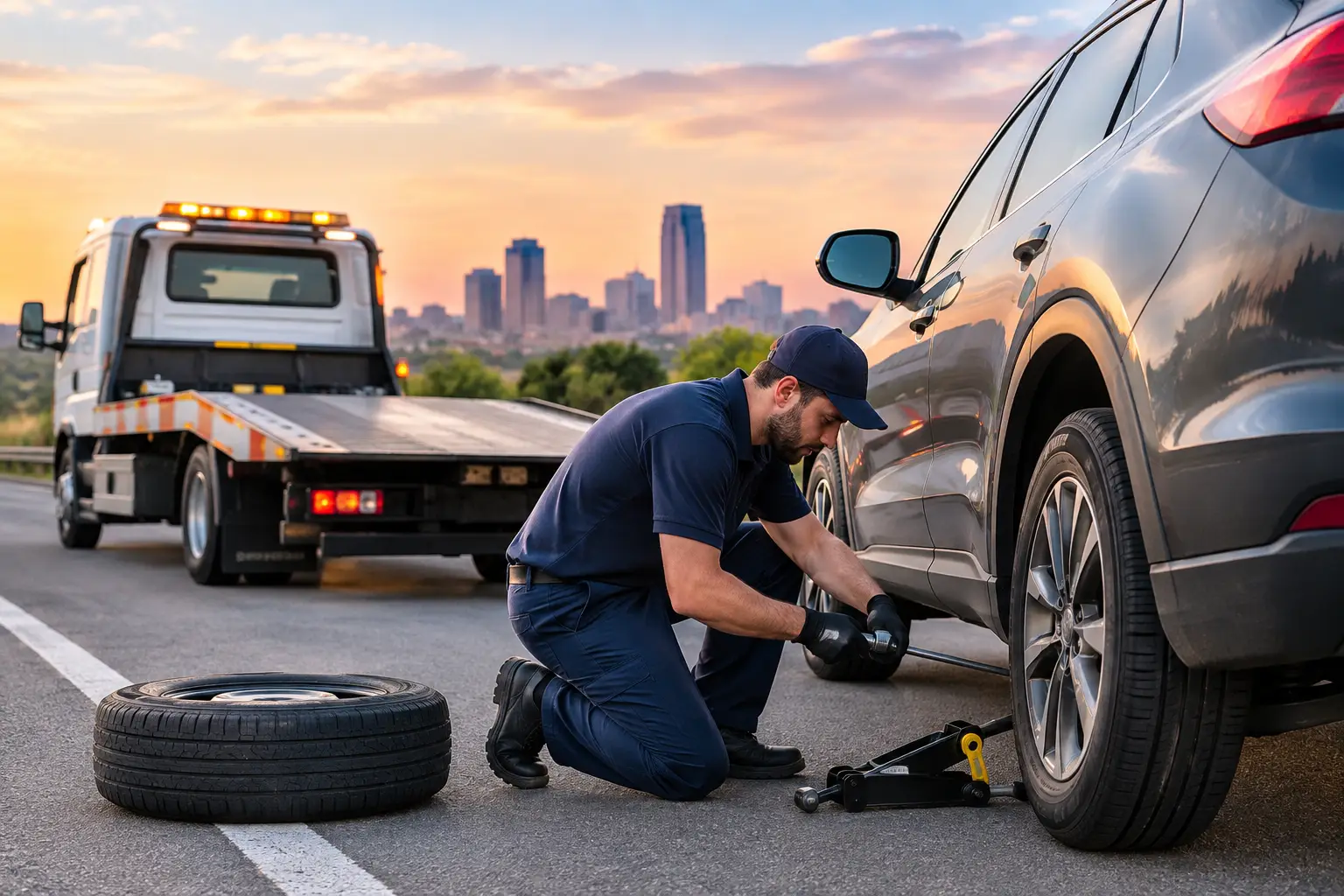
Another common situation is tire damage. A Tesla with a blown tire, cracked wheel, or damaged sidewall may need transport rather than a roadside fix, especially if the vehicle is in a bad location. We also see cases where the car is stuck in a garage, parking lot, or narrow access area and needs careful extraction before it can even be loaded.
Each one of those jobs requires a slightly different approach. The equipment may be the same, but the handling is not always identical.
How a Tesla Should Be Loaded
The key is controlled movement. If the vehicle can enter Transport Mode and roll freely, that makes loading easier. If not, the tow operator may need to use skates or other equipment to move it safely without dragging the tires.
The loading angle has to be managed carefully because Teslas can scrape easily. Winching should be smooth and straight. Sudden pulls, bad angles, or careless hook points are where damage happens. The vehicle also needs to be secured correctly once on the bed, with attention to wheel and body clearance.
For drivers, this is the part you usually do not see until the truck arrives. But it is the difference between a routine tow and a problem. A proper setup is not complicated when the operator knows the vehicle, but it should never be treated as a generic hookup.
What Tesla Owners Should Do Before a Tow
If it is safe to stay with the vehicle, a few quick steps can help. First, let the tow operator know the exact model and what the car is doing. Say whether it has power, whether it will roll, and whether there is any accident damage. That information affects how the truck is prepared before arrival.
If the screen works and the car has enough power, check whether Transport Mode can be activated. If not, do not force anything. Avoid trying to improvise with another vehicle or allowing someone to drag the Tesla a short distance just to get it moving. Shortcuts are usually where damage starts.
It also helps to tell the driver if the car is in a tight spot, underground garage, or heavy traffic area. In places like Tulsa Hills, downtown parking structures, or along I-44, setup space can be limited, and knowing that ahead of time speeds things up.
Can a Tesla Be Towed Safely After an Accident?
Yes, but post-accident towing adds another layer. The car may have hidden suspension damage, locked wheels, or debris around the underbody. In some cases, it may not be safe to roll the vehicle at all without recovery equipment.
That is where careful handling matters most. An accident-damaged Tesla should be assessed based on how it is sitting, whether the wheels turn, and whether there is visible damage underneath. A flatbed is still the right direction, but the loading process may require extra caution to avoid making body or wheel damage worse.
For local drivers dealing with a disabled Tesla in Tulsa, Broken Arrow, Bixby, or Jenks, the safest move is simple – call for a proper flatbed tow and let the vehicle be moved the right way the first time.
The Real Answer
So, can a Tesla be towed safely? Yes, absolutely. But safe Tesla towing depends on proper equipment, the right loading method, and an operator who understands that an EV cannot be treated like every other car on the road.
If your Tesla is stuck, disabled, or damaged, the goal is not just getting it moved. The goal is getting it moved without adding underbody damage, wheel damage, or drivetrain problems on top of the issue you already have. That is why careful flatbed towing matters, especially when the situation is already stressful.
When your vehicle is down, clear communication and proper handling go a long way. A careful tow now is a lot cheaper than fixing damage from a careless one later.