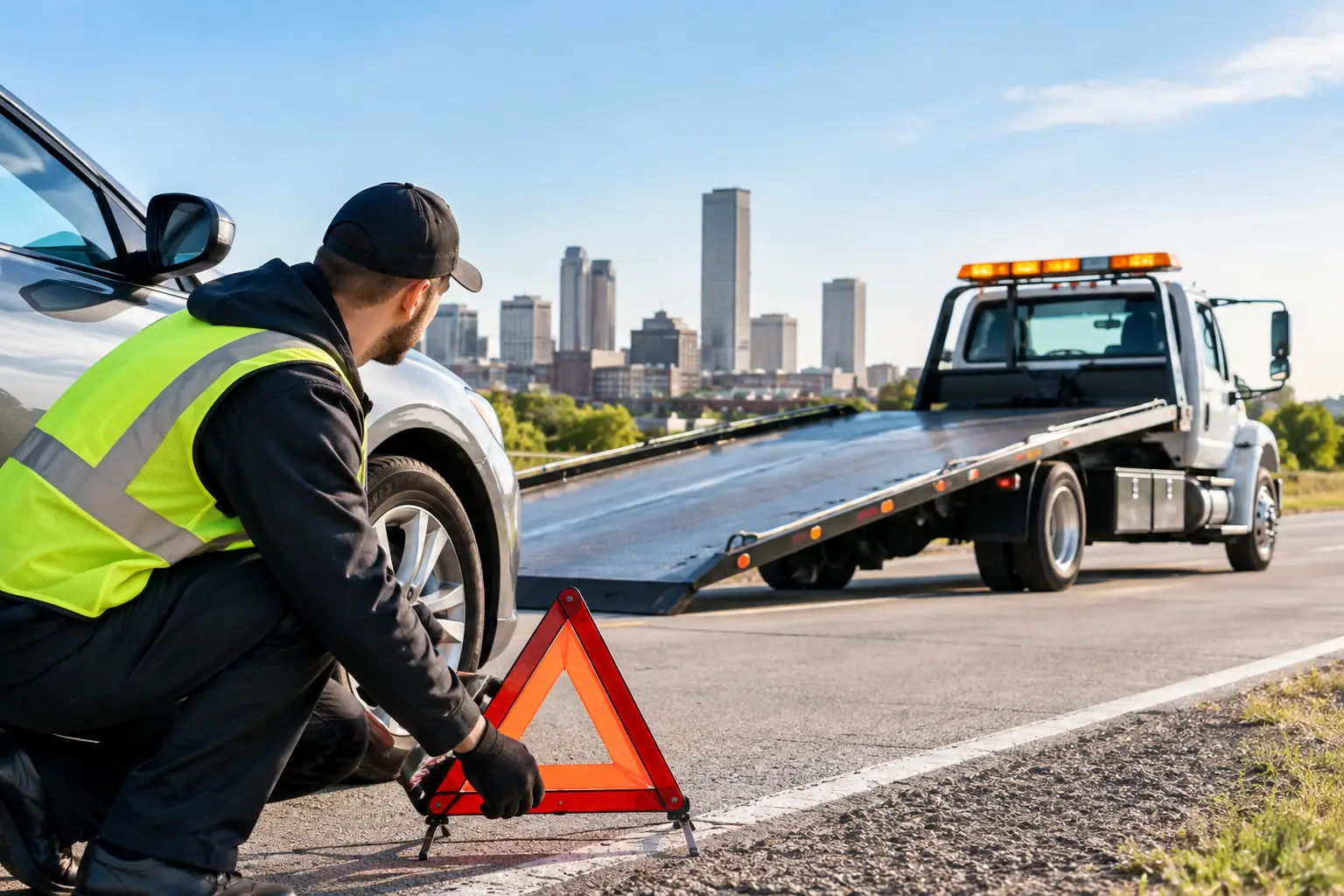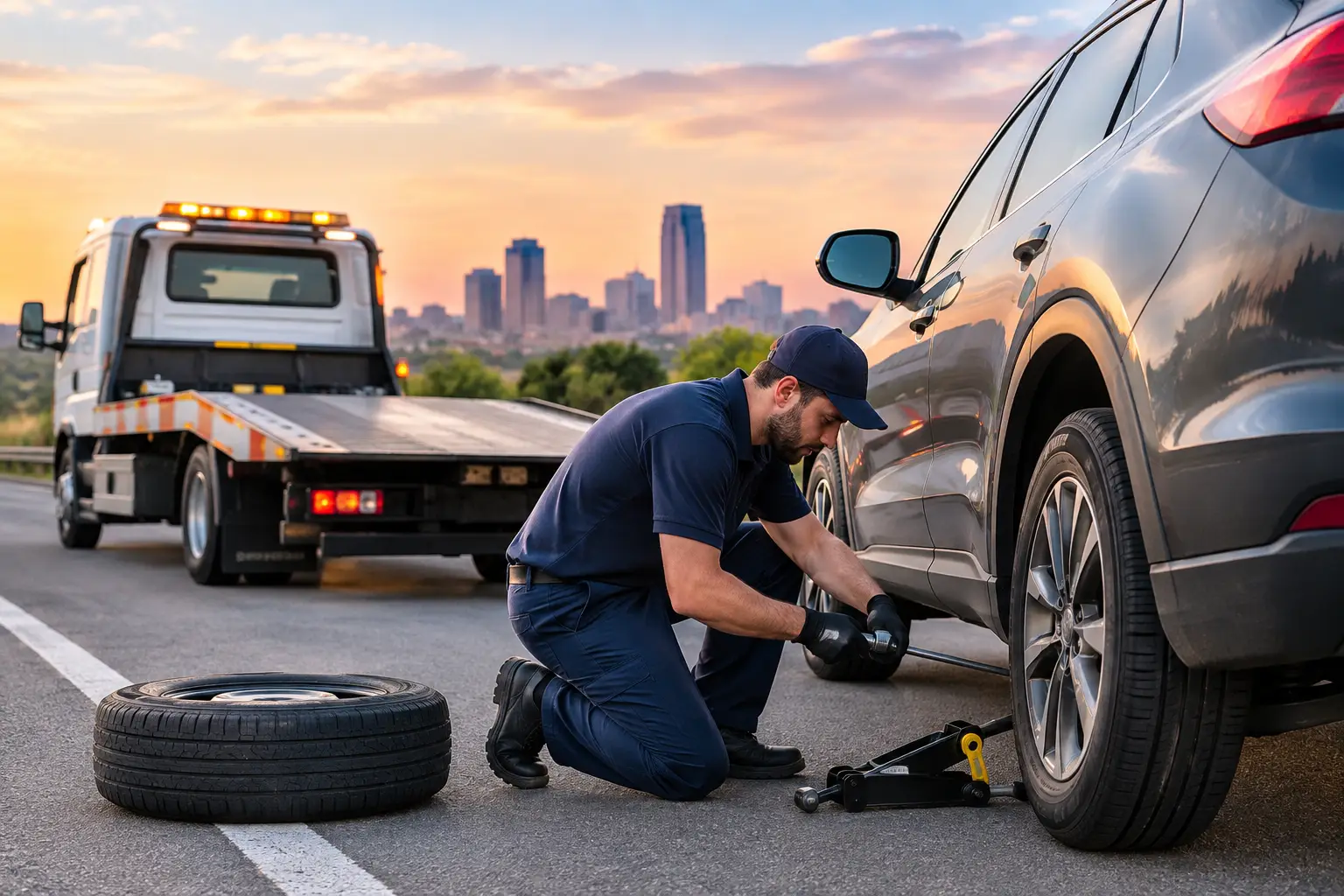
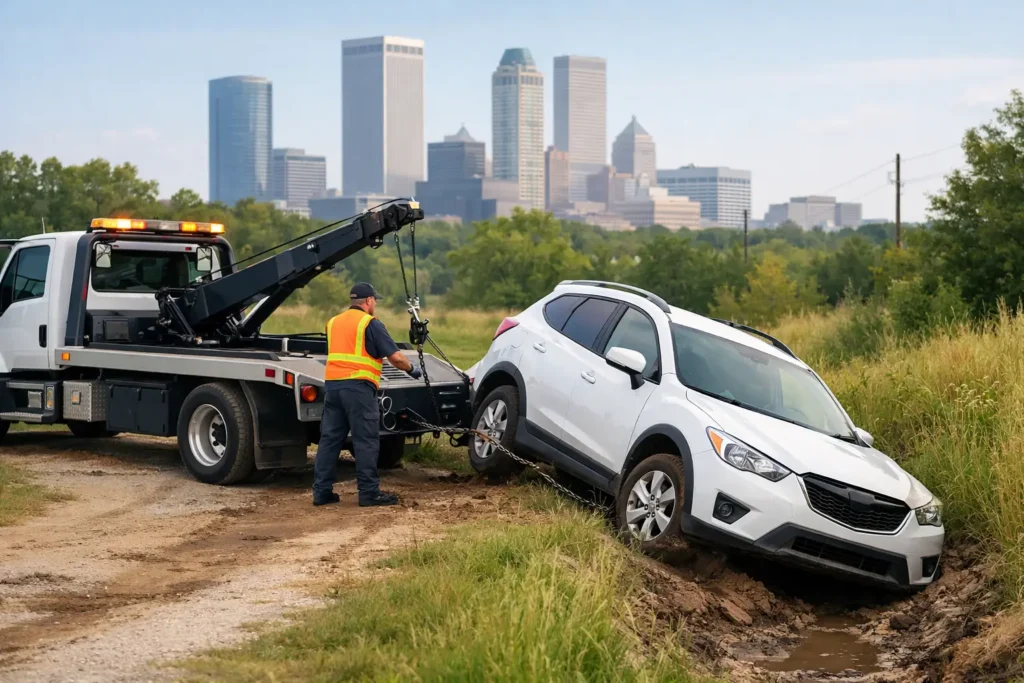
A car stuck off road in Tulsa usually happens fast. One soft shoulder, one muddy edge near a driveway, one slide into a ditch after rain, and now the vehicle will not move without making things worse. In that moment, the main goal is simple – get the car out safely without tearing up the bumper, suspension, tires, or drivetrain.
This kind of situation is more common than most drivers think. It happens on roadside shoulders, gravel edges, construction areas, wet grass, apartment entrances, and narrow pull-offs where the ground looks solid until it is not. Around Tulsa, especially after heavy rain or during freeze and thaw conditions, stable ground can turn soft enough to trap a car in minutes.
Car stuck off road Tulsa – the first thing to check
Before doing anything else, stop and look at how the vehicle is sitting. If one tire is spinning freely, if the frame is close to the ground, or if the car is leaning toward a ditch, trying harder on the gas usually makes recovery more difficult. It can dig the tires deeper, pack mud under the vehicle, and create a bigger problem than the one you started with.
Take a breath and check three things. First, see whether the vehicle is on level ground or angled. Second, check whether the tires are buried, slipping in mud, or hanging with little traction. Third, look underneath if it is safe to do so. If the underside is already resting on dirt, grass, or the edge of a rut, the tires may not be carrying enough weight to pull the car out.
That last point matters. Once the vehicle is high-centered or partly grounded underneath, it often needs a controlled pull, not more throttle.
Why off-road recovery can go wrong fast
A lot of drivers assume a stuck vehicle just needs a strong tug. That is not always true. The problem is not only getting the car moving. It is getting it moving from the right angle, with the right equipment, and without adding damage during the pull.
A car that is only a few feet off pavement can still be in a bad position. If the front end is low, pulling it the wrong way can scrape the fascia or bend components underneath. If the wheels are turned awkwardly in a ditch, forcing the car out can put extra stress on steering and suspension parts. If it is an all-wheel-drive vehicle or an EV, careless handling can create even more expensive issues.
That is why winch-out work is different from a basic tow. The setup matters. Anchor point, pull angle, wheel position, and ground condition all matter. A careful recovery is usually faster in the long run because it avoids turning a stuck car into a damaged car.
When a winch-out is the right call
If your car is stuck off road in Tulsa, a winch-out is usually the right option when the vehicle cannot drive back onto stable ground under its own power. That includes mud, wet grass, shallow ditches, loose gravel shoulders, and soft lots where the tires keep sinking or spinning.
It is also the right call when the vehicle is technically movable but driving it out would be a bad idea. For example, if the car is low clearance, if the front bumper is close to the dirt, or if there is not enough room to safely reverse and correct the angle, a controlled pull is the safer move.
In some cases, the vehicle also needs towing after the recovery. Maybe it slid off because of a flat tire, steering problem, dead battery, or accident damage. In that case, the job is not just getting it back on the road. It is getting it loaded correctly and transported without extra wear or guesswork.
What not to do when your car is stuck
The biggest mistake is spinning the tires over and over. That usually digs the vehicle deeper and can overheat components if the driver keeps forcing it. It also makes the ground less stable, which can complicate the recovery.
The second mistake is letting another vehicle yank it out with a strap and no clear recovery plan. That kind of pull can go sideways quickly if the strap is attached to the wrong point, if the stuck vehicle shifts unexpectedly, or if one vehicle loses traction during the pull. What looks like a quick fix can become body damage, undercarriage damage, or a second stuck vehicle.
A third mistake is assuming every tow truck setup is the same. Off-road recoveries are situational. A vehicle in soft grass near a curb needs a different approach than a truck nose-down in a drainage ditch. The right equipment helps, but experience with how to position the truck and control the pull is what protects the vehicle.
How a professional recovery usually works
The first step is assessing the scene. That means checking the vehicle position, how deep it is stuck, what the ground is doing, and whether there is enough space for safe setup. In busy areas, traffic flow and shoulder space matter too.
From there, the operator chooses the safest pull path. Sometimes that means a straight winch back onto pavement. Sometimes it means repositioning slightly first so the vehicle does not drag or twist as it comes out. If the car is low or has limited clearance, the recovery has to account for approach angle and contact points.
After the vehicle is back on stable ground, it still needs a quick check. If it came off the road because of mechanical failure or damage, it may not be safe to drive away. That is where proper flatbed towing matters. Getting the vehicle fully loaded and transported is often the cleanest way to finish the job without risking further problems.
Off-road recovery in Tulsa depends on the surface
Ground conditions around Tulsa change the job. After rain, grassy shoulders and dirt edges can turn slick enough that even a small sedan gets buried to the frame faster than expected. In newer construction areas, loose soil and gravel can shift under the tires with very little warning. Along busy roads, the issue is often not deep mud but lack of stable room to maneuver.
That is why there is no one-size-fits-all answer for a car stuck off road in Tulsa. A vehicle in Bixby on wet grass near a neighborhood entrance is one kind of recovery. A car off the shoulder near Highway 169 or I-44 is another. Same problem on the surface, different risk level and different setup.
Local route knowledge helps here more than people realize. Knowing how to approach safely, where traffic tightens up, and how certain shoulders behave after storms saves time and helps avoid rushed decisions.
What drivers should have ready when they call
If you need help, a clear location matters more than a long explanation. Road name, nearest intersection, direction of travel, and whether the vehicle is in a ditch, on grass, or off the shoulder gives a much better starting point than just saying you are stuck. If it is safe, it also helps to mention whether the car is front-in, rear-in, or leaning.
Vehicle type matters too. A compact car, full-size truck, Tesla, or SUV all sit differently and may need a different loading plan once recovered. If there is visible damage, a flat tire, or the car will not start, say that up front. It helps the response match the actual situation.
Good communication makes the whole job smoother. When the driver knows what the ground looks like and how the vehicle is positioned, the right equipment can be dispatched from the start.
Safe recovery matters more than a quick guess
Most off-road situations are recoverable without much drama if they are handled correctly. The trouble usually starts when people keep trying to force the car out, or when the recovery is treated like a basic pull instead of a vehicle handling job.
That is where experience shows. A proper winch-out is about control, not brute force. It is about protecting the bumper, underbody, wheels, and drivetrain while getting the vehicle back to a place where it can either continue safely or be loaded for transport. Tulsa Towing handles these calls with that exact mindset – clear communication, proper equipment, and damage-free handling from the first setup to the final load.
If your car is stuck off road, the best next step is usually the simplest one: stop spinning the tires, stay safe, and get someone who knows how to recover it without turning a bad spot into a bigger repair bill.